
Creative Frome: A Wellbeing Guide to Living More Creatively in Everyday Life
Discover how to bring more creativity into your everyday life in Frome. From Black Swan Arts to Made at Nest, explore a wellbeing guide to creative places that help you slow down, reconnect, and feel better.
There’s something about Frome that makes creativity feel like part of everyday life, not something reserved for weekends or special occasions. It’s in the windows, the workshops, and the sense that people are making things because they want to, not because they have to. And when life feels full or a little unclear, creativity offers a way back, giving us somewhere to place our attention, our hands, our thoughts.
Why creativity matters for wellbeing
Creativity isn’t just about producing something beautiful or impressive. It’s about process. It’s about making space for curiosity, for play, for noticing what draws you in.
When we engage creatively, even in small ways, we step out of constant consumption and into participation. We soften the pressure to have all the answers and instead follow something more alive: interest, instinct, experimentation. Creativity can regulate our nervous systems, reconnect us to ourselves, and remind us that we’re allowed to make things imperfectly.
In a town like Frome, that invitation is everywhere.

A wellbeing prescription for a more creative life in Frome
Start with wandering. Let yourself be led by what catches your eye, not what you think you “should” do.
Here are some of our favourite places to seek out creativity:
Black Swan Arts
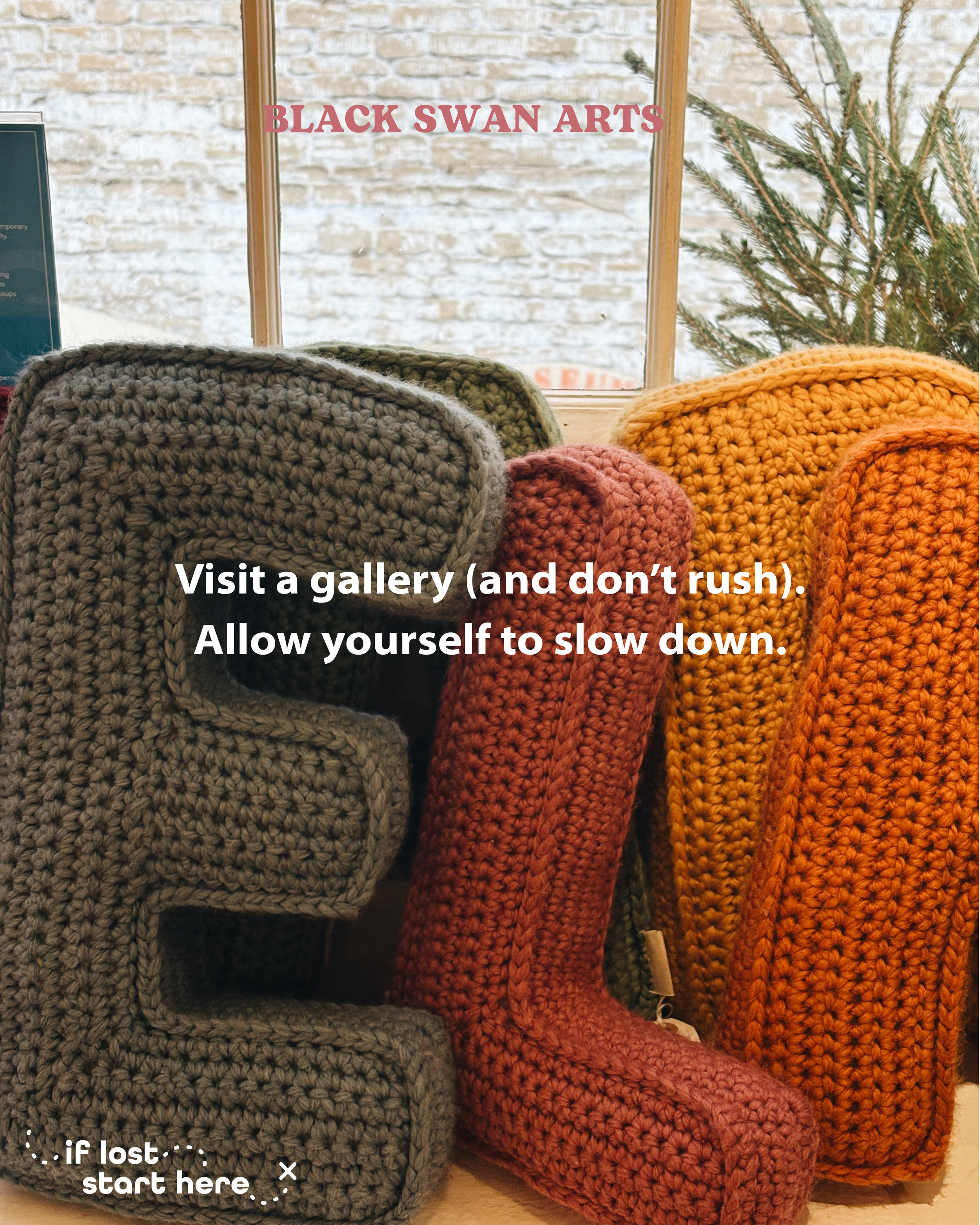
Set in a beautiful old building, Black Swan Arts is a community-driven contemporary arts centre that supports local and emerging artists through exhibitions, open studios, and workshops. You might come for a specific show, or simply to wander through and notice what resonates. It’s a reminder that creativity takes many forms and that you don’t need to understand it all to be moved by it. Also check out The Write Place, a cosy place to work on that novel hidden away on the top floor.
The Silk Mill Studios and Gallery
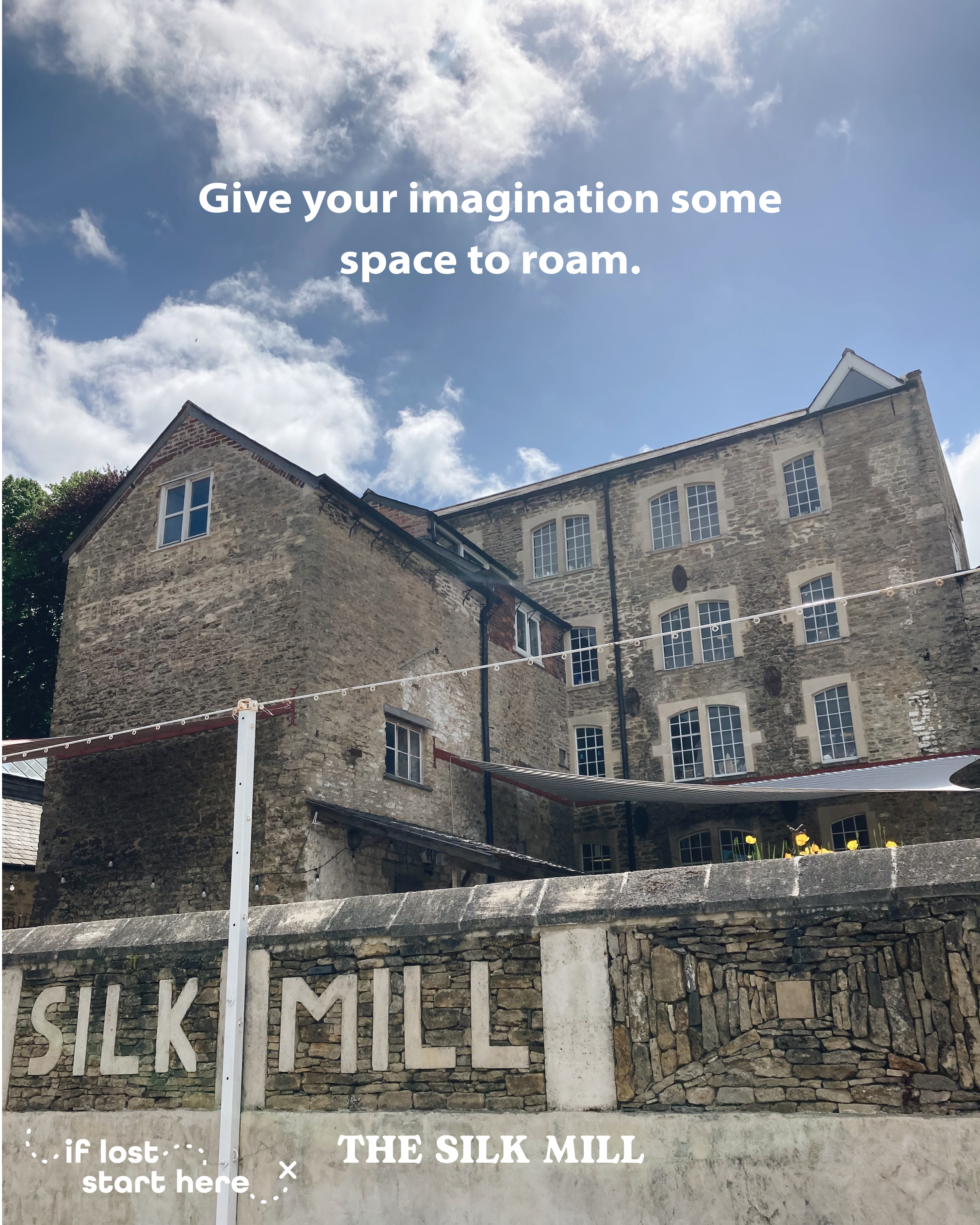
Part gallery, part working space, The Silk Mill offers a closer look at creativity lived out by the artists who work here. There’s a sense of getting to witness the in-between stages—the sketches, the half-finished pieces, the process itself, challenging the idea that creativity needs to be polished to be worthwhile. With a rotating series of exhibitions, workshops and events there’s often something here to expand your world a little.
Ground
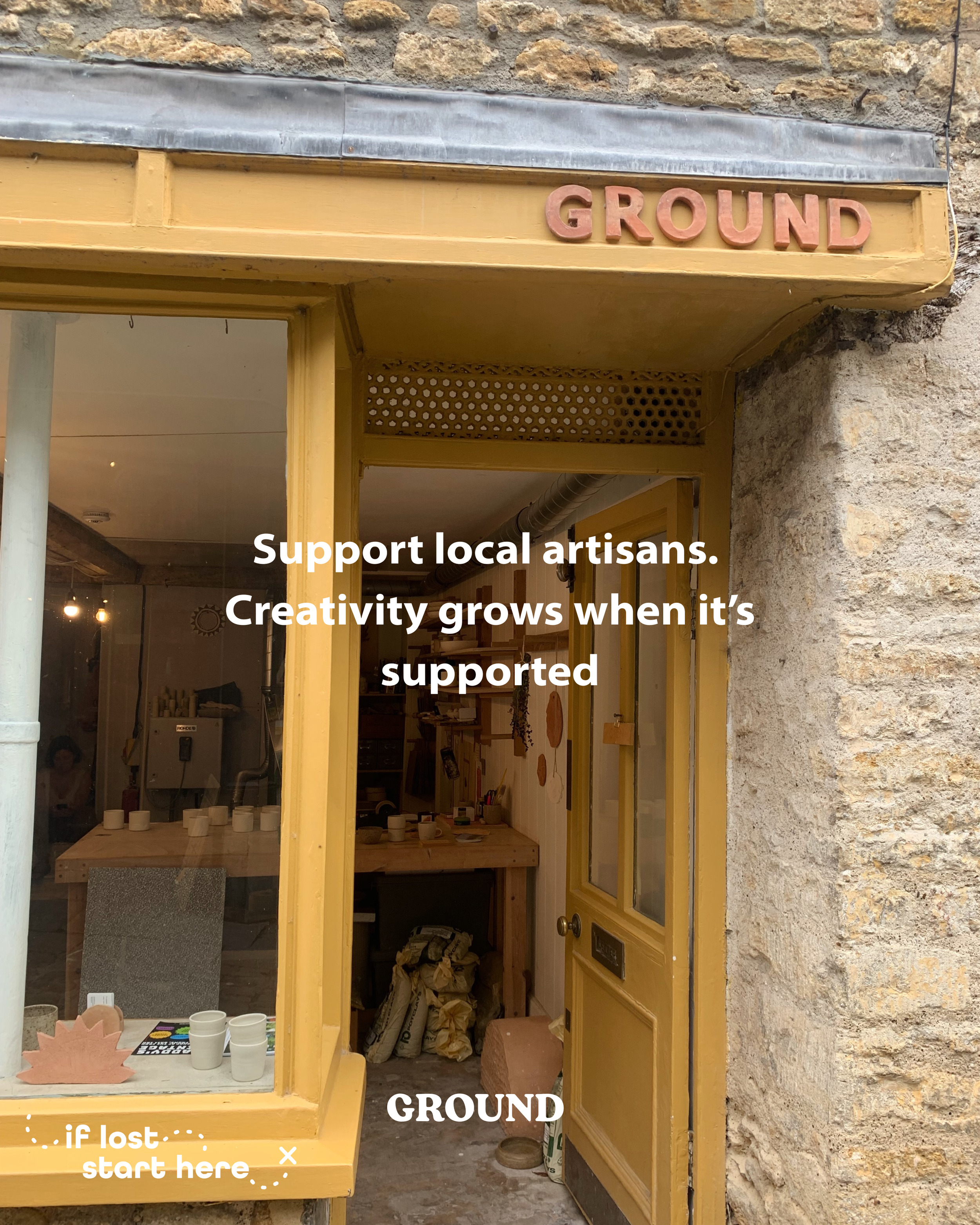
At the top of Catherine’s Hill, you’ll find Ground, a studio and shop created by the potter and artist Fi Underhill. Here you’ll get a sense that creativity can both be something you make and something you engage with. Take one of the gorgeous ceramic mugs home with you, so that an everyday, almost throwaway moment drinking your morning coffee becomes even better.
Made at Nest
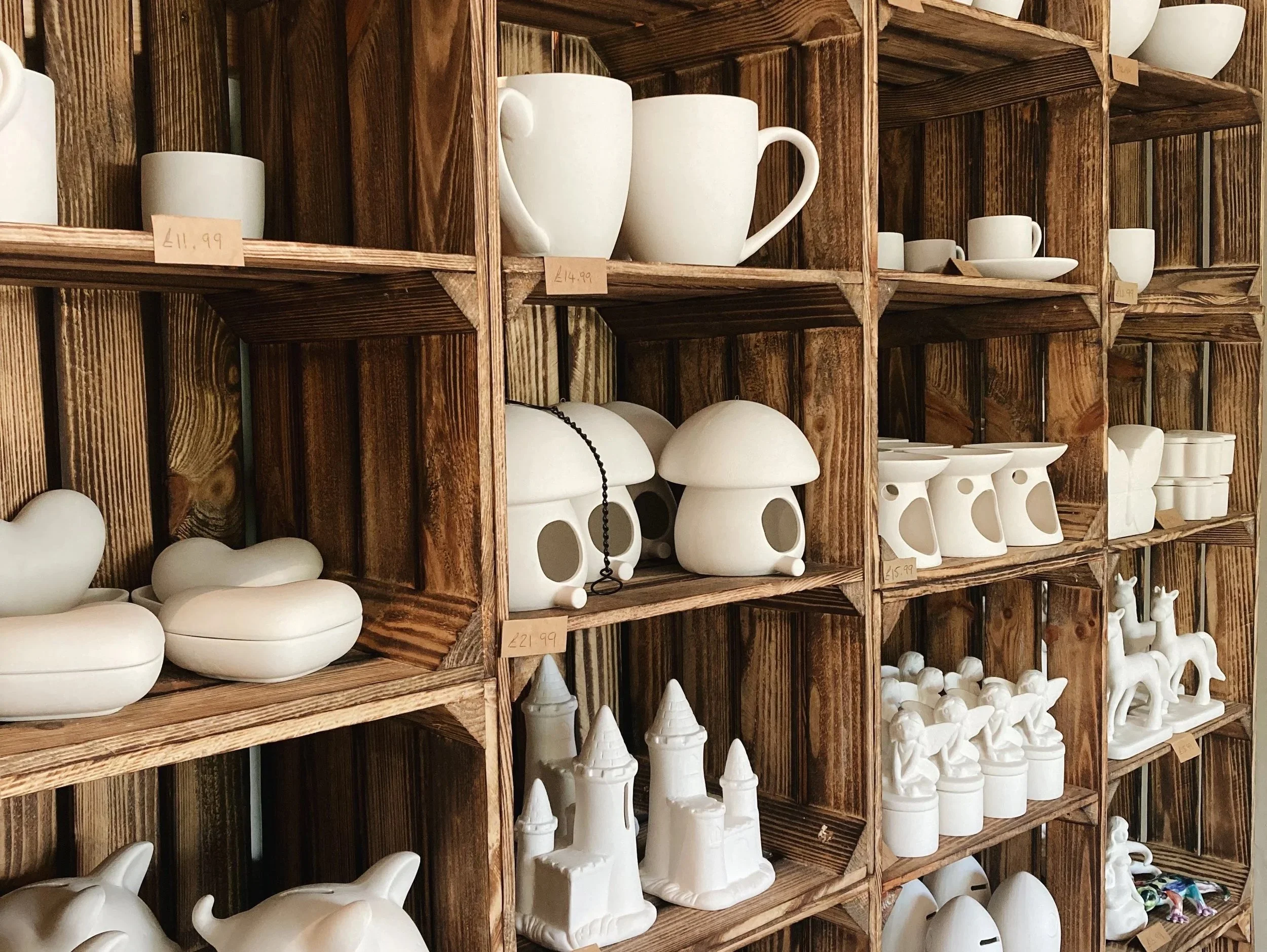
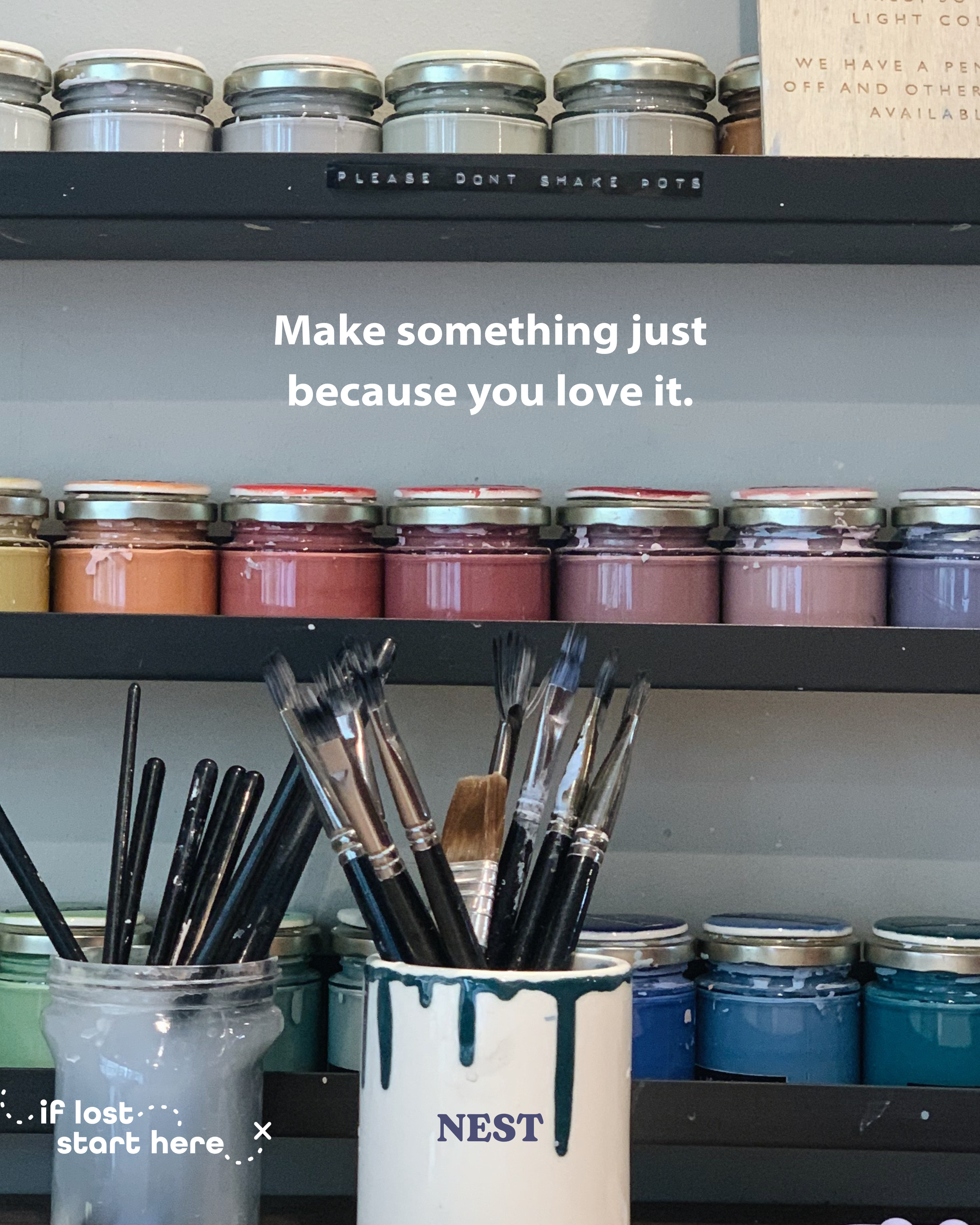
Made at Nest is a welcoming pottery studio and coffee shop that invites you not just to buy something creative, but to try making something yourself. It offers a gentle nudge towards participation rather than perfection, and you’ll feel free to paint vases and bowls, tiny bears and exuberant elephants to your heart’s content. Oh and there’s cake.
Still Life Gin
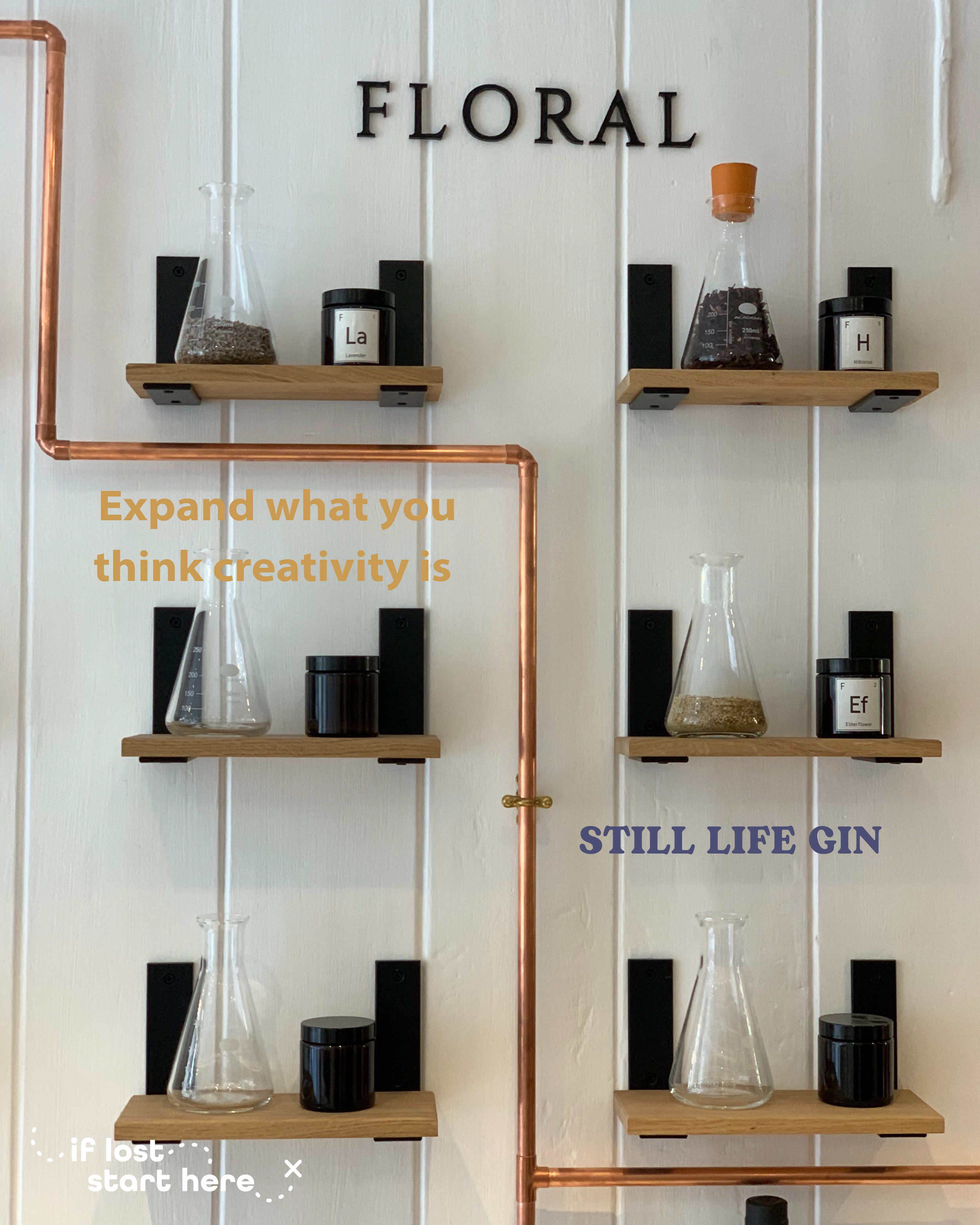
There’s creativity in flavour too. At Still Life Gin, the process of distillation becomes its own kind of craft—thoughtful, sensory, experimental. It’s a different lens on creativity, one that invites you to taste and notice, not just look. You can also book sessions to make your own gin blend.
Seed
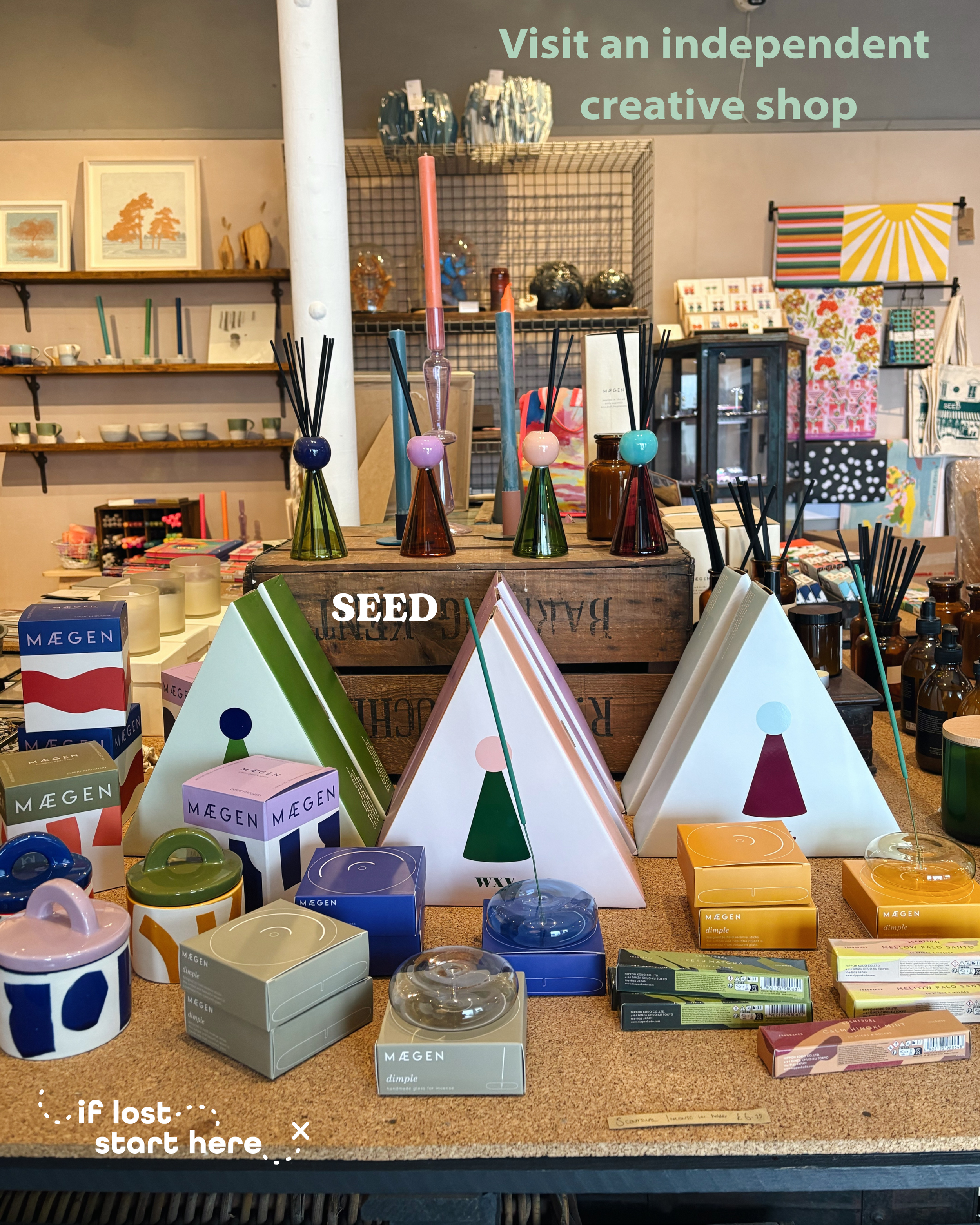
Seed is a thoughtfully curated shop filled with the best of British design from homewares, stationery, and objects that bring a sense of life and intention into your space. It’s a reminder that creativity can be as simple as how we care for our environment—what we surround ourselves with, what we bring in, and how we make a space feel like our own.
You don’t need to become “a creative person” to live more creatively. You just need to follow what feels interesting, even if it seems small or ordinary.
If you’re looking for more places like these—spaces that help you reconnect, explore and feel a little more like yourself—browse our guide for life. It’s filled with creative corners, thoughtful businesses and everyday places that make life feel better, one visit at a time.
Oh, and if you run a local place that you think would be perfect for our guide, apply to be part of our collection of places for happier days here.

Charleston
Step inside Charleston, the historic home of the Bloomsbury Group, where art, literature, and radical thinking shaped a new way of life. This beautifully preserved house and garden in East Sussex offers an immersive experience in creativity, from hand-painted walls to inspiring exhibitions.
Perfect For
Anyone who loves art, history, and a bit of creative rebellion. If you believe that life itself should be an artwork, you’ll feel right at home here
Why You’ll Love It
More than just a house, Charleston is a living, breathing piece of art history—once the home of the Bloomsbury Group, a radical collective of artists, writers, and thinkers who redefined creativity, relationships, and modern life. Every inch of the house, from painted walls to hand-decorated furniture, tells a story of rebellion, artistic freedom, and a refusal to follow convention. It’s a place that invites you to step inside a world where creativity had no limits—and to leave inspired to create your own.
What Makes It Special
An artist’s dream home – Charleston isn’t just decorated; it’s painted from floor to ceiling, inside and out.
The garden is a creative project in itself too – Designed by Vanessa Bell and Duncan Grant, it’s full of colour and sculptural beauty.
A hub for creative minds today – From literary festivals to exhibitions, Charleston is still very much alive, a gathering place for ideas and imagination. Check out their events for up-to-date information.
The Story Behind It
In 1916, artists Vanessa Bell and Duncan Grant left London behind and moved to Charleston with their unconventional household. What started as a rural retreat became the heart of the Bloomsbury Group, where Virginia Woolf, John Maynard Keynes, and E.M. Forster would visit, debate, and create. Unlike the rigid, buttoned-up world of their time, Charleston was a space of artistic and personal freedom, where boundaries were blurred, rules were broken, and the walls—quite literally—became the canvas. Today, it stands as a testament to the power of living creatively, without constraints.
Something Else We Love
The Charleston shop is a treasure trove for lovers of art, literature, and design, with prints, ceramics, and homewares inspired by the house itself. But our favourites? Their fabric collection. If you’ve ever wanted to wrap yourself in Bloomsbury-inspired patterns, this is your chance. Their notepads make sweet gifts and make you feel like you’ve borrowing a little of their creativity. And we couldn’t resist buying Deceived with Kindness by Vanessa Bell’s daughter Angelica Garnett when we stopped by to better understand what it was like to grow up here.
The If Lost Take
We love Charleston because it’s not just a museum—it’s a manifesto for a different way of living. The Bloomsbury Group believed in art as a way of life, in challenging convention, and in finding beauty in the everyday. Stepping into Charleston is stepping into a world where those ideas are still alive and waiting for you to take them home.
Some Practical Details
Firle, East Sussex, UK
P.S.
If you visit, check out some of our favourite local places in nearby Lewes:
For independent shopping: Nord, Leadbetter & Good, Closet and Botts and From Victoria
For coffee: Trading Post Coffee Roasters
For eco-conscious snacks: Seasons
For a little bit of nature: Bulb Florist
For children’s books: Bags of Books
For culture (and lunch): The Depot
For artisan breads and pastries: Flint Owl Bakery

The Barbara Hepworth Museum & Sculpture Garden
Step into the world of sculptor Barbara Hepworth at her preserved home and studio in St Ives. The Barbara Hepworth Museum & Sculpture Garden offers a rare glimpse into the artist’s life, with her untouched workshop, iconic sculptures, and a breathtaking garden space.
Perfect For
Anyone who wants to be immersed in the story of art, seek out The Barbara Hepworth Museum & Sculpture Garden in St Ives. If you’ve ever wondered what it’s like to create something truly lasting, this is your place.
Why You’ll Love It
Tucked away in the heart of St Ives, this isn’t just a museum—it’s an escape into the mind of one of the UK’s most celebrated sculptors. Barbara Hepworth lived and worked here for the last 26 years of her life, and stepping into her home and garden feels like stepping into her world. From the intimate, light-filled studio to the lush outdoor sculpture garden, every part of this space invites you to slow down, breathe deeply, and see the world as she did—through form, texture, and movement.
What Makes It Special
A sculptor’s world, frozen in time – Hepworth’s workshop remains untouched, complete with tools, unfinished pieces, and even her white work coat, as if she just stepped out for a moment.
The sculpture garden – A hidden oasis where her iconic stone and bronze works sit between tropical plants, perfectly framed by Cornish light.
Awe in the everyday – Hepworth’s work invites you to pay attention, whether that’s noticing the shadows, reframing space, and seeing shape in a whole new way.
The Story Behind It
After Hepworth’s sudden passing in 1975, her wish was clear—she wanted her home and studio to remain as she left it, a place where people could experience her work in the environment that shaped it. Honouring this, the Barbara Hepworth Museum was established later that year by her family, with Tate taking over its care in 1980. Today, it stands as one of the most personal and intimate artist museums in the world, a place where her legacy is preserved not just in her sculptures, but in the very air of the studio she worked in.
Something Else We Love
It’s not just about the art—it’s about stepping into Hepworth’s way of seeing the world. One of the most moving parts of the experience? Seeing her unfinished works, left exactly as they were when she passed, mid-creation. It’s a rare, raw glimpse into the mind of an artist, proof that the creative process is never truly finished.
The If Lost Take
We love the Barbara Hepworth Museum because it’s not just about seeing art—it’s about experiencing the world through an artist’s eyes. Hepworth believed in sculpture as something to be lived with, and this place brings that philosophy to life. Whether you’re an art lover or just someone seeking a moment of quiet awe, this is a space that lingers with you long after you leave.
Some Practical Details
St Ives, Cornwall, UK
P.S.
If you do visit, also check out our favourite local places:
For coffee: The Yellow Canary and Yallah Coffee.
For morning pastries, artisan loaves and of course Cornish pasties: St Ives Bakery
For browsing: independent book shop St Ives Bookseller.
And of course, another awe-inspiring cultural destination: Tate St Ives.

Studio Pottery
Reconnect with the practice of making in this light-filled and spacious pottery workshop located in the heart of Belgravia.
Go here if: You are seeking a break from the noise of the city and are looking to connect with the practice of making.
What is it: Founded by Lucy Attwood and Gregory Tingay in 2019, Studio Pottery London is a light-filled and spacious workshop for all who are attracted to making with clay, from absolute beginners to more experienced potters.
Why you need it: Uniquely located in central London in the heart of Victoria as part of the Eccleston Yards development, the studio has been created as a place of calm and community. A carefully curated working studio and gallery space provides a perfect environment for city-dwellers to come together to learn and create.

Photo: Yiki Dong, Studio Pottery, London

What they offer: Intimate classes across the two teaching classrooms with six wheels in each as well as a dedicated area that has been carefully designed to give members premium space. The central area, with its library, kitchenette and facilities, gives opportunities for the community to socialize.
Members and students are also welcomed by a resident potter into their private studio for one-to-one throwing and mentoring sessions, while an evolving teaching team and an in-house technician — who monitor the studio kilns and glazing room — provide support for the studio community.
For inspiration, take a look at the curated windows and displays of historic and contemporary ceramics (some of which are also for sale to visitors).
We asked Directors and Co-Founders, Lucy Attwood and Gregory Tingay what makes Studio Pottery different:
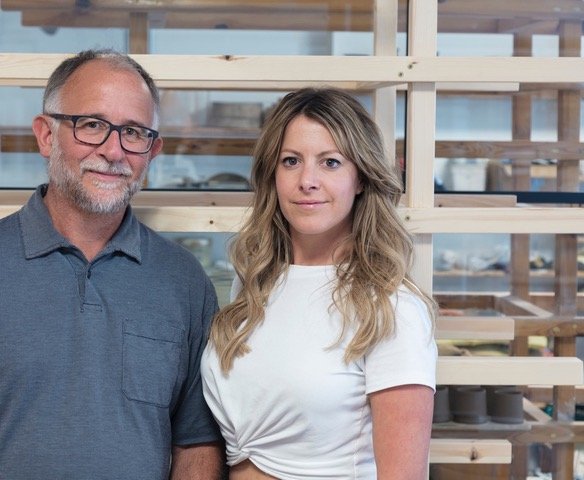
“Our focus is throwing – working with clay on the wheel. The studio also provides space for hand-building. This traditional craft provides a counterbalance to the hyperactive, mechanised, and technologically saturated metropolis.
The hands-on practice of throwing opens dormant creativity and encourages therapeutic transformation. Engaging with clay, the practitioner slows down, assimilating technique and mastering knowledge through careful repetition. It is a holistic, gradual and joyous experience, connecting the potter to a living history of human making.
Our lineage flows directly from Bernard Leach and the 20th Century revival of studio pottery – enshrined in our name. At the heart of Studio Pottery London is the desire to form a community around a shared ethos and love of pottery in all its forms.”
— Gregory Tingay, Co-founder
“Pottery can be a wonderfully social activity, as well as a solitary path of meditative practice. Our studio respects both.
We provide group taster introductions, 5 week foundation courses, and run a regular schedule of ongoing mixed ability classes that you can book according to your availability.
Our expert teachers not only lead our group sessions, they offer on-one-on tuition, which is an excellent way to learn and grow in confidence on the wheel. If you would like the flexibility of coming in your own time you can become a member, enjoying exclusive access to our members area, equipped with several wheels and workspaces.
Our studio is also available for private hire, and our team has a wealth of experience arranging workshops for private functions and one-off experiences.”
— Lucy Attwood, Co-founder

Turning Earth Ceramics
"Like a gym membership for potters", discover four pioneering London studios cultivating craft both as an accessible hobby and as a viable career.
Go here if: You want to learn a new skill, make work in ceramics, be part of a community, find new ways to relax and unwind, nurture your creativity, or even develop your career.
What is it: Turning Earth's pioneering ceramics studios are for everyone, from beginners to part-time professionals, and can now be found in four London locations: Hoxton, Leyton, Tottenham and Highgate. They offer classes and open-access membership, "like a gym membership for potters".

Turning Earth Hoxton

Turning Earth Highgate
Why you need it: Turning Earth's mission is to cultivate craft both as an accessible hobby and as a viable career (they offer a full-time professional studio, In Production, in Leyton). They want to contribute towards a broad adult curriculum that will improve the quality of life in the city.
What they offer: All the ways to try making and develop skills: Tasters, 8 or 12-week beginners courses, intermediate courses, week-long courses, weekend-long courses, private workshops, and monthly membership.
For members, they also organise improvement workshops, like their very popular raku parties, and they have exclusive access to their quarterly ceramics markets.

Turning Earth Leyton

Turning Earth Tottenham
What makes it different: The community and atmosphere are unique to each of their studios. Someone might join for the craft and end up staying for the friends and a 'second home' discovered.
What else do you need to know: They are open every day till late except on Mondays. If you’re not local you can see the wide diversity of skills and techniques on their Instagram which is often updated with pots made by their members in the studio.
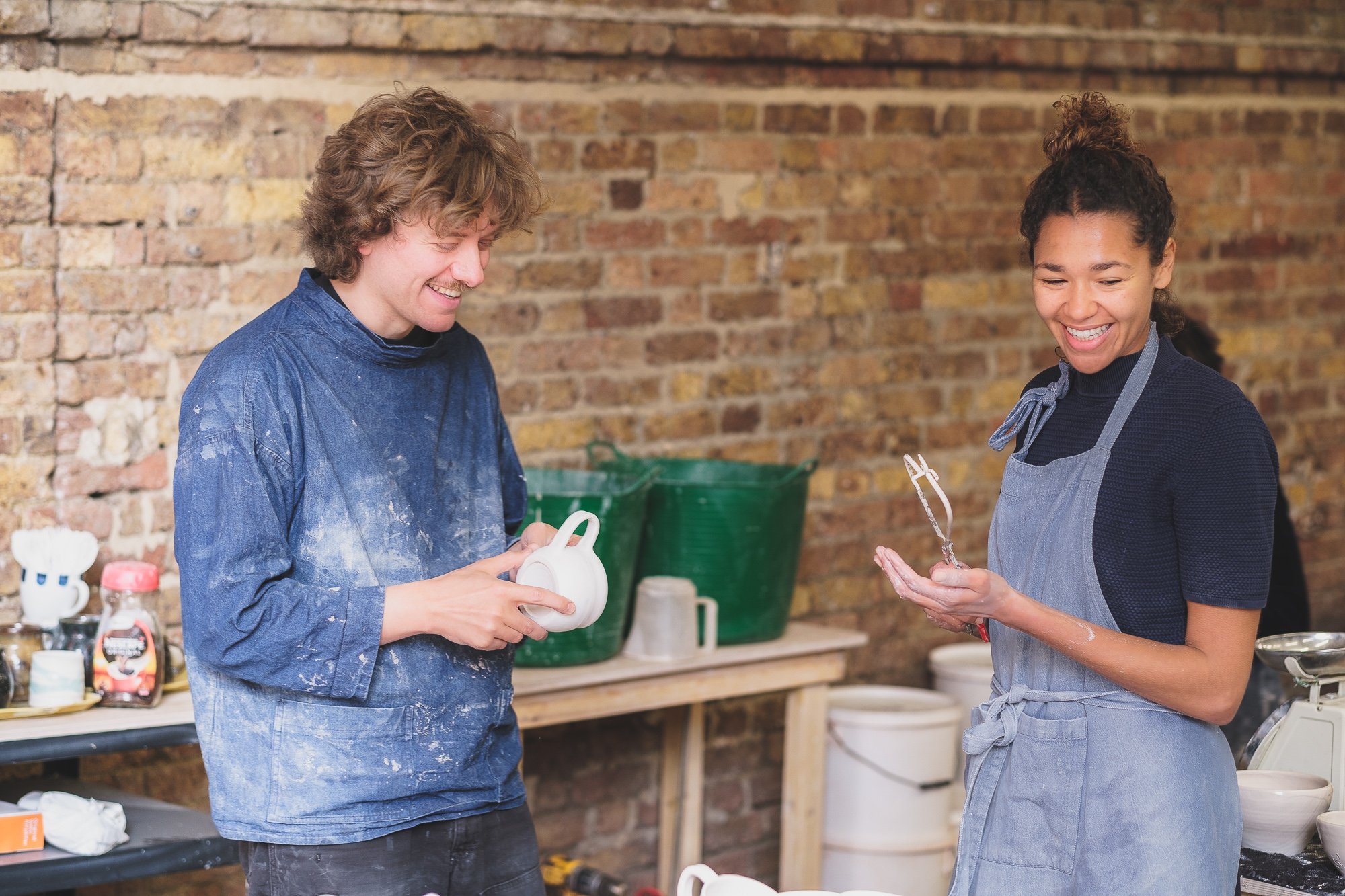

In their own words: Turning Earth was founded by Tallie Maughan. Their first studio, Turning Earth Hoxton, opened in December 2013. Following a model popular in the US, it was the first dedicated open-access ceramics studio in London.

“Turning Earth is indebted to the Arts and Crafts movement at the beginning of the 20th century, which suggested that there should be no separation between utility and art.
Our vision rests in the intuited feeling that we will naturally make life more beautiful when we take our aesthetic awareness, our right-brained feeling for things, as seriously as we take our rational understanding of the world.
We exist to enable people to make beautiful physical objects, and in so doing to make their lives more beautiful: more centred, more fulfilled, more present to what they truly care about.
We feel that in making this movement, we are encouraging a broader social shift towards living with care in our world.”


Shop Small Special: The Bristol Artisan
A home for local craftsmanship and creativity, The Bristol Artisan embodies the spirit of community and sustainability of the city.
Go here if: you love contemporary design and craft, supporting local makers and feeling like you are truly in Bristol.
What is it: A home for local craftsmanship and creativity, The Bristol Artisan in Clifton is a charming shop that stands as a testament to the city's vibrant community of artists, designers and makers.
Why you’ll love it: Showcasing a curated collection of handmade homewares and gifts from independent makers from Bristol and across the UK, you’re sure to find something to take home. From ceramics, jewelry and original prints, to vegan beauty, living plants and dried flower bouquets, each piece tells a story of skill, passion, and dedication.
The Bristol Artisan embodies the spirit of the city. It encapsulates Bristol's ethos of creativity, community, and sustainability.
How to bring this into your life: The online shop is extensive so you can shop from home. Check out the gift guides for all seasons and occasions (we have our eye on cozy hot water bottles and the perfect ceramic ramen bowls). If you do get to visit, stop at Burra next door for coffee (Bristol’s Cafe of the Year 2022).
In their own words: “The Bristol Artisan is a curated space for contemporary handmade design and craft with a focus on homewares and gifts, supporting over 60 independent makers from Bristol and beyond.”

Shop Small Special: The Department of Hope, Joy and Wonder
An uplifting place to browse and meet friends that spreads joy and wonder in Cheltenham and beyond
Go here: for an uplifting experience, you love colour and sweary cards, or you are looking for the perfect gift, stationery or homeware for yourself or someone else (also to secretly meet friends)
What is it: Cheltenham, a town known for its history and charm, holds a hidden gem — The Department of Hope, Joy and Wonder. Nestled within the heart of Tivoli, an easy walk from the centre, since spring 2021 Catherine Colebrook’s shop has been spreading joy and wonder through its selection of homeware, gifts, and sweary cards.
Why you’ll love it: When we heard the name we just had to visit. It’s a fun place to wander from the first room which is a riot of colour to the more calming monochrome spaces beyond, but we particularly loved discovering The Secret Coffee Shed at the back. Tucked away in a courtyard it feels like the perfect hideaway for locally roasted coffee (by Gloucester-based Rave) and cake by local bakers Creme De La Em and S Bakes.
How to bring this into your life: Visit if you can and attend one of the creative workshops from modern calligraphy to paper decorations (details for which you’ll find on their Instagram). If you can’t get there, play with colour in your own home by making a rainbow of your bookshelves.
In their own words: “Catherine's aim was to create an inspiring space where you can browse and catch up with friends over a coffee. A place where people can reconnect or just come in & have a good laugh at our selection of thoroughly rude & sweary cards.”


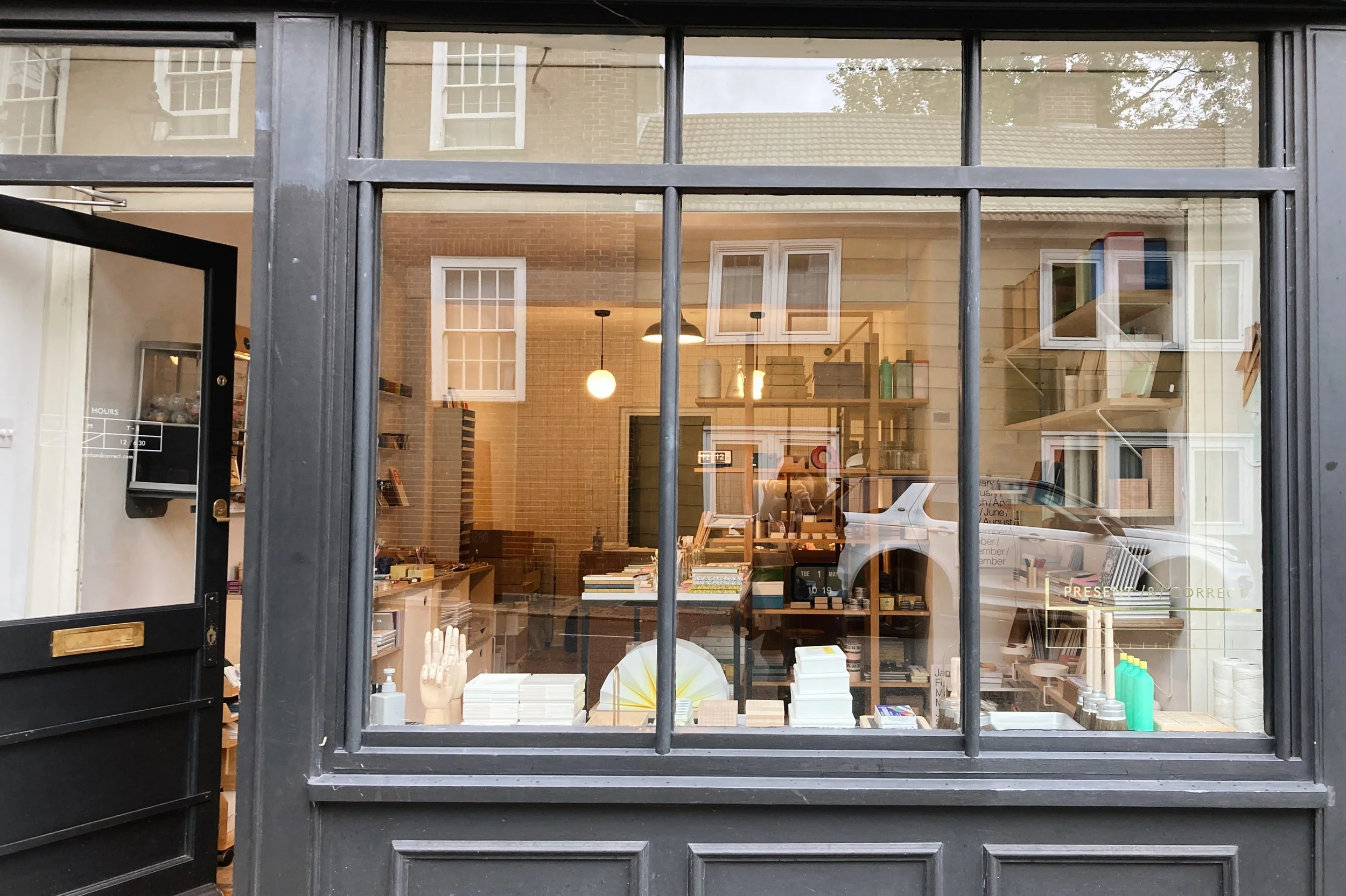
Present and Correct
A beloved stationary shop to quiet the mind and spark your creativity
Go here if: you still enjoy the tactile experience of writing, the thrill of organizing (also we see that looming project deadline that makes you want to tidy your desk), and hold the belief that self-care can come in the form of the perfect planner.
What is it: Present and Correct is a carefully curated stationary shop founded by Neal Whittington that’s currently tucked away in North London (though there’s a summer move to a larger space in Bloomsbury on the cards).
A popular destination for stationery enthusiasts and lovers of unique office supplies, this small shop offers a variety of paper goods and office conveniences from notebooks to desk accessories that combine contemporary design with a nostalgic touch. You’ll also find vintage items sourced from overseas markets. This is not your typical high-street office supply shop.
Why you’ll love it: Present and Correct is known for its emphasis on quality, craftsmanship, and attention to detail, but we also love the promises it holds. Of creativity: its notebooks and pens are the gateways to journaling, sketching, and writing that memoir in long form. Of calm: its clean and minimalist interior, and artfully arranged displays hint at some degree of control over our lives, a possible neatening of our edges. And maybe of a simpler moment: something of the analogue, of the openness of a new page, and even the joy of childhood and those new pencil cases on the first day of school.
How to bring this into your life: Although our true love is the physical store, the website offers the chance to browse and purchase from their collection of products (and they ship worldwide). We love the Finnish School chalk, Things to do Planners and Two Tone Ballpoints. And we’re huge fans – as are many – of Present and Correct’s Instagram.
In their own words: “It's a showcase for the things we have enjoyed since school….We want to spark a distant memory, make you smile or look at the most mundane in a new, and fonder, light.”


Present and Correct
At the time of writing 23 Arlington Way, London
From 20 June: see the new Bloomsbury address

Gather Round
Discover a family of creative workspaces in Bristol built by creatives for creatives. Now we’ve experienced life without each other, Gather Round restores real-life interactions that no amount of Zoom can replace.
With its first location in Southville’s Cigar Factory and now a second location in Brunswick Square, Gather Round was created to make space for community and collaboration as much as for our everyday working lives. We asked the people at Fiasco, the design studio behind it, to tell us more about what makes their creative workspace different, how they bring ideas to life and how they have created a positive culture centered on people.
What is it: Gather Round is a growing family of unique creative workspaces, designed to foster a positive community of like-minded creative people through an open and supportive culture.
Why do people need It? Gather Round was set up in 2018 by us, Ben Steers and Jason Smith, Bristol-based business owners of Fiasco Design. We had struggled to find a workspace for our design studio that wasn’t an office, didn’t tie us into a long-term contract and crucially, didn’t charge obscene rates. After chatting to other creative business owners, we soon realised that we weren’t alone. It was time to shake things up. And so Gather Round was born. Built by creatives, for creatives.
What do you offer? Across two locations in Bristol, our considered workspaces are designed around the needs of those who work within the creative industries. Made up of flexible areas with fixed and casual desks, private studios, meeting rooms, production studios for hire, hang-out areas, communal kitchen tables, quiet rooms for headspace and event spaces. At Gather Round you can do your thing, your way.
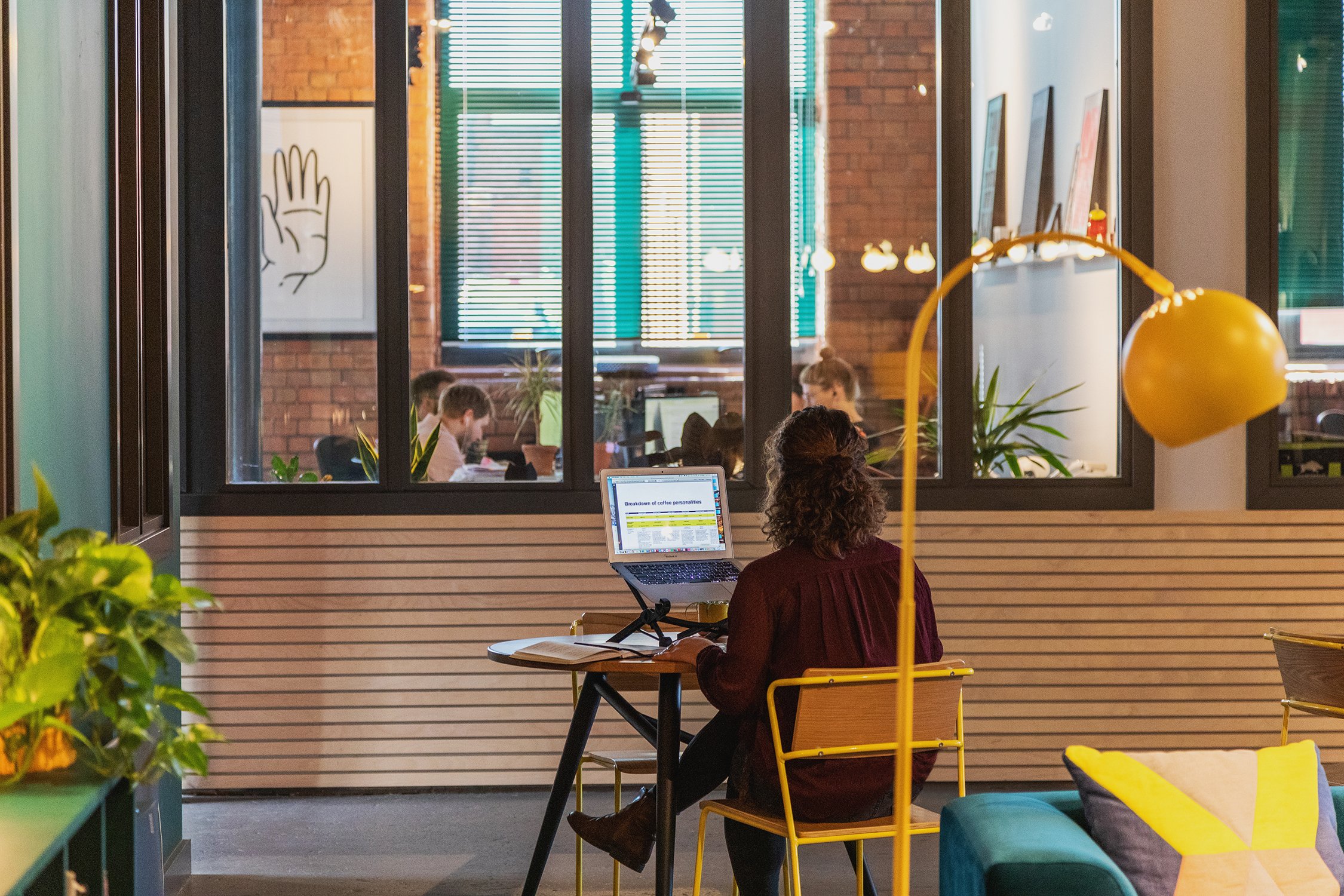
What makes Gather Round different? As creatives ourselves, we know what makes a great workspace. No indoor caravans, tardis-style meeting rooms or artificial grass in sight. Just thoughtfully designed spaces. We provide the right ingredients for creative professionals to flourish; we’ve had businesses born from Gather Round and creative collaboration between people is a natural part of everyday working. So whether you're musing over an idea, hashing out a project, or launching your plan for world-domination - we’ve got it covered.
Our beautiful coworking spaces are nothing without the community of creatives that call them home from home. Filmmakers, designers, writers, publishers, art consultants, brand strategists, photographers and more… Our members are an eclectic and talented bunch. They’re also excellent people that make our special workspaces unique.

What do our readers need to know? Gather Round is fully open and accepting new memberships at both Bristol locations. As an independent business, we are able to be reactive to the changing landscape. We have adapted to new ways of working, putting our members and their needs first. Now more than ever, people appreciate the value of human connection. Zoom, Slack and the like, are fantastic but they don’t compensate for real-life interactions. We’re proud that our spaces help to bring people together, whether that’s via a project collaboration or enjoying one of our events with a post-work beer.
Tell us a little about your story: The pandemic was a really trying time for the creative industries. As agency owners of Fiasco Design, we were in the thick of it. Multiple projects fell through for us and we witnessed first-hand businesses fold, redundancies happen and talented creatives struggle to support their families. Throughout this, our members were there for one another; supporting each other through the tough times. Our community really pulled together. Many of us were thrust into working from home, often in less than ideal circumstances. Working from home for months on end can be lonely and particularly in the creative industries, it can lead to fatigue and burnout. It’s not surprising that since the end of restrictions we’ve seen an increase in people looking for somewhere to work away from home.
How can people be inspired by your space wherever they are? We are passionate about supporting creative endeavours and we have a blog on our site that is dedicated solely to this. Whether it’s learning how to bake sourdough bread, or reading about essential tools for freelancers, you can find it all on the Journal section of our site. You can also follow us on social channels to keep up to date with what our fantastic members are up to.

Gather Round
Cigar Factory
127-131 Raleigh Rd,
Southville, Bristol BS3 1QU
&
15-16 Brunswick Square
St Pauls, Bristol, BS2 8NX.
Gather Round now has a space in Bath. Check out their new location at Trinity Church here.
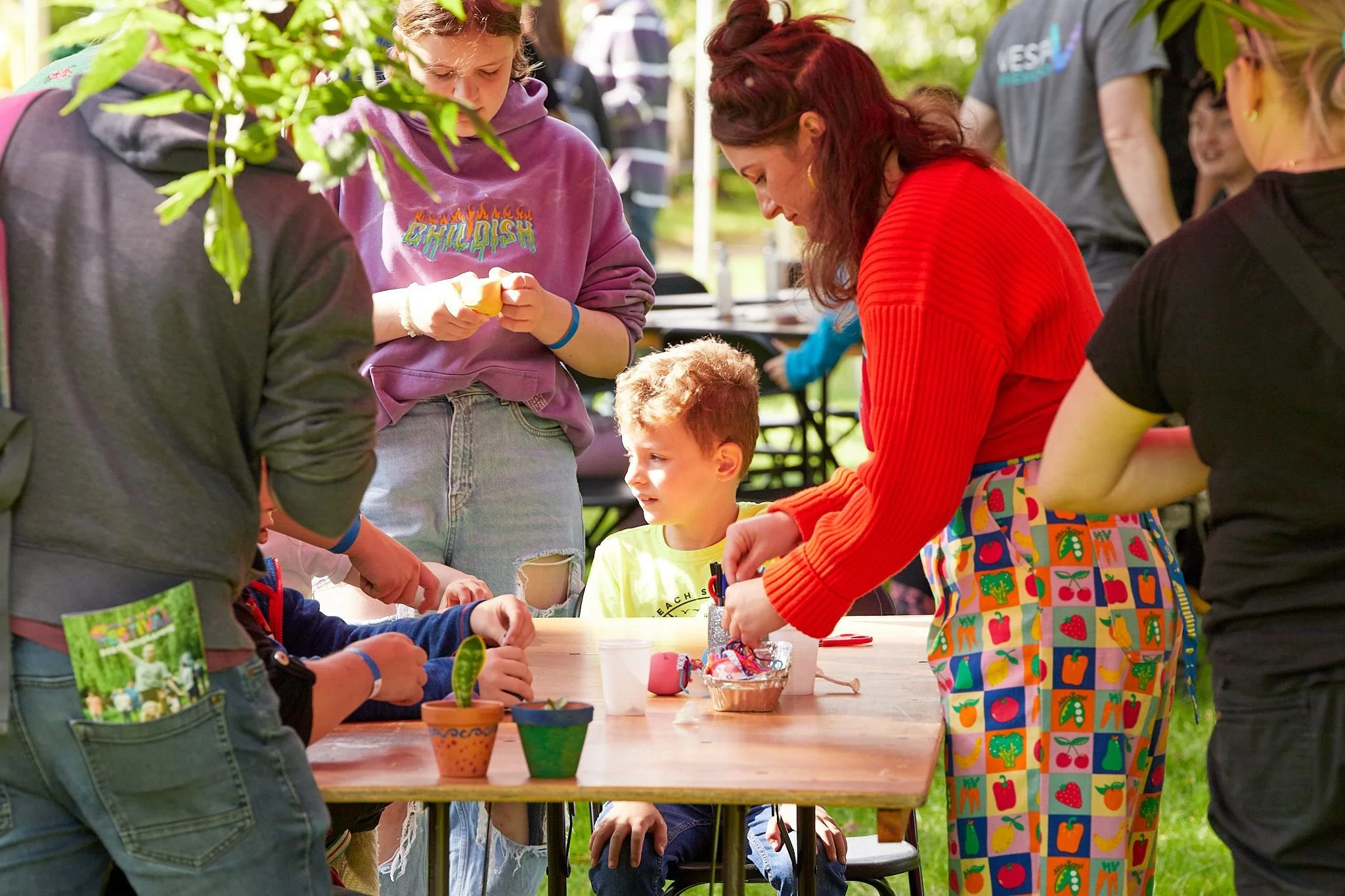
All in the Mind Festival
Discover an annual festival that uses creativity to explore mental well-being, and that’s finding ways to use performance to make happier brains.
“We use theatre to create happy brains.’”
After a couple of years that have seen our individual and collective mental health impacted and that has also forced us physically apart, the All in the Mind Festival comes at a crucial moment. Gathering people together to experience creative projects that explore our mental wellbeing, All in the Mind offers the conversations and connections we so badly need right now.
But though timely, it’s now into its 7th year. Founded in 2016 by the Fluid Motion Theatre Company, this festival has become an annual one-day event, bringing together actors, musicians, poets, comedians, and artists, for performances, workshops and interactive activities that harness the power of the arts toward better mental health for everyone. We found out more about the vision behind it and what makes it different.
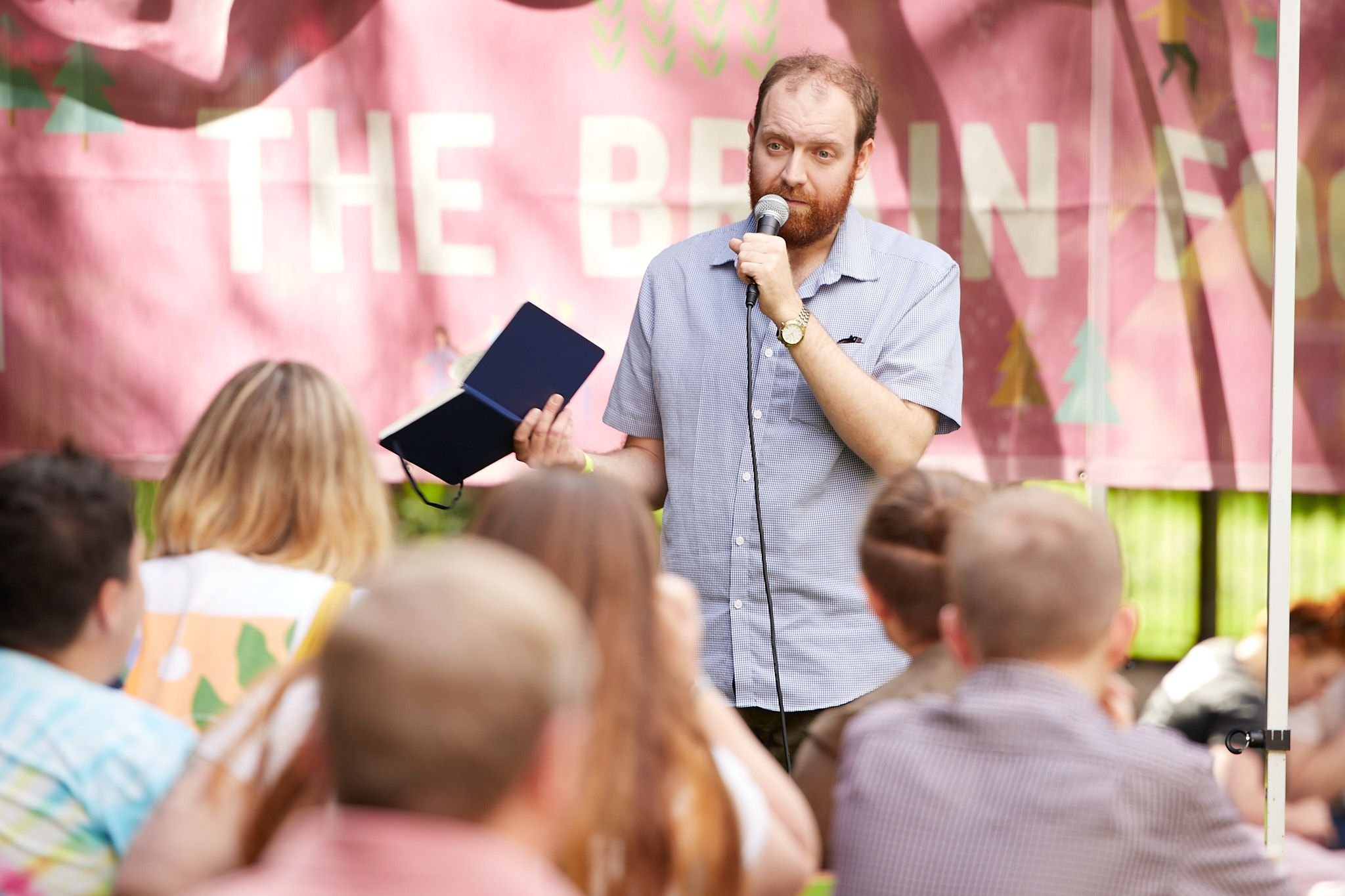
What is it? All in the Mind is the leading outdoor mental health arts festival in the UK, held in Glebe Gardens in Basingstoke’s town centre.
What do you offer? A day jam-packed with family-friendly shows and activities – from inspirational and quirky performances, to fun and interactive workshops, nature trails, a solar-powered carousel, delicious local food and drink and a community parade – there is something for everyone!
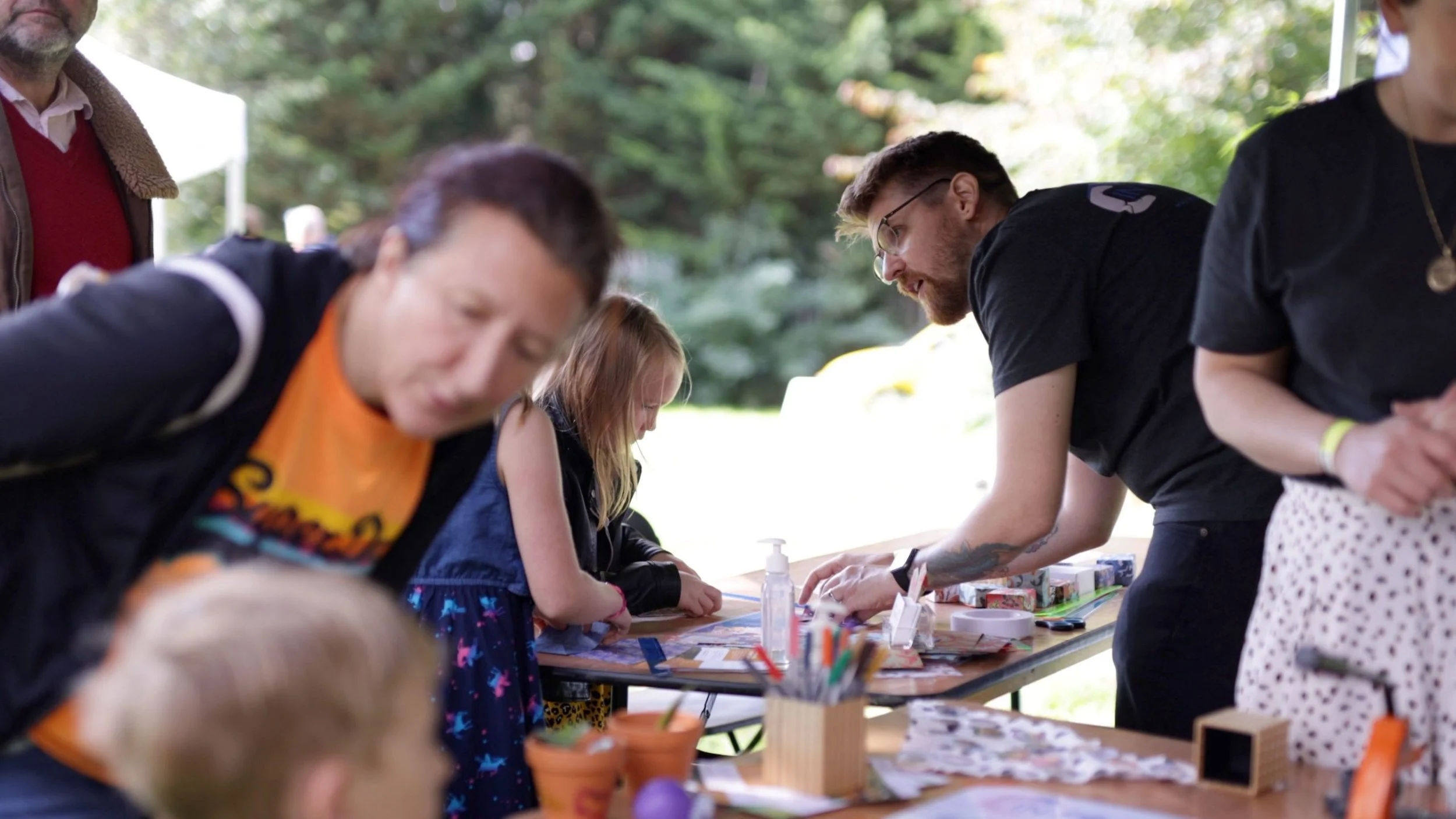
Tell us a little about your story: Our vision is to use the arts as a tool for helping open up the conversation around mental health, challenge the stigma and improve wellbeing
This year the festival will take place on Saturday 10 September 2022, is themed around nature, with tickets on sale here.

Pages of Hackney
A bright blue beacon on Lower Clapton Road, Pages of Hackney is one of our favourite bookstores for reading advice. Founder Eleonor Lowenthal talks to us about what makes Pages of Hackney so unique and why independent bookstores matter so much to our neighborhoods.
A bright blue beacon on Lower Clapton Road, Pages of Hackney is one of our favourite bookstores for reading advice. It’s welcoming not just in how customers are greeted and the bookstore arranged (no intimidating, fusty-ness here), but also in terms of which books get to sit on its shelves and whose stories get to be told. Founder Eleonor Lowenthal talks to us about what makes Pages of Hackney so unique and why independent bookstores matter so much to our neighborhoods.
What is it? Pages of Hackney is a small award-winning bookshop on the Lower Clapton Road selling an eclectic mix of books. Our priority is to be a friendly, community bookshop that is accessible and inclusive, supporting the issues we believe in and giving a platform to marginalised voices in publishing.
Why do people need it? Everyone should have the opportunity to have books in their lives. When I started the bookshop in 2008, there hadn't been one in the local area for 30 years and we had both children and adults coming in who weren't sure what a bookshop even was. We do our best to reflect the local community in our diverse stock choices and through our Pay it Forward scheme to also make it affordable for everyone.
What do you offer? We sell books in the areas of literary fiction, politics, feminism, essays and life writing as well as philosophy, psychology, nature writing, music and children’s books. Our priority is for each customer to feel that the bookshop is for them, and we do our best to give our customers individually as much time and thought as we can. We put on lots of events, both in-person and online, addressing issues including gender, sexuality, race and current events as well as platforming novels from established and debut authors.
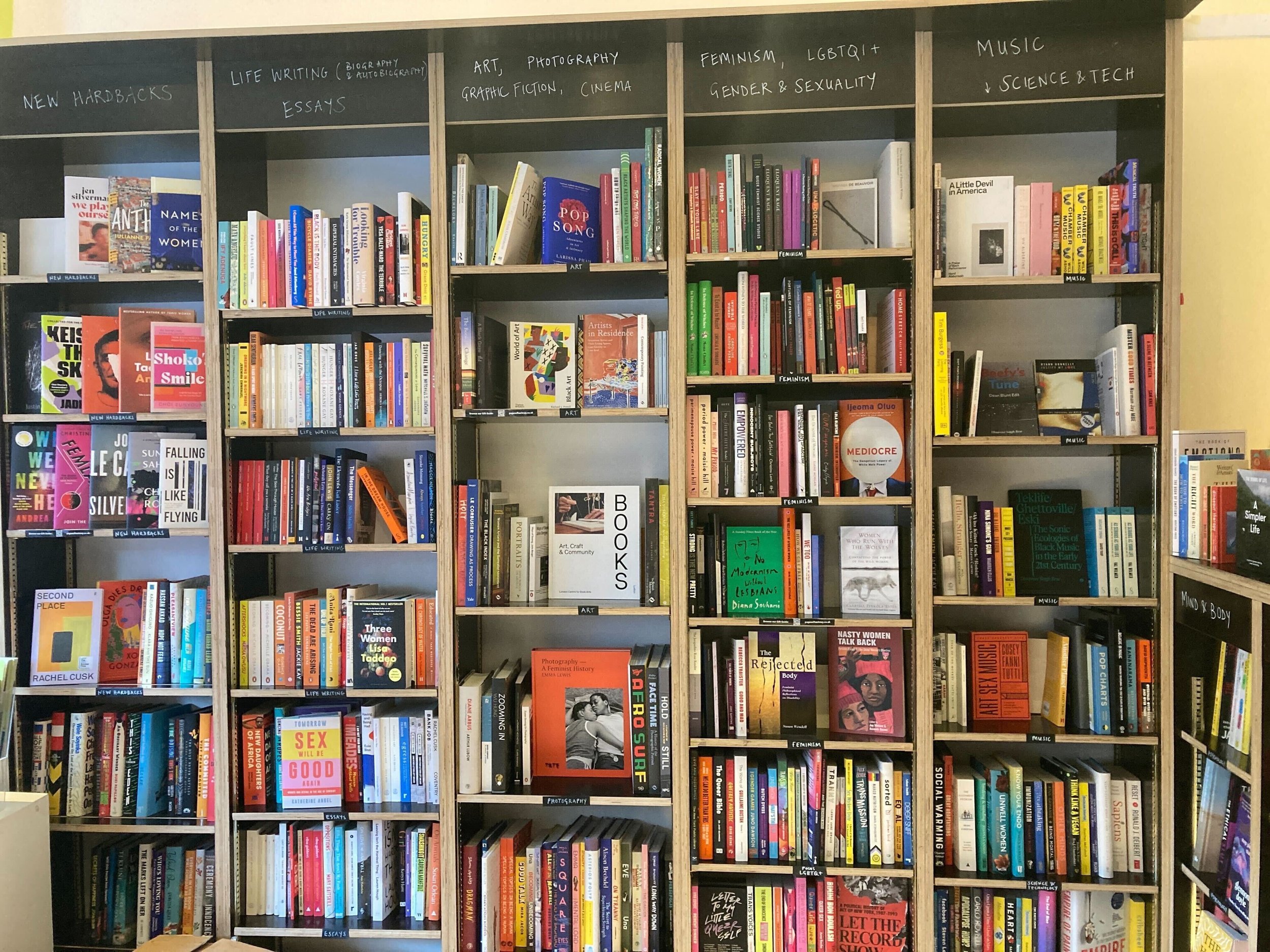
What makes it different? The space is designed to feel like a sanctuary from the busy life of the High Street. Once you step inside, you're free to browse in a quiet space, talk to us and ask for specific recommendations, or simply sit in our cosy basement. What makes us different is that we aren't simply invested in selling a book to every customer, but in making everyone feel welcome and as if the shop belongs to them and is a part of their community.
What do people need to know? We are open every day for in-person browsing, but you can also order all our books online, or request anything you don't see there. We can get most books we don't have in stock in 1-2 days and can also post books and gift wrap if required.
Tell us a little about your story: Books are an excellent way to unwind, escape into, and learn about how to cope with anything people might be struggling with. Our books reflect this and the bookshop itself is a safe space in which people can reconnect with themselves and consider what is important to them.
How can people be inspired by your space wherever they are? Simply browsing our shelves, online or in person, should be inspirational, connecting people to authors and ideas that they haven't heard of, or that they might want to explore more deeply. In addition to the usual categories, we have shelves dedicated to specific subjects that might be of interest (including the Black Britain series, both Japanese and Korean writing shelves, Afrofuturism) and authors we're currently inspired by (like Joan Didion and Toni Morrison).
Where inspires you? I get inspired by talking to new people every day in the shop and exchanging thoughts, ideas and feelings.


M.Y.O (Make Your Own)
A London studio designed for grown-ups to discover their own creativity, with all the wellbeing benefits of making.
Go here if: you’re wondering how to bring more creativity into your life, you are feeling lonely and looking for more connection, or you need to find a strategy for destressing, learned here, then taken home with your creation.
What is it: M.Y.O. (Make Your Own) is a space where grown-ups can play around with materials and making. The creative studio was launched in 2017 by Sam Lehane and Diana Muendo, both chartered accountants who were coming into their own creativity but could not find the environment that they needed to support their new interests.
Why you’ll love it: M.Y.O. gives you permission to be creative because Sam and Diana believe that everyone is. There’s no worrying about outcomes, or getting it wrong, or that you’re not really ‘Arty’ or an ‘Artist’. Just the space to explore and find the medium or practice that works for you.
What you need to know: Small classes take place in a two-level studio in Borough that has all the materials you could possibly imagine to get you making things and a space where it feels ok to get messy. There’s a huge variety of classes (refreshed every few months) on everything from watercolor painting to macrame plant hangers. Adults get a break from it all and a chance to explore arts and crafts skills without judgment or prior experience.
How to bring this into your life wherever you are: In parallel to the bricks-and-mortar space, M.Y.O. hosts a similarly wide array of virtual class options hosted with sister company Creative Jungle Co (which also offers Virtual Team Building with teams across the world).
Why we think it matters: The well-being benefits of creativity are becoming ever clearer (anyone who has picked up a watercolor brush or taken up baking in a lockdown can probably now attest to this). M.Y.O. is increasingly thinking about creativity in terms of how it helps us function in the world, helping reduce stress and loneliness. The classes offered by the studio give you an easy way into figuring out if creativity can have a place in your life and what shape that might take for you.
In their own words: “An art gym for your creative muscles.”
Something to do: You don’t need to be good at art to do it. You don’t have to make perfect pots to mold clay. All you need is the willingness to try, and an openness to seeing where it takes you. What would you try creatively if no one was watching and it’s really just for you? Start there.

The Goodlife Centre
If like many of us you’ve lost contact with basic DIY skills, London’s The Goodlife Centre gets those power tools back in your hands.
What is it: An independent DIY learning space in London’s Bankside.
Why you’ll love it: Classes are open to everyone (well over 10), so whether you are homeschooling, retraining for work, or exploring new skills for pleasure, there’s something to learn. With subjects as broad as Carpentry, Furniture Making, and Home Maintenance, that workshop could cover making a plant pot holder or simple bookbinding, learning modern upholstery or woodcarving, or delving into Log Cabin quilting or cold process soap making. You’ll come away with practical knowledge, more confidence in how to use those power tools, do things for yourself, and make whatever you need to happen in your home.
What you need to know: Inspired by her first “Tools for the Terrified” course in 2009, founder Alison Winfield-Chislett — formally a product designer at Asprey and Tiffany and author of The Girls Guide to DIY — developed the idea for The Goodlife Centre. From its first bright studio workspace in 2011 to its current permanent home in a renovated cardboard box making factory, The Goodlife Centre’s central location has given weary Londoners an escape into making.
What they offer online and off: During closed times, classes head online and are on-demand, with current offers including Basic Tiling, DIY drills, and Basic Practical Electrics. The Goodlife Centre can even send you a Practice Box, so you’re DIY endeavors are more played with than permanent.
Why we think it's special: If you’ve never learned how to ‘do things’, and you often turn to Youtube for how to rewire a plug or paint a wall, The Goodlife Centre’s experts offer the foundations and confidence to tackle repairs, restore unloved items, and make things from scratch. Becoming self-reliant is empowering, learning to take care of our homes and not outsourcing our own skills a way of reconnecting to our environments. Working with our hands again also gives us access to the analog world, getting us off our devices and into a learning experience that is all about the moment, the physical, the tangible. But these skills are impactful beyond the satisfaction of reupholstering a chair. Our throwaway culture is having serious consequences for our environment. By relearning basic object survival skills, we can reduce the amount that is wasted when something is deemed unbroken or unfixable.
In their own words: “The Goodlife Centre provides interesting practical ‘hands-on’ workshops where everyone can gain new skills and enjoy expanding their confidence and abilities. All classes are open to men and women and are intended to teach skills to beginners and are not intended as trade training courses. We do not test or evaluate – so you can relax while you learn.”
Something to do: Hesitate before you bin something you believe to be broken. Possibly it’s not and there’s a simple fix. Try to repair something (with safety cautions in mind) before you decide to replace it. Take Do Nation’s Pledge to Fix It.
To find out more: Website / Instagram / Facebook / Twitter
Photo: Vic Philips

Yorkshire Sculpture Park
As we’re forced to head outside this winter, we’re looking to an open-air art museum for awe and wonder in a natural setting.
What is it: A nine-foot-high Birkin bag. An oversized teapot in which to rest. A blank snowman in the middle of a glistening pond. Yorkshire Sculpture Park is an awe-inspiring museum without walls, with over 80 modern and contemporary sculptures set across 500-acres of the historic eighteenth-century Bretton Hall estate.
What you need to know: Since it was founded over 40 years ago by Peter Murray (also the current Executive Director), a young art lecturer inspired by European sculpture parks who had the radical idea to create an outdoor art exhibit, YSP has evolved from the UK’s first sculpture park to once of the largest in Europe and one of the most world-renowned. Through its ever-changing displays and temporary exhibitions in its enclosed galleries, YSP brings new audiences to the practice of sculpture — redefining what it is and how we view it — while enabling wider access to art and opening the field for all.
Why you’ll love it: Although there’s obviously a focus on the artworks themselves — including classics by local artists Barbara Hepworth and Henry Moore — it’s so much about how those works are situated in the surrounding environment, their dialogue with the forms of nature around them, that creates the awe-inducing and reflective situations that YSP has become known for. The outdoors replaces the architecture of the museum — trees instead of white walls, grass banks instead of wooden floors, light derived from sunlight instead of overheads — to create a living context of a very different kind.
With art embedded in nature, our perception shifts according to location, light, time of day, and the seasons. No longer static, each work’s place in the landscape is sensitively considered – part of the evolution of YSP has been the transformation of the landscape that holds it to be a more fitting backdrop for its sculptures and audiences. Recently opened award-winning visitor center The Weston designed by architecture practice Fielden Fowles and built on the site of a former quarry, takes inspiration from land artists Michael Heizer and Robert Morris. And in case you need a reminder that art and nature sit closely together here, you’ll find sheep wandering amongst its sculptures and herons found by its art trails.
Why we think it's different: After a year that has seen its capacity to bring in visitors drastically reduced (80% of revenue is from audiences on-site), YSP has also recognized a silver lining, its vital role in its audience’s wellbeing, creating much-needed opportunities to bring people outdoors and to connect with art and nature. YSP has become a location for refuge and reflection, a place that can give respite in an uncertain time. This builds on the work started in pre-COVID times such as YSP’s wellbeing program. Deputy Director, Heather Featherstone, recognizing the social and personal infrastructure that YSP provides, has commented that: “Museums and cultural organisations are the hidden social care that no one really talks about.” YSP encourages a way of being and a mode of engagement that goes beyond the typical museum audience experience, with impacts beyond a visit and into our everyday lives.
In their own words: “YSP’s driving purpose for 40 years has been to ignite, nurture and sustain interest in and debate around contemporary art and sculpture, especially with those for whom art participation is not habitual or familiar. It enables open access to art, situations and ideas, and continues to re-evaluate and expand the approach to considering art’s role and relevance in society. Supporting 45,000 people each year through YSP’s learning programme, this innovative work develops ability, confidence and life aspiration in participants.”
Something to do: Art for all? Participate in new public art initiative, The Great Big Art Exhibition, hosted by Firstsite, Colchester with the support of partners such as Tate and the National Gallery. Here rainbows in windows are replaced by artworks created on a fortnightly theme, linking us to our neighbors and displaying the creativity that many of us have newly found in lockdown and beyond.

Meticulous Ink
A tiny print studio and store that creates human-centered designs for all of us.
What is it: An independent studio and store for the printed and written word on Bath’s street of artisans Walcot Street (see other favorites Landrace Bakery and A Yarn Story).
Why you’ll love it: If you are in love with paper and pens and print, this is your place. Founded in 2010 by printmaker, illustrator, and designer Athena Cauley-Yu, Meticulous Ink is all about the precision, charm, and timelessness that go hand in hand with letterpress printing. Cauley-Yu and her team can take you through projects that matter to you (think stationery, business cards, and invitations), but you can also browse the selection of Meticulous Ink designed stationery and paper goods, and the thoughtful selection of products for modern lettering, journaling and correspondence in the tiny space out front.
What you need to know: Now into its tenth year, Meticulous Ink was recently shortlisted in the Top Five of small business campaigner Holly Tucker’s High Street Shop of the Year awards (check out the rest of the inaugural Independent Awards nominees here).
How to bring this into your life: The popular lettering and calligraphy workshops that run during normal times now take shape in Calligraphy and Handbrush Lettering Kits to practice at home (check out Cauley-Yu’s youtube videos to go along with these).
In our gift edit: This was hard to get down to just a handful of things (so basically you can’t go wrong) but we’ll go with The Stationery Pick n Mix, the cutest pencils that exist, and a custom notebook.
Why we think it's special: Those massive metal machines you see when entering the store, they work, and are the heart of all that goes on here: from the two original Heidelberg printing presses from the 1960s that started the business to the full family that now includes a Stephenson Blake proofing press, and two tabletop Model Printing presses. Each has stories of their own and are a key part of keeping the tradition of letterpress going. Cauley-Yu is enthralled by the medium and dedicated through her projects to giving it modern relevance and contemporary designs. It's all about attention to the tiniest details: making the most of paper – in all its weight, textures, colors — understanding how inks change over time, and how to make something beautiful with accuracy (from cropping to the printing itself). Printing here isn’t about mass production, but happy humans collaborating at all stages of the process.
In their own words: “We proudly create bespoke design, and stationery printed the old fashioned way - using beautiful papers, time, patience, and a deep-rooted passion for being meticulous. At the very back of the studio we usually teach our lettering and calligraphy workshops, though sadly these are on hold at the moment. The space is calm and friendly, full of creative inspiration and tactile, analogue trinkets.”
Something to do: Given our current situation, this is a store that inspires us both to retreat — to create paper-based things in which to better understand ourselves. – and to reach out — to send those things out into the world for others to enjoy. Whether that’s making a journal that best reflects who you are and spending the months indoors filling its pages, or learning calligraphy and sending a note to a loved one, try to find a way to play with materials – with paper, pens, and print – and see which direction it takes you (and to whom).
Shop Small Special: Labour and Wait
Timeless designs having a contemporary moment, London’s Labour and Wait will make you think differently about your dish brush.
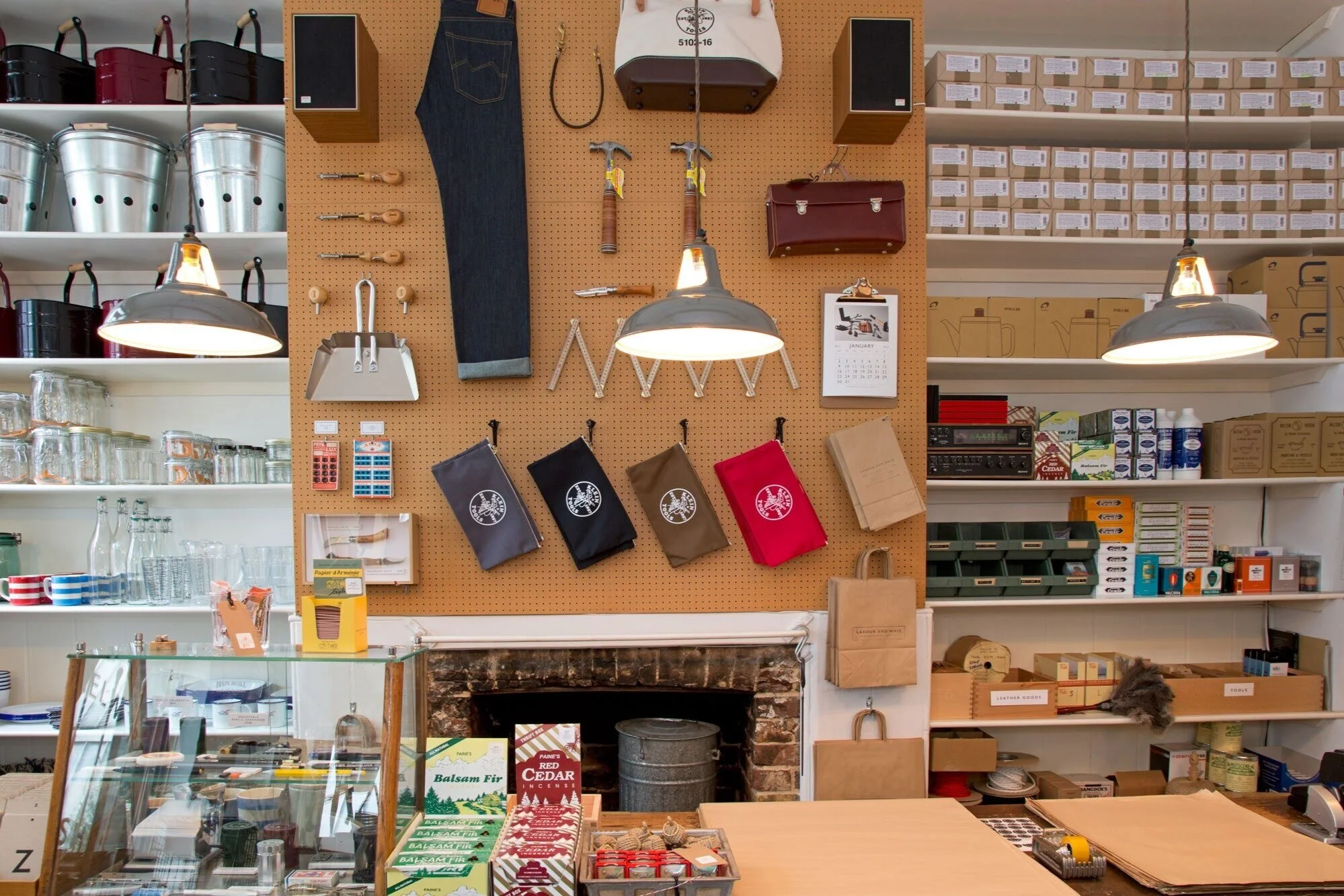
What is it: This store makes buckets look good. A corner shop that combines the hardware with the artisan in a former pub (see the distinctive green tile of Truman Brewery) in Shoreditch and offers functional products for everyday life. Also now has an outpost in Tokyo.
What you need to know: Founded in 2000 by two designers, Rachel Wythe-Moran and Simon Watkins, frustrated by the endless cycles of fashion, Labour and Wait is based on their philosophy that good design should last. Their independent store is full of products that have stood the test of time – both in terms of the legacy behind them (products include blankets produced by the last remaining woolen mill in Wales) and in terms of how long they last when we get them back home (whether that be a dish brush or bottle opener). Think functional classics like Cornishware Mugs and essential hardware needs like an indoor brush that support traditional manufacturing and resist our current throwaway culture. Though very covetable, ironically Labour and Wait takes away the pressure to consume more. Rather it’s founded on durable and functional objects having their place in everyday life.
Why we think it's special: Apart from resisting our tendency to buy plastic and buy cheap with little concern for the person behind the making – the average person in North America and Western Europe consumes 100 kilograms of plastic each year — Labour and Wait is very much an ‘in-person’ store, human interactions are key to this bricks and mortar. On Black Friday instead of leading with product discounts and special offers, Labour and Wait donated 10% of sales to Crisis at Christmas which helps homeless people in the UK.
In their own words: “We believe in a simple, honest approach to design, where quality and utility are intrinsic. From hardware to clothing we offer a selection of timeless products that celebrate functional design and which are appropriate in a traditional or contemporary environment.”
In our gift edit: Carbon neutral enamelware from Riess of Austria, a recycled coffee cup made from discarded coffee grounds, a Scottish woolen blanket made from surplus yarns (it's cold out there, sometimes emotionally), and Labour and Wait’s signature apron.
In need of more Holiday inspiration? We’re a little in love with their shops of yesterday within their own shop: like a Haberdashery, Chemist and Stationer.
Something to inspire: We get stuck on toothbrushes. Or toilet brushes. The small things around our house that we somehow forget to buy sustainably. We fall very quickly into the plastic hole with these. Try to identify something in your house that you have a kneejerk anti-environment position on (there’s something, believe us) and just focus on getting that one thing more human-friendly (whether that’s how and where it’s made, how its production affects the planet and who the person is behind the product). Small steps. Later you can commit to a plastic-free lifestyle (no, we’re not there yet either).

Shop Small Special | Lifestory
Meander slowly online or off this Holiday Season with Scandi inspired concept store Lifestory.
What is it: A slow Scandi-oriented lifestyle store in Edinburgh.
What you need to know: Lifestory was founded in 2014 by Susan Doherty (who also started the city’s Hula Juice Bars) as Edinburgh’s first concept store — bringing together coffee and design — after being inspired by similar stores on her travels in places like Melbourne and Copenhagen. An airy, warm space, Lifestory offers a thoughtful edit of the Scandinavian-based (like House Doctor, ferm LIVING and Hay) and the Scandinavian-inspired (like Woolf & Moon and Kinshipped) with some Japanese simplicity added in there. During "normal times”, there’s coffee and cake for browsing the latest issue of Cereal.
Why we’ve included it here: Each independent store makes a circle of support: within the local community in which it’s located (with Lifestory located amongst the indies of Broughton Street) and the wider community of makers that it gives a platform to (in this case candle makers, jewelry designers, potters, graphic designers, furniture crafters). We often overlook the human in how we shop, the people behind stores, behind products and, behind our neighborhoods, so its good to be reminded of this by Susan: “Ultimately, the unique quality of Lifestory, as with all shops of this kind, lies with the owner’s relationship with the products, with the space itself and with their customers". A living wage employer, Lifestory also supports the people who work there.
In their own words: “Independently-owned and constantly evolving, Lifestory is a destination for lovers of Scandinavian design and lifestyle, considered products that share the traits of beauty and function.”
Our Christmas gift edit: We’re coveting many of the wall-based pieces such as Soo Burnell’s prints and the We Haven’t Located Us Yet print.
Something to do: Browse your neighborhood, even if virtually. Many independents have had to scramble to put their wares online in the last few months, extending their business ethos of bricks and mortar into digital platforms. That’s a huge transition and a very different way of working for many people who started shopfronts for the community aspect. This season if you’re not allowed, or able, to go out, take a virtual shopping journey through a local town, and shop like you would if you were able to meander with carols in the background and snow falling (yes, we’re romanticizing as we huddle inside). For inspiration, read this piece about how our neighborhood stores are coming together online.
To find out more: Website / Instagram / Twitter

Men's Shed Movement
As men have traditionally struggled to find outlets to talk about their feelings and challenges, the men’s shed movement is starting to fulfill this need for connection.
What is it: A network of DIY-enthusiast communities that bring men (and now women) together to fix things, collaborate on projects, and share stories.
What you need to know: The men’s shed movement began life in Australia in the 1990s as a way to give older men a social hub. Working shoulder to shoulder (rather than face to face) offered participants a chance to share skills, learn techniques, and make friends. The men’s shed movement has since spread across the world; there are now 2000 sheds across 12 countries, including Finland, Ireland, the USA, and the UK, where there are more than 600 nationwide.
What they offer (online and off): Depending on the particular shed, there could be tools for woodworking, electricals, and metalwork, while members frequently pass on their own skills — coding, welding, machine tools, or car repair. Although most sheds are run by and for older men, there’s no barrier to entry; many sheds feature both female members and younger men. If there’s no shed in your area, British shedder Chris Lee has a TEDx talk on YouTube that’s a useful introduction to what sheds mean to him and how they’ve helped him. And if you’re inspired, get some tips from the guys who’ve “made one earlier” and start your own shed!
Why we think it matters: While individual sheds offer a creative, communal, and inclusive environment, the growth in the men’s shed movement illustrates the deep need for male companionship.
After major life changes such as retirement or the death of a partner, some men can become isolated. Often the loss of status or purpose can impact men’s mental health, as they keep their anxieties to themselves without finding outlets to talk about their feelings or their challenges. “As men we seem to be conditioned into letting go of things but not replacing them,” says Chris Lee, a former marketing professional who’s now a trustee of the men’s shed movement in the UK. Sheds — gathering points that feature activities from coffee to carpentry — provide a sense of community and purpose.
Whether sheds are literally wooden huts or shared community spaces, they are places where men can feel useful, comfortable, and purposeful.
In their own words: “When I heard about the Men’s Sheds movement, I immediately thought it was a brilliant way of bringing people together around something creative and fun. Men aren’t always the best at making new friends or talking to one another, but get them around a piece of wood or a DIY task and it’s amazing how they open up.” — Mike Magnay, retired electrical engineer and co-founder of a shed in Blewbury, Oxfordshire
One piece of advice for where you are: Start online and see if there’s a men’s shed in your area. Check out the website and learn more about weekly events or special sessions. Email the team. Show up. You don’t have to own a toolbelt — some guys just come along for the company and the conversation. Drink coffee, ask questions, learn wood-turning, repair an appliance, smell the smoke of a soldering iron, make a connection . . . whatever you’re looking for, the shed is what you make it.
To find out more: Website / Instagram / Facebook / Twitter
If you’ve visited a men’s shed, or you have other organizations with a purpose that you’d recommend, tell us about it at hello@ifloststarthere.com.

The Color Factory
Is sitting in a ball pit allowed anymore? Why The Color Factory is making the argument that it is.
What is it: Founded by Jordan Ferney of Oh Happy Day with fellow creatives and artists as a temporary participatory exhibition in San Francisco, The Color Factory now takes the form of two locations in NYC and Houston that capture each cities unique color stories.
Why you’ll love it: Yes, experiential museums have gotten some flack for their Insta-heavy ways, but we like how The Color Factory works with local artists, illustrators, designers, and makers to envisage its color-loving environments: like our favorite Christine Wong Yap, whose Complementary Compliments room invites visitors to sit across from one another, Emmanuelle Moureaux’s colorful paper ribbon ceilings and Carnovsky’s perspective-shifting NYC corridor. Also, note the jet black ice cream available to try.
What you need to know: Is sitting in a ball pit allowed anymore? Is it ok for rainbow confetti to sprinkle down on you? Can you really draw with giant markers on the wall or boogie on a giant light-up dance floor? Apparently yes you can. After months of being closed (and maybe even again), The Color Factory has brought in some serious cleaning techniques – just note how they clean those plastic balls. One reminder: wear a mask for those selfies.
How to bring this into your life wherever you are: You can extend your visit to The Colour Factory by following a neighborhood map to seek out more colors, and we’d suggest creating something similar where you are. Which colors can you see in your immediate environment? How often do they occur? Can you create the color palette of your home, your street, whatever your world geographically consists of? Photograph the different shades, sketch them, paint them out, even arrange them in a print. We’re inspired by the work of Leah Rosenberg, one of the founding Color Factory artists and eternal explorer of color.
Why we think it still matters: Anyone else longing for joy? For play, for escapism, for (can we whisper it here) fun? At a moment when many of us are fatigued or despondent or a little bit lost, that spirit of play that before felt frivolous in its Insta-centric approach now feels like a much-needed respite from the world. And maybe it's needed now in a not just a running-away-from-it-all-through-mirrored-ceiling-rooms way, but in a physiological sense: when we find the joy in our lives, we benefit from a release of happy hormones dopamine and serotonin. Though the impact of specific colors is changeable depending on culture (white = calm here, = mourning over there, for instance) and their specific mental health effects unproven, finding small gestures of joy in our days can contribute to an overall sense of happiness.
It may have felt like the color has drained out of our lives recently and we’re all existing in that sluggish brown that is created when kids mix all the colors together, but somewhere like The Colour Factory can remind us of the rainbow they were hoping to create when they did that.
In their own words: ‘Color Factory embraces child-like imagination, while expanding boundaries of perception and understanding.’

Another Place
In a moment when time is stretching out, Anthony Gormley’s “Iron Men” captures the wonder of shifting lives.
What is it: An extraordinary public artwork by British sculpture Sir Antony Gormley permanently installed on Crosby Beach in the North of England. One hundred cast-iron figures stand facing the horizon across a 2-mile radius of the beach. These naked figures were cast from the artist’s own body, though are rendered in different states of serenity. Since 2005, over 650,000 people have born witness to these “Iron Men”, while Turner Contemporary in Margate now has its own companion work Another Time XXI.
Why you’ll love it: In a moment when we’re being forced to live in the details of our lives, to notice changing colors on daily walks or even the differentiations in the wallpaper of our homes, Another Place is similarly about the passage of time. The subtle and major shifts that happen with these figures within a very demarcated area, feels like those that happen within our own individual – and now collective – experiences.
Sometimes the tide obscures the figures, sometimes it reveals them. Sometimes the shifting sands submerge them, before allowing them to emerge again. Barnacles grow along their limbs, rust disrupts the surfaces. The tides, the weather, the industrial backdrop, alter what this sculpture can be at different times of the day, in different seasons, in different years. Though it looks static, these weighty presences (weighing just under a ton each), when subject to nature are not permanently the same.
What you need to know: Oddly peripatetic themselves, the sculptures were previously exhibited on coastlines in Germany, Norway, and Belgium — and never found their way to their next destination, New York. In their own movements, and now final place, Gormley brings up the complex emotions associated with emigration, the anxiety around movement, the hope that such movement might bring, and the resoluteness when we find our place.
Why we think it matters: This is art not confined to the white-walled gallery. At the mercy of nature, open to anyone, Gormley recognizes the possibility of his work to capture the imagination of everyone from art pilgrims to dog walkers, beach lovers to sandcastle-building kids. Awe and wonder are held in these forms, the spaces between them and the spaces between those on the beach with them. Of Another Place Gormley has said:
“I want to see whether it’s possible for art to be everyone’s, in the same way that the sky is and it still seems to me, that that is the most exciting challenge in art. Can you make the conditions that surround us all the time, into an arena for a kind of awareness that wouldn’t exist before, and I guess Another Place is a good example of this, where we have a beach, we have tide, we have changing conditions of weather and night and day and into that you insert these works, but adequately spaced, to allow for people to walk between them and in fact it’s the space between that is critical always in the work.”
Or in their own words — well writer Jeanette Winterson’s: “Standing modestly at their posts, the Gormley bodies are guides. They have something of ancient Earth about them — these metal men, as though they have erupted out of the iron core of the world, uncertain of human form, not smoothed by millennia of natural selection, but only now cooled from molten. They could be an older life-form pushed up, tectonically, by a shift in the Earth’s plates, or returned from a past too old to imagine, through some yawn in time.”
How to bring this into your life: Take a masterclass with the artist: choose between Zabludowicz Collection talk, BBC’s quarantine drawing class or National Saturday Club’s body sculpting exercise.
To find out more: Website