

The Barbara Hepworth Museum & Sculpture Garden
Step into the world of sculptor Barbara Hepworth at her preserved home and studio in St Ives. The Barbara Hepworth Museum & Sculpture Garden offers a rare glimpse into the artist’s life, with her untouched workshop, iconic sculptures, and a breathtaking garden space.
Perfect For
Anyone who wants to be immersed in the story of art, seek out The Barbara Hepworth Museum & Sculpture Garden in St Ives. If you’ve ever wondered what it’s like to create something truly lasting, this is your place.
Why You’ll Love It
Tucked away in the heart of St Ives, this isn’t just a museum—it’s an escape into the mind of one of the UK’s most celebrated sculptors. Barbara Hepworth lived and worked here for the last 26 years of her life, and stepping into her home and garden feels like stepping into her world. From the intimate, light-filled studio to the lush outdoor sculpture garden, every part of this space invites you to slow down, breathe deeply, and see the world as she did—through form, texture, and movement.
What Makes It Special
A sculptor’s world, frozen in time – Hepworth’s workshop remains untouched, complete with tools, unfinished pieces, and even her white work coat, as if she just stepped out for a moment.
The sculpture garden – A hidden oasis where her iconic stone and bronze works sit between tropical plants, perfectly framed by Cornish light.
Awe in the everyday – Hepworth’s work invites you to pay attention, whether that’s noticing the shadows, reframing space, and seeing shape in a whole new way.
The Story Behind It
After Hepworth’s sudden passing in 1975, her wish was clear—she wanted her home and studio to remain as she left it, a place where people could experience her work in the environment that shaped it. Honouring this, the Barbara Hepworth Museum was established later that year by her family, with Tate taking over its care in 1980. Today, it stands as one of the most personal and intimate artist museums in the world, a place where her legacy is preserved not just in her sculptures, but in the very air of the studio she worked in.
Something Else We Love
It’s not just about the art—it’s about stepping into Hepworth’s way of seeing the world. One of the most moving parts of the experience? Seeing her unfinished works, left exactly as they were when she passed, mid-creation. It’s a rare, raw glimpse into the mind of an artist, proof that the creative process is never truly finished.
The If Lost Take
We love the Barbara Hepworth Museum because it’s not just about seeing art—it’s about experiencing the world through an artist’s eyes. Hepworth believed in sculpture as something to be lived with, and this place brings that philosophy to life. Whether you’re an art lover or just someone seeking a moment of quiet awe, this is a space that lingers with you long after you leave.
Some Practical Details
St Ives, Cornwall, UK
P.S.
If you do visit, also check out our favourite local places:
For coffee: The Yellow Canary and Yallah Coffee.
For morning pastries, artisan loaves and of course Cornish pasties: St Ives Bakery
For browsing: independent book shop St Ives Bookseller.
And of course, another awe-inspiring cultural destination: Tate St Ives.
Where to stop on the way to Devon & Cornwall
Here's our curated list of the best places to stop en route to Devon or Cornwall.
Every year around this time we google the same thing: “Where to stop on the way to Devon / Cornwall.”
What we’re looking for is somewhere independent and interesting, that isn’t too far from the main road (and doesn’t take us down more tiny roads). We need somewhere the kids can run and we can refuel. And we’re hoping for a feel-good stop that makes the journey that much easier (and memorable in a positive way).
Like a National Trust that feels magical and like we’re in a movie. Or an incredible bakery that makes the best sourdough (we would probably drive anywhere for a bakery). Or a cute countryside pub with a beer garden and great food.
Here’s our round-up of the best places that we’ve found to stop on the way to Devon or Cornwall. Hopefully, these will help you feel like your holiday has already started or hasn’t yet ended.
Wiltshire
Stourhead

Stourhead

The Boot Inn
The Boot Inn
This is a great antidote to the Stonehenge traffic. Dating back to the 17th century, this charming pub has a gorgeous beer garden to stretch legs and classic country pub fare made from locally sourced ingredients if car snacks aren’t cutting it.
Stourhead (National Trust)
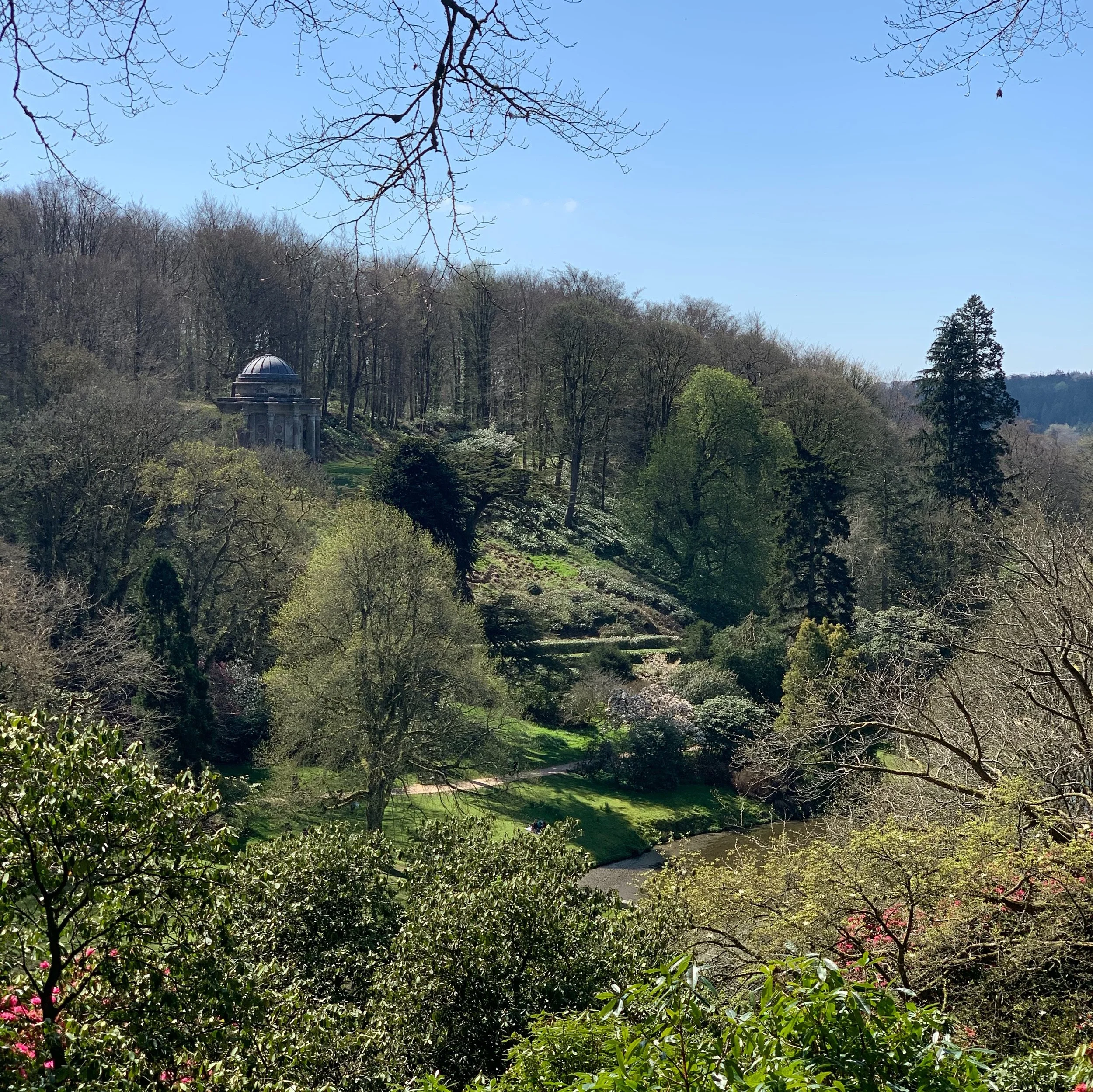
One of the UK’s most enchanting places Stourhead is just off the A303. Though it’s not a quick stop, the stunning 18th-century landscape garden complete with classical temples, tranquil lakes, and vibrant floral displays, is a welcome respite from a long car journey. You’ll need to be a member or buy a day pass to wander the grounds and take in the estate's historic Palladian mansion, but you can also take a route beyond the perimeter that goes through picturesque woodlands. Another find Alfred’s Tower is worth a look too but its more of an effort to get to (think more narrow lanes). You can eat in the cafe, The Spread Eagle pub in the village or picnic on the lawn with gorgeous views.
Somerset

Teals

Montacute House

Jordan’s Courtyard
Fleet Air Museum
We often get stuck in traffic on the A303 right around here, so if you’re looking to replace your frustration with some wonder divert to the Fleet Air Museum. Aviation history comes to life with an impressive collection of over 100 aircraft. Our kids particularly love the interactive exhibits and flight simulators that offer a hands-on experience (though these would appeal to all ages). There are more than enough stories of naval aviation to keep you interested (including the largest collection of Royal Navy aircraft in Europe.) Not a quick stop, but a fascinating one, that will either start or keep going those holiday vibes.
Teals
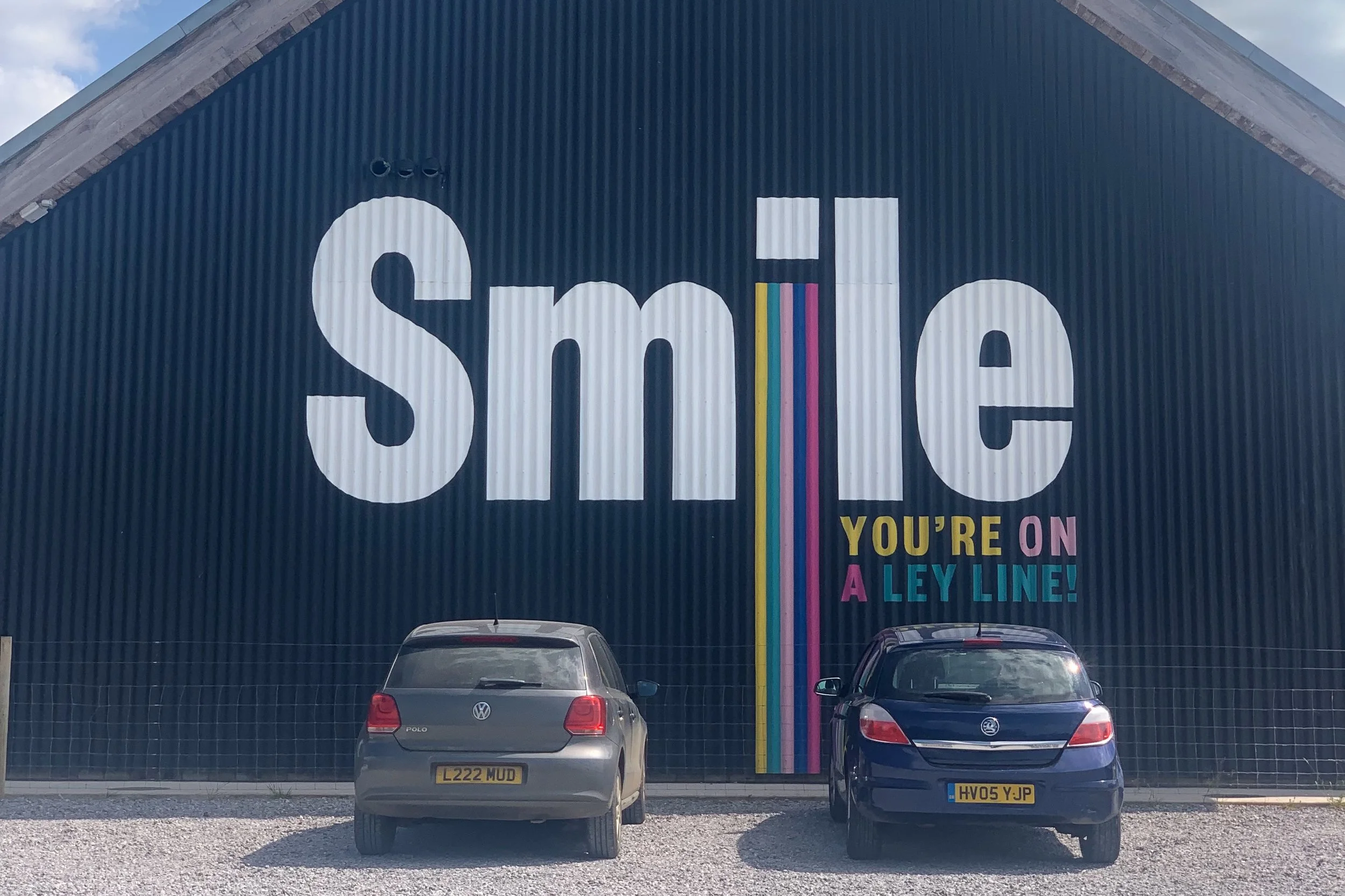
An easy stop directly off the A303, Teal’s has become one of our go-to places for taking a quick break. Offering farm-fresh groceries, locally sourced treats, and artisan goods you can shop for your picnic or that first night meal. Or stay a while in the cafe (which has a lovely outdoor seating area). You can also stretch your legs by wandering some of the countryside pathways (Teals is based on one of Somerset’s famed ley lines).
Lytes Cary Manor
Another charming National Trust property, step back in time at Lytes Cary Manor. Explore the medieval manor house, stroll through beautiful Arts and Crafts inspired gardens, and treat yourself to the tearoom. For the kids, there’s a Natural Play Area. If you need a longer stay, you can also book an overnight here.
Montacute House
Situated in a gorgeous village (the kind you expect the family of the lead from a rom-com to live) Montacute House is a gorgeous Elizabethan mansion. Wander through the grand house, admire the impressive collection of portraits, and relax in the stunning gardens. Owned by the National Trust, Montacute offers a blend of history, art, and natural beauty.
The Kitchen at Jordans Courtyard
Offering a menu of fresh, locally sourced dishes in a relaxing setting, The Kitchen at Jordan’s Courtyard is a great food stop. Sit inside the light-filled cafe or on the terrace. Perfect for travelers and food enthusiasts alike. While here also check out The Pastry Bench bakery and wellness and yoga options (maybe one will coincide with your journey).
The Flintock Inn
Nestled on the Somerset/ Devon border and just off the A303, the Flintlock Inn is a charming countryside pub offering hearty meals and a warm, welcoming atmosphere. Enjoy locally sourced dishes, real ales, and the kid-friendly pub garden.
Devon

Buckfast Butterfly Farm

Dartington Estate

Hog and Hedge
Darts Farm
Darts Farm has over the past 50 years evolved from a farm shop to an award-winning lifestyle and dining destination. Shop the food hall full of fresh, local produce and artisan food (we particularly like the ice cream and baked goods). The Farm Table has been named one of “Britain’s 100 Best Local Restaurants’ in 2024. There’s even Vineyard Tours and a Maize Maze. Set within the beautiful Devon countryside, there are also some easy walks. Just check the traffic before turning off your main route as it can get busy around here.
Castle Drogo
While not the quickest detour, the majestic Castle Drogo (run by the National Trust), perched above the Teign Gorge, will make your journey memorable. The last castle to be built in England — in the twentieth century by renowned architect Sir Edwin Lutyens — is captivating. The walks up to it and the views around it are well worth a visit. If you need a longer stop, you can also take scenic walks in the surrounding area.
Hog & Hedge
Not your usual service station, Hog and Hedge (an easy find just off the A30) offers fresh, locally sourced food and specialty hand-roasted coffee. A place with a mission, Hog and Hedge promote low food miles, supports small suppliers and uses packaging made from plants and not plastic. Enjoy a homely atmosphere while helping people and the planet.
Dartmoor Otter Sanctuary and Buckfast Butterfly Farm
We don’t know quite why otters and butterflies go so well together but they do. Wandering through the butterfly house can feel magical as they fly around you; while there is something so fun about watching the otters outside get playful. Try to time your stop for one of the otter feedings.
Dartington Estate
We’re never quite sure what we’ll find at Dartington Estate. On our last visit, we stumbled on a summer literary festival. Dartington offers a perfect blend of culture, nature and relaxation. Check out the packed calendar of events, eat at The Green Cafe, or shop at The Cider Press Center. There’s even a Barn Cinema. Our kids also love to run around here and spend time on the nature-inspired playground. There are also many options to stay over — from glamping to cabins — if you need a longer break.
Almond Thief, Dartington
One of our favourite bakeries is located in an unassuming setting, tucked away on an industrial estate. Savour artisanal bread, pastries, and fresh coffee in a welcoming, if stripped back, setting. A great spot to refuel and indulge in some of the tastiest baked goods around.
Cornwall

Coombeshead Farm

Tre Pol & Pen

Da Bara Bakery
Coombeshead Farm
This takes a little more to seek out: there are some twisty lanes and you’ll need to double-check opening times, but Coombeshead Farm feels like an idyllic retreat before continuing your journey. A charming guesthouse, bakery, and working farm nestled in Cornwall's serene countryside, you’ll find farmhouse comforts, freshly baked goods, and the beauty of 66 acres of meadows and woodlands. You can also stay overnight on the farm with dinner, bed and breakfast provided.
Tre Pol & Pen
An award-winning farm shop and restaurant in the Tamar Valley, we loved the striking design, charming countryside setting, and indoors/ outdoors feel of Tre Pol & Pen. The cafe and farm shop offer fresh Cornish produce, delicious meals, and unique gifts, plus there’s room and a playground for the kids to run around. It’s a slightly longer detour but down pretty straightforward roads.
Da Bara Bakery
Where to stop can be all about timing. How soon or late in the journey do you make a detour? Sometimes we arrive here just as we’re leaving Cornwall and though it can feel early in our road trip we’re drawn by the cinnamon rolls and wholewheat molasses. Offering freshly baked goods that showcase local flavors and expert craftsmanship to eat in or takeaway, this is an easy comfort stop just off the main route.
Places open and close, they change hands or menus. We once drove 30 minutes out of the way to find a highly recommended coffee grindery and cafe closed (though the next-door winery wasn’t so that was a bonus).
If you’re planning to stop at one of these places check directly with them on their socials or website for the latest details.
Let us know where you would add. Reach out to us here or on socials. Or if you run a place you’d like us to feature in our guidebook, get in touch too. We’d love to hear from you.
Browse our online guidebook for more people-positive places.

The Lost Gardens of Heligan
Seek wonder at The Lost Gardens of Heligan and discover a land once forgotten.
“Putting Heligan in aspic for posterity wasn’t what we wanted. Instead, we’d tell the story of those who worked here and re-discover their horticultural knowledge and skills.”
Go here if: you’re looking to find magic in nature, lose yourself in awe, or take a moment to pause.
What is it: Sometimes when you expect a tourist destination, what you find is a place of true wonder. From the founder of The Eden Project (and now Gillyflower Golf Course) Sir Tim Smit, The Lost Gardens of Heligan comprises 200 acres for nature lovers to explore, with breathtaking twists and turns through a lost landscape and a lost history.
Why you’ll love it: Like a story from a fairytale, a door found in the ruins of the Heligan estate led to the discovery of a garden lain long dormant. When World War I reaped its devastation, it took many of the gardeners who had once worked the estate and eventually all that they had created here: the Victorian glasshouses broke, the ferns and camellias grew over, the plant specimens brought from around the world, became hidden by time. Now Heligan has become the site of the largest garden restoration project in Europe; since the 1990s a team has worked to restore what once was, adopting the same principles of regenerative architecture, reviving the plants and species forgotten and revealing the original gardens.

Take the trail past the living sculptures embedded in the landscape (including the much-photographed Giant’s Head and reclining Mud Lady) through the jungle hidden in a valley (you can cross it by a rope bridge and it all feels like a dinosaur might emerge at any moment) up to the pineapple pit and the working gardens. But most of all just wander – the landscape shifts as you do, and the discoveries reveal themselves, sometimes slowly.
Heligan is still actively farmed with over 300 species of mostly heritage fruits, vegetables, salad, and herb plants, that are then used in the Heligan Kitchen, and heritage breeds (it was lambing season when we visited).
What you need to know: We sought out The Thunderbox, which was not what we thought it would be – once the gardener’s lavatory — but it contains the secret of past lives. The gardeners wrote their signatures on the wall beneath the statement “Don’t come here to sleep or slumber.”: the date August, 1914. In 2013, the Imperial War Museum recognized The Thunderbox as a “Living Memorial” to the gardeners of Heligan, a testament to the people who worked on the estate before World War 1 took them.

How to bring this into your life: Beyond visiting, you can attend a Lost Supper.
In their own words: “We were fired by a magnificent obsession to bring these once glorious gardens back to life in every sense and to tell, for the first time, not tales of lords and ladies but of those “ordinary” people who had made these gardens great, before departing for the Great War.”


Shop Small Special | Alice in Scandiland
We’re starting our Shop Small Holiday Special with Alice’s adventures in Scandiland.
When indie doors close at the most important time of the year (many shops make the bulk of their earnings in the run-up to the Holidays), our makers, shop owners, small-batch producers, and our communities struggle. In the weeks before Christmas, we’re focusing on independent stores that are anchor points in their neighborhoods, who support small themselves, and who make our worlds just that little bit better by existing.
In a moment when we can easily slip into the mass-produced at the expense of the environment, our makers, and ourselves — what do 80p black dresses really do for us and all those amazon deliveries we’re now relying on — we feel that shops that curate the handmade, that add to our high streets, and that give us places to go matter more than ever. If you can (we understand the competing pressures financially that many of us have this year), give independent stores in your community the gift of your support.
What is it: Scandinavian design comes to Cornwall courtesy of award-winning style blogger Alice Collyer.
Why you’ll love it: As with many independent stores, Alice in Scandiland started as a labor of love two years ago, when Alice decided to transform the inspiration for her blog and the vintage finds that she sold in her backyard She-Shed, into a bricks and mortar shop. Literally built out by Alice and her dad, Alice in Scandiland is very much an extension of her own home and life philosophy.
Why we think it matters: Hygge. Lagom. Fitka. Scandanavian concepts in living that have caught our attention, and which have themselves spun mini industries. But take away the quickly produced books and listicles that cash in on cool new words, pare all the trend styling back and they represent enduring healthy approaches to life. Alice got there before most of us, embracing the cult around all things Scandinavian (yes, we know they are better at everything than us now) when she started to makeover her own home by taking the things away she didn’t need and immediately felt the benefits of living with less.
Favoring a natural color palette and materials, integrating form with function, and bringing in light and nature where possible, Scandinavian design is all about creating a sense of stillness that is soothing in its calm. Its warm minimalism helps our environment too – items are made to last and owning less is foundational. If we’re fortunate to be able to work from home (and still not resent it), how we create our home environments will make even more of a difference to how we function. Alice may have been having adventures in Scandiland for a while, but they are adventures we can now share in worlds of our own making.
In conversation with 91 Magazine Alice says: “I love to champion independent makers, they are keeping amazing skills and crafts alive, putting their heart and soul into their creations. I firmly believe that it is these carefully considered pieces that add the meaningful finishing touches to a home and that’s not something you can buy for £3 in Primark. I am a strong advocate of buying less, but buying better.
It really doesn’t have to mean spending much more either, if you average it out over a year. It’s important that we all become more conscious consumers and support our local creatives. Add this with vintage, thrifted finds and it’s a total winner.”
In our gift guide: we recommend Sofia Lind’s white flower print, Laura Lane’s Cornish Textured Mug and for those thank you cards, Gemma Koomen’s note set.
How to bring this into your life: Want to recreate the pared-down look at home – think woven baskets, cozy textures, and handmade ceramics. Alice’s blog gives tons of tips. During usual times, Alice also acts as a small business mentor and hosts workshops including one on building as successful an Instagram platform as her own.

The Eden Project
What does one of the most popular visitor attractions in the UK have to do with wellbeing? A lot it would seem.
“Transformation — it’s in our nature.”
There are many visitor attractions that wear us out. The traffic at parking, overcrowded visitor buses, long walks between the ‘highlights’ and queues once we’re there, overpriced and unhealthy food options, and the inevitable sugar crashes with tantrums from all ages: collectively these make the places that should hold excitement and wonder feel fractious and underwhelming.
But this wasn’t our experience at Cornwall’s Eden Project, one of the most popular places to visit in the UK — even though one of our kids complained the entire day that they were not in a swimming pool! We managed to keep that sense of awe and wonder from the moment we arrived — and glimpsed that first truly stunning view of the biomes which are tantalizing hidden until the last moment — to when we left, of course, through the gift shop but one which played out on its shelves the same story of sustainability and impact that we’d been following all day.

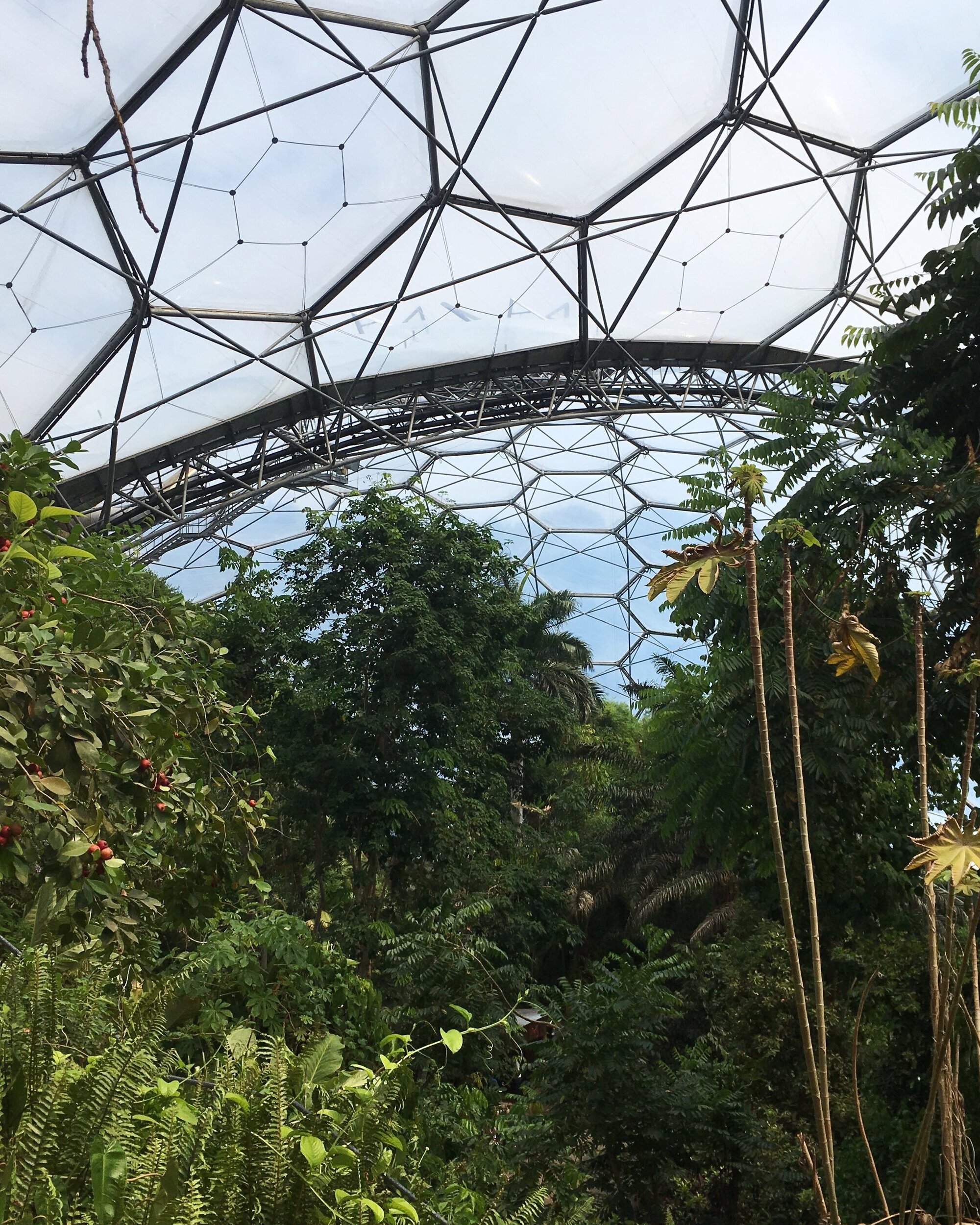
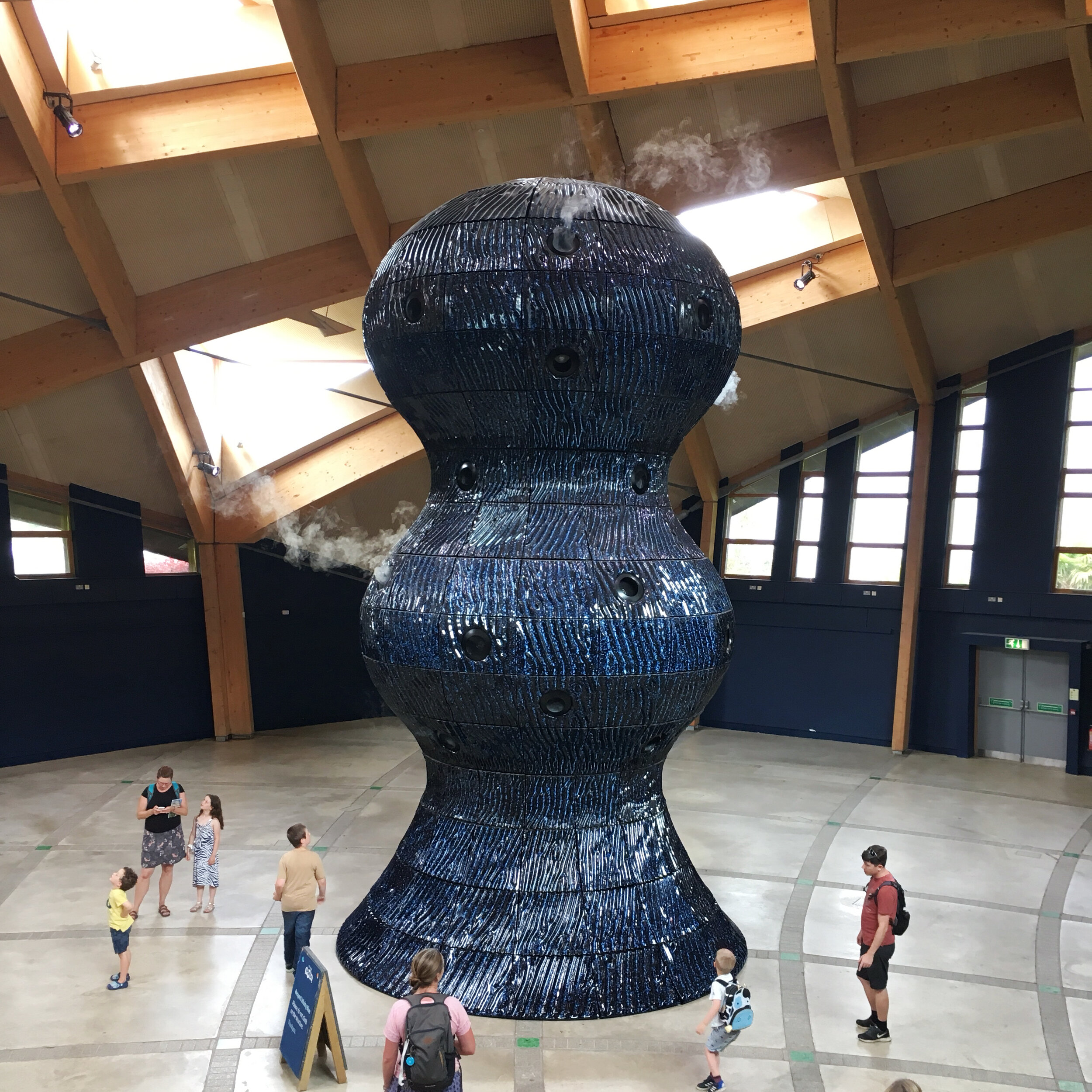
What captured our imagination most were those things you might immediately think of — the largest indoor rainforest with over 1,000 different species (and a cloud-making bridge), those other-worldly bubble domes, the zip line (!) moving its daring-doers across the valley. But there was also the wonder of the Core Building which houses permanent exhibition Invisible Worlds and includes Studio Swine’s interactive art installation Infinity Blue and Peter Randall-Page’s serene Seed sculpture which takes our understanding of the natural world right down to the Fibonacci sequence that shapes it.
There’s something else magical about the place though. Something that extends beyond the natural world on display. What’s striking is that even though it’s about plants, trees, biodiversity, what its really about is us. The story it’s telling is not just one of presentation, it’s one of impact. We’re increasingly realizing that the story of our environment is the story of the people it sustains and that we’re becoming leading characters in each’s narrative. Speak now of anything within one realm and you are speaking to the other. That’s an interconnected relationship that’s on fast forward and in conversation in ways we’d never considered before. And we need to get it, quickly.

But here’s the correlative — for the moment anyway — there’s an optimism latent in these landscapes. It’s very existence a testament of the will of people (well one person at first, co-founder Sir Tim Smit) to create something out of nothing, in this case transforming the massive hole in the ground that was a former working china clay pit into a place of possibility. There’s an optimism just in that act and it gives foundation also to the belief that each of us, working together, carries the potential to make real change happen. That’s inspiring in a different way, and as necessary as the green knowledge we’re on catch-up with.
That inherent belief in our capacity to be different, to do things differently, is taking the Eden Project ethos beyond its famous biomes. This social enterprise/education charity also hosts Nature’s Way, a social prescribing project in which GPs refer patients to initiatives within the community that might have wellbeing impacts beyond traditional pharmaceutical and medical treatments. It was the Eden Project that pioneered The Big Lunch — one weekend when neighbors across the UK are encouraged to sit down and eat lunch together (it’s taking place on 6-7 June this year and last year’s event attracted millions of participants). Then there’s Deep Roots New Shoots, which invites grandparents and their grandkids to participate in nature-based activities. The spin-off initiative Eden Project Communities promotes the idea that small acts of connection make stronger communities and happier humans.

The Eden Project isn’t just an entertainment project, or an educational one either. It’s also a wellbeing endeavor — from the micro, like keeping our soil healthy, through to the macro, like keeping our communities healthy. Yes, it’s a fun place to visit (particularly for the music sessions), but we’re betting (as are they we think) that the wonder, optimism, and connectedness that you take home with you, will last longer than the honey you bought in the gift shop.
To find out more (and to keep up with new development Eden Project North): Website, Facebook, Twitter and Instagram