

Get The Boys A Lift
A group of lads in Wales is making conversations about men’s mental health more acceptable at their cafe headquarters and beyond.
Go here if: you are looking for a supportive space to talk.
What is it: A not-for-profit coffee shop, community hub and drop-in counseling space in Haverford West run by a group of local lads who are vocal advocates for better mental health in Pembrokeshire.
Why you’ll love it: For its origin story and ongoing mission: when founder Gareth Owens returned from a year in New Zealand in 2016, he felt isolated. Remembering a couple of students at his school who had taken their own lives, Owens embarked on a walk around Wales to raise funds for mental health awareness and suicide prevention. Part of his strategy was printing branded T-shirts to raise additional funds.
The idea quickly caught the attention of others, and he was joined by more friends — including fellow GTBAL founders Jake Hicks, Steven Cristofaro and Mike Slack — for his next fundraiser, a hike to every UK capital. This morphed into further sponsored walks over the next few years, with the hugely popular campaigns and accompanying merchandise culminating in a donation of £12,000 to local and national mental health organizations.
But it also led them to start their own place — this place — that does the work that they realized needed to be done in their own community to raise mental health up the agenda, and make it ok to talk about what people, particularly men, are really going through in a safe, supportive space.
What you need to know: The coffee is good, like destination good (GTBAL was featured in The Independent Coffee Guide), there are board games and brownies to be had and a warm friendly welcome when you come through its doors. Beyond the coffee, there is free counseling on-site by trained practitioners which is significant when you realise the cost and access barriers that typically accompany therapy.
GTBAL are active campaigners for better mental health with recent campaigns including their Get Out and Get Active campaign, a recent climb in collaboration with a local gym, or Pints4Prevention, where you can donate the cost of a pint each month to support free counseling.
How to bring this into your life wherever you are: The merchandise supports the work of the social enterprise so ‘buy merch, fund counseling’. Or raise funds for the vital work that they do like one person’s recent shiver-inducing ’30 Days, 30 Swims’. Their founding ethos, you don’t need to know someone to give them a lift very much applies here.
Why we think it’s different: Get The Boys A Lift shifted from handing over the money raised to non-profits to launching a model of support that worked in its own community, a unique drop-in free counseling spot open to everyone. As more people need therapy, and waiting lists get longer, GTBAL is making it easier for people to access the help they need when they need it. If only there was one of these on every high street. Since the café started in April of 2019, it has funded mental health support for over 220 people in the community.
GTBAL is also stepping into the space of men’s mental health, crucial when two-thirds of suicides were carried out by men and one of the most vulnerable populations for suicide are males aged 45-49, but surprising when so much of the wellness and therapeutic fields continue to be associated with women. The stigma of needing and asking for help is still gendered, though thankfully this is starting to shift (see the advocacy work too of Jonny Benjamin for this and Prince Harry’s recent vocal testimonies to his own struggles with mental health.)
In their own words: “We’re a Community Interest Company based in the heart and soul of West Wales that pride ourselves on doing right by our community to help improve mental health within our own community as well as those further afield.”
Something to do: Allow the men in your life and your community to be open about their mental health. Hold back on any gendered assumptions about how someone should or shouldn’t be coping. Bring empathy, compassion and support to conversations with those who are open about their struggles. Make it ok for everyone to talk about their mental health, whatever that looks like for them and whoever they are.

Cafes for Life
Which cafes do more than get you started in the morning? Here we’re featuring a handful of cafes that go beyond coffee to our communities, our planet, even our minds.
Although our equivalent of lockdown bread baking was making a half-decent latte, we’ve been missing cafes. Today we’re looking at a handful that give us a place to think about the world differently, whether that’s giving back to our communities, raising money for charities that matter, working to save our planet, or even redefining their role in mental wellness. As we’ve come to realize as we steam oat milk in our kitchens, there is more to cafes than the drinks they serve; they are the hubs that bring a neighborhood together and offer a framework in which to explore what matters in life.
Pink Owl Coffee, Marin, CA
Before the pandemic, this was our place to head for early morning work meetings, chosen because of its friendly owners, great coffee, and cozy lounge. But the reason we’re including it here is the café’s mission to support breast cancer charities, with 10% of profits going to research and awareness initiatives. Founded by breast cancer survivor Saandra Bowlus and her partner Joe Carlo, the café puts its support front and center, from the name (the Owls are just because they like them), the pink inflected décor, and the savvy branding — as their new retail coffee bags say “Because breast cancer sucks”. When you buy their vanilla lavender oat milk latte made with the on-site roasted blend, or a mochi donut from Third Culture Bakery, or even a puppucino, you get to support a great cause too. Once the space reopens for inside coffee drinking, we recommend you seek out a spot by the fireplace or a window seat, grab a board game or a book on coffee, and settle down with a friend or listen to one of the live music sessions. A local with heart.
Back of the Yards Coffeehouse, Chicago
A womyn and Latinx-owned community-focused coffee company established in 2016 based in the Back of the Yards neighborhood on the south side of Chicago. In one of the city’s most historic districts – many European immigrants came to work on the stockyards, which has most recently seen an influx of Mexican migrants – that has become associated in the news with gun violence, Marya Hernandez and Jesse Iniguez, who grew up in the neighborhood, wanted to establish a different narrative and new opportunities for locals. Working against a belief that “Mexicans don’t drink coffee” and in a place where independent coffee shops weren’t going, Back of the Yards Coffeehouse has become a popular spot – awarded the 2018 Time Out Chicago Love Award for Most Loved Coffee Place. Its drinks menu includes Cafe de olla (with cinnamon and spices), Ojo Rojo (a shot of espresso added to drip), and Café Con Leche. But it is how the cafe supports ethical coffee production and the neighborhood that makes it stand out: The café sources its beans directly from farmers including those in the Chiapas region paying a fair price, directs 95% of waste to compost, everything from coffee cups to used beans, and hires locally, training up interns to be fully qualified baristas. For each purchase of a bag of their 47th Street blend, Back in the Yards Coffeehouse gives $1 to a Social Impact Fund that works to support programs for peace and education in the neighborhood. And those red mugs on the wall, represent all the people who pulled together to make this cafe happen for the community.


Trouble Coffee, San Francisco
We’ve written about how cafes have helped our own emotional wellbeing, but this Outer Sunset coffee shop was started 13 years ago to help the owner, Giulietta Carrelli, manage her own mental health. Many first came to Carrelli’s story on This American Life which relays how she founded the business to give her the order and routine she needed to manage her schizophrenia. Trouble Coffee reads like an autobiography, a stand-in for Carrelli herself, particularly its idiosyncratic menu which features cinnamon toast (for comfort and which is also attributed with starting San Francisco’s high-end toast craze), coconuts (for survival, containing everything needed for nourishment), and coffee (representing speed and communication). This tiny outpost by the ocean — which was created out of the driftwood found on the beach — also gave Carrelli the loose connections she needed to feel safe, to know that as people began to recognize her, she’d be known and understood within this community. Opening a coffee business is not a natural remedy for a mental health condition, but Trouble Coffee allowed Carrelli to make space for herself in ways she hadn’t been able to before and that saved her. As Carrelli/ Trouble says, “trouble is not only a coffee co it is a community of people and power that kept me alive.”
IXV, Brooklyn
In a city where, pre-pandemic, New Yorkers were going through 100,000 disposable coffee cups every half hour, IXV is the sustainably-minded coffee shop and brand that’s needed. It was founded by Jenny Cooper, former J.Crew/ crewcuts designer (the company is named after her grandfather) in the garage of her Boerum Hill, Brooklyn home, to make “life less trashy”. When she started just over a year ago, Cooper had a simple idea to bring sustainability and community together — making coffee for people in the neighborhood who could bring a mug to be filled and drop it off to be cleaned, with the cycle beginning again the next morning. Aiming for zero-waste, IXV encourages customers to bring their own cups (there’s a .25 cent charge for paper cups to cover composting and recycling charges), reduce waste and compost where possible (it’s all the detail here: cold drinks are served in algae lined paper cups which compost better than PLA compostable plastics). IXV also serves as a store with plastic-free household goods, ceramic espresso cups, and refillable hand sanitizer available, a vintage clothing upcyler aiming to counter the environmental impacts of fast fashion through reworking preloved pieces, and a location for a CSA food box that supports local growers and makers, in this instance New York’s Norwich Meadows and givebacks via donations to a local shelter and soup kitchen ChiPS. IXV is giving locals a better way of getting their caffeine and a different model for how our neighborhood coffeeshops might operate. More widely it can inspire us all to carry our keep cups while adjusting daily habits that trash the environment.

Tell us which cafes matter to you and could matter to other people too? Which cafes are helping our minds, our bodies, our communities and our planets function better? You can nominate them for our guide here.

Social Bite
A cafe with a cause in Edinburgh that became a movement to end homelessness.
What is it: A sandwich shop in Edinburgh that became a movement to end homelessness in Scotland (and has also captured the attention of Meghan Markle, George Clooney, and Helen Mirren)
What you need to know: The first café was opened in 2012 on Edinburgh’s Rose Street – amongst the Subways and Prets — by co-founders Josh Littlejohn MBE and Alice Thompson (who recently left to join motivational speaker agency Speaker Buzz). From the outset, Social Bite donated its profits to homeless causes and a pay-it-forward jar sat on the counter so that customers could donate a meal to people experiencing homelessness. Now Social Bite has grown into an award-winning social enterprise with five of its mission-driven cafes across three cities (now including Glasgow and Aberdeen), and one central kitchen.
But there’s also now this – a housing development Social Bite Village, the now international Sleep Out campaign, and an annual fundraising campaign to provide Christmas meals to the homeless (the cafés in Glasgow and Edinburgh this year opened to homeless people in Edinburgh and Glasgow and served 155,000 meals).
How to bring this into your life: One small ask: Buy a box of brownies. Each ethically sourced and handmade brownie box helps to fund jobs, housing, and support for people experiencing homelessness. Need more ideas? Social Bite has a ton of them for wherever you are, like using Amazon Smile, Sustainably, and Give as You Live.
Why we think it matters: At a moment when homelessness and food insecurity are becoming dire consequences of the Coronavirus epidemic, Social Bite's mission of tackling homelessness with compassion, support, and love is needed more than ever. One-third of the cafes’ workforce are people who have struggled with homelessness. Their high-end restaurant Vesta Bar + Kitchen sets aside Monday afternoons to feed people experiencing homelessness for free and with humanity – with a two-course menu of dishes typically offered to paying patrons during the week. And the business did a very quick pivot when the COVID crisis hit. They shifted their operations to feeding the hungry — still including the homeless, but also now those experiencing food poverty and vulnerable children and adults — with a weekly target of providing 5000 emergency food packs to partners in communities in Scotland, and 160 free meals distributed each day in the cafes in Edinburgh and Glasgow.
In their own words: “We believe that now more than ever, there is a need to put aside our differences and come together to ensure that everyone has a safe space to call home.”
Inspired to: Volunteer to help the homeless and feed the hungry in your community. Pack food parcels at your local food bank (and donate items), support campaigns for free school lunches, and share food going to waste on the Olio app.
To find out more: Website / Instagram / Facebook / Twitter
Try also: London’s Luminary Bakery and Brigade Bar + Kitchen

Rawberry
A plant-based juice bar and cafe helping you feel good.
What is it: A vegetarian juice bar and café just off Winchester High Street
Why you’ll love it: Massive pink letters on the window announce its ‘Feel Good’ factor and once you step inside the bright café space (if allowed at the time of visiting) you’ll instantly get how different this place is.
What you need to know: What you eat affects how you feel – that’s the idea behind a menu of juices with names like ‘Belly Buddy’ and ‘Super Skin’ and Smoothies that include ‘Green is the New Black’. Caffeinated options go the Beetroot and Turmeric Latte route and there’s even a Superfood Hot Chocolate.
While there: Check out The Study Hub downstairs, 6 tables reserved for serious work, and getting out of the house when that option is available to us again.
What they offer beyond the cafe: Weekly juice deliveries – bringing bottled sunshine to you over grey days – and for those times when all the supermarket delivery slots are booked, opt for one of the essentials provisions and raw boxes. Also, see retail treats – like Soakin’s line of bath salts for when this world of ours is getting too much.
Why we think it matters: If you are of the post milk generation, believe that independents are crucial to healthy communities – this is a family run business - and sustainable sourcing goes hand in hand with your daily coffee – they serve River Coffee Roasters which makes sure the people who produce the beans benefit too – then places like Rawberry have a role on our High Streets. Our everyday choices like where we pick up our daily cup have impacts beyond just making us feel good (or awake), helping our communities, food producers, and even the animals taken out of the food system.
In their own words: ‘At Rawberry, we know it can be difficult to find alternatives on Winchester’s High Street; Whether it's vegetarian, vegan, gluten or dairy-free. Options are sparse. This is why for the last three years, from our beginnings as a humble market stall, we have been working on the alternative.’
To find out more: Website / Instagram / Twitter

Potts Coffee
Liverpool’s Potts Coffee gives a plant-based lifestyle a modern outlook and brings compassion to a neighborhood cafe.
What is it? A 100% plant-based coffee shop
Why you’ll love it: With a modern design, this is not your hippy hangout but a cozy entry into the world of veganism (through pancakes and lattes!)
What you need to know: A café that cares: about animals, about the environment, about the neighborhood. Potts Café makes sure to weave ideas of ethical sourcing, sustainability, and community into their coffee business. But these are not just of-the-moment trends but translate into real-world solutions — fairtrade beans, compostable takeaway containers, reclaimed furniture, and products from local producers, farmers, and makers.
Why we think it matters: Plant-based lifestyles are shown to reduce the environmental impact of animal-based food systems. Consuming more vegan meals and snacks has real-world impacts, by minimizing water and land use, creating less pollution, slowing down deforestation and even saving lives by promoting human health. Plus, it feels good to support a business that is dedicated to doing good in the world. (Eating here is basically selfless self-care. Just saying.)
In their own words: “One lazy Sunday morning our founders, Jonny & Danielle had a dilemma - they wanted great coffee and a great vegan brunch. Being coffee enthusiasts and brunch lovers - they wanted somewhere that they could get both. From there, their mission was to create an entirely vegan coffee haven in Liverpool city centre - fulfilling the needs of brunch lovers in the city, whilst striving to make the world more compassionate (& delicious).”
How to bring this into your life: This one needs a visit if you are in the area, particularly for their vegan brunch which started it all. From home, you can shop their merchandise (our eyes are on the Be Kind Tote bag.) Or start your own plant practice by replacing cow milk with oat in your morning coffee.
To find out more: Website / Instagram / Facebook / Twitter
If you’ve visited Potts Coffee and have something to add here, or if there’s another plant-based community cafe that you love, let us know by emailing us at hello@ifloststarthere.com.

Scrappy adventures at home
This weekend we brought the outside world indoors. Now we’re trying to bring the magic of the undomestic world home.
In a creative outburst (or desperation on day 40 of lockdown), we pitched a tent in our living room and went camping. We blew up the deluxe mattress, brought down our duvets, and hung a super bright lantern. The six-year-old asked for spooky stories, the eleven-year-old asked for more bouncing on that deluxe mattress, the forty-four-year-old husband gave up and headed for an actual bed, alone. As I fell asleep with the kids, we looked at the sky and trees through windows, snuggling into the warmth of indoor camping and our even cozier imaginations.
As we’re increasingly longing to be out in the world, we’ve also starting to think about how we can bring our favorite places indoors. We’re learning in our very scrappy way how to recreate a little of our former world’s magic in our domestic unbliss. Thrown together with whatever we have lying around the house, our manifestations at home are ungainly, un-Pinterest worthy recreations, but somewhere in our souls, they are filling an ever-growing need to be somewhere else, with you in the world outside.
We’ve noticed on social media the creeping in of festivals, discos, museums, into our living rooms, gardens, kitchens. We’re seeing a blending together of before and now, and a relentless hope that once was will come back again. For now, our attempts at capturing the spirit of where we once gathered will have to do.
Here’s our rundown of what we’re missing and how we’re, and you perhaps, are bringing places out there in here.
Cafes: Missing, missing, missing. We admit to buying a coffee maker as Step 1 of our lockdown journey (not sure there was a Step 2) and have since spent way too much time working out how to make an oat milk latte with froth (who needs to write the next NYT bestseller?). Add in Spotify’s Coffeehouse playlist, find a quirky chair at home, and nurse that coffee for 3-4 hours while trying not to make eye contact with anyone else. Maybe even throw $7 in the bin if you live in the Bay Area. You are almost, almost there.
Festivals: Can of wine, loud music, and deck chair on whatever outside space we can find. Kids running wild. We’ve nearly nailed it. The only things left are to throw mud at our tent, find the wellies, and start smoking.
Bakeries: A friend is baking cookies and cakes for distraction. Actually, everyone is baking cookies and cakes for distraction. There’s a run on flour and yeast and cultivating a sourdough starter has just become the new learning a language of lockdown. We’re also opening cookbooks like “50 most calorific things you can cook today with real sugar”, rather than “The Joy of Kale and Brown Rice”. Scents of bread baking, old school achievement, something to eat that isn’t from a can or cereal. Also comfort eating – it is a requirement to comfort eat right now. Pairs well with white wine at the end of the day. This is not the moment to diet, numb feelings yes with carbohydrates and alcohol. No one can see you anyway.
Coworking: If you live alone, sorry this one is going to be tough; you could make cut out figures as today’s art project and prop them next to your laptop while smiling at them occasionally. If you live with other people, just find any table, crowd around it, write an aspirational saying like ‘We work best together’ somewhere on a wall, and occasionally high-five each other. Points for adding name tags.
Indie cinema: Just switch out Netflix for National Theater Live, add in posh popcorn and a vodka tonic, and you’ve got the vibe.
Museum: Entry-level efforts, hang all the new creations you’ve been working on with everyone else on a wall in a pretty way. Add wall labels with cute names and give the whole thing a title (no, “Untitled” is cheating). Even better hang them on a wall outside and call it ‘Public Art’. But if you want to take it seriously, and you do, because you know ‘Art’, then follow the lead of New Jersey resident Teresa Mistretta. If you want to get super fancy, make your home into one of those experiential museums – paint your walls candy-colored (you need a DIY project right now). Even better, make merchandise in said theme to sell back to yourself.
Library / Bookstore: Those books on your shelves at home you’ve been meaning to read, now is the time to actually read them, not just wave at them. That might mean pulling I Could Pee on This off your shelves, but hopefully, you have something lying around like Joan Didion’s The Year of Magical Thinking. If going for the library vibe, post them back through your front door for added return affect. If indie bookstore, make cute piles randomly around your house. For either, go crazy and curate subject areas, that only you understand – brave princesses who’ve learned to say no, self-help for the days you hate everyone, chick-lit which you basically see as the great American novel but are too ashamed to say so. You could also print a cool Indie Store name on the side of a paper bag and shop your shelves. We always wanted to own a bookstore.
Lecture series: You can be inspirational too. Watch something by Brene Brown or Elizabeth Gilbert or Glennon Doyle, then hold forth at dinner about the value of vulnerability, creativity, love. Your co-lockdown companions will appreciate your Ted Talk at the kitchen table. They might even take notes.
Safari: If you have pets, just follow them around the house for an hour, narrating their escapades. Maybe even give them a backstory that adds drama – you need an arc for this one to work. Make sure to practice a Megan Markle narrating Elephants range of emotion.
Retreat: Basically, lockdown with some sort of epiphany and hiding alone in your bedroom trying not to talk to anyone.
Places in the world – we miss you. And though our attempts to make you real in our living rooms and gardens may be naff, they’ll have to do for now. One day when we visit you again, we will shower you with love and attention and never take you for granted again. We Promise.

Vent Over Tea
Tatiana Backlund writes about a new active listening service in Montreal that you can seek out when you are in need of a good ole chat.
When someone tells you their problems, do you try to fix it? We tend to offer alternatives and suggestions when people share their feelings. But sometimes people don't need advice, they just need someone to listen. Just being heard by an empathetic person can help us feel validated and understood.
In Montreal, Canada, Vent Over Tea offers a free, in-person, confidential active listening service to the community. This volunteer driven service aims to promote mental wellness and connection within the comfort of a local café.
I had the opportunity to speak with the amazing folks over at Vent Over Tea to get a more in-depth understanding of this initiative.

Can you walk us through what to expect when you book a session with Vent Over Tea?
When you book a vent session through our online platform, you pick a day, time, and cafe to meet at that’s convenient for you. On the day of the vent session, you meet at the cafe, you each buy your own beverages, and then you get to talking!
When booking the session, you’ll be prompted to list any particular topics you’d like to talk about in the session, but during it you can talk about whatever you’d like. You can make chitchat and ease into whatever topic has been weighing on your mind or dive right into it. Maybe something else has come up since you booked the session that you’d rather discuss. Our active listeners are there to create a space for you to talk about what’s on your mind, so the listener doesn’t have any expectations about what, when, or how things “should” be discussed.
What value can an active listener bring?
Vent Over Tea’s active listeners bring value by helping to create a space for people to vent, explore feelings, and possibly even discover their own solutions. The idea of Vent Over Tea came about when one of our co-founders, Sarah Fennessy, had worked through her PTSD and no longer needed to see her therapist but realized she still liked having someone to talk to. Around the same time, Sarah learned about a study that found that people with low levels of depression and anxiety saw on average as much improvement in their mental health by speaking with an empathetic listener as they did speaking with a professional therapist. Our service aims to offer our venters empathy and understanding to help with their mental wellbeing.
What main goal does VOT hope to accomplish?
Vent Over Tea's main goal is to promote mental wellbeing. It’s a lofty goal for sure! There are three main ways we try to improve the mental wellness of those we interact with:
There are lots of instances where a person could benefit from talking about their issues, but they don’t need to see a professional psychologist. We understand how helpful it can be to talk through what’s bothering you with an engaged, impartial listener. We want to give people in these situations an outlet to vent to another human being face-to-face.
We want to help destigmatize help-seeking for mental health. Whether you just want to vent to one of our active listeners or you have a mental illness and want to see a psychiatrist, through our service, events, blog, and social media, we try to spread the message that it’s okay to talk about how you’re feeling; it’s okay to ask for help.
Finally, we want to help create a connection within our community. Montreal is a well-populated city, but it’s common to feel lonely and isolated here—even when you’re pressed up against strangers on the metro. Through our events in particular—but also through our service and digital presence—we try to create space for people to connect with others in a way that makes them feel more rooted in our community. We truly believe that facilitating this sense of belonging will have a positive impact on the mental health of the members of our community.
If you think you’d benefit from Vent Over Tea’s services and to find out more visit: Website, Facebook, Twitter and Instagram

The Poetry Pharmacy | A conversation with Founder Deborah Alma about why poetry still matters
We talked to the founder of the world’s first Poetry Pharmacy about why poetry still matters.
When we first heard about The Poetry Pharmacy, we thought it was a kind of dream. A shopfront dispensing poetry for modern day ailments. It’s something from a children’s book, or a gorgeous idea of a place developed over excited conversations. But just last month, in the town of Bishop’s Castle in Shropshire, poet Deborah Alma (with her partner Dr James Sheard) opened the world’s first Poetry Pharmacy. And she readily admits its dream-like quality even as it now exists as a reality for her, and the people it serves. In the first months of opening, we were lucky to grab some time with Deborah to talk about why real-life places and poetry matter more than ever.
Claire: We’re enthralled by The Poetry Pharmacy, as I think are many people who are reaching out to you. Can you talk us through the space?
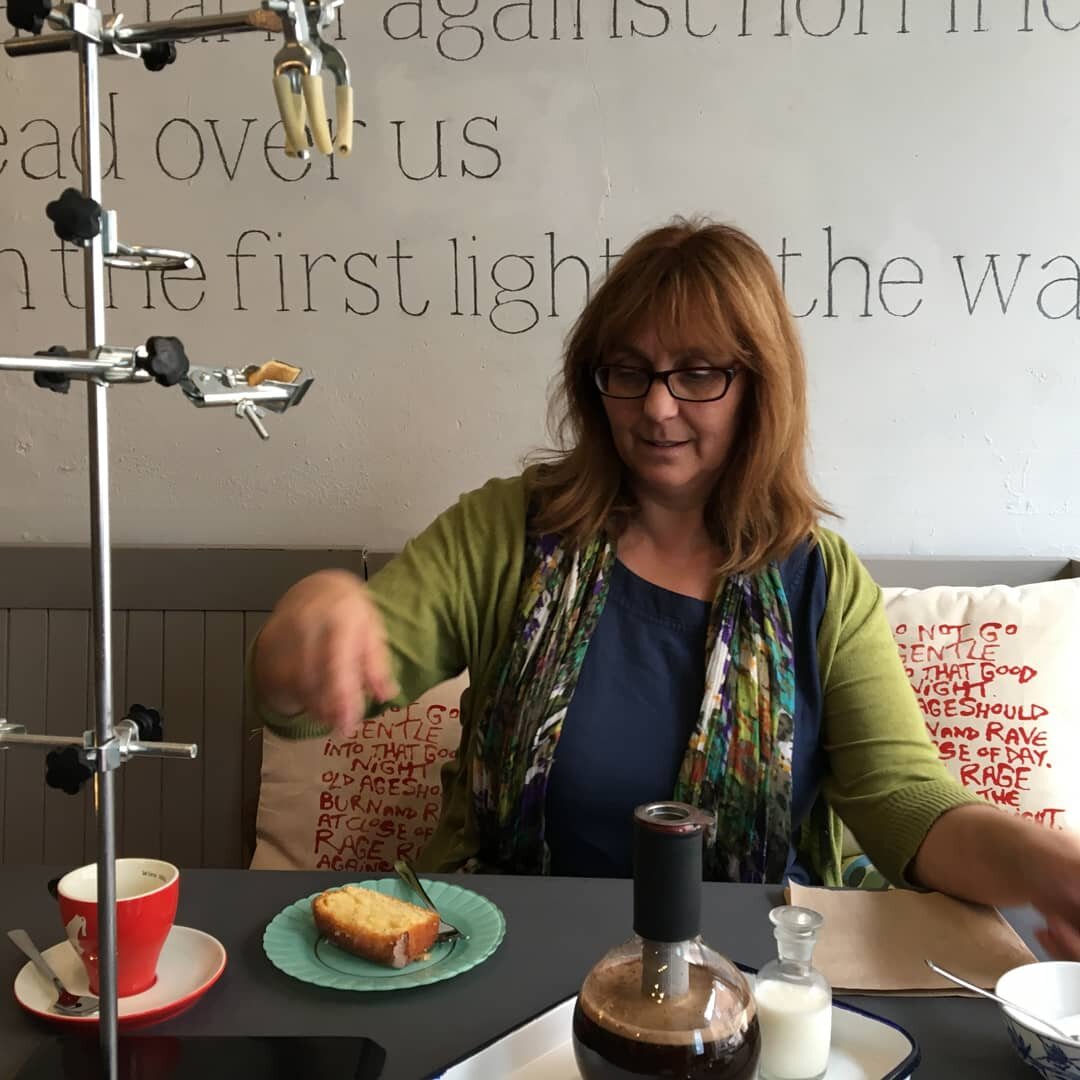
Deborah: We’ve converted a beautiful Victorian shop that had been closed for 13 years into an apothecary from which to dispense poems. It’s located in a small town on the wild west borders between England and Wales that’s full of writers and artists.
When people come into The Poetry Pharmacy, they’ll find books of poetry face up and filling the shelves. We’ve designed it so that people can browse by ailment — like ‘Matters of the Heart’, ‘Carpe Diem’, ‘Now I Become Myself’, ‘Be Alive Every Minute of Your Life’, and ‘Hope is the Thing with Feathers’ — and shop accordingly. We offer free one-on-one consultations on Friday afternoons, or people can make an appointment outside of that. We’re also happy for people to just come in and chat.
We also have a Dispensary Café which serves tisane, teas, coffee and cakes, as well as a shop that offers poems-in-pills for different needs such as a Bottle of Hope and Existential Angst Pills. Upstairs, we have The Distillery space from which we host book launches, workshops and other writing events.
We’ve kept the original architectural details like the old mahogany counter and till. We’ve allowed for as much natural light as possible (there are no neon lights). We’ve also painted the walls in muted paint colors.
There’s definitely something about the space that appeals to people in and of itself; a kind of therapy in not having technology everywhere. We’ve explicitly designed The Poetry Pharmacy for people to sit longer over coffee. There’s no pressure to move on and people are encouraged to talk to each other. It’s a place also for people to come to read and write.

Claire: Why in this moment when we’re rushing more and more of our everyday lives online and our High Streets are sadly struggling was opening a physical space important to you?
Deborah: I see the Ambulance as a physical space too; for years I operated as an ‘Emergency Poet’ from a converted vintage ambulance, prescribing poems to people at festivals, conferences, hospitals, libraries and schools around the country. But I felt like I was getting too old for all that travelling around, and it was often cold working outside in the UK. As the editor of four books and the writer of two of my own, I felt like enough people had heard of me, that if I set up a permanent location, they would already know what I was doing.
I do believe that people still want to touch something real. To be in a place that feels like it might last. The online world has a terrible power to cut connections with people in real places. The Poetry Pharmacy offers nothing like we can replicate when we are online. I also feel like if it’s there then it’s not hard for people to engage. People here are so delighted to find this place open; a place they can drift into and have a coffee and chat
I’m aware that it’s a gamble though. It’s an experiment, that comes with a certain degree of optimism and maybe even self-indulgence.
Claire: What need in the world do you think The Poetry Pharmacy responds to?
Deborah: We offer a therapy in slowness and a nostalgia for something lost: old fashioned service, friendliness, even listening.
People can come in feeling miserable and we give them a free ‘pill’ as well as the chance to talk about what they need. Then we prescribe a poem.
Claire: Why poetry? What’s the value that you see in it when applied to people’s lives?
Deborah: I realized a long time ago that most people are frightened of literature and poetry within that. And that the people who create or understand that art can be possessive. I used poetry in my work with people living with dementia. From that experience, I saw first-hand how you can change someone’s mood by taking them somewhere with a poem and that I could share the intimacy inherent in this form. This underpinned the Emergency Poet idea; I wanted to stop poetry from being intimidating and I wanted to show that it can literally be a vehicle for talking to people. That project effectively bypassed how poetry usually gets to people and how they then get to use it.
I’m aware that the Poetry Pharmacy idea is a bit mad. That putting poetry on the High Street is unusual. We keep hearing that poetry doesn’t sell, and this is a quiet town, but I’ve done it because I really do believe that poetry is a good thing. It’s beautiful. We’re putting it front and center instead of in the corner. Why not have piles of poetry books and say that has a value equivalent to other genres? With The Poetry Pharmacy we’re bringing poetry to the forefront and there’s an art in curating it — picking out the ones that speak to certain subjects, putting them with other things, and saying,“Take a look!”


Claire: And they are. People are enamored with this idea. Why do you think that’s happening?
Deborah: When I first started, it was a mad faith thing. People said, “you know why there is no other Poetry Pharmacy in the world? Because no one wants it.” But we’re finding differently; the idea of it even existing in the world seems to be a nice thing in the middle of all this darkness — BREXIT, Trump and just continuous bad news. It’s a piece of optimism and faith in something. It’s a positive thing, and light-hearted in lots of ways
It’s lovely that The Poetry Pharmacy exists in the world. It’s like a piece of fiction and reminds me of The Little Paris Bookshop by Nina George. In that novel Monsieur Perdu opens a floating bookstore on the Seine from which he prescribes books for a broken heart.
We’re only in week six and it’s been busier than I thought it would be. People get in touch across the world, we’ve had BBC News in here, the local Bishop’s Castle / Shropshire or West Midlands community is delighted, and people are seeking us out from outside of town and even from outside the UK.
We need all the elements though for it to work: the coffee shop to have a treat and a good coffee or tea that is nicely presented, like a ceremony; music that is welcoming and low-key, that makes people feel comfortable; a shop of desirable items, the consulting room and workshop space; and lots of events going on.
Claire: Would you place The Poetry Pharmacy within the world of mental wellbeing?
Deborah: I shy away from the word therapy, but I do say that it’s therapeutic. When I prescribe poetry to people, poems that I know and love, then people can make a poem their own; just reading it will take them to another place. What poetry is doing is taking you somewhere else in your head when you are busy. It’s telling you things that you may not be hearing from other people. It underlines something to yourself. Even imagining it, is a moment of benefiting from it.
At The Poetry Pharmacy we also include material for how to look after our lives in other ways beyond poetry. There’s a section ‘For days when the world is too much with us’, where we have Wordsworth next to psychotherapy and self-help books. We have another section that’s the ‘Best Medicine’ which includes gardening and nature — like counting butterflies, sitting in a patch of sunlight, and going for a walk.
Claire: When I think of The Poetry Pharmacy, I think of it as helping people with their anxieties, but I also think of it as supporting people in their loneliness. Is that fair?
Deborah: Yes, the poetry community has traditionally been good for the lonely as often people come to things on their own. People don’t have to be in a couple or with a friend to attend these events, like they might for say a dinner party or other social gatherings. It’s easy for people to come here on their own. Most of our events are on Sundays and quite a lot of people have said that Sundays are always difficult when they live on their own, but now they can come here for company. Rural isolation can also be a problem. This can be a place that people can come on their own and still feel comfortable.


Claire: Now we’ve established the life-affirming magic of the place, can we talk a little about the practical side? Like how you made it happen?
Deborah: We ran a successful Kickstarter campaign and I was amazed at the response. The crowdfunding raised money to pay for the build-out, including things like wiring the shopfront! We found that strangers turned up and said we love this idea and want to support it, because they don’t want closed-down shops on the High Street. We also received a small Arts Council grant.
We were very resourceful. As much as we could, we turned The Poetry Pharmacy into a project for both the local community and the literary/poetry one. We had many people volunteering their time and expertise.
Claire: What advice would you give to other creatives thinking of starting a bricks-and-mortar endeavor?
Deborah: It’s difficult, which I think is why so few people do it. But for me, it was huge just knowing that there’s a community of support behind me. I think it’s critical to have a few key people to support you in the first instance, and other people believing in you. The doubters are also quite useful because they test your resolve. Maybe they are right, and you don’t do it. But for me it was: ‘Bloody Hell, I’m going to prove you wrong matey.’ You’ll know in that fierce moment whether to do it or not.
Claire: How else has The Poetry Pharmacy impacted you? How does being front and center sit with the more private practice of writing poetry?
Deborah: Yes, there is that dilemma of reconciling this public project with the country mouse part of me. I do think (without overgeneralizing) that people who write who are novelists tend to be introverted, while poets tend to need to connect with other people more often. They work on a poem, then go out because they need to talk to people. For me, I crave being on my own and periods of time to write, and I’m aware that that’s not in balance at the moment. There are two sides of me; they don’t exist in the same place, but they do need to communicate, all the same. I hope that will settle down.
I do believe in The Poetry Pharmacy and it seems to be working in the way that I hoped. Also, for me too. Because I’m now so busy, I’m not online so much. What I wanted to do — and needed to do — was to have an open door and to welcome people in. To say: “Come in. Who are you?” To say. “ I’m interested in you. “
Discover more places for a happier life

RISE
Somerset’s RISE is both a place to come together and a modern day twist on traditional church.
“A place to relax, play, work, eat. A place to be together”
Above the entrance is a simple sign that says ‘Rise’. This sets the tone for all that goes on inside: a café, bakery and play space, an active calendar of workshops, events and activities, office space for socially-minded businesses, and a contemporary art gallery that shouts out local and national talent. Here, in a sensitively converted church, are all those components that once made this space so appealing to the congregation it previously housed: community, positivity, hope and connection.
Three years ago, Io Fox and Ed Roberts, a former teacher and nurse, bought this church, originally built in the early 1800s. It had fallen in recent years on its own hard times. The congregation of the United Reform Church had been dwindling for a while, so much so that the building was put on the market. But rather than shape this space into luxury apartments or private offices, the new owners did something remarkable. They shifted the emphasis to a wider purpose, giving a modern spin to the architecture, history and ideals this church once offered. Through their renovations, they weren’t intent on erasing what had once past, but rather building on it. Everywhere there are traces of what the building was before: etched arched windows, stone plaques, a working organ that dominates the main space. Keeping the look and feel of the place, they acknowledged its abiding history, and even embraced its former community and intent (a couple has since got married here).


They also did this, they allowed the community in which it sits in Frome, a small town in Somerset known for its creativity, a say in how this project evolved. They kept those long-time hallowed doors open to whoever needed them in maybe a different way, inviting in businesses, practitioners, parents, and charities who were seeking space to develop initiatives of their own. They welcomed everyone, with the aim of similarly nurturing people within its walls, so that Rise could truly reflect the community in which it is situated. And the local people that it served, answered the call, creating a new sense of life in this space, forming and shaping its content, giving this building new and more relevant purpose.
Three years on, Rise is now a buzzing multi-use space. The central atrium has been given over to Rye Bakery which runs a friendly café incorporating local suppliers, simple food and organic sources where possible. On Friday it hosts community building pizza nights. There’s also a play space (Alfred’s Tower) for the little ones, which has a handmade feel to it, a nice antidote to the bright plastic that usually comes with the kid’s area, and a sweet reading space. Most laudable though is the stunning woven nest space, a semi-private huddle for nursing moms and for smaller gatherings.


The mezzanine space where the congregation would once have sat, has become an increasingly well regarded contemporary art gallery, The Whittox Gallery, curated by Sara Robson. It shows local and national contemporary artists and designers in an exhibition program that roams across all media.
Sort of behind the scenes, The Old School and The Sun Room, have become spaces to hire by anyone, for private and public events. The downstairs offices and work spaces have been rented out to socially-minded organizations, like OpenStoryTellers, a charity that aims to empower people with learning disabilities and autism.
Across all these spaces are an active range of classes, workshops and events for all ages, abilities and backgrounds such as yoga classes, wellbeing sessions (like one on unleashing creative genius), exercise groups (see the popular Mojo moves and hoop dances), art and science clubs. A therapeutic choir just started in the space.
Rise is a modern-day church without really being a church at all. It works within that rich history of places where people gather, connect and believe, and gives those very fundamental human needs a thoroughly modern-day twist. In its name and its mission, Rise uplifts those who work here, engage here and play here. There’s a reason churches were once the heart of the community, and there’s a reason why Rise has become a space that local people flock to again.


The Joy Cafe | A Conversation with Becky Playfair on community
We talk to the Founder of the Joy Cafe Becky Playfair on building a life-giving community cafe in one of the UK’s most deprived areas.
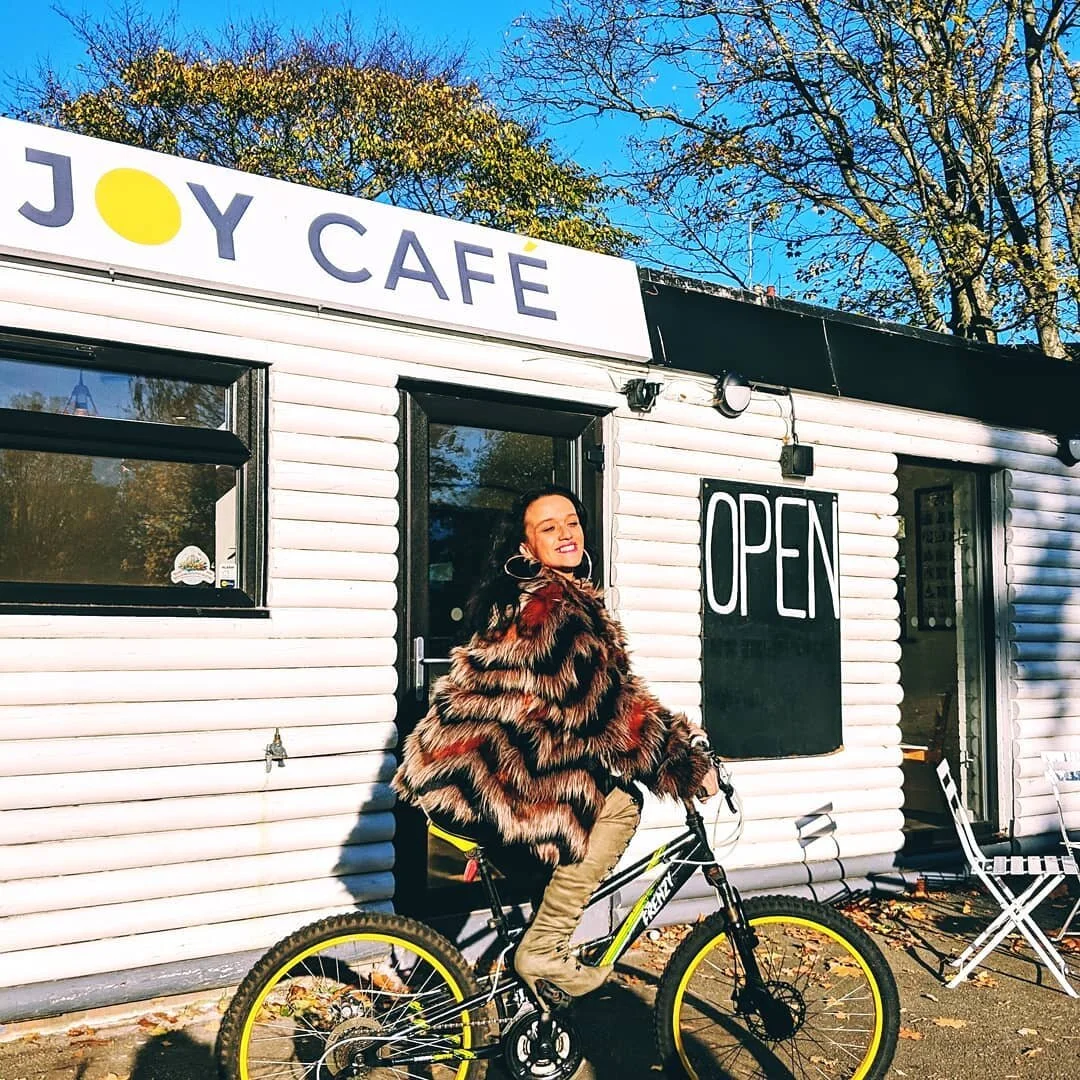
On an unusually hot summer morning in the little town of Boscombe, in England, I was introduced to a friend’s local cafe with a difference. As I stepped into the Joy Cafe, I lit up. In this converted shipping container, there was a hum of friendly chatter amongst families with young children and seniors sat together. The cheerful decor of sunshine yellow and dove gray gave the cafe a warm home-from-home feel. The smell of fresh coffee and sausage sandwiches wafted under my nose as I took in the delightful display of homemade brownies, cookies and cakes. As I ordered, I spotted a Suspended Drinks noticeboard whereby someone can buy an extra drink that gets ‘suspended’ on the board until someone who needs a free tea or coffee claims it. It’s a beautiful way for the locals to give or receive in their local community.
But the Joy Cafe offers so much more than free hot drinks and an insanely affordable menu of homemade food. It’s the little thoughtful details that reveal the heart and soul of this space, in initiatives that support the local neighborhood in heart-centered ways. The Joy Cafe provides positivity and connection to others through a variety of organized events and activities that bring different members of the community together in fun ways, that support mental wellness and ease loneliness.
Some of these include: Safe & Sound Ladies Craft where women can spend a couple of peaceful hours relaxing over a warm drink while crafting together. Awaken Conversations where guest speakers come and speak about personal development and life skills. Chess Club happens every week and there are regular community dinners for all ages that feature pop-ups from local cooks and food businesses. Local families who use the playground outside are supported with free breakfast mornings and art workshops during school holidays. Dotted around the Joy Cafe you can also find unstructured play opportunities for all ages with plenty of art supplies, books and board games on offer, perfect for rainy days.
The Joy Cafe was founded four years ago by Becky Playfair who had a vision to turn a rundown youth center in the park of Churchill Gardens, Boscombe (one of the most deprived areas in England), into a life-giving not-for-profit community cafe. From its first iteration as a pop-up bake sale with boxes of hula hoops, frisbees and crafting materials, the project progressed to a lease and planning permission to convert the old youth hut into a café. Key to making this happen was a JustGiving campaign to raise money in which 11 members of the Coastline Missional Community were sponsored to complete a 3 Peak Challenge, climbing the highest peaks in Scotland, England and Wales in just 24 hours!
I talked to Becky about the hard work and determination (with the huge support of the Coastline Vineyard Church and young volunteers) that helped make her dream of a very special community-centered cafe into a reality:


Sophie: How did the concept for the Joy Cafe first begin and why did you believe that it was needed?
Becky: I first had a dream to open a café when I was 18 years old. I was jogging (not very fast!) around my neighborhood in Birmingham realizing that I had little ambition but desperately wanted some! I wanted (and prayed for!) something to aim for in life. I wanted to dream big, to achieve, to make a difference, to have life goals. So, as I ran, I pondered, and prayed and pictured a café.
In the same moment I just knew that it would be more than your average British high street café. It might be a place where people had not just great food and drink but also got to encounter something more. A little bit of heaven on earth. Where people would feel safe, genuinely known, loved, appreciated and accepted. Where they would be spoken to, listened to, given hope, encouragement, a compliment, a smile, conversation or creative activity.
After studying Psychology at Exeter University, I moved to Bournemouth, then a year later to Boscombe, the most deprived area of Bournemouth. In the bottom 3% of deprived areas in the whole of the UK, the area was impacted by huge issues with drugs and alcohol, crime, poor housing, and health, etc. I moved into a house known as NO10 (the house number of where we were); we all worked part-time and gave the rest of the week to making a difference in our neighborhood. We opened our doors at NO10 and had all sorts for dinner and mentored in the local schools. Living in a truly beautiful but broken area, made me realize the need for a third space. Most of my neighbors lived in bedsits, they stood outside and smoked with only the rubbish bins to lean on. They were friendly but lonely. The communal space was the pavement. … they desperately needed a café and one that they could afford to buy coffee from!
Sophie: How did it progress from a pop-up to a proper cafe?
Becky: I started the pop-up Joy Café a year after moving to Boscombe. The two trestle tables, simple refreshments and kids’ activities were all stored in my hallway and taken in and out every day. We had an incredible first summer… local families loved us and thankfully so did the Council. They could see the transformative potential and gave us a chance. When the hut in the small park in the heart of the neighborhood became vacant, we were given the lease and allowed to renovate, making it fit-for-purpose. We’re been open as a “proper” café since February 2018.
Sophie: What were some of the challenges you found opening the Joy Cafe?
Becky: Getting the lease then planning permission for the renovations took ages and was beyond me! I would never have managed it without the support of a very wise surveyor from my church. Without his endless negotiations and skills, it wouldn’t have happened. But the toughest thing was definitely project managing the renovations. It took four months and though I had the most amazing team, largely made up of hugely generous and skilled volunteers who gave hundreds of hours to the project, I cried most days! (I was also wedding planning and later found out I had glandular fever… no wonder I was a mess!). I was consistently out of my comfort zone but somehow made it through! I’m now in my element being a barista, chatting with people, and building community.

Sophie: What is the mission of the Joy Cafe and how did you want it to benefit the community?
Becky: Joy Café is a lush little café with a big heart for building life-giving community (our strapline). We want to create a safe space, a home from home. We want to be the friendliest café. We like to make people’s day. I love blessing people with the occasional free coffee or cake or go out of my way to make something off-menu that they’d love and really appreciate. We celebrate our customer’s birthdays with cards, banners and gifts. We also partner with local people, groups and organizations. We do Suspended Drinks. We love Young Volunteers and have the best and youngest baristas in Bournemouth. We want to try to listen to what our community and neighborhood needs or would like and do our best to make it happen. We have free bike repairs, chess club, creative events, eco-workshops, games groups... all sorts!
Sophie: How do you want people to feel spending time at the Joy Cafe?
Becky: Known, valued, accepted, listened to, themselves, joy, at peace, loved, part of a community.
Sophie: What are the ways that the cafe has impacted the local community, you as an owner and your staff?
Becky: So many people talk about the impact of the Joy Cafe… from local families, individuals, councilors, tradesmen, the police, people who used to live around the area and are now back… People from every area of society have commented on the dramatic and positive impact the Joy Cafe has had on the area and park. It's safer, busier, lighter, has a better atmosphere… because of the Joy Cafe. Yay!
Sophie: What are your hopes and dreams for the future of the Joy Cafe. And will there be more?
Becky: I love where we’re at and want us to continue growing. I don’t know whether there will be more Joy Cafes but if the opportunity arises then I probably wouldn’t say no!
To find out more about Joy Cafe, head to their Instagram or Facebook.


Frazzled Cafes
With Frazzled Cafes, our mental wellbeing has hit the High Street. Comedian Ruby Wax has created safe spaces to talk at M&S locations across the UK.
“We live in a time where to have a life crammed to the hilt is considered a success story. But with all this pressure, so many of us have nowhere to go to meet and talk about it. Frazzled Cafe is about people coming together to share their stories, calmly sitting together, stating their case and feeling validated as a result. Feeling heard, to me, has always been half the cure.”
Modern life burn-out is as ubiquitous as M&S but we have this idea that we have to be all in with therapy or medication to deal with it. And we’re not knocking either (we have been and sometimes still are there), but sometimes we just need access to what we see as mental health maintenance, safe spaces to talk it out and talk it over. That’s where the network of Frazzled Cafes come in. They fill that gap between sitting alone with something, with the struggle and the frankly frazzled feelings that infiltrate our lives and our days, and pouring resources like money and time into talking cures, to committing to sessions and schedules. We need both. In fact we need all the different things, the different kinds of spaces and initiatives that might meet us where we are and hold us for the time that we’re there in whatever way we need, without judgment and with compassion.
Frazzled Cafes were launched a couple of years ago by the comedian Ruby Wax, who has recently become known as the popular author of books that include How to be Human, in which she discusses with a monk, and a neuroscientist the fundamentals of how we function as people, and A Mindfulness Guide for the Frazzled, an approachable and funny course in mindfulness. During the tour for her books, Wax had people again and again come up to her needing to talk and that was her lightbulb moment—that we all are running on empty and still finding our way through, and that we all need a way of expressing that feeling while connecting with others who are probably experiencing the same thing.
On why that word ‘Frazzled’, Wax explains: “A neurobiologist might say that someone is ‘stuck in a state of “frazzle”. They mean that, for this person, constant stress is overloading the nervous system, flooding it with cortisol and adrenaline; their attention is fixed on what’s worrying them and not the job in hand, which can lead to burn-out.”
The genius of the idea though is that Wax reached out to M&S, the widely beloved British High Street institution, to host these talk gatherings. And with that one call, you are in seriously stigma busting territory. If the venerable M&S is in that space of talking about our emotional and psychological lives, then surely that’s ok and allowed. Plus, who doesn’t want to spend time in an M&S after hours where the sessions are held?
Frazzled Cafes now take place in M&S locations across the UK, in their cafes and sometimes community rooms. Recently the idea was also tested at High Street Bakery Le Pain Quotidien. People are invited to RSVP beforehand and some weight is given to those who have attended before. Each session lasts 75-90 minutes and starts with a meditation to bring people into the room and ground their experience. The meetings are run according to the rules of therapeutic spaces, with a set of guidelines that promotes ideas of confidentiality, kindness and support.
If you interested in joining one of these meet-ups, sign-up for the newsletter which announces dates and venues and will link you to the RSVP for each cafe session. Just note that Frazzled Cafes are keen to point out that this is not designed to replace therapy but rather fills a need that most of us have just to be heard.
In our busy, often overwhelming lives, sometimes all we need is a safe space to talk. Frazzled Cafe is that space. And with that the issue of our mental wellbeing has now hit our high-street. Let’s keep it there.
To find out more: Website www.frazzledcafe.org / Twitter @frazzledcafe / Facebook @frazzledcafeuk / Instagram @frazzled_cafe

The Canvas: Vegan Cafe | Creative Venue | Community Hub
From the outside this yellow splash of a storefront just off Brick Lane is not exactly what it seems.
“What started as one woman’s idea has now evolved to become a living, breathing embodiment of all the best parts of humanity: generosity, positivity, kindness, hope and love. This is thanks to the people who have joined The Canvas along its journey, adding their voices, ideas and energy, nurturing the space so that it’s constantly growing and evolving to be something greater.”
Brick Lane’s Canvas Café is part of Action for Happiness’ network of Happy Cafes (yes there are more) throughout the world. In fact it was London’s first.
But what exactly is a Happy Café? What differentiates it from any other kind of caffeine-oriented place? Well, there’s a clue there—it’s less about the lattes served and more about what this space creates, the connections and the activity that happens here.
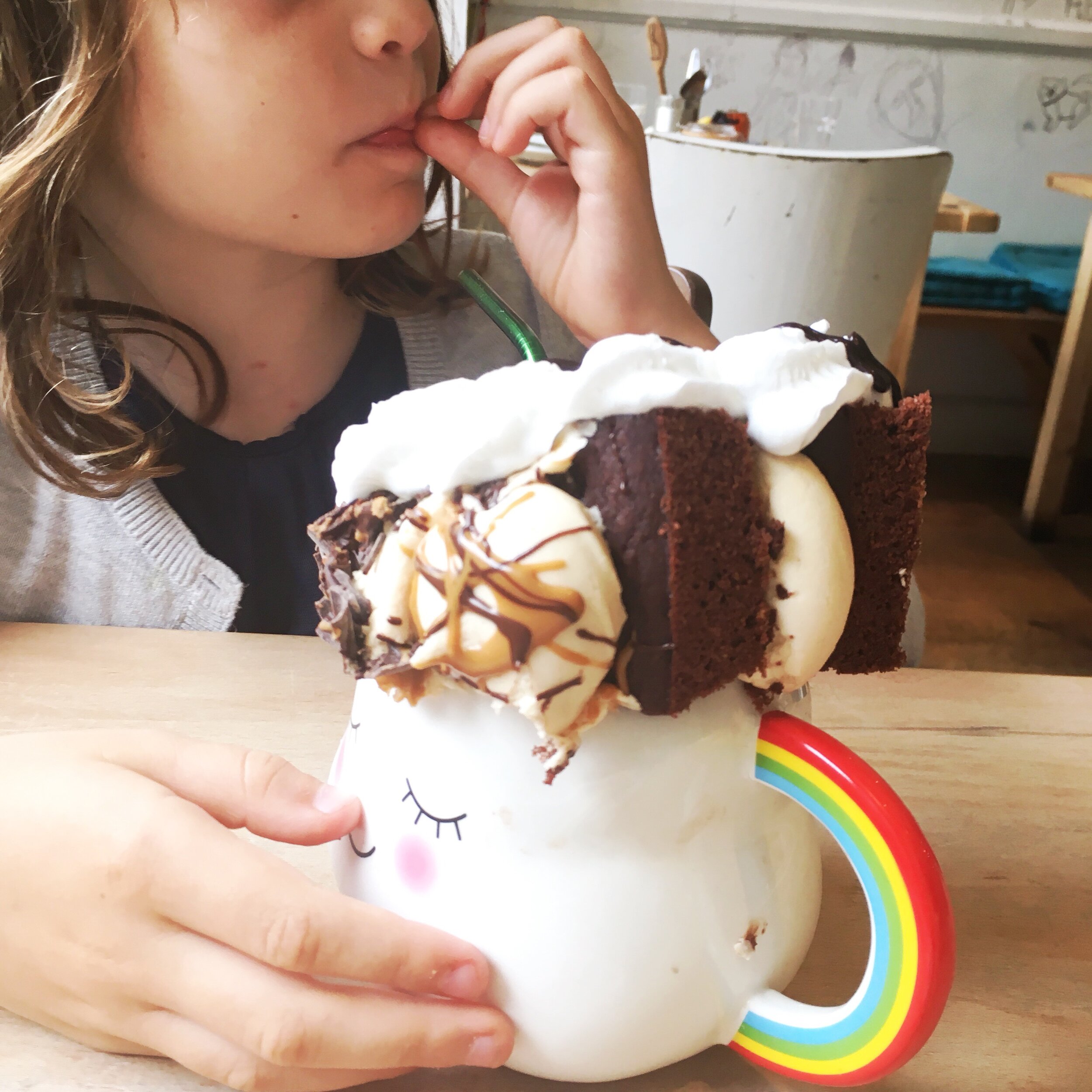
From the outside this yellow splash of a storefront just off Brick Lane is not exactly what it seems. You can just treat The Canvas like any other café—and if you do we recommend the freakshakes, unbelievably a slab of cake perched precariously on top of a ceramic mug of your choice (we chose the cloud/ rainbow one) filled with a creamy, non-dairy milkshake. But there are hints of something else afoot with the invitation to draw on the wall and answer questions like ‘what does community mean to you?’ and ‘what’s your happy place’.
There’s also the pay-it-forward board which invites you to add a drink or meal to your order for someone who might not be able to afford it. And this café is 100% vegan and all the food served is homemade. A mission to do good, to be good, determines everything in this café. All those buzzwords: sustainablilty, local, low-footprint, form the foundations of the Canvas Cafe. This extends to the suppliers that it works with, which includes local coffee purveyor Square Mile Coffee and Pip+Nut which doesn’t use any palm oil.


Beyond its café appearance it’s kind of the dream of positivity, exactly the kind of place that we find ourselves longing for at If Lost Start Here. The Canvas puts people—their ideas, their needs, their lives—at the center of what it does. That means there’s true generosity in how it operates. And if there’s a bit of cynicism there, let’s get that out the way right now. This isn’t some wishy-washy place that makes nice aphorisms and cute branding. It fundamentally operates from a place of living its values and combats such lifestyle nasties as loneliness, mental ill health, and climate change.
This is all encapsulated in the Community Hub, a white-walled blank canvas of a space for individuals, organizations and charities to try out their ideas for positive activitism. Renting space is expensive in London but this one room is offered for free to incubate ideas that can make people’s lives better. In return The Canvas just asks for donations to its Pay It Forward program.
The Community Hub has become a vital early supporter of innovative ideas for those things that we’re now finding we need in our lives to function better. Future events on the schedule include Hugs and Cuddle workshops, free meditation sessions from Inner Space, and improv for life. It already has an impactful history of supporting great causes in their early days: Places like the Museum for Happiness and Mike’s Table (which serves refugees) got their start here.

Since it was founded in 2014, by Ruth Rogers (not River Café, but the actress and puppeteer) as the blank space for the community and an outlet for both creativity and positivity, The Canvas has flourished. It now has an active program of partnerships. Each month sees 50-60 events with everyone from the perfectly named Revolting Vegans Supper Club—which offers a 6-course menu while taking on issues around food waste and the environmental impact of what we don’t get to eat—to Raining Sessions, where twenty-somethings get to share their stories and receive support. And The Canvas roams off-site too: over the summer they provided free meals and sport and craft activities to kids in Tower Hamlets.
Exhausted yet? The Canvas wants to do even more. They have just completed a fundraising campaign to renovate the Community Hub space which means more events, more support of great ideas, more people helped, more grass roots beneficial social change. Add another 5-years, we hope, and The Canvas will have brought even more people together in that big ole-city of London around positivity, innovation and creativity.
To find out more: website www.thecanvascafe.org / Instragram @thecanvascafee1 / Twitter @thecanvascafe / Facebook @thecanvascafeE1

Cafes for Life: Are Cafes Good for our Mental Wellbeing?
On cafes and why my love for them is maybe not just a personal one, but part of a wider universal longing.
Last night my daughter Ottilie ended up in the ER. It wasn’t serious. That’s not this story. As we walked off the beach, my son threw a stone at her and though she was supposed to duck behind the boogie board, she didn’t. It punctured her eyebrow and off we went to get it glued and pulled back together.
This morning, at Kindergarten drop-off, Ottilie wobbled. She was worried about the plaster getting wet, worried about the rain forecast, worried about it being Monday morning and that she would be away from me again.
And I wobbled too. I felt her anxiety—felt it with my own, seeping through my body. I carried all of it into the beginning of my week too: The moment I saw the blood streaming down the left side of her face and my son screaming ‘it’s her eye, it’s her eye’. The fear of what might have happened, of washing away all that red to figure out how serious it was, the anger that my son had caused this and that my daughter was in pain.
I felt it keenly this morning when I awoke, that long evening in the ER waiting room, with kind doctors and nurses paying attention to this little girl still in her beach wetsuit, trying to stay calm and positive as I wanted to vomit into the trash can. And I felt too the effects of that very large glass of rose I used to dull my nerves on an empty stomach when I got home, and the kids finally slept. I felt it again and again, the vulnerability that is our world with children, and the times our lives smash into pauses of the non-self-care kind, but of the nothing-else-matters-because-my-kid-is-hurt-and-I-do-not-care-in-this-or-any-other-moment-how-many-followers-I-have-on-Instagram kind.

But we’re here now. On a Monday morning. With all the feelings. In need of pulling it all back together, to similarly glue the opposing sides of myself. To get back to work, to life. I know I’m supposed to do this: drop off the kids, walk home to my study, sit down and work. But instead I do this: drop off the kids and drive to a café. Sit down and work. Because this, getting myself to a café, feels good to me.
Here, in this bustling space, with the sound of the espresso machine, and frankly quite horrible music playing, here is my solace. This café is the balm, these people I don’t know sitting next to me, are the answer that I’ve found to sitting also with the sometimes ickyness of life. It’s cafés that I turn to for something, some cossetting. I don’t go for a run, I don’t go to the gym, I head here. To cradle a large latte and to feel ok again.
Home represents something else: maybe a spiraling down, an empty space to fill with feelings, the weight of family needs that populate it. But here, there’s no empty something to fill, it’s already filled to the brim with chatter and other people lives, adjacent to my own. None of this belongs to me, but I get to witness and to brush against other people’s stories, to be distracted from my own.
Maybe I’m avoidant. But I know I’m not running away. I still bring the crap with me, it just sits better here, perched on a stool looking out at the world. It’s not a ‘let’s not do this’, more of a ‘let’s do this’ but with a blanket of cafeness. Can that be a word? What’s does that even mean here—warmth, people, place?
My life is a long-read in cafes—my coming-of-age story happened not at the Hacienda in Manchester in a period of music that was to become quite defining (Happy Mondays, Inspiral Carpets, Stone Roses, you know), but at the now defunct Cornerhouse café (since morphed into Home) a pretentious enough place that reflected my tendency to rave in my own mind and happily alone. Attending University in Edinburgh it was the Elephant House where JK Rowling wrote some book. In London, actually Caffé Nero (sorry - there’s a nice one in Chiswick). In San Francisco, there were too many to count—this was the polyamorous part of my café love (in a pinch we’d go for Ritual, The Mill, Coffee Bar and the Equator locations). This was when I could get lost in a neighborhood, and find its people lounging in some carefully designed caffeinated environment.
Then came one of the blows to being a new parent: realizing that toddlers don’t do well in fancy, artisan places—which is why Blue Bottle’s takeaway counter at San Francisco’s Ferry Building does so well for us, and Sightglass doesn’t. And also, the realization, if I could not do anything else in my day with a baby in the sling, too knackered to function in the sleep deprivation months, I could get myself to a café where I knew the barista and a handful of people. They would be kind enough to acknowledge me as a person, not just a mama, and I could have that sensation that I was still a grown up, because going for coffee was something only real adults got to do, right? A little older, my kids now know the equation, playground + coffee shop (the brits do this best: see Bath’s Alice Park Cafe). When we travel, our sight-seeing comes with best guides to coffee shops as much as things to do with kids (thanks The Almond Thief, Moo and Two, Society Café, The Hobo Co, the Hairy Barista, The Hatch and Cargo Coffee – our favourite places that dotted our summer holidays).

Maybe I’m weird. Maybe this is an unusual anomaly to put out there in self-care (which autocorrects to self-café btw, which makes no sense at all). But there’s some science behind this. And it’s all around ‘minimal social interactions’, which are vital to our mental wellbeing. The NPR podcast Life Kit put me on to this, a study by Dr. Gillian Sandstrom at the University of Essex that she conducted on whether people were happier even through weak ties, i.e. connections with people that we barely know and with whom we have limited contact. In short, she studied the impact on people of their interaction with a barista. She defined two groups, one that had just a functional interaction with the barista, and the other who chatted a little more with them. Then she asked them some questions on the way out of the cafe. Her study concluded that people were more satisfied, connected and happier, if they had engaged the barista, even for just a little while.
Cafes do this work. The work of connection, of putting people in front of us, with our nods and their smiles, our how are you's and what about the weathers. They helps us. I know that, less scientifically, because for my dad who cares full-time for my mum, a cup of coffee in a café means he’s less lonely. A few words exchanged and he’s a person again not just a carer.
Cafes are our third spaces, that mythical place between work and home. Sometimes they are even our work locations as I type away on my laptop. As high streets fall apart and our communities fragment, cafes are becoming one of the few places we can actually go to be with others. They are vital to our wellbeing.
Real-world initiatives are building on this, like the Chatter & Natter tables now in over 1000 cafes across the UK (including at Costa and piloted this year in Sainsbury’s) that sets aside a table for strangers to chat and aims to combat loneliness. This scheme brilliantly responds to two very contradictory things: that 75% of us would like more real-life conversations and that we don’t know how to do this. Ever found yourself sat in a cafe and looking around at all the other people sat alone too who you might be able to chat with if you didn’t feel so uncomfortable about approaching them? Chatter & Natter tables make it easy: if you want to talk to someone, you choose to sit at one of these tables. You don’t need to forge forever friendships, but you can make your day better by talking to a person for the time it takes to drink your coffee, maybe even for longer. It’s an ingenious, and super simple, way of making the world less lonely. Even the guinea-pig themed café in FleaBag had Chatty Wednesdays.

Cafes for us are the main way we get to be in the world while deciding how and if we interact with other people. Some cafes are really getting this by actively building connection into what they do or finding ways to provide sustaining spaces of comfort and intimacy. Some are just making sure they exist beyond the beverages on offer. London’s Drink Shop Do has built connection (and craft and bottomless brunches) into their space with an active program of events and a welcoming style. Brooklyn’s IXV promotes a no-waste, people-first ethos. New Jersey’s The Peccary gets the central role baristas play, and puts their wellbeing, their knowledge of the product and their interactions with customers, at the heart of what they do.
Sometimes it’s in an even more direct response to our mental health needs: In Chicago, Sip of Hope is one of the first cafés where 100% of their profits go towards suicide prevention and mental health education. Wallers Coffee Shop in Atlanta was founded to take on the stigma of depression, through offering music, mental health first aid, even a wall of resources. Dear M&S has been getting in on the act for a while: select cafes have for the past few years been used after-hours for Ruby Wax’s Frazzled Cafes. And there’s even a network of Happy Cafes worldwide, realized in association with Action for Happiness, that count our psychological wellbeing next to the lattes on their menus.
Self-care takes many forms. Being in a cafe is one of them for us. Maybe even for you too?
Tell us about cafes you know that are your respite from the world, or make space for something you need, or that make mental wellbeing part of their impact. Over the next few weeks we'll look more at some of these places and bring them into our guide for in real-life locations that help us better live our lives.