
How to Rewild Your Summer (Without Adding Another Thing to Your To-Do List)
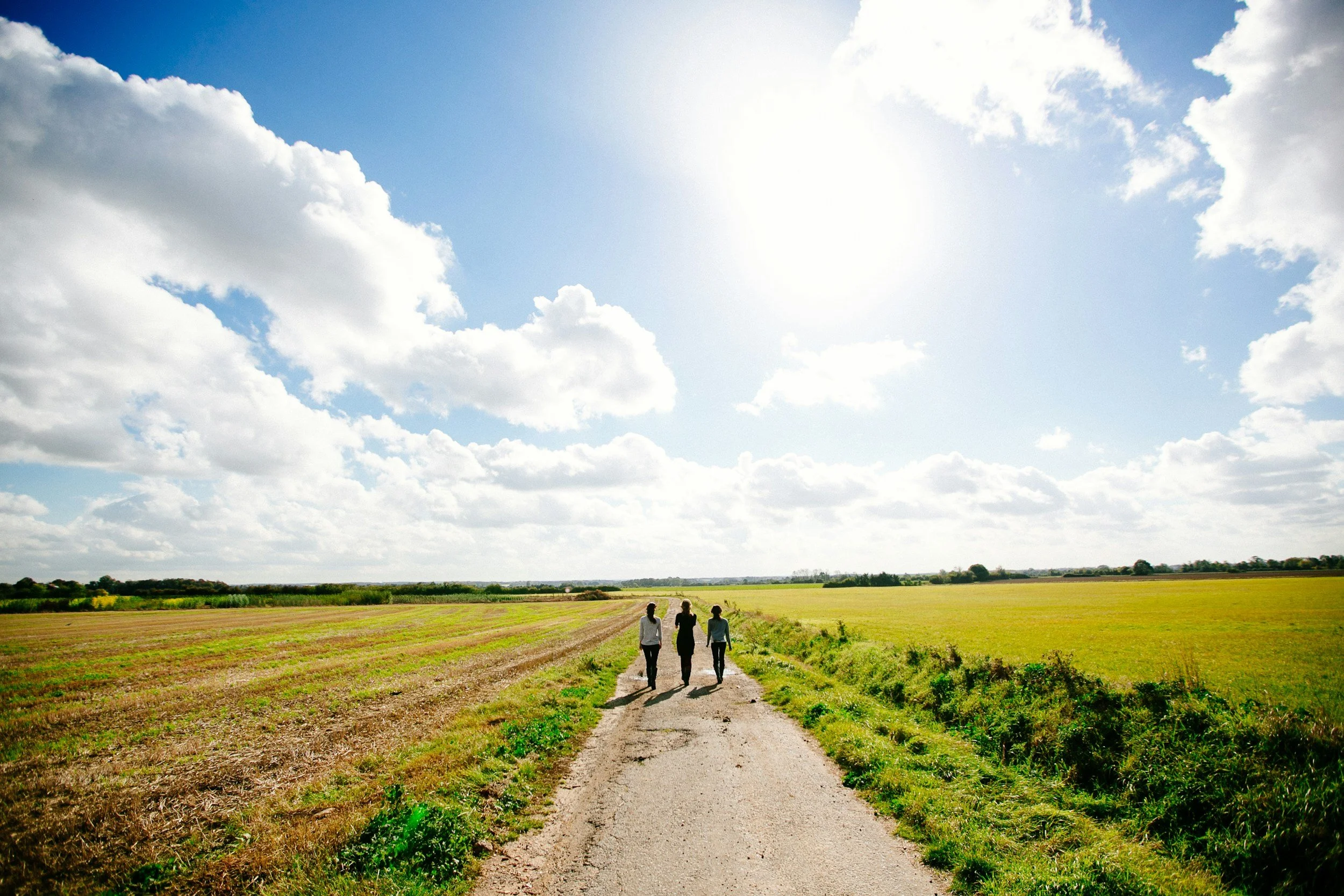
By June, summer can start to feel less like a season and more like a project.
There are holidays to organise, childcare puzzles to solve, gardens to tame, bbq invitations to accept or decline, and a growing awareness that these long evenings and warm days are somehow supposed to be enjoyed before they disappear again. If you have children, there can be the pressure to create memories. If you run a business, there can be the challenge of keeping things moving while everyone else appears to be on holiday. If you're already tired, summer can feel surprisingly demanding.
We're sold an image of summer as carefree and expansive. In reality, many of us arrive here carrying the same worries, responsibilities, and emotional baggage we had in February, only now we're expected to enjoy ourselves while carrying it.
Perhaps that's why I keep returning to nature at this time of year. Not because I believe it will fix everything. Not because I think everyone should be hiking mountains at dawn or plunging into cold rivers before breakfast. But because nature offers something that feels increasingly rare: a different pace.
Recently I came across a survey from the Wildlife Trusts that found almost 90% of UK adults have happy memories of spending time in nature as children. Reading it sent me back to my own childhood.
Growing up in suburban Manchester, nature wasn't wild swimming and forest bathing. It was annual trips to the Lake District, farm holidays in Devon, climbing shale hills in Yorkshire, and riding bikes across cul-de-sacs to fields that would soon become housing estates. It was picnics amongst gravestones because that was the nearest green space. It was drinking hot chocolate in garden centres with my mum while surrounded by tropical plants.
The details were different, but what struck me was how easily those memories returned.
The survey found something else too: people who remember positive experiences in nature are more likely to seek it out as adults. That feels important because many of us have drifted away from it.
Not necessarily because we don't care about nature, but because adult life has a way of shrinking our worlds. We spend more time indoors, more time looking at screens, more time moving from task to task. We become efficient. Practical. Busy.
Nature, meanwhile, waits patiently in the background.
But before we turn this into another wellbeing prescription, it's worth acknowledging that reconnecting with nature isn't equally easy for everyone.
One in five households in the UK cannot access green space within a fifteen-minute walk of home. Some people live with disabilities or identities that make outdoor spaces difficult to navigate. Some of us carry fears that make nature feel less restorative than wellbeing magazines suggest.
I still don't particularly enjoy walking through isolated country fields alone. Years after reading about attacks on women in rural places, I remain aware of my surroundings. Camping alone with a toddler and newborn didn't make me feel adventurous and free. Mostly it made me feel responsible for keeping everyone alive.
For some of us, nature is associated with discomfort, boredom, loneliness, danger, or exclusion as much as wonder.
Which is why I think rewilding our summer isn't really about becoming more outdoorsy.
It's about becoming more curious.
It's about asking what nature could look like for us.
Maybe it is wild swimming and mountain hikes.
Maybe it's moving your desk so you can see trees instead of a wall.
Maybe it's growing herbs in a window box.
Maybe it's reading a novel in the shade for twenty minutes while your children play nearby.
Maybe it's joining a community garden, visiting a flower farm, taking a slower route home, sitting in a park with a friend, or eating lunch outdoors whenever the weather allows.
Perhaps the goal isn't to become the kind of person who loves nature.
Perhaps it's simply to notice where nature is already waiting for you.
At If Lost Start Here, we often talk about wellbeing as a series of pathways rather than prescriptions. Nature is one of those pathways. Not because everyone needs the same relationship with it, but because so many of us feel better when we experience even small moments of connection with the wider world beyond our own concerns.
Summer offers us more opportunities for that connection than any other season.
Longer evenings.
Open windows.
Unexpected conversations on walks.
The scent of cut grass.
Strawberries that actually taste of strawberries.
A garden that changes week by week.
The first time you notice the swifts have arrived.
None of these moments require us to completely overhaul our lives.
They simply ask us to pay attention.
So rather than creating a summer bucket list or another set of expectations, what if we approached the next few months as an experiment?
What if we became curious about the role nature might play in helping us feel a little more grounded, a little less rushed, and a little more connected to ourselves?
Not because we should.
Not because it will solve everything.
But because there might be something there waiting for us.
A Question to Take With You
When you think about being outdoors as a child, what comes to mind first?
And is there a small piece of that feeling you'd like to bring back into your summer?
Ready to Explore What Helps You Feel Better?
Sometimes finding your footing isn't about doing more. It's about noticing what helps you feel more like yourself. If you're feeling overwhelmed, disconnected, or unsure where to start, our coaching sessions can help you explore what wellbeing looks like for your real life.