

Street Wisdom
Street Wisdom is prefacing a way of being that feels critical now. It’s untethering us from devices, it’s getting us back into our heads and bodies, it's making us sit with ideas again, and it’s offering us the space, time and tools to allow new perspectives in.
“Answers are everywhere.”
OK technically this is not a place, but it is everywhere and there’s something to be said for that.
Street Wisdom was founded by David Pearl in 2013 with the mission to ‘make every street in every city a free source of inspiration for everyone, every single day.’ That reach is spreading. Their bespoke problem-solving walks are now worldwide from York to Utrecht, Paris to Wellington, and you can even take part in a World Wide Wander this coming September.
So what exactly is it and how does it work?
Volunteers lead short urban walks – each about three hours – over the course of which they set up a different kind of scenario for engaging with the world around you. Rather than casually and blindly walking familiar and even unfamiliar paths, participants like you are invited to notice everything that is around them. But this isn’t just an observation exercise, it’s also founded on inquiry because you are invited to ask these streets (aka the universe) a question - maybe around a career change, a relationship ending, or professional and personal conundrum of some other kind. But something meaty, and concrete, that needs a straight-forward enough answer. This is not metaphysical deliberation.
That means that as you wander the streets, they are going to respond to you in a metaphorical conversational way; the magic starts to happen in the form of a sign, a place name, a chance encounter, something unseen before and observed now. It’s all information, its all material to be used and processed. These guided walks are designed to help you find answers in the environment that is all around you. There’s no need to escape your life to get insight into it.
There’s some training built into these walks to do this: during the first part, before this wandering with some intent starts, participants are invited to tune into their bodies, to become aware of their instincts, their sense of self, their openness. The guides create the structure for these sessions, even if they are not the ones who are going to give you the answers. There’s also that moment of collective reflection; each session ends with participants coming together again as a group, of sharing what was discovered that might make meaning in their lives.
Sounding hokey? It’s funny, because really what Street Wisdom is doing is prefacing a way of being that feels critical now. It’s untethering us from devices, it’s getting us back into our heads and bodies, it's making us sit with ideas again, and it’s offering us the space, time and tools to allow new perspectives in. That means if you want to repress anything by wearing headphones as you walk down the street, if you want to avoid people and any chance encounters, if you want to keep your head down and your goal in mind, you can’t. You can’t do any of that. Which is pretty much our default way of negotiating our world and it probably doesn’t serve us so well. Because we no longer wander, or roam, or stroll, or kinda just be – or any of those wonderful things without a definite purpose that might get us approaching our own lives differently.
Try it. Being your body, in the streets, in your life – that’s a powerful trifecta. No avoidant behaviors here.
If you can’t get to a walk, there’s tons of material on their website to DIY one of their sessions, including an audio session, or you can read Pearl’s book Wanderful:Sat Nav for the Soul. There is wise material to be had all around us if we try to seek it.
To find out more: Website www.streetwisdom.org / Twitter @street_wisdom / Facebook @streetwisdom1 / instagram @street.wisdom

MOAB | Feeling Beloved
Moab is a place to discover yourself in the present, but with a deep sense of being cradled by the past. A place to feel beloved on the earth.
“And did you get what
you wanted from this life, even so?
I did.
And what did you want?
To call myself beloved, to feel myself
beloved on the earth.”
Moab, in Southern Utah, is an enchanting town full of contrasts. Nestled in the Southwest desert, it is an area of stark but ethereal beauty. Red cliffs rise dramatically out of the flattest of plains, as if sculpted by some other-worldly hand.
As a land where dinosaurs once roamed, where the Wild West played out, markers of the past are everywhere. Serene hikes among stunning, primitive, red rock formations compete with modern, high-octane adventures, tempting the senses. Moab is a place to discover yourself in the present, but with a deep sense of being cradled by the past. A place to feel beloved on the earth
The town is the gateway to two national parks, The Arches and Canyonlands. The former has over 2,000 Arches, with the iconic Delicate Arch drawing endless streams of visitors. The park is a mystical wonderland of gigantic sandstone structures, eroded monoliths, spires and colossal rocks, balancing precariously; somehow daring you to approach, to wander among them, but forever imprinting a deep awe and respect for this ancient ecosystem upon you. For indeed, over 65 million years of intense geological forces created this surreal, fragile land.
A visit to the Canyonlands is equally as mesmerising. The Colorado River and Green River combine here, dramatically carving out the land. Majestic canyons, mesas and buttes formed over millions of years invite the visitor deeper into the desert. It is a place of reflection, a place where solitude can be found among its vast, primitive deserts. Traces of the past hang in its atmosphere. Rock art from hunter-gatherers from the Late Archaic period (2,000-1,000 BC) is found alongside petroglyphs from the Ancestral Puebloans, and some images are dated to after 1540 AD, when the Spanish re-introduced horses into America; a veritable gallery of mankind’s visions unfolding over time.
Moab is a land of awe and wonder, where dinosaur tracks are as ubiquitous as Native American petroglyphs. Time transcends. As the desert sun burns intensely overhead, you can somehow feel the ground shake as a gigantic Brontosaurus tears trees from the land.
As the night sky falls, a curtain of black dramatically descending, you are drawn into the thundering hooves of the Wild West days, debauchery and gunfights escalating in the town squares. Ultimately though, it is a magical place where time loses relevance, a place to feel beloved on earth.
To find out more: website www.discovermoab.com / Instagram discovermoab / Facebook @discovermoab / Twitter @Visit_Moab_Utah

Culture Therapy | Part 1 Connection
We’re kicking off a new series on ‘Culture Therapy’ — the books, podcasts, music, magazines, and other media that we turn to when in need. First up how to get more connection into your life without leaving your house.
“In reality, every reader, while he is reading, is the reader of his own self. The writer’s work is merely a kind of optical instrument, which he offers to the reader to permit him to discern what, without the book, he would perhaps never have seen in himself. The reader’s recognition in his own self of what the book says is the proof of its truth.”
“Art is a social practice that helps people to locate their truth.”
We’re kicking off a new series on ‘Culture Therapy’ — the books, podcasts, music, magazines, and other media that we turn to when in need. Recently we realized that we’re the kind of people that often turn inward as much as outward when we need help (points for knowing ourselves!). We look to all kinds of things that we can do alone to shift our moods and our perspectives.
Here’s where that piece of being ‘a travel guide but for people who don’t want to actually go anywhere’ sits. There’s no pressure to get out of the house, there’s no pressure to Instagram a perfect life or enviable days, there’s no pressure to fill schedules instead of your heart and mind.
We’ll arrange our Culture Therapy posts according to the same categories of approach you’ve seen with our places, so there’s always somewhere to go — either physically or in the imaginary, whenever and wherever you need it.
We’re starting with the idea of connection, of the importance to our mental wellbeing of being around other people, which we know is kind of ironic. Yes, there are ways of pursuing connection in real time and space, in the actual world of humans; but then there’s ways of connecting through the shared experience of someone else’s life, exploring someone else’s point of view, of being consumed by the narrative of others for a while.
Writer Elizabeth Day believes in connection so much that she has ‘Only Connect’ tattooed on her wrist, because for her “that’s the whole essence of life, you need to connect.” So here goes, a Prescription for Everyday Life around the idea of connection:

Repeatedly on Best of Lists for 2018 (just see this list over on Amazon), Tara Westover’s memoir has stunned people with its true tale of a seventeen-year-old Westover entering a classroom for the first time after growing up in a Survivalist family in the mountains of Idaho. Though a deeply personal and moving account of one’s person’s struggle to navigate the reality of their own life, the universals of family, home and courage speak to all of us.
“Everything I had worked for, all my years of study, had been to purchase for myself this one privilege: to see and experience more truths than those given to me by my father, and to use those truths to construct my own mind. I had come to believe that the ability to evaluate many ideas, many histories, many points of view, was at the heart of what it means to self-create. If I yielded now, I would lose more than an argument. I would lose custody of my own mind. This was the price I was being asked to pay, I understood that now. What my father wanted to cast from me wasn’t a demon: it was me.”
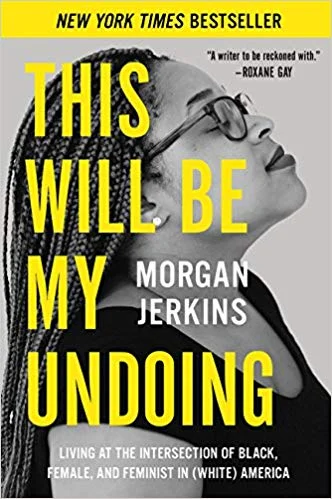
THIS WILL BE MY UNDOING
This book blew us away. It’s courageous and open and raw and brave. It unsettles, and challenges, and moves, and awakens. Morgan Jenkins gives voice to her experiences of being a black woman growing up and living in today’s America. She talks openly in a series of essays about her experiences in contexts such as cheerleading, Ivy League college, and international travel, her take on figures such as Michelle Obama and Beyonce, the politics of black women’s hair, and how to have and sustain relationships, within ideas of identity politics and personal beliefs.
“We cannot come together if we do not recognize our differences first. These differences are best articulated when women of color occupy the center of the discourse while white women remain silent, actively listen, and do not try to reinforce supremacy by inserting themselves in the middle of the discussion.”

OK, Caitlin’s Moran’s book isn’t a memoir, but we fell in love with it and it has all the insight of one. Follow 19 year old music journalist Dolly Wilde as she deals with unrequited love for an actual pop star, the enmity of the all-male staff of a leading music magazine, and dealing with fame, London, and very, very bad sex.
“Think about how brave it is, to do this: to queue up, and meet your hero. There’s something incredibly intimate about reading, or listening, or looking at someone else’s art. When it truly moves you—when you whoop when Prince whoops in Purple Rain; or cry when Bastian cries in The NeverEnding Story, it is as if you have been them, for a while. You traveled inside them, in their shoes, breathing their breath. Moving with their pulse. A faint ghost of them imprinted, inside you, forever—it responds when you meet them, as if it recognizes its own reflection.”

CONVERSATIONS WITH FRIENDS
Sally Rooney’s stunning debut novel feels like its keeping itself in check while trying not to fall into the intimacy abyss of female friendship and love relationships. Frances, a millennial beholden only to herself, but who is really in thrall to the self-possessed Bobbi and confusingly charming Nick, works at figuring it all out with a cool detachment that she certainly doesn’t feel. People, yup, they are complicated. It will make you question why you think what you think about people, and how your ego sometimes needs to slide right out of the way.
“Things and people moved around me, taking positions in obscure hierarchies, participating in systems I didn’t know about and never would. A complex network of objects and concepts. You live through certain things before you understand them. You can’t always take the analytical position.”

Russian Doll
Really? Connection? The Netflix comedy-drama created by Natasha Lyonne (who also stars), Amy Poehler, and Lesyle Headland, is about many things. We’ll allow you to debate that endlessly. But we think this twisted Groundhog Day-style series — where Nadia keeps reliving the day that she heads to an NYC party to celebrate her 36th birthday and dies, in various ways, again and again — is about figuring out that people bit. At its heart, its about learning that not being alone in life is maybe enough to solve even the most mysterious of problems.
“In the ‘60s, you would see people dropping like flies at 27 and you felt, ‘Oh that must be a drug thing. But as you move into modern times, we’re realizing that it’s very adult and very accomplished people who find that life is simply too much to bear. That’s a very real thing that we need to remove a cloak of shame around. I think we need to be discussing freely and openly the underlying brokenness of the human experience.”
How to Human has become one of our default listens with its raw, open questioning, as much of host Sam Lamott as his guests. Sam is not afraid to face his past, and his present struggles, publicly and sincerely, and he’ll admit to feeling kind of afraid or crap or lost as he does so. That’s unusual in the highly polished storytelling of most of today’s podcasts. It’s an approach that has drawn in guests as wide-ranging as sometimes controversial lawyer Gloria Allred and wise person in the world Bryron Katie.
“If you believe what you see, you believe we look like our cherry-picked profile pictures we curate, that our life is the polished story we present. But our truth, our quirky, messy, actual human experience, is captivating and magnetic, because we see our true self in the story.”

We want to tell you that everything we learned about people we learned from listening to Terry Gross interview everybody of note, ever. But we didn’t. Though we did feel smarter and more understanding after listening to her conversations. Gross somehow doesn’t push her guests to reveal too much, but she does somehow sensitively and expertly allow for their vulnerability and for them as real people to show up, whether that’s Phoebe Waller-Bridge or Zadie Smith.
“I also often ask my guests about what they consider to be their invisible weaknesses and shortcomings. I do this because these are the characteristics that define us no less than our strengths. What we feel sets us apart from other people is often the thing that shapes us as individuals. This may be especially true of writers and actors, many of whom first started to develop their observational skills as a result of being sidelined from typical childhood or adolescent activities because of an infirmity or a feeling of not fitting in. Or so I’ve come to believe from talking to so many writers and actors over the years.”

We don’t believe in must-reads (who has the time) only loved-reads, and we’d add the literary magazine American Chordata into that pile. Fiction, non-fiction, poetry, art and photography approached with a beautiful design sensibility and brave emotional tenor. Make this your company for a while and it will be interesting company at that. This is a magazine that captures the ‘plurality of human experience.’
“We want to be a really good literary and arts magazine that celebrates sophisticated design and earnest expression on the same page… What interests us most is work that’s new but not smug, that’s brave enough to give us emotional detail and skilful enough to do it without melodrama.”

LOST IN TRANSLATION
We still go back to this movie, which to us defines a certain innocence of its stars Bill Murray and Scarlett Johansson, and of our times, when just hanging out in Tokyo and finding oneself and someone else to brush against seemed enough. Because what really happens here? Two people hang out, slight confused but content to be seen for a while as they are, maybe falling in love, maybe just holding each other for a while in time and space outside of their regular lives. Plus that karaoke scene?
“More than this, you know there’s nothing. More than this, just tell me one thing.”

Susan O’Malley was a SF-based artist who used the materials of our human connectedness to create meaningful works that engaged and inspired. This book centers on a single question — ‘What advice would your 80-year old self give to you?’ — that O’Malley asked people aged 7 to 88. Turns out you should listen to that voice. There are wise words to be heard from your future self if you listen.
“In every conversation I’ve had for this project, I’m reminded how we all are looking for similar things in our lives: meaning, security, happiness, community, and love. Your heart has reasons your head does not know; love is everywhere, look for it; do the things that matter to your heart. The words of others often express what I’m thinking but haven’t yet found words for. It’s these moments of hearing what I recognize that makes me feel alive, connected and understood. Yes, we are all in this together.’”

Amanda’s playlist for connection over on spotify. Listen to this if you don’t want to see people, or want to be inspired to be around them again! Either works.
Let us know what we’re missing, what you’d add and what you turn to when in need of more connection in your life. One note, this is not a list of everything ever written on the subject. Its our take, from what we’ve been consuming over the last few months. Its our prescription for your life for where we are, and you might be, right now. Enjoy!

MARFA | Land of the Lost
The great irony of Marfa is that it isn’t really trying to be anything other than what it is: a tiny, dusty Texas town. The city of Marfa website pitches it as “more than just a place. . . . It’s a state of mind,” but my mom and I agreed that that gives the wrong idea.
“Don’t drop it!!” I yelled in mock alarm.
I’d just mentioned to the proprietor of Many Stones, the rock shop in Terlingua, Texas, that my mom and I had driven down from Marfa. Mostly in good fun, but also with a healthy dose of genuine mockery, he was holding up a work of contemporary art for our admiration and possible purchase—which was, of course, imaginary. He’d likely perfected the joke over many years: a rock shop owner, selling empty air! These rubes will believe anything!
Grizzled locals ribbing the art crowd who helicopters in, lingers just a while, and jet-sets out: Is it a cliché if that’s what they genuinely think? And who are art tourists to fling around words like “cliché,” hmm?
My mom and I spent three days in Marfa, and we saw most of what it has to offer the out-of-towners. Most tourists come to see the art—expansive installations by Donald Judd, Robert Irwin, Dan Flavin, and other confrères of 1960s minimalism, most of the works permanent and overseen by Judd’s Chinati Foundation. Almost everything is advance-ticketed in order to keep the crowds similarly minimalistic. Other tourists come to see the famous Marfa Lights, a ghostly atmospheric effect. Yet other tourists, for instance Anthony Bourdain, come for the food and continue on to Big Bend National Park, which is even deeper in, on the Mexico border. Bourdain would be dead before that episode aired. Judd died before his time, too.
The great irony of Marfa is that it isn’t really trying to be anything other than what it is: a tiny, dusty Texas town. The city of Marfa website pitches it as “more than just a place. . . . It’s a state of mind,” but my mom and I agreed that that gives the wrong idea. The folks who run the town and the art foundation really do want to keep Marfa a smallish, authentic (in the true-to-itself sense of the word, not the external-culture-police sense) place where tourism doesn’t make life insufferable for the locals. Donald Judd left New York for Marfa because he dug it as it was: small, remote, cheap. It’s the outsiders who insist on projecting onto it all sorts of loco imaginings.
My initial trip research turned up these two young ladies who sought it out as a backdrop for their fashion show:
http://livvyland.com/2017/02/02/texas-road-trip-marfa-big-bend-national-park/
Then there’s this, which makes me think “ugh”:
I have no words for this:
I mean, if you’ve spent many a summer in tiny midwestern towns, as both my mom and I have, there’s nothing . . . magical and transformative about being back in one. In fact, it’s familiar, comfortable. People wave at you when you’re out for a run. Shop owners have time to chat.
And now that we’re on the subject, I’m actually highly suspicious of art people who profess too much astonishment at experiencing a remote place. How many art hotshots in New York or L.A. or San Francisco actually grew up in the metropolis, hmm? And indeed, while waiting around for our tour of The Block, Judd’s former home/compound, I struck up a conversation with a guy, who turned out to be a Local Kid Made Good: grew up nearby, cut his teeth as a Chinati tour guide, now is employed at the Smithsonian in DC, and was back in town for the holidays to see his family. He was taking the tour as an excuse to jaw with old coworkers.
Of course now that I’ve debunked the place, it’s time to admit that I did have a transcendent moment in Marfa. As a lifelong James Dean acolyte (who even made the long, lonely drive to Cholame on one milestone death anniversary to linger at the fateful spot on the highway, at the exact time of day of the crash, with the similarly besotted), I’d known for years that his last film, the epic Giant, was filmed in Marfa. He died just days after principal photography wrapped. What I hadn’t realized was that the Hotel Paisano, where my mom and I stayed, was where the cast had lived for the month-plus of on-location filming. Massive production stills plastered the lobby, and the hallways were filled with little gems for the inquisitive guest with time on her hands, for instance a photo essay by some guy who’d visited the remains of the train station in Maryland where Elizabeth Taylor’s character was shown embarking for Texas with Rock Hudson, her new husband.
It was decrepit now, and that made him sad.
At least there was still something to see. Nothing at all remains of the Reata mansion, which was only ever a facade to begin with—time and tide, fires and looters have disappeared it all—but the spirits of those film legends, all gone now, hovered everywhere for me in Marfa.
As you leave town, for sure stop to take a photo at Elmgreen & Dragset’s Prada Marfa (I bet the rock shop guy secretly loves the idea of that place! so snarky!). But also linger a while in the desert just outside of town and commune with the ghosts of the big ones—and I’m talking about Judd and Bourdain here, too—who likewise stayed a moment or longer, and for some of whom it was more or less a last stop.

City Lights Books | behind the truth
City Lights Bookstore is a literary landmark and a magical meeting place for intellectual inquiry.
“City Lights is a landmark independent bookstore and publisher that specializes in world literature, the arts, and progressive politics.”
City Lights Bookstore is a literary landmark and a magical meeting place for intellectual inquiry. Open until midnight daily since 1953, City Lights is internationally known for its expert selection of books and for its impact on the history of free speech in America with the publication of Allen Ginsberg’s Howl and the subsequent trials. City Lights continues to publish avant-garde work, host regular events and readings, and be a beacon of inspiration for all writers and lovers of the written word.
Lawrence Ferlinghetti, the primary founder and caretaker of City Lights, turned 100 years old this year and San Francisco celebrated his incredible contribution to both this city and literary culture across the globe. Ferlinghetti is a widely read, published, and cherished poet and activist who continues to create and paint mystical worlds of the imagination.
Inspired by Ferlinghetti and City Lights, I wrote a poem to pay homage to this singular place of multi-faceted truth:
behind the truth
after ‘behind the cape’ by david larsen
behind the truth,
and growing numb,
fear floods
the misled head.
men of power
trick fear from
silence.
from
knowing
something
to
knowing
nothing.
now
the work of
untangling
knots of
misplaced, misused
lies
i start again.
To find out more about City Lights Books: Website www.citylights.com / Facebook @citylightsbooks / Instagram @citylightsbooks/ Twitter @citylightsbooks

The Sheppey
The Sheppey rewards those who seek it out with character in abundance, and music to pay attention to, thoughtful rooms to suit your different moods and barrels of cider on the bar to blurry away your day.
“Five minutes from Glastonbury and ten minutes from Wells, England’s smallest city, The Sheppey is a pub out in a world of its own, amongst the peat beds and murmurating starlings of the Somerset Levels. We offer brilliant modern European food, a constantly changing roster of beers and ales, and a bar covered in casks of local ciders that’ll knock your socks off.”
Sometimes when it feels like there is nothing there, we stumble on something. Driving down narrow single lanes across the Somerset Levels, the feeling is very much of absence – of being lost on the flatness of it all, of peet moors and dairy farms and not much more. But then you arrive, at an unassuming white fronted building and you are here, in someplace. Which here means a location of eccentricity and bustle, and a pub called The Sheppey.
We’re huge believers in the good ole English pub to hold us as people, but it takes a special kind of pub to hold us beyond the pint. The Sheppey rewards those who seek it out with character in abundance, and music to pay attention to, thoughtful rooms to suit your different moods and barrels of cider on the bar to blurry away your day.
There’s whimsey to be found here: the fish wallpaper, signs declaring LOVE, the plastic horror dolls (or is that just our reading of those things!), the vintage finds, retro furniture and Hockney prints. You get to self-select where you want to be: cute cubbies for lounging, a more traditional pub bar, an outside courtyard to soak in the hoped for sun and a more grown-up light filled indoor space conducive to conversation. And let’s get back to that music which is built into the tongue-in-cheek DNA of this place: the DJ sets, the different music for different decades (yes, that includes an 80s dance party where you get to dress up in that rara skirt you’ve been holding onto) and an eclectic line up of live bands ranging from folk, soul, jazz funk and, err, poaching music.
Bought by Mark Hey and Liz Chamberlain in 2010, The Sheppey has been lauded for a while as one of the best of the west, its pull equivalent, maybe, to that famous site of pilgrimage, The Glastonbury Tor, that sits within its sights. Ok, maybe that’s going too far, but this is a place that has draw. We came with kids and cousins, and probably wrongly used the flea market toys on display to distract them while we munched on our ale battered fish and chips on the sun-filled balcony beside a round shiny ball that said appropriately ‘Globe’. For an afternoon, seated beside a river, with food and family, that was our whole world. That was enough.
By pouring their commitment and personality into this space, Hey and Chamberlain have created a context where magic of a different kind can happen too. Yes, they have manifested a situation of welcome and hospitality, a context that invites joy and relationships, an environment that is cosy in its crammed arrangements. But when this all gets out of the way, when you are seated or dancing or eating amongst its glory, there’s that other spark that can happen, the one where we come together as people and help make The Sheppey sing too.
To find out more: Website www.thesheppey.co.uk / Facebook @sheppey
[Oh and if you need more of this and want to stay longer, there are three bedrooms on site and two cottages close by.]

ARoS Aarhus Kunstmuseum
ARoS refers to itself as a ‘mental fitness center’ which we just love. We’re very much on board with that approach to our museums.
“ARoS is the perfect place for social interaction. It is a place where visitors are presented with new perspectives and opportunities to broaden their outlook. In all its diverse activities, ARoS wants to radiate attractiveness, relevance, and integrity. ARoS, therefore, is an outstanding universe appealing to both the heart and the brain. Looking at art is very like standing on a trampoline. You need to be moving in order to gain something from it and, after a time, you find yourself jumping higher and seeing more of the world. This is what art is about at ARoS. It is mental fitness. ”
Usually, when an art museum decides it wants to be one of the top 10 in the world, it focuses on building a stellar collection of masterpieces. ARoS Aarhus Kunstmuseum is doing it differently by focusing on its connections with the local community and society at large. That means it’s committing to us as people not just us as an audience.
Take its latest exhibition, Tomorrow is the Question, which faces our possible futures as humans given the crises we're in and is one of the many initiatives at the museum inspired by the UN seventeen sustainable development goals (others include Hunger and Poverty). There’s the awe-inspiring rooftop work by Olafur Eliasson, Your rainbow panorama, as well as James Turrell’s wondrous expansion of the museum with the Next Level, and the ARoS Triennial, which in 2017 looked at nature and environmental issues in contexts beyond the museums walls. Plus there’s Art & Yoga, artists in residence, and an emphasis on local food and craftsmanship in its culinary offerings. It is this commitment to 'experience, insight and reflection' that is making ARoS, one of Europe’s largest museums, also maybe one of its most relevant.
In fact Director Erlend Hoyersten is explicitly making good health and well-being a goal for this contemporary arts institution:
'A good life is a life full of meaning and social relations. We humans need to commit ourselves, to know things, and to mean something to others. Joy is not about predictability, control or absence of pain. Joy is often about something we cannot be quite sure of. Art disrupts. Art asks questions. Art helps us to see what does not yet exist. Only by imagining a better world can we actually get a better world. If you can think it, you can do it.’
ARoS refers to itself as a ‘mental fitness center’ which we just love. We’re very much on board with that approach to our museums. Here we get to reach as people for whatever it is we need in our lives: curiosity, connection, awe and wonder amongst these. Giving ourselves over to new ideas, to new ways of being, to new visual languages, means we also get to give ourselves over to an expanded sense of ourselves, of our worlds and of each other.
Watch this video: it will give you shivers for how our museums can function differently. Campfires for today? Absolutely.
To find out more: Website https://en.aros.dk / Instagram @arosartmuseum / Facebook @ARoSArtMuseum / Instagram @arosartmuseum

Fiber Circle Studio: A conversation with Alisha Reyes on how making saved her
Some of us know our purpose right from the get-go; many of us don’t, we stumble on it. For Alisha Reyes, founder of Sonoma County’s Fiber Circle Studio, it took knitting a pair of socks at age 17 for her life to light up.
“Fiber Circle Studio, located in Sonoma County, CA, focuses on offering fiber related workshops, and equipment in the areas of weaving, spinning, fiber processing, sewing, dyeing, knitting, crocheting and felting. Our goal is to provide all levels of fiber artists, from new to expert, with all the resources, tools, knowledge and equipment to explore one’s creative journey in a place of community, support and inspiration.”
Some of us know our purpose right from the get-go; many of us don’t, we stumble on it. For Alisha Reyes, founder of Sonoma County’s Fiber Circle Studio, it took knitting a pair of socks at age 17 for her life to light up. Literally. At that time she was struggling with depression and ideas around self-worth, and it was that one seemingly tiny act that gave her hope.
Since that moment, Alisha has actively pursued workshops, mentors and teaching experiences to gain mastery of knitting. As she did so, she found she was good at it, like really good. When that pursuit wasn’t quite enough, Alisha headed to a farm in upstate Washington to understand the entire process of fiber, like from the sheep stage on, including spinning and dyeing. She was that committed! Alisha is now a prophetess of the fiber arts but she’s also super approachable and down-to-earth and gets that even if you don’t self-identify as a maker, you get to do it too.
About 18 months ago, at the beginning of 2018, all Alisha’s knowledge got poured into a bricks and mortar space in Cotati, called Fiber Circle Studio. For months before the opening, Alisha collected weaving looms, spinning wheels, sewing machines and drum carders, which all got stored in her 700 square foot home (there’s that commitment showing up again) and which now fill this space instead. She faced down all those barriers to starting an actual space for creatives: like insurance, rent, parking, licenses, you know all the scaffolding that can make our dreams but sometimes make the kind of walls that we don’t want to be building instead. Then there were, and still are, those more personal issues to contend with like money, time, experience, self-value and family time, as well as the reality of being only 28 years old and a mother of two.
Alisha’s getting it done though despite these hurdles. Fiber Circle Studio is a sweet wonderland of making. There are areas for all the fiber arts, like weaving, fiber processing, dyeing, crochet, and knitting, a kitchen station for dyeing, a couple of tables to gather and workshop, even a library of books about process available for members. As Alisha will tell you, “It’s a busy life, but to have all of these incredible things going on in my life is so fulfilling!’
Fiber Circle Studio is designed to support people however they come to the fiber arts. Sometimes that’s with a workshop that starts someone weaving, trying something new, and using their hands again. Building confidence and interest. Or offerings for people at the intermediate and advanced levels, who have exhausted other retail and book-based resources. Recent workshops have brought in fiber artists from Indonesia to explore batik and New Mexico to learn about inkle weaving.
There’s also a membership option, where people get to use the space and tools however and whenever they need, returning again and again to work on their pieces, share their skill, and maybe even collaborate with the person on the loom over. This is a space that works across breadth and at depth, and one of the few places in the US that operates this way in the area of the fiber arts.
And there’s also that community piece, that goes beyond nurturing a potential talent, such as tapestry weaver Keyaira Terry who got her start here, but is also about nurturing us as people and us in community. Fiber Circle Studio isn’t about making in isolation, it’s about making in community and in relation to yourself. That’s evident in programs like Craftaholics Anonymous, but also in the very DNA of this space – it’s all relational, to self and to others. The strands of a life sit here; Fiber Circle Studio exists to help you weave them together, however that makes sense to you.

MAKING SPACE:
With Alisha Reyes, Founder, Fiber Circle Studio
Why was a physical space important to you?
To have a place of engagement and interaction. To provide space and equipment for people to explore a creative journey in an inspiring and supportive environment.
What advice would you give to other creatives thinking of starting a bricks and mortar?
Set a budget, list your absolute needs as well as negotiable desires. Envision, plan and do it!
What does community mean in the context of Fiber Circle Studio?
Community is about sharing knowledge, inspiring others and being inspired, growing and evolving on a creative journey alongside others. Making connections and providing opportunities!
To find out more: Website www.fibercirclestudio.com / Facebook @fibercirclestudio / Instagram @fibercirclestudio

Sunday Assembly
What makes Sunday Assembly distinct, and widely compelling, is the basic belief system of ‘Live Better, Help Often, Wonder More’. Who could not find themselves getting behind that?
“Celebrating life together. Inspiring events and caring communities in 70+ cities worldwide.”
A Sunday Assembly. What are your associations with this? You probably already have some. Maybe your mind goes to Church. Maybe it goes to Religion. Maybe it’s just thrown back to some gathering, or school, or choir thing you had to attend when you were a kid. But does it go to singing Snow Patrol (‘Light Up, light up / As if you have a choice / Even if you cannot hear my voice / I’ll be right beside your dear’), or eating donuts and drinking coffee, or hearing someone’s story of how they couldn’t quite get their life to do what it needed to do that week?
Since it was launched in 2013 by two comedians Sanderson Jones and Pippa Evans, as the punch-line that didn’t have a joke, Sunday Assembly has morphed into 70 chapters in 8 countries. The most recent chapter opened in Plymouth, England in the past month. We’ve attended the monthly meet-ups in the San Francisco Bay Area. There are others, many others, in places like Cape Town, Sydney, Amsterdam, Paris, Detroit and Las Vegas. If there isn’t one near you, you get to start one with 9 of your friends, following this pathway. There’s a reason it’s the fastest growing secular community in the world.
What makes Sunday Assembly distinct, and widely compelling, is the basic belief system of ‘Live Better, Help Often, Wonder More’. Who could not find themselves getting behind that? Each Chapter is built around a Manifesto that includes things like ‘Is 100% a celebration of life. We are born from nothing and go to nothing. Let’s enjoy it together.’ And ‘Is radically inclusive. Everyone is welcome, regardless of their beliefs—this is a place of love that is open and accepting.’ And ‘We won’t tell you how to live but will try to help you do it as well as you can.’ (There are 10 points that make lots of sense, read them all here)
But this is making it all sound horribly serious. The Assemblies themselves are open and playful, and delightfully human. They speak to our needs as people – the simple ones of laughter, storytelling, friendship, singing, music, sharing food and spending time together. Things happen at them, some expected like the inspirational speakers saying wise words on themes like human aging, or happiness, or body positivity, but some things that may take you out of your comfort zone (or not, depending on how you are inclined) like err dance breaks. Bands play, spoken word artists perform, poets take the podium. Each Assembly is different though the foundation of the mission permeates even the most unique among them.
Maybe because they all speak to our more complex needs, those of wanting to be heard and needing to listen, of getting beyond ourselves and into a wider purpose, of realizing that our emotional lives can have a place in the days of our weeks, that there’s a graspable value system within our reach. Maybe the most important thing here is around belonging – at a time when we’re more and more disconnected, more lost, more lonely, Sunday Assembly opens its doors and says just ‘hi, come in.’
That’s the beautiful simplicity of the whole thing. When you walk into one of the congregations, you can feel it. That openness, that sense of welcome, that feeling of being ok. As you sing along, as you reflect, as you boogie just a little, even as you catch the eye of the person next to you in the fab recognition of it all, you get to be a person in the world, and that can feel good, even if you are out of tune or a stranger or slightly befuddled by it all. This is your chance to revel in the feeling of truly belonging, even if it’s just for a little while.
To find out more: Website www.sundayassembly.com / Instagram @sundayassemblylondon

Descanso Gardens
Most city gardens are well manicured and pretty to visit, but Descanso maintains a unique kind of messiness that instantly transports you into a magical world of plants, trees, and flowers.
“Descanso Gardens is an urban retreat of year-round natural beauty, internationally renowned botanical collections and spectacular seasonal horticultural displays. Visit for a stroll, a concert or a class — there are so many ways to explore.”
Nestled in the mountains just a short drive from the urban landscape of Los Angeles you’ll find Descanso Gardens. Walking among the winding paths and hidden trails, you can’t help but feel transported into a global nature experience spanning the world. One moment you’re in a Japanese garden, and the next you find yourself in the midst of California redwoods.
Most city gardens are well manicured and pretty to visit, but Descanso maintains a unique kind of messiness that instantly transports you into a magical world of plants, trees, and flowers. It’s unique design and layout organically encourage curiosity, and instill a felt sense of wild freedom. Descanso has a way of washing away worry while generating a new perspective on life.
We’re learning more and more how essential nature is to our mental health, and visits to places like Descanso Gardens offer a perfect prescription when difficult feelings like overwhelm and loneliness surface. Providing an opportunity to easily escape and connect at the same time, Descanso is a place to wander alone, or to generate a strong sense of belonging and community.
Your spirits will be lifted by the special beauty of Descanso Gardens, and you’ll immediately feel a sense of calm when you journey into these gardens. This is the perfect place to get the peace of mind you crave in the city of angels.
Website: www.descansogardens.org / Facebook @descansogardensLA / Twitter @descansogardens / Instagram @descansogardens
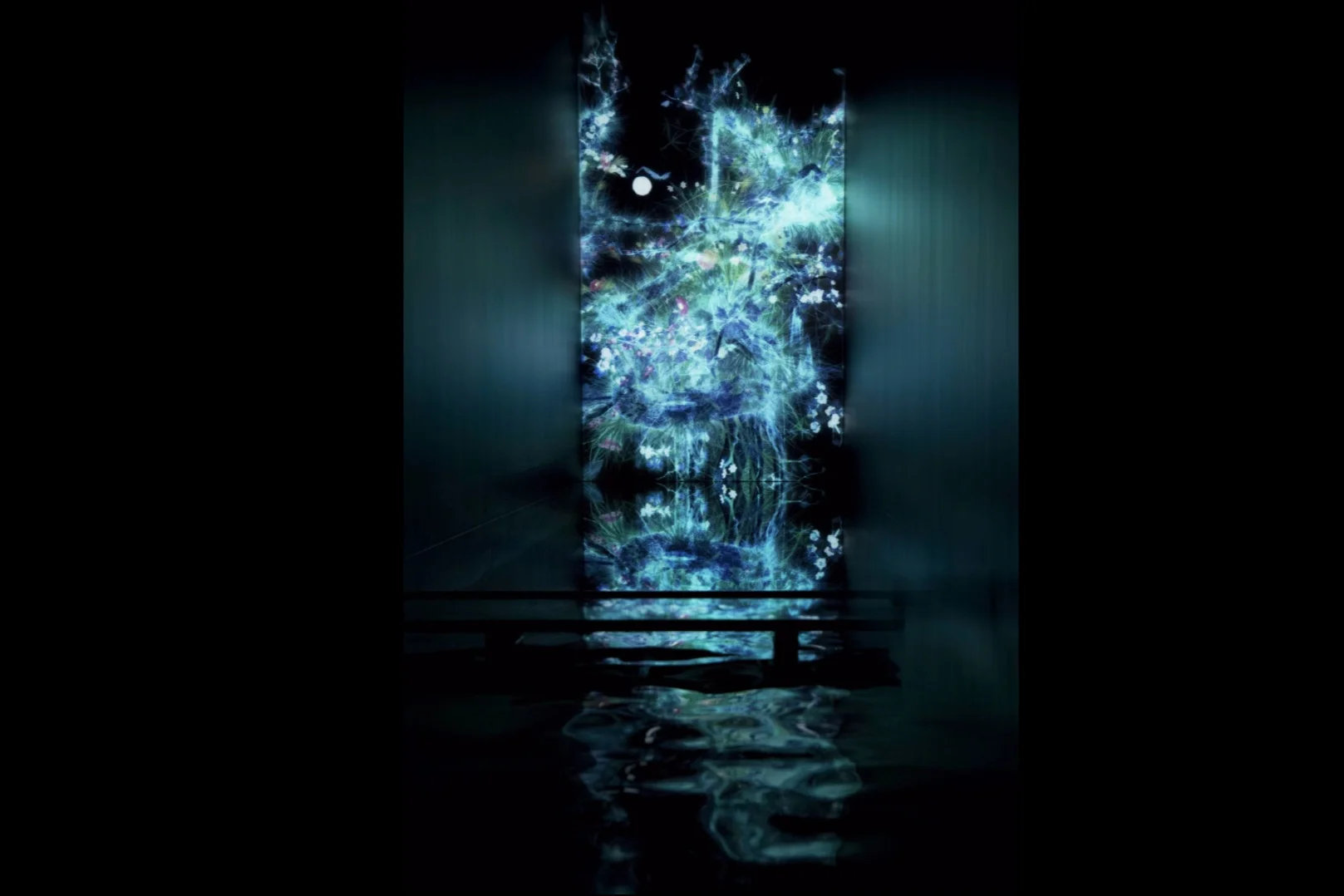
teamLab Planets
There are the obvious jokes one can make about the plethora of experiential pop-up museums that have emerged in our new Instagram-able world, but perhaps there is a kind of beauty that would not have been dreamed nor experienced had social media not been invented.
“teamLab Planets is a museum where you move through water. It consists of 4 vast exhibition spaces at its center, and 7 works of art. The artworks are based on art collective teamLab’s concept of “Body Immersive”.
The massive Body Immersive space consists of a collection of installations in which the entire body becomes immersed in the art, and the boundaries between the viewer and the work become ambiguous.
Visitors enter the museum barefoot, and become immersed with other visitors in the vast installation spaces.”
I know there are the obvious jokes one can make about the plethora of experiential pop-up museums that have emerged in our new Instagram-able world, but today’s visit to *Planets* had me re-thinking my own cynicism.
Perhaps there is a rare beauty in these new creations that we ought to be grateful for, a kind of beauty that would not have been dreamed nor experienced had social media not been invented. I have only ever gone to these *museums* because I know it’s an hour my kids will thank me for. But today’s visit turned out to be something entirely different for me.
Unlike the highly commercial, soulless stateside pop-ups, this museum experience was wildly sensual, surprisingly dreamy and inevitably personal. Over and over again I kept asking myself, “Is this what the approach to heaven feels like?” I kept thinking of my father in his last days weeping, “If I’d known dying was such a beautiful experience, I wouldn’t have spent my entire life fearing it.” I know this is some heavy feelings-stuff for this venue, but really - it was beautiful and powerful.
Head to their website, turn-up the volume and walk with us through an Olympic sized pool of warm, milky water with calming projections of cherry blossoms and koi fish. The music was absolutely everything.
In the end, we lay on a floor for an eternity, observing the vibrant visions of petals falling and butterflies ascending, and the whole time I kept thinking: “Yes. This is exactly what heaven will be like.”

Yerba Buena Center for the Arts
Shaping itself very much as a ‘citizen institution’ in diverse and ambitious ways, YBCA is more than an arts institution, it is a container for all our lives.
“At Yerba Buena Center for the Arts (YBCA), we are driven by the belief that art and creativity are essential to healthy lives and communities. Every day, we work with artists who are tapping into the wonder, creativity, and imagination that fuels our perception of what is possible. This sense of possibility and potential is the foundation of our well-being.”
San Francisco’s Yerba Buena Center for the Arts excels at making it’s cool taglines real. Like ‘Center for the Art of Finding Beautiful Truths Amidst Ugly Realities’. Or ‘Center for the Art of Expressing Optimism Against Unfathomable Odds’. And even ‘Center for the Art of Exposing a Needle of Insight in a Haystack of Confusion.’
These often lyrical insights are woven throughout YBCA’s mission and are activated within the diverse communities in which it consciously operates.
Yes, there’s still an active exhibitions program but one that orientates itself around social change and that promotes discussion around participation, reflection and awareness. With exhibitions by socially engaged artists such as Suzanne Lacey, Futurefarmers and Tania Brugera, YBCA goes beyond the standard solo show format to interactive installations that process our everyday realities at depth and within clear contexts.
But YBCA as a real, impactful and needed platform also manifests beyond it’s white walls and into the public realm, onto the streets, in the neighborhoods and within the urban lives surrounding it’s downtown location. YBCA’s public artworks, for instance, advocate for change. Like the partnership with the Tenderloin Healthy Corner Store Coalition, in which artists replace existing neon signs advertising liquor and cigarettes with new ones selling fresh produce. Other sited works are designed to capture our public imagination like Ana Teresa Fernández’s Dream.
With it’s moment defining YBCA 100, YBCA surveys and amplifies the people, initiatives and movements affecting social change. 2018’s wide-ranging list included the ‘me too’ movement, the students of Majory Stoneman Douglas High School, comedian Luna Malbroux, activist Naomi Klein and poet Chinaka Hodge. While YBCA’s Fellowship Program brings together creative citizens across the Bay Area to collectively interrogate a single urgent question that culminates in an inclusive day-long Public Square event, of performances, installation, workshops, and presentations.
Then there’s the partnership with Blue Shield that builds on the ‘growing evidence that art, creativity, and culture have measurable impacts on individual and community health.’ Culture Bank, co-founded by YBCA Director Deborah Cullinan, which actively invests in artists who are cultivating the hidden assets of our communities. And now YBCA has become home to the Curatorial Research Bureau, a bookstore, learning site, exhibition and public programs space that opens up who gets to learn about the discourse impacting culture.
Shaping itself very much as a ‘citizen institution’ in all these many ambitious ways, YBCA is more than an arts institution, it is a container for all our lives. It’s public service ambition is most eloquently summed up in the words of Cullinan:
“Today, as public trust in our institutions and our leaders continues to erode, there may be no role that is more important for our cultural organizations to play than to be places for people from all walks of life to come together in dialogue. In fact, I believe that the arts organizations that will survive and thrive over the next several decades will be those that embrace a radical inclusivity; set free structures that privilege certain perspectives and exclude others; encourage dialogue and debate; and, expand definitions of what art is, who makes it, and who it is for. These organizations will fuel the public imagination and catalyze collective action. These organizations will hold our democracy accountable.”
Across the cultural field, people are starting to build frameworks for engagement, transformation and participation, often through the filter of culture, and creating the structures to help negotiate our lives, from multiple perspectives. It’s a very different approach to what culture was supposed to do previously and how our institutions have been conceived and constructed. YBCA is a lead player in this field: reconfiguring what it means to be an arts institution today, the role that cultural spaces can actively take to affect our everyday lives, and what a center for doing something about it can actually look like.
Visit. Engage. Participate. Because what YBCA makes happen matters to us.
Website: www.ybca.org / Facebook @YBCA / Instagram @ybca / Twitter @YBCA

On Cycle Class
I appreciate so many things about cycle class—the exercise, of course, but also the mental equanimity it brings. I have one of those brains that speeds, and when it’s not speeding it’s caught in a loop.
She wasn’t my first. There were others before, and there’ve been others since.
But she was my favorite. I suspect she always will be.
Circumstances kept us apart most of the time, but for a few hours a week, I was entirely hers. And when we were together, an hour went by like an instant.
She was funny, but she could also be tough. Very tough. I worked so hard, trying to make her happy. When her lips would curve into a smile of approval, it made my day.
Sometimes she would invite others to come watch us, to get new ideas.
Our song was “Sandstorm” by Darude. She could even make the song shrink or lengthen, depending on her mood. She was tiny in stature, but she was that powerful. I still think about her often, and fondly. Even though I no longer remember her name.
She was the group exercise manager at the 24 Hour Fitness at El Camino and Hwy 92, and when she led a cycle class, you could count me present and accounted for, ma’am. She often climbed off her bike and prowled around the room, never making eye contact with any one individual but letting us know she was watching, always watching, as she barked orders. “Sprint!” “Jumps!” “Hill climb!” The aforementioned others who came to watch were her fellow cycle instructors; she insisted they sample one another’s classes to keep everyone at the top of their game.
I’ve been attending cycle classes for almost twenty years now, and I’ve encountered dozens of instructors. The worst are the throwback dudes who play Aerosmith and Guns ’n’ Roses—two bands I love dearly, thank you very much—but then expect the music (not them) to lead the class, and we all plod, plod, plod away at the same BPM for an hour. Actually, no, I stand corrected, the worst is when they command us to pump away at some other BPM than the music. Would a Zumba teacher ever tell you to dance faster or slower than the music? No!
I appreciate so many things about cycle class—the exercise, of course, but also the mental equanimity it brings. I have one of those brains that speeds, and when it’s not speeding it’s caught in a loop. Cycle makes the needle jump its groove and gives me some relief. I’m not overly sporty, and I’m about as adept with choreography as I am with, say, brain surgery, but I can do jumps on fours and eights like nobody’s business. I’m competition-averse, but eagerly imagine that I’m racing the guy next to me. And likely winning, considering how easy he seems to be taking things today, the slacker.
For an hour in cycle I get to think deep thoughts about the structure of music. Even pop music has a lot of structure, and a really skilled instructor will leverage it to make us work hard and make the time streak by. I also get to muse on personality types. In the old, less trusting days, the gyms would keep the bike seats in a padlocked locker between classes, and there was that one guy who never took a seat so he’d have to stand for the whole class. Hmm.
I became a freelancer so I’d never have to attend a meeting I didn’t myself schedule, but two or possibly three thousand times over the last twenty years I’ve gotten up at the crack of dawn, or snuck out of work early, or otherwise dragged my sorry ass to the gym for cycle class at some weird hour someone else decided on. And even when Mr. Guns ’n’ Roses is at the helm, it’s always felt like time utterly well spent mentally, not just physically. I’m sure others, sweating alongside me in the dark, trouncing me in their own imaginary races, think the same.
———
And for another take on cycle class, Jimmy Fallon (thanks Lindsey for the suggestion)!

Jodrell Bank
Jodrell Bank is one of those truly special places for a spectacular, constant, reason. Right here is one of the biggest and most powerful radio telescopes in the world.
“Take new and exciting approaches to presenting the wonders of science in a way that engages our visitors emotionally as well as intellectually, evoking wonder, surprise, humour and, above all, curiosity.”
We’ve been coming to Jodrell Bank Discovery Center since we were kids. And now we take our own kids. That sense of awe and wonder that we experienced way back then (even though we went there on school trips which somehow make everything boring), that hasn’t gone away for us, and now it captures our younger generation too.
Since we came in our school uniforms (we won’t say exactly when that was), Jodrell Bank has undergone a bit of a revamp. Our kids get a much nicer café then we ever had, though we get the benefits of that too, as well as majorly remodeled visitor buildings. The striking Planet Pavilion contains the world’s largest clockwork Orrery (a to-scale working model of the solar system) and in the Space Pavilion you now get to hear the Big Bang.
But Jodrell Bank is one of those truly special places for a spectacular, constant, reason. Right here is one of the biggest and most powerful radio telescopes in the world. The giant, Grade-1 listed, Lovell Telescope. This monumental white bowl has been sat in the green fields of Cheshire since 1957. Positioned right beside the Manchester-Crew train line, I’d pass it every day on my way to school, and it has never ceased to blow my mind. Looking out of a train window, the Lovell Telescope would denote an escape from the quotidian, from the banal, from our diminutive human lives. It would signify space and the universe, the capacity for us to know the unknowable, mysteries of an astronomical scale. It would communicate escape.
At a distance, the Lovell Telescope is symbol of authority for what man-made science can do. Much, much closer —you can walk right up to its base—it maintains that sense of awe, but it also conveys our humility, our very much non-man-made place in the universe. As it transcends time, the Lovell Telescope is beginning to show the wear and tear of its own life, it begins to feel fragile. When we last visited, the train-track base was covered in scaffolding, which seemed surprisingly prosaic when you think about what this thing can do. It felt oddly like it might break if moved [sorry all those Uni of Manchester science hearts that just died when I typed that]. And it does move – it’s one of the largest steerable telescopes in the world, with the bowl changing position depending on which part of the sky it needs to track.
Jodrell Bank is a place full of these kind of dichotomies. It’s an analogue escapees dream: while here, you are asked to switch off all devices, so that they don’t interfere with the powerful radio observations. Which is a permission giving of a kind we like. There’s a sense of play, of curiosity, in the exhibits on display, and the grounds that allow free-roaming, but there’s also the weighty responsibilities and ambitions of the science authored here to further our knowledge and capacity to get beyond dreaming. And now there’s even camping, bringing the vast imaginative possibilities of this place to a 4-day annual summer festival, appropriately called bluedot. With an audience of 25,000, science just got way more accessible, as it plays with music, art and culture, and bands like The Chemical Brothers, Flaming Lips and Elbow, as well as Manchester’s own Halle Orchestra, get to drop by. But best of all—we think anyway—bluedot takes place right next to that giant telescope (sometimes incorporating it into the show) and you get to unzip your tent, probably on a frosty Mancunian morning, and be right there with it.
We can majorly lose our minds on that. As we always have done, a bit, just being here with the Lovell Telescope and its universal pull.
Website www.jodrellbank.net/ Twitter @jodrellbank/ Facebook @JodrellBankOberservatory

The Chapel
The Chapel pulls people together, over food, over wine, over conversation, over ideas. That is does so in a space long held for purpose and meaning, gives the idea of the communal a modern finish.
“Warm and friendly place to shop, meet, drink and eat the very best seasonal, local food. ”
This was not the place that we thought we’d find in a gorgeous village in Somerset. But then Bruton is not defined by its countryside location or its picturesque look. There’s a lot going on within these country lanes. You might even, sometimes, think a tiny piece of London has just got off the train. Hey, even John Steinbeck said of Bruton: ‘I feel more at home here than I have ever felt in my life in any place.’
So maybe it makes sense to find The Chapel right at the center of it all. We want to write lots of naff sentences saying things like worship at the culinary altar of the chapel, or bread is our gospel, or a church for modern life, but though it threads a desirable religiosity through its space, the Chapel is very much to the side of that. Yes, it’s a serene update of a Grade II Listed, 19th-century space, which is itself a remodel of an 18th century former congregational chapel. And yes, you very much sense that history within its walls. But it’s also much less ethereally focused in its update of the purpose for these spaces: it now contains all the things we need to build the modern good life.
There’s the artisan bakery headed by Tom Hitchmough using a traditional long fermented process. We’re bread believers: bakeries can be the souls of our communities. Just think about the hours involved in creating a loaf, that nighttime toil, the scents and bustle created around the storefront, the taking home of packages of warmth, and the mindful in the moment-ness of breaking bread.
Then there’s the award-winning all day-restaurant which though is buzzes with conversation and contemporary needs (a bar where the altar would be) somehow manages to instill tranquility (and even quiet our kids) with its high ceilings and windows, streaming natural light, and figurative sculpture looking down on the dining congregates. It holds us in our days: somehow moves from loungey to kitchen table to posh restaurant, and from solo coffee to dinner for two to group dining, depending on where you are seated, what you need, and the time you are there.
More behind the scenes are the clubhouse, a private resident’s lounge from which to work (free Wifi) and relax. And the eight bedrooms that offer a tranquil pause. Oh, and there’s a carefully curated wine store that focuses on local producers.
But the thing we’re struck by is that The Chapel also offers this, public events for the curious that attract some big names and introduce some life-changing ideas: like a talk by Ed Bullmore, author of The Inflamed Mind, connecting the mind and the body through inflammation, an evening with Martin Shaw, a storyteller of ancient myths for modern times, and a film screening with campaigner Nimco Ali discussing female genital mutilation.
The Chapel pulls people together, over food, over wine, over conversation, over ideas. That is does so in a space long held for purpose and meaning, gives the idea of the communal a modern finish.
Website www.atthechapel.co.uk / instagram @thechapel / Facebook @thechapel / Twitter @thechapel
While you are here: For that creativity piece, head to Hauser & Wirth, an internationally renowned gallery that brings major art world players to a converted rural farm. For Nature + Wonder, visit The Bishops Place, where history is being interwoven with play in the cathedral town of Wells. And for spirituality of a pagan kind, walk to the top of Glastonbury Tor, and allow the legend and views to sweep over you. And you can do this from anywhere, buy a Mad Girl / Mad Boy sweatshirt by Bruton based Selfish Mother in collaboration with Bryony Gordon / Mental Health Mates.

Psychology Fringe Festival
The Psychology Fringe Festival is giving us some much needed alternatives for ways forward and ways of being. They are bringing to the fore increasingly urgent conversations created by the circumstances of our rapidly evolving world by the people who understand them most. That’s a new kind of festival that we all need to exist.
“The more we can talk about mental health – and the more ways we find to talk about it, sing about it, rap, act, paint, photograph and so much else then the more chance we have of improving wellbeing more generally. Mental health isn’t something that belongs behind the clinic-room door or in the professor’s office. It belongs to all of us. ”
A small team of clinical psychologists established the Psychology Fringe Festival and the accompanying Beyond the Therapy Room Conference to present ‘different voices, opinions and perspectives on mental health’ and to ask how we can create a more psychologically caring society. That’s a perspective that we badly need.
Though it operates alongside the Division of Clinical Psychology’s annual conference, The Psychology Fringe Festival is very much publicly orientated. Its aim is to explore clinical psychology and mental health in a broader way, to think about how we relate to one another as human beings rather than focusing on a purely medicalized approach to difficulty and distress which we’re maybe more familiar with.
In that spirit, the festival uses art-based formats, such as dance, theatre, poetry, comedy, philosophy, art and workshops, and has touched on poverty, LGBT issues and the media as well as mental health. Programs and performances are often delivered by people with lived experience of mental health services, such as DanceSyndrome, Heart to Heart Theatre, and Neural Knitworks.
Its sister program, The Beyond the Therapy Room conference similarly focuses on celebrating innovative ways of working, highlighting what we can do beyond one-to-one therapy to engage with wider issues affecting people’s mental health, including the social and political climate.
Following successful events in London, Liverpool, Cardiff, and Manchester, the Psychology Fringe Festival is giving us some much needed alternatives for ways forward and ways of being. They are bringing to the fore increasingly urgent conversations created by the circumstances of our rapidly evolving world by the people who understand them most. That’s a new kind of festival that we all need to exist.
Alternatives for supporting us through our everyday lives are popping up, but as clinical psychologist and one of the festival’s cofounders Will Curvis advises, we need to engage: “Show up at the conference and festival. Coming to events, meeting like-minded people, getting involved in these services - there’s a lot of opportunity to be active.” See you there next year?
To find out more: www.psychologyfringe.com / Twitter @ClinPsychFringe / Facebook @psychologyfringe
Case for Making
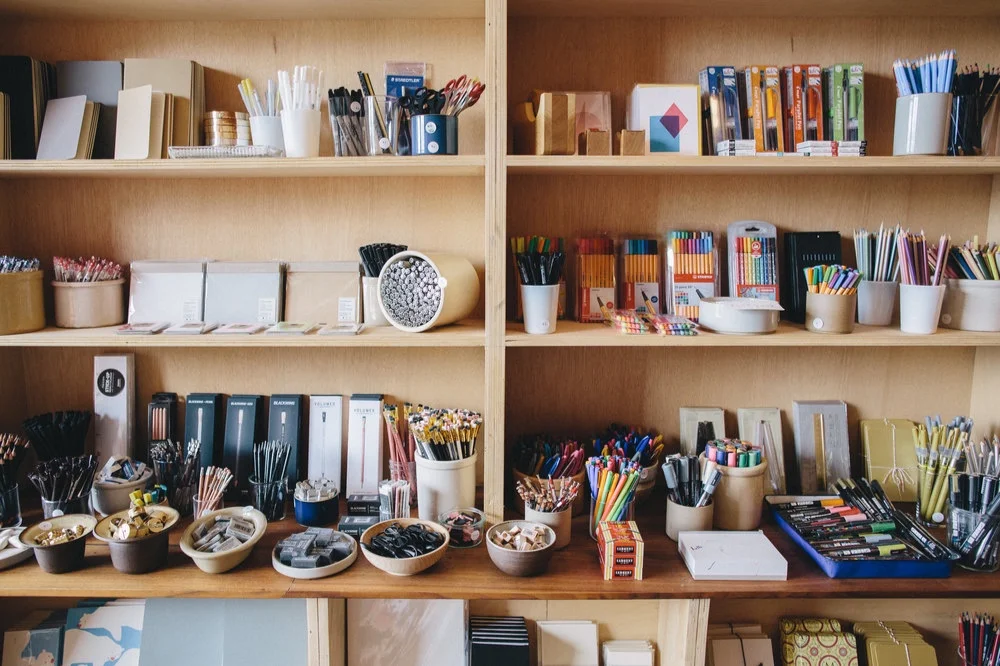
An emporium for the curious, for searchers and explorers of the page and white space. San Francisco’s Case for Making has been thoughtfully designed to ‘push our collective ideas further about what creativity can be’.
“Case for Making is a storefront offering creative supply basics, raw materials, and workshops, selected and designed to encourage process-focused exploration. Our practice is to recognize the presence of creative inquiry in multiple forms, and to provide space for engaging in and valuing this work.”
Right in a pocket of community in San Francisco’s Outer Sunset neighborhood, sits Case for Making, its creative beating heart. Founded by Alexis Joseph and Lana Porcello in 2014, because ‘the potential of humans doing projects makes them very happy’, this sweet storefront stakes a mark in the ground for the importance of making in our lives. Its an artist’s store for all of us.
Browse their products (you can do this online too). Take time in the store to just figure out what appeals to you and what makes you want to play at the process of it all. For us, its usually the handmade watercolors and indigo inks, and the special paper goods, particularly their fill-in-the-blank greeting cards.
This is an emporium for the curious, for searchers and explorers of the page and white space. Its a place designed to ‘push our collective ideas further about what creativity can be’.
Maybe this is best captured by the workshops on offer. Through classes led by local makers they admire, you are invited to produce your own pigments, learn how to draw, or paint with watercolors (their current offerings). These practical explorations sit closely to a spirit of guided inquiry, about how we show up as people in our worlds.
Case for Making takes down the idea that art is precious a notch or two, and opens the door to whatever it is that creativity means to each of us. We get to decide what we want to make and why it matters. They get to help us to do that. That’s why we love them.
*There’s a sister store at The Aesthetic Union too that you should check out!
Website www.caseformaking.com / Instagram @caseformaking

LA Central Library x Susan Orlean
It’s when Susan Orlean writes of the multipurpose function of libraries now to be the spaces that can reflect our public imagination that we feel like signing up to be a librarian right now.
“The publicness of the public library is an increasingly rare commodity. It becomes harder all the time to think of places that welcome everyone and don’t charge any money for that warm embrace.”
The Los Angeles Central Library? Wait, what, is this the right place for this? Its just a library afterall.
Yeah, we think so. We just finished reading Susan Orlean’s The Library Book and she wrote of this one library in all the terms that we consider fundamental to If Lost… places. She lyrically, and realistically, captures what this library in particular, and libraries more widely, mean to us. She knows in the heart and her own experience, how libraries hold a unique space in our lives, sometimes across generation, how they allow us spaces to just be, how they create a way into our communities that might not otherwise be there.
The Library Book captures the unique history of the LA Public Library itself - the fire that almost took it down, the women who first shaped its mission, and the current social conditions and expectations that it must now negotiate. Its also just a building. Albeit one that makes magic on a daily basis. On the LA Public Library itself, Orlean’s writes:
“The ground floor has the same traffic pattern as Grand Central Station in Manhattan. Both places are animated by a hurrying flow that surges in and out of the doors all day long. You can bob along in that flow, unnoticed. The library is an easy place to be when you have no place you need to go and a desire to be invisible.”
It’s when she writes of the multipurpose function of libraries now to be the spaces that can reflect our public imagination that we feel like signing up to be a librarian right now. Since their development in the 1800s libraries have acted as critical focal points for our communities, but The Library Book, also captures the shift in libraries from “a gigantic, groaning, fusty pile of books” to “a sleek ship of information and imagination.” Our libraries now contain not just text and voices, but services and programs that serve diverse populations, including the homeless, low income population and families. Today, libraries have a critical civic role, a pubic facing responsibility. They are sanctuaries, our town square, our community hub, our places of learning, or as Orlean’s writes “a place that is home when you aren't at home”.
We need libraries. We need these spaces to thrive, and they are.
“By most measures, this optimistic cohort seems to be right. According to a 2010 study, almost thee hundred million Americans used one of the country’s 17,078 public libraries and bookmobiles in the course of the year. In another study, over ninety percent of those surveyed said closing their local library would hurt their communities. Public libraries in the United States outnumber McDonald’s; they outnumber retail bookstores two to one. In many towns, the library is the only place you can browse through physical books.
Libraries are old-fashioned, but they are growing more popular with people under thirty. This younger generation uses libraries in greater numbers than older Americans do, and even though they grew up in a streaming, digital world, almost two thirds of them believe that there is important material in libraries that is not available on the Internet. Unlike older generations, people under thirty are less likely to have office jobs. Consequently, they are always looking for pleasant places to work outside their homes. Many end up in coffee shops and hotel lobbies or join the booming business of coworking spaces. Some of them are also discovering that libraries are society’s original coworking space and have the distinct advantage of being free.
Humankind persists in having the desire to create public places where books and ideas are shared.”
But libraries are also something else aren't they? They have this critical place in our communities, but they hold as equally a powerful place in our imaginations. When Orlean’s writes of the nostalgia around libraries, who cannot be taken back to that place of refuge or respite that they themselves experienced at some stage in their life? For her, it was like this:
“Decades had passed and I was three thousand miles away, but I felt like I had been lifted up and whisked back to that time and place, back to the scenario of walking into the library with my mother. Nothing had changed—there was the same soft tsk-tsk-tsk of pencil on paper, and the muffled murmuring from patrons at the tables in the center of the room, and the creak and groan of book carts, and the occasional papery clunk of a booked dropped on a desk. The scarred wooden checkout counters, and the librarians’ desks, as big as boats, and the bulletin board with its fluttering, raggedy notices were all the same. The sense of gentle, steady busyness, like water on a rolling boil, was just the same. The books on the shelves, with some subtractions and additions, were certainly the same.
It wasn’t that time stopped in the library. It was as if it were captured here, collected here, and in all libraries—and not only my time, life, but all human time as well. In the library, time is damned up—not just stopped but saved. The library is a gathering pool of narratives and of the people who come to find them. It is where we can glimpse immortality; in the library, we can live forever.”
When my son was born the first thing my husband did was get him a library card. He’s now 10, and has a sister in tow, and he has come to know very closely the capacity of libraries to enchant and educate. From the time his then stay-at-how dad bounced him on his knee during library story times to his amazement at experiencing Virtual Reality during a preteen takeover, the library has been a constant. Its one of the few places left where all of us with our different ages and needs finds something. We all find our way in their together, even if we spend our time separately when we’re in there.
If you don’t know your public library seek it out. And if its under threat like we know many are, campaign for its survival. These are places we need, so we don’t become untethered from our pasts or each other.

Fox + Kit | Tumbling Towards Joy
Entering the play space was like entering another world; a world where quality design meets functionality, a world where the color palette doesn’t send your eyes darting back and forth seeking reprieve, a world where kids slide happily down hills with nothing more than pirate hats, books and one another to entertain them.
“Coffeehaus + Playground”
When I first entered Fox + Kit, my two children in tow, I quickly placed a mental bet with myself: How long would it take us to (1) break something beautiful, or (2) be kicked out entirely?
The cafe felt, distinctly, like somewhere grown-ups like me weren’t allowed to enjoy anymore. Live plants, marble tables, swinging rattan chairs, gorgeous modern furniture in dusty pinks and deep blues. They must not know how sticky we are (?), must not know that I have a 3-week-old banana in my purse, just waiting to tumble out.
The baby-pink-clad barista (a detail I would be remiss to overlook) standing beside a bevy of drool-worthy pastries (another key fact) didn’t appear to share my hesitation. With a smile, he asked if we’d been in before, if he could get a coffee started for me, and if the kids would be heading into the play space.
And, that’s when I saw it … a giant glass wall cordoning off what can safely be considered the most aesthetically-pleasing play area I’d ever seen. Custom woodwork, faux-grass, plush stones, stackable cushions, cozy corners and caves, space for reading and running and dress-up (and whatever other weird things kids do when they are loosely-supervised). We were awestruck, our feet moving forward before our brains could catch up.
So, I stumbled through my coffee order and we continued toward the play space. “We’ll put it in a tumbler for you, so you don’t have to worry about spills in there,” they called after me. I didn’t know exactly what a tumbler was, and the kind, pink barista clearly didn’t know that I’d fully resigned myself to any discomfort associated with spilling things in public (but I was very excited for a special cup). I wanted to drop into my most gravelly voice and tell him, “You don’t know the things I’ve seen…” but I already had the rotten banana to deal with, so I thought it best not to press my luck. (It was the kid’s job to get us kicked out, after all. Wouldn’t want to steal their glory.)
Entering the play space was like entering another world; a world where quality design meets functionality, a world where the color palette doesn’t send your eyes darting back and forth seeking reprieve, a world where kids slide happily down hills with nothing more than pirate hats, books and one another to entertain them. Miraculously, my kids (ages 5 and 10) were both instantly hooked. I grabbed my coffee (a cool, copper tumbler, with a spill-proof lid that I still can’t quite understand the dynamics of), gave them kisses, told them I’d be in the cafe, then left.
Walking back in to the cafe felt illegal.
Can I sit here? Are these swinging chairs for the VIPs? When my kids come running out, loudly-insisting that I come see their half-heartedly executed tumbles, is that when the jig is up? When does the shame part start???
But…it never came.
The kids played, ran in and out, insisted that I meet their new friends and watch their questionable gymnastics feats, took a short break for croissants and chocolate milk (their little mini-tumblers even cuter than mine)…and they played, and I worked (and breathed, and relished in the beauty of the space).
The novelty of this might be lost on someone who hasn’t spent the better part of a decade feeling excluded from the spaces they once found comfort and solace in. And, of course, no one is really *actively* telling you that you can’t enjoy the spaces you once occupied (that would be discrimination) but there is certainly an air of “your crying baby is ***really*** fucking up the vibe and if you don’t leave on your own volition, we might be forced to hipster-stare you into oblivion.” Sometimes just because you’re “allowed” to be somewhere, doesn’t mean you’re welcome there.
When husband and wife designers David and Kyoko Westberg set out to create a space for parents and children, they considered every detail, most notably, a way to make guests feel comfortable, content and accepted for what they are: very nice people (with very loud smaller people, in tow) who all just want some good coffee and yummy snacks.
At Fox and Kit, we’ve found a space that makes us feel both welcome and at ease, even productive. (No one even mentioned the banana.)
Website www.foxandkit.com / Facebook @foxandkitmarin / Instagram @foxandkitcafe

The Bear Trail
The Bear Trail gives you full nature immersion in the up-to-your-knees/waist/neck mud version. This is an outdoor adventure assault course for adults and kids that starts with things to scramble over and ends in the showers!
“Love mud. Love life.”
We know that being in nature does good things for us like making us less stressed and more balanced in our everyday lives. The Bear Trail takes this idea and runs with it by giving you full nature immersion in the up-to-your-knees/waist/neck mud version. This is an outdoor adventure assault course for adults and kids that starts with things to scramble over and ends in the showers!
We got lucky, in a way. We went at the tail-end of a heatwave, so those deep pools of mud were still there but maybe not as abundant as at other times of the year. You can decide how much you are all in so to speak. You get to take the course at its own pace, and choose the risks that you are willing to take. If you’ve brought flip-flops (don’t) and are feeling kind of quesy about mushy wetness you can probably half-arse a few of the obstacles.
Regardless of your timidity level around dirt, its joyful scrambling, jumping, zip-lining, balancing, bouncing and climbing your way around the 28 obstacles. There’s no judgement if you don’t get anything right, actually no tuition to even tell you that. Adults are given as much credibility for being here as kids, there’s no feeling stupid for wanting to do what your 9 year old is doing. Just an open field to play in for everyone. As they say here, “Remember, mud washes off… experiences stay forever!”
Website: thebeartrail.co.uk / Facebook @thebeartrail / Twitter @trail_bear