

Hoxton Street Monster Supplies
Now allowing in humans, this store has everything the monster in you needs (and a not-so-secret cause behind it all).
For: monsters of every kind struggling to find the supplies they need to get through their ghoulish days and humans of all ages looking to restore make-believe in their lives.
What is it: One to enter at your own risk, this quirky store on an ordinary-looking street in Hackney is maybe the only one in the world (that we know of) that stocks “Bespoke and Everyday Items for the Living, Dead and Undead’.
What you need to know: Escape into your imagination with a store that is really one of its kind: since its murky start by newly exiled Igor the 1st in 1818 and its tentative steps into the human world in 2010, it has been serving everyone and everything with the kind of canned and boxed delights that any self-respecting creature needs, the fang floss, breath remedies, and dragon treats on our shopping list.

How to bring this into your undead life: Wherever you are, your way into this world is definitely via witty and fantastic products like their Salt Made from the Tears Shed while Home Schooling, Mummy’s Sewing Kit and packets of powdery pink brain food. If you live locally, volunteer to help brave visitors survive the store or become a writing mentor in the Ministry of Stories.
Why we think it’s different: Beyond its license to sell ‘items including, but not limited to: Malodulous Gases, Children’s Ears, Gore, Fear (tinned only)”, behind a secret password guarded door is The Ministry of Stories , a creative and mentoring charity for mini-humans aged 8 to 18.
The not-for-profit was started by About a Boy / Fever Pitch / High Fidelity writer Nick Hornby with Lucy Macnab and Ben Payne and was modeled on Dave Egger’s 826 Valencia. The aim of the classes here is to make writing fun and accessible across all genres from gaming to screenwriting, cookbook contributions, and graphic novels, and to build the confidence that comes with creative adventures on the page experienced in a supportive community.
It’s now been widely published that there’s a curse in the store – that makes all profits go to the Ministry of Stories. As Minister of Fluency, the beloved by us and many a monster, Colin Firth declares “you know your helping to support the business of the imagination with the next generation”, so maybe this is one hex that we humans won’t venture to break.

In their own words: “We pride ourselves on being London’s, and quite possibly the world’s, only purveyor of quality goods for monsters of every kind. Many of our customers have been coming to us for centuries. Indeed, some have been coming for considerably longer. Whether you’re a Vampire, Werewolf, Sasquatch or something else entirely, we have everything you need.”
Something to inspire: Short of attempting to rebrand everything in our homes – will our kids go with water if it’s the elixir of life – look to ways to bring in the make-believe. In a year, when we’re been abruptly pulled up by reality, there are ways of escape that might be nearer than the dream destinations we’re been longing for – retreats made in our minds, and played out in worlds of our own making. Even travel bans can't go there. But monsters can.

How creativity can improve your wellbeing during uncertain times and beyond
The many ways that creativity can make you feel better wherever you are, and whatever your creative practice.
“Unused creativity is not benign. It metastasizes. It turns into grief, rage, judgment, sorrow, shame. We are creative beings. We are by nature creative.”
Creativity is an important aspect of life, but many people are currently struggling to feel creative. Months of isolation have left many of us feeling lonely and uninspired.
However, some people in the past and present have found that uncertainty and crisis can actually spark creativity and innovation. From trying new crafts like knitting to renovating your home, undertaking creative projects can help boost your mood, bring some joy during these difficult days, and also help you cope during periods of isolation, especially if you live alone.
What is creativity?
Creativity can be channeled, honed, and expressed in tonnes of different ways, not just on canvas or through arts and crafts. It could be through a board game, party planning, or even coming up with solutions to a business problem.
Everyone is creative, but many of us choose to not explore, express or appreciate it, for a variety of reasons, so it goes down the pecking order of priorities and/or the benefits aren’t felt.
Sam had the perception for years that being creative involved painting a masterpiece, like Van Gogh, or writing and performing a song. Both of which he felt he couldn’t do; his creativity was locked in a box or didn't even exist. He’s now come to realise that creativity just needs an outlet that works for you, like many things in our lives.
Similarly, when we think of creativity, many of us still think of painters and musicians, rather than architects, interior designers, warehouse managers, founders, accountants, and all the other people who need to be creative regularly and may not realise they are.
We’ve found that being more creative, however, you choose to access it, is a superpower that can positively impact your life and business. Don't forget - you are creative, it is in you just waiting to come out.

Being more creative boosts your mental health
Here are seven ways that creativity can help us negotiate uncertain times and get through periods of isolation.
1. Creativity reduces stress, anxiety, and mood disturbance
The pandemic has created a lot of doubt and uncertainty, and for many people, this can create feelings of negativity — but you can help mitigate this negativity by doing something creative. Whether you make something beautiful for yourself (such as a pair of earrings) or use your creativity to help someone else (for instance, you could help a small local business with advertising), this focus on doing something and bringing an idea to life will give you a sense of purpose and productivity — giving more meaning to your days in isolation.
The Connection Between Art, Healing, And Public Health — a Review of Current Literature (2010) concluded that “creative engagement can decrease anxiety, stress and mood disturbances.” Another study Everyday Creative Activity as a Path to Flourishing similarly concluded that engaging in a creative activity just once a day can lead to a more positive state of mind.
[A creative activity can be simple, don’t worry. You may be doing it regularly already. It could be doodling in a journal, crafting, playing the guitar, redesigning your kitchen, or business planning. These are things everyone can do and just acknowledging it can give you a boost.]
Back to the study. The results surprised the researcher Tamlin Conner, who didn’t think the findings would be so definitive. Conner said...“Research often yields complex, murky, or weak findings…But, these patterns were strong and straightforward: Doing creative things today predicts improvements in well-being tomorrow. Full stop.”
During the pandemic, your local council might offer creative workshops. For example, the creative sector in Bradford has come up with a host of creative ways for locals to improve their mental health; they are providing virtual classes for both adults and children, including drawing classes, yoga classes and writing classes.
2. Creativity Can Improve Your Personal Space
Lockdown created a whole host of DIY clichés and for good reason! Being stuck inside your house for months isn’t much fun, especially if you don’t find your home relaxing or pleasant — but up-cycling is an easy way to improve your surroundings.
From up-cycling old chairs to give them some personality, repainting some cupboards to breathe new life into them, or turning old cups and bowls into planters for flowers and shrubs this is a simple way to stay occupied (and it is also great for the environment!).
If you are looking for some upcycling inspiration, we can recommend these Instagram Accounts:
@maiseshouse for beautiful upcycle furniture inspiration
@restoringlansdowne for moody interiors and Victorian home renovations
@linsdrabwell for some budget-friendly upcycle hacks
You can start small on something like a plant pot or a mirror and work your way up to something bigger.
This leads to another benefit of creativity; it gives us a feeling of pride, that "I did that, yeah, me”. It’s really nice spending an hour or more creating something, and then et voila. It’s done, it’s there, something that reflects your inner creativity and personality. An expression of you. It feels very empowering and never gets old.

3. Creativity Allows You To Connect With Other People – Close to Home & Around The Globe
Creativity allows you to connect with other people. One of the hardest things about isolation is limited socializing, but you don’t have to be creative alone.
When lockdown first started, and we were on furlough when our studio M.Y.O had to close, we launched #createsolation. This was a series of almost daily challenges trying a new craft from macramé to string art and even fork calligraphy! This helped bring some structure to our days especially and keep us connecting with our audience and regular studio guests virtually. It was so great to see many guests try out the challenges we were doing and share their tips and creations with us.
There are now a whole range of classes that you can take online with friends, as well as hundreds of forums for specific creative interests (such as designing jewelry or knitting) that meet virtually. This allows you to connect with new people who have the same passion as you so that you can collaborate and have fun together. It also opens up borders enabling you to connect with people around the world, who you may not normally meet!
Closer to home, Sam has been sending his mum a range of creative kits from calligraphy to watercolours and even candlemaking for them to do together and to bring back her creative spark. She has been cocooning for a few months as a vulnerable person and having retired was looking for projects to keep her busy. It’s been amazing to see how much it has helped brighten her mood and give her a sense of achievement — from lino printing 50 Christmas cards to decorating her lampshade and upcycling her furniture, her creations have definitely inspired us!
Humans are social creatures, we crave company, connections, and being around other people. Social interactions are still a vital part of who we are — but it is possible to build connections virtually.

4. Creativity increases our sense of self-awareness and opens up expression
Dabbling in being creative produces an output, which is basically an expression of you — even if you don’t think it is! Over time and with a little practice, you can feel a lot more able to express yourself as you become more comfortable in yourself and the different techniques that you are drawn to.
5. Creativity can slow you down (in a good way) and give you an expanded sense of time
Time slows a little in the sense that your thoughts slow and it’s easier to stay focused on the task at hand and feel a little more present. This can be referred to as being in the flow.
Ever feel like your weeks are just absolutely flying by and you don’t know how and what you’ve done? Slowing that right down can really help, and arts and crafts can make that happen. Having such easy access to technology means our brains are constantly whirring, but not necessarily about the right things.
6. Creativity can help you think better
Experiments have shown that being creative, which can trigger mindfulness, boosts your general creativity as it can enhance your ability for divergent thinking — a thought process or method used to generate creative ideas by exploring many possible solutions. But, many of the qualities associated with convergent thinking are also enhanced by mindfulness. Convergent thinking is basically the opposite of divergent thinking. It generally means the ability to give the “correct” answer to standard questions that do not require significant creativity. Creativity helps with both.
7. Become a better problem solver
Short and sweet here. You can become a little more resourceful and creative with figuring things out, much like you need to be when creating something. Part of this comes from having more confidence to think creatively, as you will naturally think harder and come up with more possible solutions to problems, rather than latching onto the first two you think of.
There are so many times when very quick decisions are made on big challenges, without really looking for all possible solutions. When we can come up with more options, we can assess each one and decide on the one that increases our chance of success.

But how can I be creative?
We know that starting any creative practice can be intimidating, even when the benefits to us are increasingly evident. Here are a few ideas for getting you started on your creative adventure.
Start small
If you feel you are never creative, that’s fine. Maybe try it once this month and make a mental note of how you feel after. Try something you can quickly do like an adult colouring book, doodling, or painting by numbers. Do that a couple of times in the next few months, then maybe try more often… you may end up doing it daily — but don’t put pressure on yourself to do that from the outset. Small, incremental changes can become habits.
From a creative thinking perspective, think back to times where you were creative. This will give you a confidence boost to do it more often when you are looking at challenges in life and business. There is always option a, b and c but what about option z?
Next time you have a challenge you need to overcome, write down ten possible solutions to it. You'll be surprised with what you come up with.
Start with someone else
We always find a bit of peer pressure helps and keeps you in check. Get a friend or colleague who you think would equally benefit from having a creative practice, explain the reasoning and get them on board — they don’t have to do it with you, it’s fine to do it solo, but at the least, they can check-in to see how it went, increasing the chances of you doing it! Try making something for each other or teasing out a life or business problem together.
Check out resources for creativity and find the ones that appeal
Our creative space for grown-ups has many classes (both online and off), you can check out our kits (and podcast!) on Creative Jungle and of course If Lost, Start Here has advice on where to go to seek out creativity. However, you start, make it something that works for you, whether that's pottery or welding... the options are huge. Go play.
So, stay creative, stay inspired, and make sure to regularly reach out to your loved ones for a chat whatever your creative life looks like.


Hackney Herbal
A garden and studio in Hackney promoting the well-being benefits of herbs and our connection with nature.
Go here if: you are curious about the potential for herbs and nature to impact your day-to-day life, you are looking for connection with others, or you are looking for strategies to improve your physical and mental wellbeing.
What is it: A social enterprise that promotes the wellbeing potential of herbs — growing them, cultivating them, using them as teas and remedies — founded in Hackney by Natalie Mady. Since its start in 2015, the community-minded business has gone on to collaborate with organizations such as Tate, Stella McCartney, and Kew Gardens.
What you need to know: From its garden space and studio, Hackney Herbal offers hands-on workshops that take a broad view of herbs – from practical skills that include how to grow and dry herbs for self-care purposes, and how to make herbal teas and remedies, to wider subjects like how to urban garden and how to connect with nature. Herbs here serve both as a practical remedy and a framework for thinking about our health and the environment
How to bring this into your life right now: Though Hackney Herbal is fundamentally about being together and working within nature, it has managed to put a selection of their workshops online. You can book classes in growing food on the windowsill, identifying wild herbs, and using essential oils for the mind. Also, they make handcrafted herbal tea blends from their own gardens and other organic growers that are available to buy, with profits funding initiatives that serve the local community.
Why we think it matters: By booking a workshop or an event or purchasing their teas and products, you are also supporting free nature-based programs that apply the therapeutic benefits of herbs to communities who need them such as the 6-week Herbal Craft Course at the Center for Better Health, and mental health orientated classes at Recovery College and the local chapter of the charity Mind.
In their own words: “We connect people, plants and place to:
1. Share knowledge and skills relating to horticulture, food growing, and nature
2. Inspire people on their own journeys with plants
3. Nurture the health and resilience of people and the land in Hackney
We use nature-based activities to allow people to come together, share ideas and collaborate. We provide a preventative intervention to the onset of poor mental health as well as a pathway to recovery for those already suffering. Our key outcomes follow the themes of health, education and community resilience.”
Something to do from wherever you are: Can’t wait to get started, Hackney Herbal offers tons of advice on their website and social media channels about making herbal remedies and growing herbs at home, as well as downloadable seasonal journals full of recipes (like this on making a solar infused oil or this on making a body scrub from coffee grounds), sales of which support their mission of increasing access to green spaces in the borough of Hackney and helping people improve their physical and mental health through herbs.

M.Y.O (Make Your Own)
A London studio designed for grown-ups to discover their own creativity, with all the wellbeing benefits of making.
Go here if: you’re wondering how to bring more creativity into your life, you are feeling lonely and looking for more connection, or you need to find a strategy for destressing, learned here, then taken home with your creation.
What is it: M.Y.O. (Make Your Own) is a space where grown-ups can play around with materials and making. The creative studio was launched in 2017 by Sam Lehane and Diana Muendo, both chartered accountants who were coming into their own creativity but could not find the environment that they needed to support their new interests.
Why you’ll love it: M.Y.O. gives you permission to be creative because Sam and Diana believe that everyone is. There’s no worrying about outcomes, or getting it wrong, or that you’re not really ‘Arty’ or an ‘Artist’. Just the space to explore and find the medium or practice that works for you.
What you need to know: Small classes take place in a two-level studio in Borough that has all the materials you could possibly imagine to get you making things and a space where it feels ok to get messy. There’s a huge variety of classes (refreshed every few months) on everything from watercolor painting to macrame plant hangers. Adults get a break from it all and a chance to explore arts and crafts skills without judgment or prior experience.
How to bring this into your life wherever you are: In parallel to the bricks-and-mortar space, M.Y.O. hosts a similarly wide array of virtual class options hosted with sister company Creative Jungle Co (which also offers Virtual Team Building with teams across the world).
Why we think it matters: The well-being benefits of creativity are becoming ever clearer (anyone who has picked up a watercolor brush or taken up baking in a lockdown can probably now attest to this). M.Y.O. is increasingly thinking about creativity in terms of how it helps us function in the world, helping reduce stress and loneliness. The classes offered by the studio give you an easy way into figuring out if creativity can have a place in your life and what shape that might take for you.
In their own words: “An art gym for your creative muscles.”
Something to do: You don’t need to be good at art to do it. You don’t have to make perfect pots to mold clay. All you need is the willingness to try, and an openness to seeing where it takes you. What would you try creatively if no one was watching and it’s really just for you? Start there.

A Calendar for When Life Starts Again (UK edition)
As we’re coming up for lockdown air, we’re looking to this year’s festivals to restore a feeling of togetherness.
Events where we can gather together feel like a dream right now. We’re writing this in the winter lockdown. Festivals are still canceling for the year — including iconic Glastonbury and one of our featured places Do Wales. But over the past week, as new rules have become clearer and there are tentative dates moving forwards, we’re feeling cautiously optimistic, pulling out our calendar, thinking about how we might even fill some of those days with others.
Many of the festivals that we’ve come to associate with living a thoughtful life in the UK have been doing the same, announcing dates and line-ups and partnerships and glamping deals. They too are hoping to give us a break from screens, with non-zoom formats returning and in-person tickets selling fast.
We’ve pulled together the festivals that currently have dates next to their names, even if the format they are taking this year is still evolving. Of course, these might change — so check with the festivals themselves for the latest. We recommended using this list with this calendar from Marby & Elm that starts in April 2021, our hoped-for New New Year.
July
1 to 4 | Love Trails | Nature, Mind & Body

Love Trails is the world’s first trail running + music festival. Set in the stunning Gower Peninsula it’s aimed at everyone with an interest in running, from those who have just discovered it as a salve for lockdown days to those who have goals that include marathons and races. Each day of the four-night festival features runs of different lengths (from 5k to 42k) and different themes (sunrise, beer, mindfulness – not together) hosted by running clubs from across the UK. Still, have some energy to burn? There are also activities like wild swimming, sea kayaking, paragliding, yoga, and pilates sessions to keep you moving. And this being a festival, the days are closed out with live music and dancing, a spot in the soothing hot tub to ease those tired muscles, and camping under the stars to sleep it all off, but you’re more likely to wake up to fellow festival-goers arising for sunrise runs rather than falling into ditches.
16 to 18 July | Life Lessons Festival | Mental Wellness

A relatively new addition to the circuit, now in its second year, this thought-led wellness festival takes place this spring in the open-air setting of eighteenth-century Chiswick House. Over three days, smart thinkers will be applying their big ideas to our everyday lives. This is a festival that aims “to get to the heart of what it means to be human: finding meaning in life, creating better communities, living more sustainably, doing business better, and realizing more from society and politics.” You can build your own festival by choosing which of the six sessions over the weekend you are interested in attending. We’re looking to our favorites The Poetry Pharmacy applying words to healing, Bryony Gordon talking about her relationship with her own mental health, and Caitlin Moran updating us on her take on modern feminism.
August
6 | Getahead Festival | Mental Wellbeing
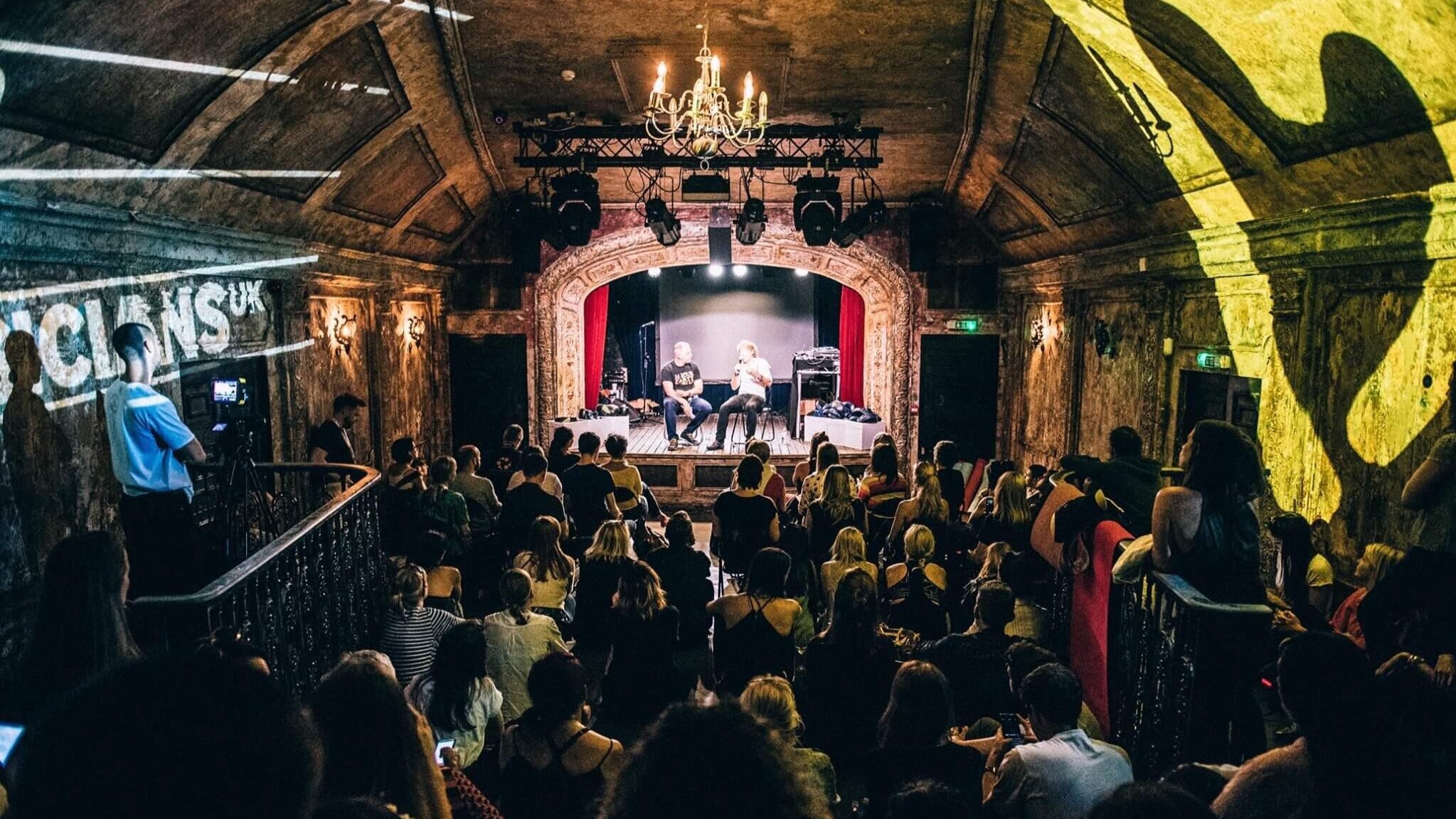
Billed as the only 24-hour festival focusing on mental health and wellbeing, the Getahead Festival steps into a moment when many people have been struggling. As Co-founder and CEO Jenni Cochrane has stated: “We may have a vaccine for the pandemic, but there is no vaccine for the mental health crisis we’re facing.” Over the course of a long in-person day at the Omeara in London attendees will have the chance to recalibrate their approach to their own wellbeing. Sessions will include those on mental and physical health, with topics including body positivity and mindful drinking, as well as lectures on personal and professional development with much-needed talks on financial wellbeing and productivity. To lighten the mood, they’ll also be a sober rave, comedy, dancing, dog therapy cuddles, and a sleep retreat. The non-profit Getahead launched its first festival in London in 2018 with a 25-year mission to positively impact a billion people.
5 to 8 | Wilderness Festival | Nature

Hot tubs, dodgeball, tug-of-war, dancing, river swimming, even a cricket game in the center of it all. After its 10th birthday year was canceled, this boutique festival is back this summer in the stunning setting of Cornbury Park, Oxfordshire — a 500 acres deer park and one of the only privately owned forests in southern England — for all the summer fun to be had and a sense of joy that’s been much delayed. Over four days, you can book experiences across categories such as wellbeing, the outdoors, and dining, filling the long days with inspiring workshops and delicious food, and maybe longer nights with live music, DJs, and dance.
20 to 22 | Soul Circus Festival | Mind & Body Connection
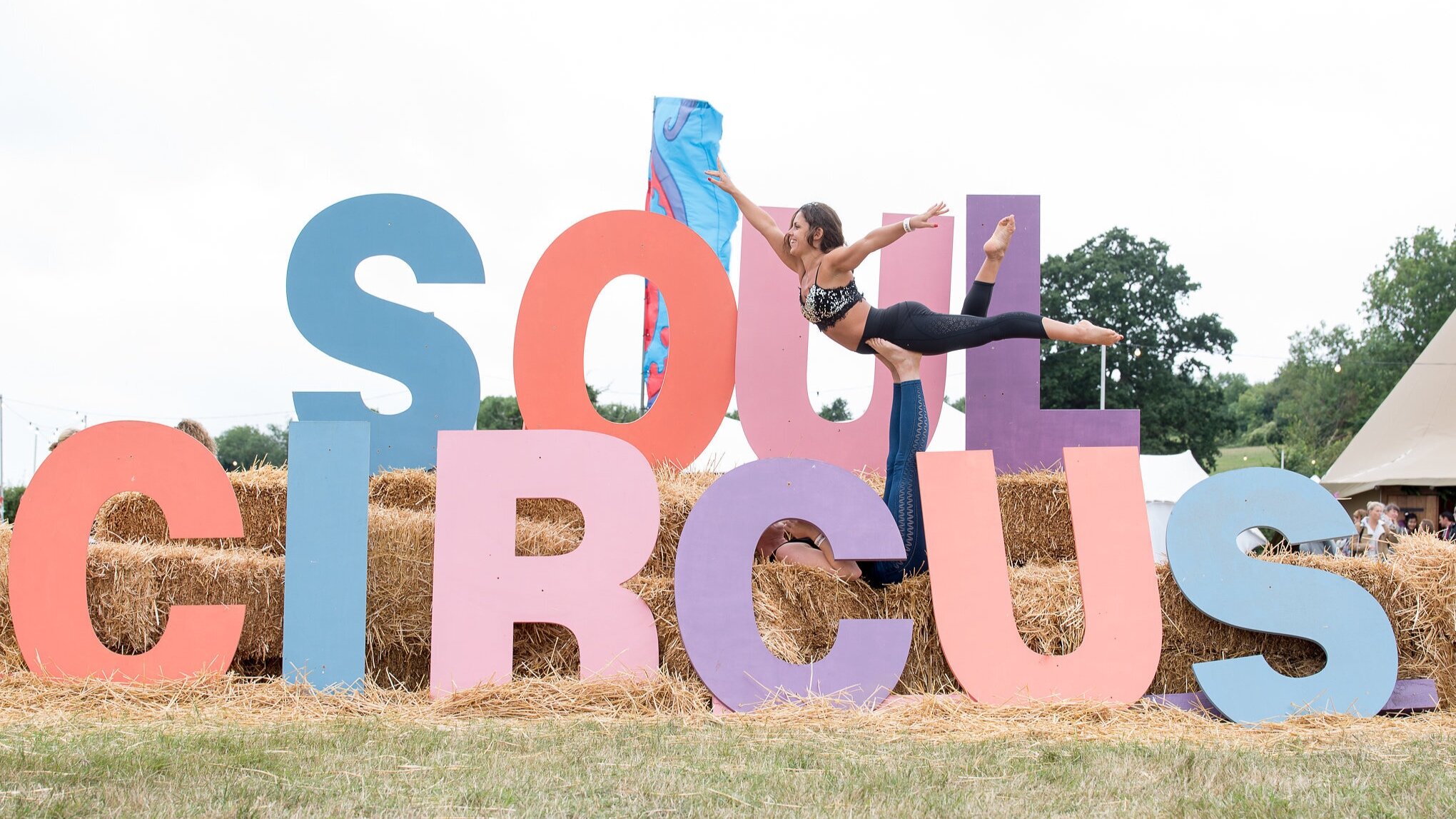
A summer festival that puts wellness at the center but keeps the fun going, set in the beautiful Cotswold countryside. If Downward Facing Dog in the company of hundreds and an openness to all things wellness is your thing, then this is the Summer weekender for you. Who needs wellies and stumbling drunk into tents when you can have tipis full of meditation, breathe work sessions from GOOP superheroes, and yoga to Beyonce (as in played not present). Don’t worry there are still cocktails to be had, comedy for life-affirming belly-laughs, and serious dancing in the evening (Goldie and Norman Jay MBE have attended previous years).
27 to 29 | The Big Feastival | Connection
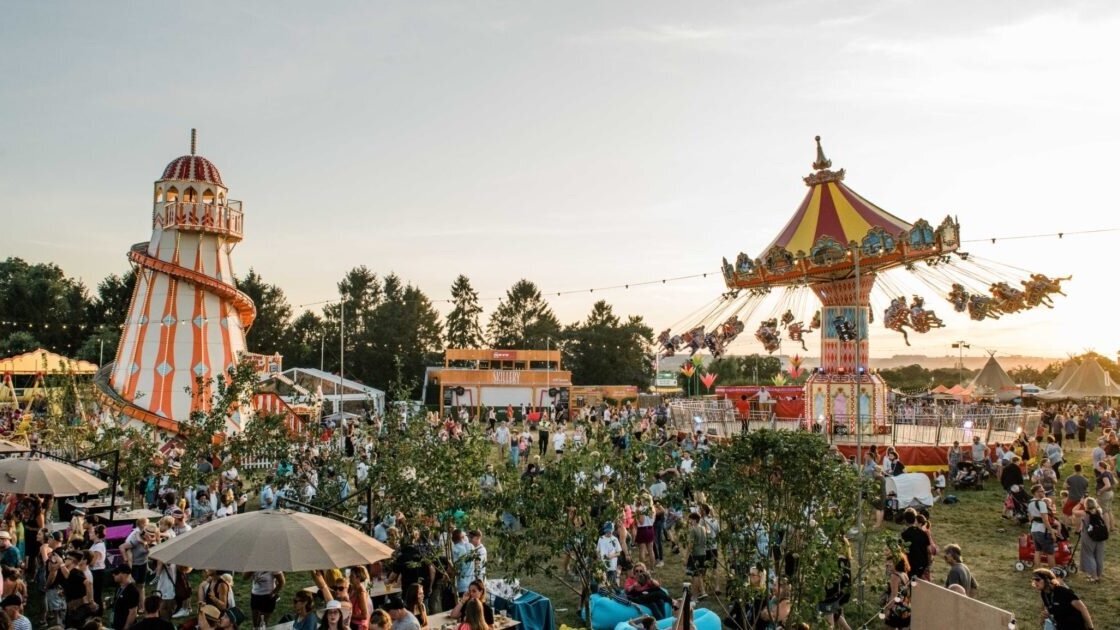
A village fete supersized that takes place on Alex James (Blur’s bassist) farm in the Cotswolds, this year supporting the work of charity partners The Flying Seagull Project and Magic Breakfast. It’s a uniquely family-orientated festival, where music shares billing with food; performances, and family silent discos in the evenings following days of workshops with Michelin starred chefs and hands-on cooking sessions. A vintage funfair and an on-site farm, as well as a BBC Introducing stage, brings the magic to all ages for a summer weekend of being in the moment, a Hawaiian poke bowl in hand.
27 to 30 | The Byline Festival | Awe & Wonder

Now entering its fourth year, The Byline Festival takes place on Pipingford Park Manor in East Sussex and bills itself as “a festival with a social, environmental and moral conscience. not just a shopping mall in a field.” Founded in 2017 by Stephen Colegrave and Peter Jukes, the executive editors of the sister organization Byline Times with a focus on the future of journalism, free speech, and the issues of the day, it also includes literary events, music, and comedy. This year’s festival will take you further into the forests with events from Lowkey, Tokyo Taboo, The Human Library, Hardeep Singh Kohli, The House of Comedy, and partners Frontline Club.
September
17 to 19 | The Good Life Experience | Untethering

Though The Good Life Experience is canceled, a more intimate version, Camp Good Life, is going ahead in September. It promises to have all the same elements that we’ve come to associate with its usual outing but reimagined for our current times.
25 | VERVE Festival | Mind & Body Connection

There have been some changes this year to the weekend wellness reset located in an area of outstanding natural beauty within the Wiltshire countryside. Now taking place over just one day and in a new location at Pyt House Kitchen Garden, it will keep its focus on health, exercise, and nature, with group yoga and pilates, lifestyle workshops and meditation sessions, forest bathing, and farm runs; something you might love already, and some new discoveries to try. Don’t worry, you don’t need to be a wellness warrior to attend, as VERVE caters to all levels, including families (who get to do bushcraft and foraging). Co-founded by Anna Hayward and Charlotte Cummings, VERVE prides itself on being sustainable – it’s a zero-waste festival and works with local food and drink suppliers to reduce food miles where possible.
Many of these festivals are now on our post-pandemic bucket list; we’re definitely finding that future thinking is keeping us hopeful. But these are just a handful of festivals that we’re looking forward to, for more connection, nature, wellness, and wonder later in our year. Let us know where we’ve missed. What are the places on your future festival list? Where are you longing to attend to bring more togetherness in the shape of a long weekend of out of our house fun?

London Terrariums
When you can’t leave the house, bring tiny worlds indoors with London Terrariums.
Go here if: space and time for gardening is limited but your interest in it isn’t
What is it: London’s first terrarium shop and studio in New Cross Gate is an entry into these magical ecosystems under glass.
What you need to know: London Terrariums was started by Emma Sibley in 2014, just before the houseplant movement really took off and potted plants went from dusty in the corner relics to central pieces in interior design. Ever since, attendees to the terrarium workshops, visitors to the brightly colored store which stocks bespoke creations and gardening tools, and clients from the V&A to The Hoxton Hotel, have become enraptured with these tiny self-sustaining worlds (the plants photosynthesize in the enclosed space, living off the condensation so there’s no need for watering). The practice of terrarium making and design stretches back to the Victorian era, and though particularly popular in the 1960s, it fell out of favor. Until now, when we’re looking for ways to reconnect with nature, to bring more of the outside into our lives, and to nurture something beyond ourselves.
What they offer (online and off): During current closed times, you can purchase a terrarium kit or attend an online workshop for at-home terrarium making. If you love subscriptions, check out their London Terrariums Plant Club for a monthly dose of greenery. LT ‘s bespoke terrariums can also be bought on the site if you are looking for a ready-made one.
Why we think it's special: As our awareness of the benefits of plants – for our mental wellbeing, productivity, and creative inspiration as well as the air quality in our homes – is increasing, making sure that everyone has access to green spaces matters more than ever. And yet the realities of urban lives often translate to no gardens, small spaces in which to live, and little time, distancing us from the natural world even more. Terrariums though striking are low maintenance taking up little space and fitting small apartments and overscheduled lives. As we’re also able to shape them ourselves, we have the added benefit of working with our hands and the pride that comes with making something. Creating terrariums gets our fingers muddy as we figure out designs with moss, orchids, and succulents within glass containers that range from huge carboys to quirky domes. As Emma has said: “ “It’s horticultural therapy. Working with the soil and the plants is meditative and calming.” They become objects of creation and reflection.
In their own words: “Terra- Meaning Earth. Arium- A suffix denoting a place. This is is the basics of what a terrarium is, we are creating a landscape protected from the outside elements, in which the plants and minerals used can interact and grow as if they are in their natural ecosystems.”
Something to inspire: Our relationship with nature doesn’t have to be monumental – like planting millennial forests – but can be realized as tiny worlds set on kitchen counters that make us smile as we pass them. House plants give us tiny ways for nature to take up space in our lives and for us to cultivate something beyond ourselves.

The Freud Museum
London’s Freud Museum shares the legacy of the founder of psychoanalysis while giving the practice of therapy modern relevance.
Go here if: you ever wondered why we go to therapy.
What is it: The Hampstead home, now museum, of the founder of psychoanalysis Sigmund Freud and his daughter, pioneering child psychoanalyst, Anna.
What you need to know: Though Freud spent most of his life in his beloved Vienna, he was forced to flee to England ahead of the Second World War. He was to spend only one year in London before his death in 1939, but he brought to his new home an outstanding collection of over 2000 antiquities, objects, and books as well as his famous couch. These remain on display in the Queen Anne property; his treatment room and library veritably untouched. The Viennese apartment that he left behind was similarly transformed into a museum dedicated to Freud and recently underwent a four million Euro makeover, but here the driving theme, with its empty rooms, is one of absence and exile.
What they offer online and off: During closed times, you can still take a virtual tour of the museum, or attend a talk, event, or workshop such as one on the psychological effects of racism or another on attachment, desire, and chemical distractions. Also, a new podcast Freud in Focus, presented by Tom DeRose and Jamie Ruers, takes a close look at some of Freud’s texts.
Why we think it matters: Although much of Freud’s work has been contested, his impact on the way in which we continue to approach our mental health is enduring. The museum strives to keep his legacy relevant with a recent exhibition on melancholia that included UCL’s Psychoanalysis Unit and the current exhibition “1920/2020: Freud and Pandemic” makes connections between the current moment in which we’re living, and Freud’s own time when he published his seminal (and somewhat controversial) Beyond the Pleasure Principle and Other Writings and his own daughter Sophie died of the Spanish flu. The Museum has also commissioned contemporary artists such as Sophie Calle, Louise Bourgeois, and Mark Wallinger to create temporary pieces placed within the museum, giving Freud’s work, and that of his daughter Anna, new meanings.
In their own words: “The Freud Museum exists to promote the intellectual and cultural legacies of Sigmund and Anna Freud for the learning and enjoyment of all. While caring for the house and collections, we aim to highlight the relevance of Sigmund Freud, Anna Freud and psychoanalysis in the contemporary world.”
Something for now: Therapy curious? Explore podcasts, TV shows, and books that approach the practice of therapy in an open way. Therapy ready? We’ve pulled together some modern-day resources that are rethinking how we access the talking cure — now at some distance from Freud’s early treatments —and bring it into our modern lives.

How therapy is being redesigned for modern times
Therapy has changed. We’ve rounded up some of the new places and platforms bringing this practice into our modern world.
Finding a therapist can be difficult, particularly in a moment when people are feeling most anxious or lost. Figuring out who to see, and then checking in with yourself about whether they are the right fit, can feel bewildering, even exhausting.
We’ve been there: looking over lists of names, arranging the first meet-up, wondering whether something was off in your relationship or whether it was just your material, ending an ill-fitting arrangement, and then having the energy to find someone new to work with. Many times we gave up until the issue that pushed us to seek therapy could no longer go unheeded and we tried again. We knew when we’d found the right therapist, we knew who we wanted to work with, but there were some dead-ends and frustrations on the way there.
Often it's exactly this match-making piece that is the barrier to entry for someone seeking help. There are others — around cost, cultural sensitivity, access, and belief systems — but here we’re going to focus on how you can find the right therapist and how they can find you. Over the last few years entrepreneurs, mental health practitioners, and even the tech industry have noticed this issue too. Below we’ve pulled together some of the new services that have been emerging, ones designed to get you to the right person when you most need it, and in ways that feel very different to what has gone before.
Frame, Los Angeles

“Therapy looks different on everyone. We help you find your fit.”
Based out of Los Angeles, recent start-up Frame is approaching therapy with a modern consumer in mind. Forbes has called it the Bumble of Therapy. Long-time friends and founders Kendall Bird, a tech marketer, and Sage Grazer, a licensed clinical therapist, launched Frame to both serve the therapy-curious and the therapists themselves. Frame matches people with therapists through an algorithm, asking ten questions to best identify the six therapists that they could work with. These matches then each offer an introductory session. There’s no wasted money or awkward endings as you try to find the right person to work with. Frame is also currently offering digital workshops for the therapy-shy or for people who aren’t quite ready to commit to the one-on-one work of the therapeutic relationship. For therapists, Frame figures out all the back-end stuff too (therapists are effectively small business owners) — like billing and appointments, which in turn helps clients (who wants to take out cash and calendars at the end of a session?). Currently based in Los Angeles, Bird and Grazer plan to expand the service to San Francisco, New York, and Chicago within the next year.
Alma, New York

“Alma makes it easy to find high quality, affordable mental health care.”
New York-based Alma, approaches modern therapy from a completely different angle, that of the therapist. As founder Dr. Harry Ritter has said, “Great therapists need to be taken care of too.” Alma’s first space opened in 2018 in Manhatten’s midtown as a co-practicing space — or what CNN has called “WeWork for therapists” — providing a carefully designed environment in which mental health professionals – which also includes acupuncturists and nutritionists — can practice, a community in which their own learning and wellbeing is supported, and a suite of digital tools to make the business side of things easier. But the experience on the client-side is similarly thought through. Alma offers a searchable — including in terms such as race, ethnicity, gender, and sexuality — of its member therapists and a Client match-making team for more advice on finding the right person. Alma’s space is also not the environment of your typical therapy session with meditation stations in the lobby that offer Headspace while you wait for your appointment, check-in on iPad stations, chairs carefully positioned so clients can feel comfortable seated next to one each other, and a member’s library of books for browsing. Each therapy room also shares identical décor to make the experience consistent should sessions need to move spaces. Venture capitalist funded, named one of the most innovative companies of 2019 by FastCo, and with Ester Perel as a clinical adviser, Alma is in the process of expanding nationally. See their announcements for further cities in the US.
Black Female Therapists, USA

“Black Female Therapists (BFT) is the #1 lifestyle and empowerment platform for women of color.”
After Licensed Professional Counsellor Amber Dee struggled to find a therapist for herself, she established Black Female Therapists as a safe space to support the work of other black female therapists and to create a positive site for exploring mental health, self-care, and #blackgirlmagic for women of color more widely. The resulting Directory connects people across the US with therapists of color for both in-person and online sessions. It’s searchable in terms that include specialty, insurance, and Loveland coupons. With its focus on positivity and cultural sensitivity, BFT goes beyond just therapy though to include a range of wellbeing resources that aim to break the stigma around the practice of therapy within the black community. By promoting tools for thinking about mental wellness including the podcast 15 Minutes on the Couch, a daily affirmation service, and weekly classes, BFT also helps those not quite ready for therapy but in need of support through their everyday lives.
Additionally, try:
San Francisco and New York. The Silicon Valley funded one.
New York. Specializes in gender, sexual and racial issues

Online while NY space on hold.“The Wing of mental health”

You can also check out our conversation with San Francisco-based Two Chairs and our feature on Therapy for Black Girls.
As we’re all about the face-to-face, we’ve favored the in-person piece here, but there’s also a handful of digital therapy resources to explore like Talk Space, The Circle Line, Wysa and Mindler (now in the UK).
We’d love to hear your experiences of finding therapy online or off. Have you tried the new digital platforms or found someone to work with in analog spaces?. Let us know your experiences, what you’ve loved, what you haven’t, how things have improved, and what’s still missing. And if there are other resources that you’ve been turning to, tell us about those too, so we can include them in our guide for life and share with others who need them too.
The person who can help you is out there. Hopefully, these resources will help you find them.

Refettorio Felix
The magic that can happen when a Michelin-starred chef takes on food insecurity, food waste and social isolation.
What is it: The community magic that can happen when a three-star Michelin chef solves for issues of food waste, food insecurity, and social isolation through great food, compassionate design, and human dignity. Refettorio Felix takes London’s food surplus and turns it into meals for the vulnerable prepared by local chefs, bringing people together in community over a shared meal served in comfortable surroundings.
What you need to know: In 2017, renowned chef Massimo Bottura – his Moderna restaurant Osteria Francescana was named the world’s best – brought his innovative non-profit Food for Soul to St Cuthberts Centre, a 30-year old charity serving those experiencing mental health issues and homelessness, aging populations and the vulnerable in the community. Building on the impacts of Refettorio Paris and Refettorio Gastromotiva in Rio de Janeiro, in London Bottura teamed up with The Felix Project, a charity that saves food that can’t be sold — in date, good quality ingredients from national supermarkets — and delivers it to those in need.
As with his other projects, Bottura realized that the context mattered too. For Refettorio Felix he commissioned Ilse Crawford, a designer sensitive to the wellbeing impacts of the environments that she creates, to transform St Cuthbert’s space. Her brief: “to make it beautiful, a universal pleasure that is often missing from social projects”. The resulting dining area facilitates connection and closeness, with reading areas, low hanging light fixtures, and darker toned walls. Swiss furniture company Vitra donated the chairs.
How to bring this into your life: Refettorio Felix is very much active through the pandemic, serving meals and hot drinks. If you are local you can volunteer to support their ongoing work.
Why we think it matters: There are an estimated 8.4 million (12%) adults living in households with insufficient access to food. And yet, in the UK annually 10,000 tonnes of food is wasted (that figure is closer to 1.6 billion tons worldwide). These figures are pre-covid and have only gotten worse. Before the virus, the project served 75-80 people a day, in the early days of the pandemic that went up to 300 meals.
Refettorio Felix steps right into the gap between food insecurity and food waste, but it does so in ways that treat people with care and dignity. The conversations made over meals, the feeling of support of a safe environment, become as important as the social inequalities it hopes to alleviate. After a meal, people can stay – for therapeutic counseling, creative workshops, and even laundry services.
In their own words: “We sustain and support vulnerable people with positive and warm therapeutic services to accomplish our charity’s objectives of relieving poverty, hardship, sickness and distress. Our impact is grounded in the power of a shared meal of outstanding quality made with 100% surplus food.”
Something to do: If you are able, start to help alleviate food insecurity from your home – from reducing the meat you consume and the food you waste to supporting your local food bank and supporting school meal programs.
Additionally, support: Emma’s Torch | Social Bite | Brigade Bar + Kitchen | Luminary Bakery

Book-ish
For curiosity seekers, book lovers, and those looking for an escape into ideas, Crickhowell’s Book-ish makes a community out of reading.
“Reading gives us somewhere to go, when we have to stay where we are.”
What is it: An award-winning bookstore – Independent Bookshop of the Year Award 2020 — situated in an award-winning town — Crickhowell officially has one of Britain’s best High Streets, Book-ish was founded by an award-winning local high street hero Emma Corfield-Walters in 2010. Likes all good bookstores there’s a person behind it who believes in its capacity to be the heart of a community.
What you need to know: When the pandemic closed the store, Corfield-Walters (aka Mrs. Bookish) quickly got together with the female-founders of three other leading independent bookstores — Helen Stanton from Forum Books, Carrie Morris from Booka Bookshop, and Sue Porter from Linghams Booksellers — to start 4Indies, an online space that hosts author events for at home times.
How to bring this into your life: Book-ish has one of the widest range of book clubs that we’ve seen, including The Throw Away Your Television Society that delves into ever-changing themes, and The Underground for teen readers. You can sign up for a subscription service, with a book pick — non-fiction, fiction, poetry, picture book — sent out each month. (One option includes a monthly candle). Book-ish still runs an active online events calendar for when in-person is on hold.
Why we think it matters: Our favorite bookstores are those that go beyond books into the lives of our communities, enriching not only our minds and imaginations but also the relationships that bind us together. During non-pandemic times, the bookshop, with its bar, café, and events space, is a critical place to come together, to chat, to make space for ourselves. But its work goes outwards too. Corfield-Walters is a local advocate, bringing books into schools, hosting pop-ups at local festivals such as Green Man and HowTheLightsGetIn (when they are running), and serving as the co-director of the Crickhowell Literary Festival. She’s also an active supporter of community-building campaigns like Totally Locally, Fair Tax Town, and the community Corn Exchange Program. Book-ish makes space for books, but it also makes space for the people who love them too.
What next: If your pandemic fatigue now comes with reading fatigue, seek out Corfield-Walters’ recommendation to get you back to books: My Sister The Serial Killer by Oyinkan Braithwaite for “its short chapters and wickedly dark characters”.
To find out more: Website / Instagram / Facebook / Twitter
Additionally, try: Mr. B’s Emporium of Reading Delights / Pages of Hackney

Grow2Know
A London based not-for-profit bringing the therapeutic benefits of gardening to young people and changing who gets to garden one project at a time.
What is it: “The healing power of nature in the community”. Grow 2Know is a not-for-profit based in the community of North Kensington aiming to make horticulture more inclusive, by inspiring, supporting, and educating young diverse gardeners through greening disused spaces across London.
What you need to know: In the aftermath of the devastating Grenfell Tower fire in 2017, local semi-professional footballer Tayshan Hayden-Smith who had lost friends in the fire turned to nature for healing, greening the spaces in the surrounding community as a form of therapy. With other community members in North Kensington, he founded the Grenfell Garden of Peace, a sanctuary and a symbol of resilience. Now with Danny Clarke aka The Black Gardener (and the first black gardener to be given a TV show, The Instant Gardener in 2015) and Ali Yellop a local agriculturalist, all of whom have Jamaican heritage, Hayden Smith has started Grow2Know. Through designing, building and collaborating on community gardens, Grow2Know aims to shift the narrative of who gets to garden and who gets access to green spaces.
Projects have included taking over a discussed green space at Morley College, transforming it into a place of tranquility with the help of members, staff and students. This year, Grow2Know will participate in the RHS Chelsea Flower Show creating a garden centered on the Caribbean community, and inspired by the now closed North Kensington Caribbean restaurant The Mangrove which in the 1970s was frequently the target of police. Future projects also include a Calisthenics exercise garden to reinforce the physical benefits of green spaces and a collaboration with Steel Warriors, who use salvaged steel from melted down confiscated knives to build outdoor exercise gyms.
Why we think it matters: This pandemic has made overt the connection between nature and our mental wellbeing, but persistent social inequalities mean that not everyone has access to those benefits. As Grow2know has noted “if you live on the 20th floor of a tower block what reason do you have to currently get involved in gardening?”. Gardening pulls together disparate threads all impacted by racial justice, from environmentalism — the quality of the air we breathe and who feels most the consequences of climate change — through to food insecurity (having access to fruit and vegetables through urban farming initiatives). Grow2Know aims to shape the conversation around gardening by mitigating some of these issues. Their approach takes a broad view, diversifying who has access to green spaces while showing young people the mental health benefits of gardening, and the connections between nutrition and growing food. The benefits of gardening here are far-reaching, experienced personally as therapy and support, and more widely, making communities more conducive to mental wellbeing and connection.
In their own words: “Grow2Know aims to heal, inspire, empower & educate using horticulture – planting seeds in the minds of young people & giving them the necessary tools to make a positive impact in their communities. We aim to change the narrative & break the mould on the stereotypes of what it is like to be a gardener & what a gardener may look like, & in turn, create a more inclusive industry. We feel that gardening is a pretty cool thing to do & it is our mission to exhibit just how cool it is.”
Something to do: Follow one of Mind’s tips for getting into nature wherever you are, such as bringing nature inside, helping the environment, and growing your own food.
Discover more ways to enhance your well-being through the natural world

The Goodlife Centre
If like many of us you’ve lost contact with basic DIY skills, London’s The Goodlife Centre gets those power tools back in your hands.
What is it: An independent DIY learning space in London’s Bankside.
Why you’ll love it: Classes are open to everyone (well over 10), so whether you are homeschooling, retraining for work, or exploring new skills for pleasure, there’s something to learn. With subjects as broad as Carpentry, Furniture Making, and Home Maintenance, that workshop could cover making a plant pot holder or simple bookbinding, learning modern upholstery or woodcarving, or delving into Log Cabin quilting or cold process soap making. You’ll come away with practical knowledge, more confidence in how to use those power tools, do things for yourself, and make whatever you need to happen in your home.
What you need to know: Inspired by her first “Tools for the Terrified” course in 2009, founder Alison Winfield-Chislett — formally a product designer at Asprey and Tiffany and author of The Girls Guide to DIY — developed the idea for The Goodlife Centre. From its first bright studio workspace in 2011 to its current permanent home in a renovated cardboard box making factory, The Goodlife Centre’s central location has given weary Londoners an escape into making.
What they offer online and off: During closed times, classes head online and are on-demand, with current offers including Basic Tiling, DIY drills, and Basic Practical Electrics. The Goodlife Centre can even send you a Practice Box, so you’re DIY endeavors are more played with than permanent.
Why we think it's special: If you’ve never learned how to ‘do things’, and you often turn to Youtube for how to rewire a plug or paint a wall, The Goodlife Centre’s experts offer the foundations and confidence to tackle repairs, restore unloved items, and make things from scratch. Becoming self-reliant is empowering, learning to take care of our homes and not outsourcing our own skills a way of reconnecting to our environments. Working with our hands again also gives us access to the analog world, getting us off our devices and into a learning experience that is all about the moment, the physical, the tangible. But these skills are impactful beyond the satisfaction of reupholstering a chair. Our throwaway culture is having serious consequences for our environment. By relearning basic object survival skills, we can reduce the amount that is wasted when something is deemed unbroken or unfixable.
In their own words: “The Goodlife Centre provides interesting practical ‘hands-on’ workshops where everyone can gain new skills and enjoy expanding their confidence and abilities. All classes are open to men and women and are intended to teach skills to beginners and are not intended as trade training courses. We do not test or evaluate – so you can relax while you learn.”
Something to do: Hesitate before you bin something you believe to be broken. Possibly it’s not and there’s a simple fix. Try to repair something (with safety cautions in mind) before you decide to replace it. Take Do Nation’s Pledge to Fix It.
To find out more: Website / Instagram / Facebook / Twitter
Photo: Vic Philips

Something Good
A Newcastle store making it easier to live the zero-waste lifestyle.
What is it: A sustainable living store with a plastic-free pantry and a refillery, Something Good is bringing the zero-waste lifestyle to Newcastle (and possibly beyond if its popular online service is extended).
Why you’ll love it: Founder Lauren Wedderburn, an architect by training, has applied an ethos of great design to create a minimalist, light-filled space that makes supporting a more ethical lifestyle much easier for all of us. Confused by the implications of the choices that you make in a regular supermarket run, Lauren has chosen a selection of products that not only fit the store’s carefully curated aesthetic but also the rigorous set of values (biodegradable, plastic-free, and not tested on animals) on which it is founded.
What you need to know: Here you’ll find the everyday items that you use in your life and in your home – the porridge you make for breakfast, the coffee that wakes you, the oat milk you’ve now switched to, the body wash you apply in the shower — but without the environmental devastation. Gone are single-use plastics and none-reusable packaging: Dried goods, like cereals and spices, nuts and pasta, are dispensed into compostable bags or long-use containers; bath, kitchen, and cleaning products distributed in refillable bottles so you buy only what you need.
Where possible Lauren sources locally, supporting the independents in her community similarly striving for a better way of living, like handmade chocolate from Tynemouth, natural deodorant produced a walk away, and coffee beans ground and roasted in North Shields.
Purchases also support one of the shop’s two charity partners: tree planting with the Tree Sisters — whereby money for a tree is donated with each delivery or each birthday of loyalty club members, and The Hygiene Bank, alleviating hygiene poverty through a buy one / donate one scheme.
How to bring this into your life: The pandemic has driven more of us online for our food shopping. Replace an Ocado order if you can with click and collect from a zero-waste store. Something Good even offers local delivery by electric cargo bikes or a zero transmission van.
Why we think it matters: When we read that microplastics have now entered our water supply and that traces have been found in our bodies, there’s no hiding the devastating impact of our consumer choices anymore. From killing seabirds and marine life to accelerating climate change, that throwaway water bottle lasts longer than the thirst you had when you bought it. Similarly, we’re overbuying when we shop, with an estimated 33 to 50% of all food grown globally never eaten. By buying less and buying what you need, you can reduce the amount of food that goes moldy in your fridge or is forgotten at the back of a cupboard. Stores like Something Good present an alternative way of purchasing our food and products for our home in a way that not only feels good but does our planet good too.
In their own words: "Our little shop brings together all of the products we use ourselves to make our everyday routine a little less wasteful, and a little more sustainable! Everything we sell is tried, tested, tasted and loved by us, so we can make it simple and affordable for you to make some small changes, too.
We make sure each product is thoughtfully designed, well crafted, and sourced from only the best growers, makers and creators. And we make sure to champion local small businesses at every opportunity."
Something to do: Many more of us are turning to plant-based eating as a form of environmental protection, but many of our cosmetic products also use animal derivatives in their ingredients. If you are making the switch to vegan, look on your bathroom shelf as much as your kitchen fridge. Lauren recommends Pamoja skincare, as a planet-friendly go-to.
To find out more: Website / Instagram / Facebook
Additionally, try The Good Life for more on pursuing a zero-waste lifestyle.

Yorkshire Sculpture Park
As we’re forced to head outside this winter, we’re looking to an open-air art museum for awe and wonder in a natural setting.
What is it: A nine-foot-high Birkin bag. An oversized teapot in which to rest. A blank snowman in the middle of a glistening pond. Yorkshire Sculpture Park is an awe-inspiring museum without walls, with over 80 modern and contemporary sculptures set across 500-acres of the historic eighteenth-century Bretton Hall estate.
What you need to know: Since it was founded over 40 years ago by Peter Murray (also the current Executive Director), a young art lecturer inspired by European sculpture parks who had the radical idea to create an outdoor art exhibit, YSP has evolved from the UK’s first sculpture park to once of the largest in Europe and one of the most world-renowned. Through its ever-changing displays and temporary exhibitions in its enclosed galleries, YSP brings new audiences to the practice of sculpture — redefining what it is and how we view it — while enabling wider access to art and opening the field for all.
Why you’ll love it: Although there’s obviously a focus on the artworks themselves — including classics by local artists Barbara Hepworth and Henry Moore — it’s so much about how those works are situated in the surrounding environment, their dialogue with the forms of nature around them, that creates the awe-inducing and reflective situations that YSP has become known for. The outdoors replaces the architecture of the museum — trees instead of white walls, grass banks instead of wooden floors, light derived from sunlight instead of overheads — to create a living context of a very different kind.
With art embedded in nature, our perception shifts according to location, light, time of day, and the seasons. No longer static, each work’s place in the landscape is sensitively considered – part of the evolution of YSP has been the transformation of the landscape that holds it to be a more fitting backdrop for its sculptures and audiences. Recently opened award-winning visitor center The Weston designed by architecture practice Fielden Fowles and built on the site of a former quarry, takes inspiration from land artists Michael Heizer and Robert Morris. And in case you need a reminder that art and nature sit closely together here, you’ll find sheep wandering amongst its sculptures and herons found by its art trails.
Why we think it's different: After a year that has seen its capacity to bring in visitors drastically reduced (80% of revenue is from audiences on-site), YSP has also recognized a silver lining, its vital role in its audience’s wellbeing, creating much-needed opportunities to bring people outdoors and to connect with art and nature. YSP has become a location for refuge and reflection, a place that can give respite in an uncertain time. This builds on the work started in pre-COVID times such as YSP’s wellbeing program. Deputy Director, Heather Featherstone, recognizing the social and personal infrastructure that YSP provides, has commented that: “Museums and cultural organisations are the hidden social care that no one really talks about.” YSP encourages a way of being and a mode of engagement that goes beyond the typical museum audience experience, with impacts beyond a visit and into our everyday lives.
In their own words: “YSP’s driving purpose for 40 years has been to ignite, nurture and sustain interest in and debate around contemporary art and sculpture, especially with those for whom art participation is not habitual or familiar. It enables open access to art, situations and ideas, and continues to re-evaluate and expand the approach to considering art’s role and relevance in society. Supporting 45,000 people each year through YSP’s learning programme, this innovative work develops ability, confidence and life aspiration in participants.”
Something to do: Art for all? Participate in new public art initiative, The Great Big Art Exhibition, hosted by Firstsite, Colchester with the support of partners such as Tate and the National Gallery. Here rainbows in windows are replaced by artworks created on a fortnightly theme, linking us to our neighbors and displaying the creativity that many of us have newly found in lockdown and beyond.

Social Bite
A cafe with a cause in Edinburgh that became a movement to end homelessness.
What is it: A sandwich shop in Edinburgh that became a movement to end homelessness in Scotland (and has also captured the attention of Meghan Markle, George Clooney, and Helen Mirren)
What you need to know: The first café was opened in 2012 on Edinburgh’s Rose Street – amongst the Subways and Prets — by co-founders Josh Littlejohn MBE and Alice Thompson (who recently left to join motivational speaker agency Speaker Buzz). From the outset, Social Bite donated its profits to homeless causes and a pay-it-forward jar sat on the counter so that customers could donate a meal to people experiencing homelessness. Now Social Bite has grown into an award-winning social enterprise with five of its mission-driven cafes across three cities (now including Glasgow and Aberdeen), and one central kitchen.
But there’s also now this – a housing development Social Bite Village, the now international Sleep Out campaign, and an annual fundraising campaign to provide Christmas meals to the homeless (the cafés in Glasgow and Edinburgh this year opened to homeless people in Edinburgh and Glasgow and served 155,000 meals).
How to bring this into your life: One small ask: Buy a box of brownies. Each ethically sourced and handmade brownie box helps to fund jobs, housing, and support for people experiencing homelessness. Need more ideas? Social Bite has a ton of them for wherever you are, like using Amazon Smile, Sustainably, and Give as You Live.
Why we think it matters: At a moment when homelessness and food insecurity are becoming dire consequences of the Coronavirus epidemic, Social Bite's mission of tackling homelessness with compassion, support, and love is needed more than ever. One-third of the cafes’ workforce are people who have struggled with homelessness. Their high-end restaurant Vesta Bar + Kitchen sets aside Monday afternoons to feed people experiencing homelessness for free and with humanity – with a two-course menu of dishes typically offered to paying patrons during the week. And the business did a very quick pivot when the COVID crisis hit. They shifted their operations to feeding the hungry — still including the homeless, but also now those experiencing food poverty and vulnerable children and adults — with a weekly target of providing 5000 emergency food packs to partners in communities in Scotland, and 160 free meals distributed each day in the cafes in Edinburgh and Glasgow.
In their own words: “We believe that now more than ever, there is a need to put aside our differences and come together to ensure that everyone has a safe space to call home.”
Inspired to: Volunteer to help the homeless and feed the hungry in your community. Pack food parcels at your local food bank (and donate items), support campaigns for free school lunches, and share food going to waste on the Olio app.
To find out more: Website / Instagram / Facebook / Twitter
Try also: London’s Luminary Bakery and Brigade Bar + Kitchen

Golden Hare Books
Edinburgh’s Golden Hare Books keeps the city’s literary tradition alive with its thoughtful curation.
What is it: An award-winning (Bookshop of the Year 2019 UK & Ireland) indie bookstore to warm your heart (and hands by its wood-burning stove) in Edinburgh’s village within the city, Stockbridge.
What you need to know: Founded in 2012 by Sir Mark Jones – previously the Director of the Victoria & Albert Museum and the National Museums of Scotland – this is a bookstore as curated space in both how it looks and what gets to be included. Covers face out and draw attention to great design, creating an immediate visual hook for potential readers and making objects of the books themselves.
The range of its small careful selection of books changes constantly –‘the idea is that you never visit the same bookshop twice.’ Golden Hare is known for bringing in a wide range of choices, including works in translation, books by women, and diverse children’s authors
How to bring this into your life: It’s all about the reading subscription, Postbooks, which sends a beautifully packaged fiction or non-fiction book(s) each month specially chosen for you, often around a theme, like Green Transformation, and with its own reading guide. The key difference though is that Golden Hare supports indie presses and small publishers in its choices such as Charco Press, Tilted Axis, or & Other Stories, widening your reading from the usual suspects and making sure more writers get attention from readers.
Golden Hare is also a bookstore where you can become a Member, and during usual times there is an active book club and Sunday Stories reading club for kids. Golden Hare has pivoted to the ways we now shop: click and collect, and Saturday bike deliveries.
Why it caught our attention: This is a bookstore that works hard. It does a lot. Not just in its active support of indie publishers but its reach within the local community and that of the city of Edinburgh. In 2019, Golden Hare hosted its first book festival with local partners and it co-hosts the Edinburgh Book Fringe with Lighthouse Books. Books are embedded in the cultural life of Edinburgh – a UNESCO City of Literature. It was famously here that J.K. Rowling wrote some of her Harry Potter series and Arthur Conan Doyle, Sherlock Holmes. Golden Hare keeps the tradition alive of supporting local voices and creating a place for the writing community.
In their own words: “We are a knowledgeable team of self-confessed reading addicts who have been selling beautiful and important books since 2012.
Our charming independent bookshop is situated in Edinburgh's Stockbridge, where you can find an ever-changing collection of fiction and non-fiction for readers of all ages. We hold close to 2000 titles covering all genres of writing from cookery to travel, from flower arranging to science fiction - and many more topics in between.”
Lost at home: It's winter where we are. Maybe there too. Cozy down with a book. Choose one of Golden Hare’s winter picks: Once Upon a River by Diana Settenfield, The Snow Child by Eowyn Ivey, and The Changeling by Victor LaValle. While purchasing, make a resolution not to buy from internet giants (take this resolve into the rest of 2021).
While here: Seek out Golden Hare collaborators café Lovecrumbs and Smith & Gertrude, as well as If Lost favorites the Royal Botanic Gardens and Lifestory.

Mr. B’s Emporium of Reading Delights
This month, we’re finding awe and wonder in our independent bookstores. First up for booklovers and the curious, Mr B’s Emporium.
This week, in the middle of winter and at the start of a New Year that’s feeling decidedly same-y, we’re seeking wonder in the everyday. We need an antidote to All This (gestures to COVID, politics, BREXIT, homeschool, laundry, Tuesdays in January).
For us, one of the easiest ways to access awe is through bookstores. As holders of the imaginary, of knowledge and curiosity, these special places out in the world give us access to lives that we might otherwise not know and avenues in our own worlds that we currently may be unable to tread. Even during the harshest of lockdowns (hello, UK), the doors of independent bookstores may be closed, but what they contain can still be made available to us.
Over the next week, we’re going to focus on a handful of independent bookstores that help us find our way in uncertain times. Like a great café or bakery, a local dive bar or a music venue, we’re aware that we each have our go-to independent bookstores, so let us know what yours are, so we can bring them into our guide and into other people’s lives.
Mr. B’s Emporium of Reading Delights
“Book lovers — welcome to your spiritual home.”
What is it: How bookstores look in movies, Bath’s Mr. B’s Emporium has all the delight, whimsy, and charm of a highly idiosyncratic world created especially for bibliophiles. A dream conceived on a honeymoon by newly married lawyers Nic and Juliette Bottomley, since it opened in 2006 Mr. B’s Emporium has twice been named best UK Independent bookstore and The Guardian has named it as one of the top ten bookstores in the world.
Why you’ll love it: For us, it’s the friendly staff who have an exhaustive knowledge of books and aren’t afraid to share it — every time we’re there we eavesdrop on excited conversations about much-loved recommendations — while also kinda apologizing when it feels like they may be upselling us as they get enthused about something. It’s also the magical kid’s section, with its fairytale tree and park bench corner. It’s The Imaginarium, an in-store spot for visiting writers-in-residence. It’s the fine touches: the wall of comic book pages, the winding staircase, the fireplace, and claw foot bath (book filled, of course). It's maybe also the fact that Mr. B’s Emporium is set off the main street, down an alleyway, so it feels like a find, though other book lovers have been lured this way before.
What you need to know: It’s so much about reading here: about opinions on books and chatter on authors, about bringing into your world books you may not have previously considered. The staff will gently guide you through but also leave you alone if you are more of a private browser.
How to bring this into your life wherever you are: For At-Home Times, go with their specially tailored to you Reading Subscriptions, which are like a through-your-letterbox monthly bibliotherapy session. One to save for Later (which we are), the Reading Spas – meaning a cozy tea and cake moment in the bibliotherapy room with a pile of books chosen especially for you. During All Times, watch storytime on the YouTube channel or listen to their podcast with more recommendations and meandering chats, Talking to Book People.
Why we think it matters: Books are personal but sometimes the way they are sold feels nothing of the sort. Book buying becomes transactional, with stores that pile it high, discount massively, and rotate them fast. Reading lists become bestseller lists. At Mr. B’s Emporium book-finding feels more person to person, one world brought into another, a love shared and passed on. Here books are restored as the wonders that we, and they, believe them to be.
In their own words: “Mr. B's is a beautiful, energetic and innovative bookshop on John Street in the heart of Bath. It's a bright labyrinthine space where book-related chatter and advice seems ever-present and you never know what you might encounter next, from claw-foot bath book displays to toilets illustrated by Chris Riddell.”
Something to do when this is all done: Take a bookshop tour of wherever you are (you could even attempt this virtually). See Louise Boland’s Bookshop Tours of Britain for inspiration.
While local: We recommend Landrace Bakery and Colonna Coffee, and If Lost featured places: Meticulous Ink and Magalleria.

Prick
Beyond the best name for a store dedicated to cacti, Prick is making wider access to the greenery we all need part of its mission.
What is it: London’s first store dedicated entirely to cacti and succulents on Dalston’s Kingsland Road.
Why you’ll love it: With their geometric forms and unusual presentations, the plant life here read as nature’s aesthetic conjurings. Nominated for High Street Shop of 2020, the store feels more like a boutique than a garden center, with white walls, sculptural plinths, shelves of ceramics — “prick pots” – many of which have been commissioned by local artists and books on the subject rounding out the interior landscape. Even the wood here is sourced from the Natural History Museum’s Reading Rooms.
What you need to know: Prick was founded by Gynelle Leon, who at the age of 30 on a quest for a different story of happiness than the one she’d been sold retrained as a florist. Her love of plants had started to edge out an early career in finance and fraud prevention (her degree was in Forensic Science). A 2011 visit to Yves Saint Laurent’s Jardin Majorelle in Marrakesh led her to fall for cacti’s diverse forms and set her on a global search to become an expert taking in the epic desert plant-life of the United States. Leon now sources unusual specimens (the shop stocks over 150 types) throughout the UK and Europe, forging relationships with auctions, nurseries, and collectors to curate the store’s collection of cacti and succulents.
In the summer, Prick expanded from just the plant shop to a new space which according to Gynelle “is not a shop but our event space for workshops, talks, panel discussions lectures, book clubs, coffee mornings… I love community and have always dreamt of a space where we can celebrate and enjoy plant culture.” Due to shifting COVID rules, we suggest checking social media for updates on this new stage of Prick.
Why we think it matters: As we spend more time at home – and we can all feel differently about that – those little pops of green around us start to matter. Plants have a direct impact on our wellbeing: seeing them reduces stress, caring for them gets us out of our heads, and even the air we breathe improves. Gynelle has been open about her own experiences of depression, stress, and anxiety and how “being around nature and especially caring for my houseplants provides me with moments of calm and allows me to be in flow.”
And yet, who has access to green spaces and those green pots, indeed who can cultivate them, hasn’t been historically equal. On researching and developing Prick, Gynelle found that she was one of the few people of color in horticulture, a field dominated by middle-class white men. She has since made it part of her mission to bring plants to everyone. That’s part of the appeal of houseplants – they can be for all — there’s no need for outdoor spaces, or vast amounts of experience, or expensive tools. Hardy, needing very little attention, cacti and succulents are the perfect companions for busy city dwellers and everyone who wants to tend to them. As Leon says: “We all should have the right to a connection with nature and the ability to make a career out of it. The representation in gardening media and the large horticultural bodies must change to inspire those of all walks of life and race.”
In their own words: “Prick sees cacti and succulents as living sculptures that take years to fully develop…A succulent plant has the potential to live for many years, sometimes even outliving its owners. Investing in plants is like gaining new flatmates or family members; a break away from our modern disposable culture.”
Gift edit: The shop is now in book form, Prick, but we’re also coveting this one and this one.
Something to do: Participate in Black Pound Day, started by Swiss of So Solid Crew, and now backed by Google, which takes place on the first Saturday of the month to encourage people to support black-owned businesses.

Meticulous Ink
A tiny print studio and store that creates human-centered designs for all of us.
What is it: An independent studio and store for the printed and written word on Bath’s street of artisans Walcot Street (see other favorites Landrace Bakery and A Yarn Story).
Why you’ll love it: If you are in love with paper and pens and print, this is your place. Founded in 2010 by printmaker, illustrator, and designer Athena Cauley-Yu, Meticulous Ink is all about the precision, charm, and timelessness that go hand in hand with letterpress printing. Cauley-Yu and her team can take you through projects that matter to you (think stationery, business cards, and invitations), but you can also browse the selection of Meticulous Ink designed stationery and paper goods, and the thoughtful selection of products for modern lettering, journaling and correspondence in the tiny space out front.
What you need to know: Now into its tenth year, Meticulous Ink was recently shortlisted in the Top Five of small business campaigner Holly Tucker’s High Street Shop of the Year awards (check out the rest of the inaugural Independent Awards nominees here).
How to bring this into your life: The popular lettering and calligraphy workshops that run during normal times now take shape in Calligraphy and Handbrush Lettering Kits to practice at home (check out Cauley-Yu’s youtube videos to go along with these).
In our gift edit: This was hard to get down to just a handful of things (so basically you can’t go wrong) but we’ll go with The Stationery Pick n Mix, the cutest pencils that exist, and a custom notebook.
Why we think it's special: Those massive metal machines you see when entering the store, they work, and are the heart of all that goes on here: from the two original Heidelberg printing presses from the 1960s that started the business to the full family that now includes a Stephenson Blake proofing press, and two tabletop Model Printing presses. Each has stories of their own and are a key part of keeping the tradition of letterpress going. Cauley-Yu is enthralled by the medium and dedicated through her projects to giving it modern relevance and contemporary designs. It's all about attention to the tiniest details: making the most of paper – in all its weight, textures, colors — understanding how inks change over time, and how to make something beautiful with accuracy (from cropping to the printing itself). Printing here isn’t about mass production, but happy humans collaborating at all stages of the process.
In their own words: “We proudly create bespoke design, and stationery printed the old fashioned way - using beautiful papers, time, patience, and a deep-rooted passion for being meticulous. At the very back of the studio we usually teach our lettering and calligraphy workshops, though sadly these are on hold at the moment. The space is calm and friendly, full of creative inspiration and tactile, analogue trinkets.”
Something to do: Given our current situation, this is a store that inspires us both to retreat — to create paper-based things in which to better understand ourselves. – and to reach out — to send those things out into the world for others to enjoy. Whether that’s making a journal that best reflects who you are and spending the months indoors filling its pages, or learning calligraphy and sending a note to a loved one, try to find a way to play with materials – with paper, pens, and print – and see which direction it takes you (and to whom).
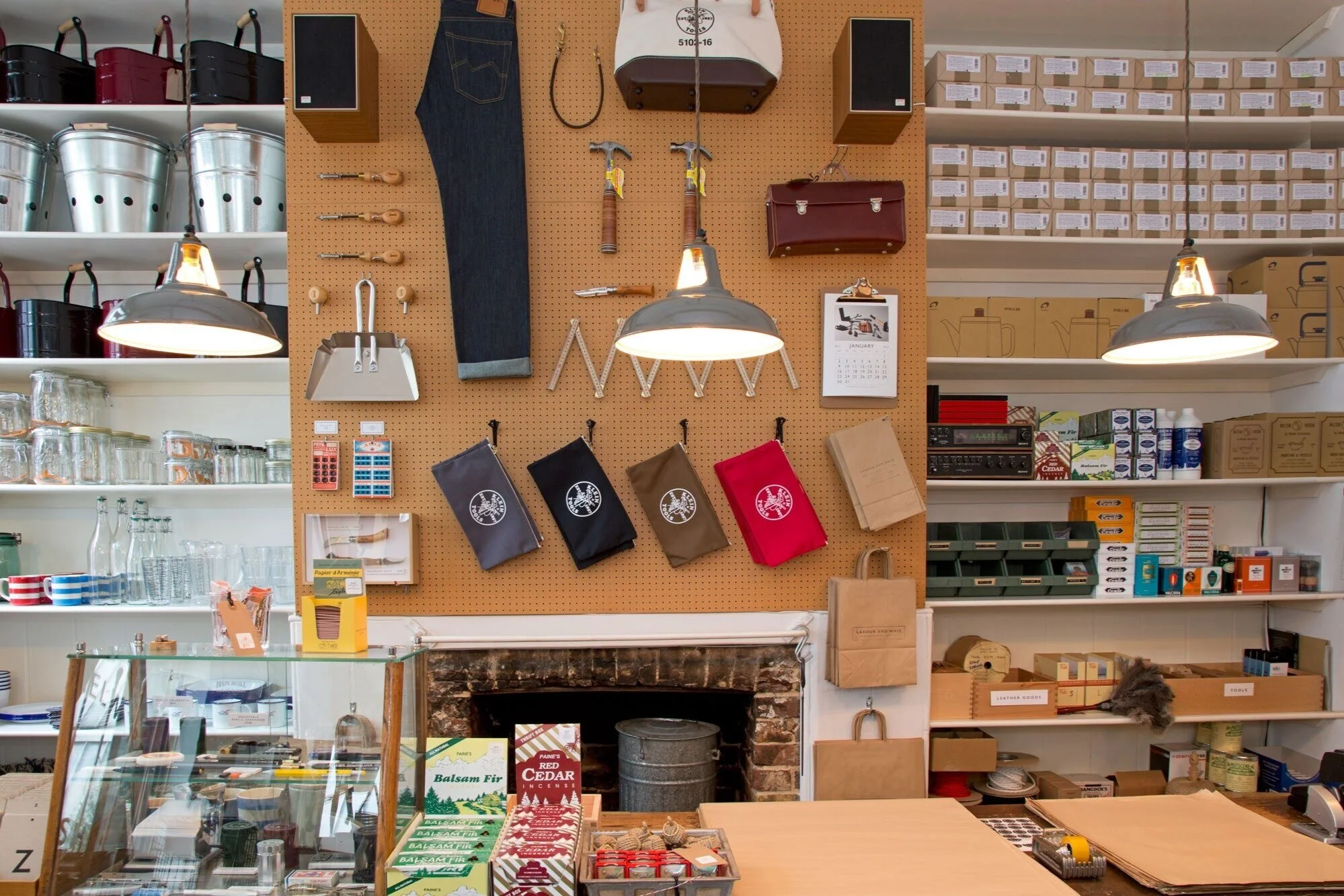
Shop Small Special: Labour and Wait
Timeless designs having a contemporary moment, London’s Labour and Wait will make you think differently about your dish brush.
What is it: This store makes buckets look good. A corner shop that combines the hardware with the artisan in a former pub (see the distinctive green tile of Truman Brewery) in Shoreditch and offers functional products for everyday life. Also now has an outpost in Tokyo.
What you need to know: Founded in 2000 by two designers, Rachel Wythe-Moran and Simon Watkins, frustrated by the endless cycles of fashion, Labour and Wait is based on their philosophy that good design should last. Their independent store is full of products that have stood the test of time – both in terms of the legacy behind them (products include blankets produced by the last remaining woolen mill in Wales) and in terms of how long they last when we get them back home (whether that be a dish brush or bottle opener). Think functional classics like Cornishware Mugs and essential hardware needs like an indoor brush that support traditional manufacturing and resist our current throwaway culture. Though very covetable, ironically Labour and Wait takes away the pressure to consume more. Rather it’s founded on durable and functional objects having their place in everyday life.
Why we think it's special: Apart from resisting our tendency to buy plastic and buy cheap with little concern for the person behind the making – the average person in North America and Western Europe consumes 100 kilograms of plastic each year — Labour and Wait is very much an ‘in-person’ store, human interactions are key to this bricks and mortar. On Black Friday instead of leading with product discounts and special offers, Labour and Wait donated 10% of sales to Crisis at Christmas which helps homeless people in the UK.
In their own words: “We believe in a simple, honest approach to design, where quality and utility are intrinsic. From hardware to clothing we offer a selection of timeless products that celebrate functional design and which are appropriate in a traditional or contemporary environment.”
In our gift edit: Carbon neutral enamelware from Riess of Austria, a recycled coffee cup made from discarded coffee grounds, a Scottish woolen blanket made from surplus yarns (it's cold out there, sometimes emotionally), and Labour and Wait’s signature apron.
In need of more Holiday inspiration? We’re a little in love with their shops of yesterday within their own shop: like a Haberdashery, Chemist and Stationer.
Something to inspire: We get stuck on toothbrushes. Or toilet brushes. The small things around our house that we somehow forget to buy sustainably. We fall very quickly into the plastic hole with these. Try to identify something in your house that you have a kneejerk anti-environment position on (there’s something, believe us) and just focus on getting that one thing more human-friendly (whether that’s how and where it’s made, how its production affects the planet and who the person is behind the product). Small steps. Later you can commit to a plastic-free lifestyle (no, we’re not there yet either).