

Ride with Me | Drawing Bike Lines Together
For Roos Stallinga riding a bike is both an art and therapy, making ourselves, and the world around us, a better place. Ride with Roos in Barcelona, Amsterdam and New York.
When I lived in New York City (between 2002-5) and studied Art Therapy at NYU, I met with a therapist as part of my training. At some point, she asked what made me most happy. I answered, “When I ride my bike around NYC!” The woman, American and in her fifties, could visibly not relate. She blinked a few times, and then kind of ignored my remark. Like, “Right, but now for something real, like work or study, something in the actual world.” At that time it was indeed really strange to bike in New York. Almost no one was doing it. But to me, I later realized, this really WAS essential — so much that I turned it into my profession.
Riding my bike in New York made me feel free, strong, alive, and right at home (maybe it helped that being Dutch I was basically brought up on a bike). I got so much inspiration and energy from riding around the city, absorbing the sights, sounds, smells, and stories. It was never boring and I got to know the city really well. The bicycle opened up new neighborhoods and parts of the city I wouldn't have come to otherwise.
At times, I would feel slightly scared, exploring new ground, not knowing anyone. Sometimes I would meet people and have a chat. Other times I would just sit in a café, writing in my diary, enjoying just being there and grateful for getting a peek into another world. Even though I was usually alone on my adventures, I somehow always felt connected, to the city, and its inhabitants. There would be eye contact with a fellow biker, laughs from a random stranger on the street. And even the occasional angry driver, who would tell me to get out of the way, or off the road. I would try to stay calm, strong, and smile. “Just smile” Another NYC cyclist once told me “You’ve got a right to be here, too”.
Now I explore cities for RIDE WITH ME, discovering the best biking routes, coffee, art, parks, hills, beaches, bars, and restaurants on the way. In 2009, I created RIDE WITH ME NYC, out of my experiences and insights, as well as conversations with fellow bikers. I wanted to share the joy, and the beautiful places and people I discovered on my way. I used my bike as my pen, to draw lines in the city. And as a key to open the city. I wanted more people to experience this, to ride these routes, and even better, to create their own adventures!
RIDE WITH ME guides are like cookbooks, with recipes for urban adventures. Some of my favorite recipes and ingredients are listed here:

AMSTERDAM is my hometown and base; I think it’s the best place in the world to bike. And so beautiful! It’s an easy place to ride, once you get beyond the chaos and amount of other people on bikes. My advice: just go with the flow, stay on the right, make eye contact, and don’t stop in the middle of the road. You will be fine!
Ride to the ‘Noord’ (North) side, taking your bike on the free ferry behind Central Station, and explore the area around the old NDSM ship wharves, with street art and artist studios, and some nice cafés, like Noorderlicht or Pllek (here’s a city beach too). Continue along the water, passing by freshly built neighborhoods, warehouses, car garages, and find another special place on a dead-end alley called De Ceuvel. Old boats lying on land are turned into creative offices, a polluted area that is slowly being cleaned by using innovative methods. There’s a nice cafe as well, and in the summer, people go swimming.

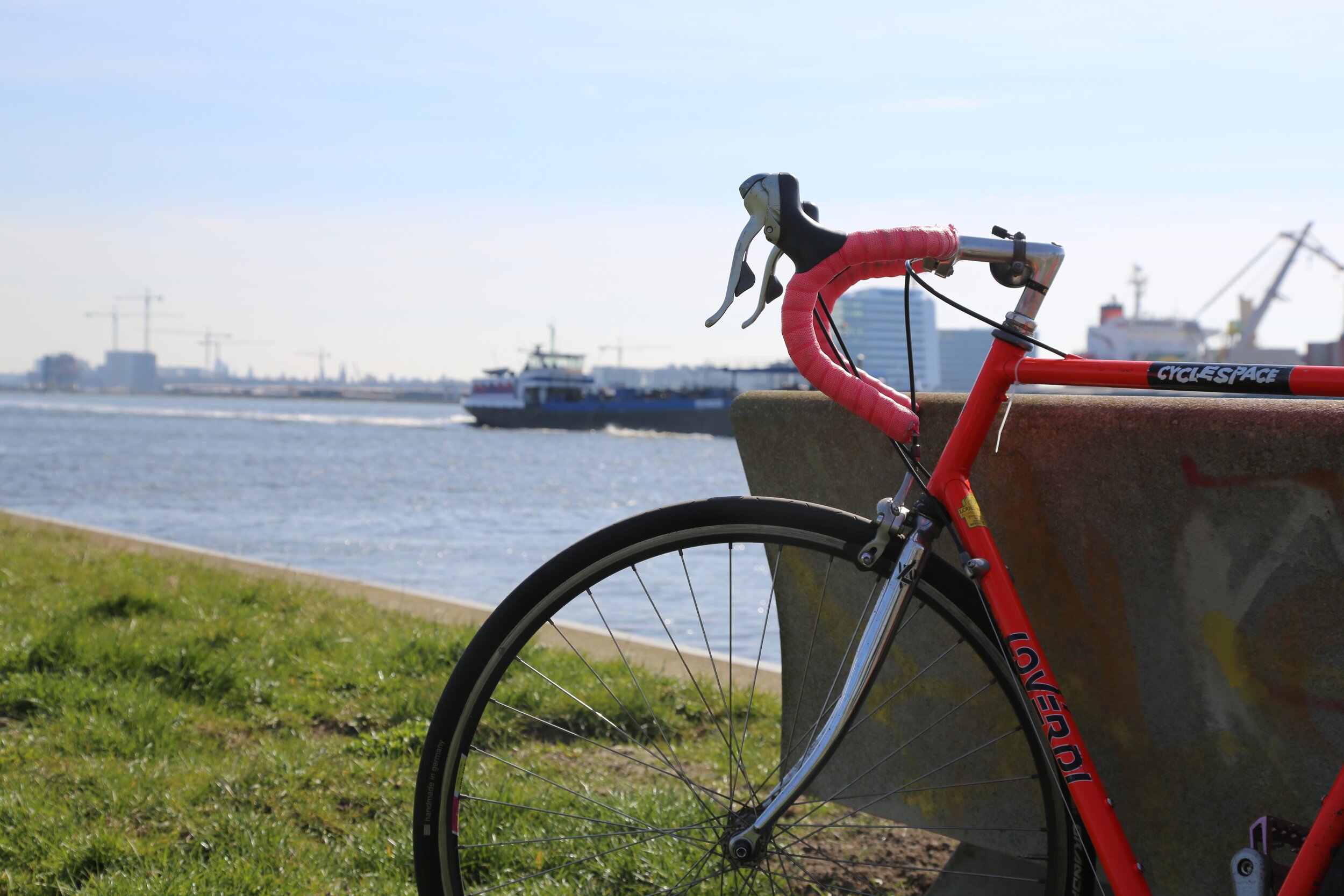
Further on, if you keep heading east, crossing the ‘Noord-Hollandsch’ canal, you will pass small workers homes, more warehouses with creative offices, a brewery called Oedipus, a local winemaker and co-working place called Chateau Amsterdam and find a couple of delicious destinations, like the Mexican taqueria called Coba, and a huge and welcoming restaurant named Hotel de Goudfazant. Ah! And if you want, you CAN also just stay and go dancing at the Skate Café. Or keep riding, all the way to Durgerdam, a quaint fishing village along the IJ lake, amongst green fields and cows.


Ride around the old city center, and its Red Light District, early in the morning, possibly on a Sunday. When most people are still asleep, you can really sense the soul of this place, rich with history, and its share of drugs, sex and rock ‘n roll.


Head West on your bike, exploring the old gas factory site called ‘Westergas’ in Westerpark, now filled with cultural happenings and culinary destinations. Through the park, you can ride even further west, towards ‘Bos en Lommer’ neighborhood — or BoLo — a diverse and upcoming area. There’s a super sweet book shop called ‘De Nieuwe Boekhandel’, and kick-ass coffee place called Friedhats Fuku Cafe founded and run by star barista Lex Wenneker and friends.

BARCELONA soothes my soul. I just love residing in this city, with its beautiful light, buildings, and nature, the people, the way of life. It always relaxes me. How wonderful being able to ride your bike to the beach, dive in, dry in the sun, and ride on. Then enjoy a long and lazy lunch, for example at Sala Beckett, which is inside a beautiful theater building, or LEKA, for deliciously local and sustainable food, both in the Poblenou neighborhood (in general a great area to explore by bike).


Barcelona is relatively easy to ride in, just go easy and accept the occasional counter-intuitive bike infra, AND the fact that as a person on a bicycle you are basically at the bottom of the mobility food chain here (after the car, the moped, the pedestrian, and maybe also the electric scooter).


Photo: Gregor van Offeren
I love riding up the Montjuic hill, a magical place filled with plants, art, culture, and sports facilities — the Olympic Games were hosted here in 1992. At the back of the mountain, there is an impressive cemetery (many famous Barcelonians were buried here) with views of the industrial port, which makes for a surreal setting. If you continue to ride up here you will pass the botanical gardens and finally get to a semi-secret ‘mirador’ (outlook post) and bar La Caseta, with beers, music, and bbq ‘en plein air’. It’s the perfect bike stop, after which you can just roll down that hill and maybe end the day at the lovely Poble Sec neighborhood.
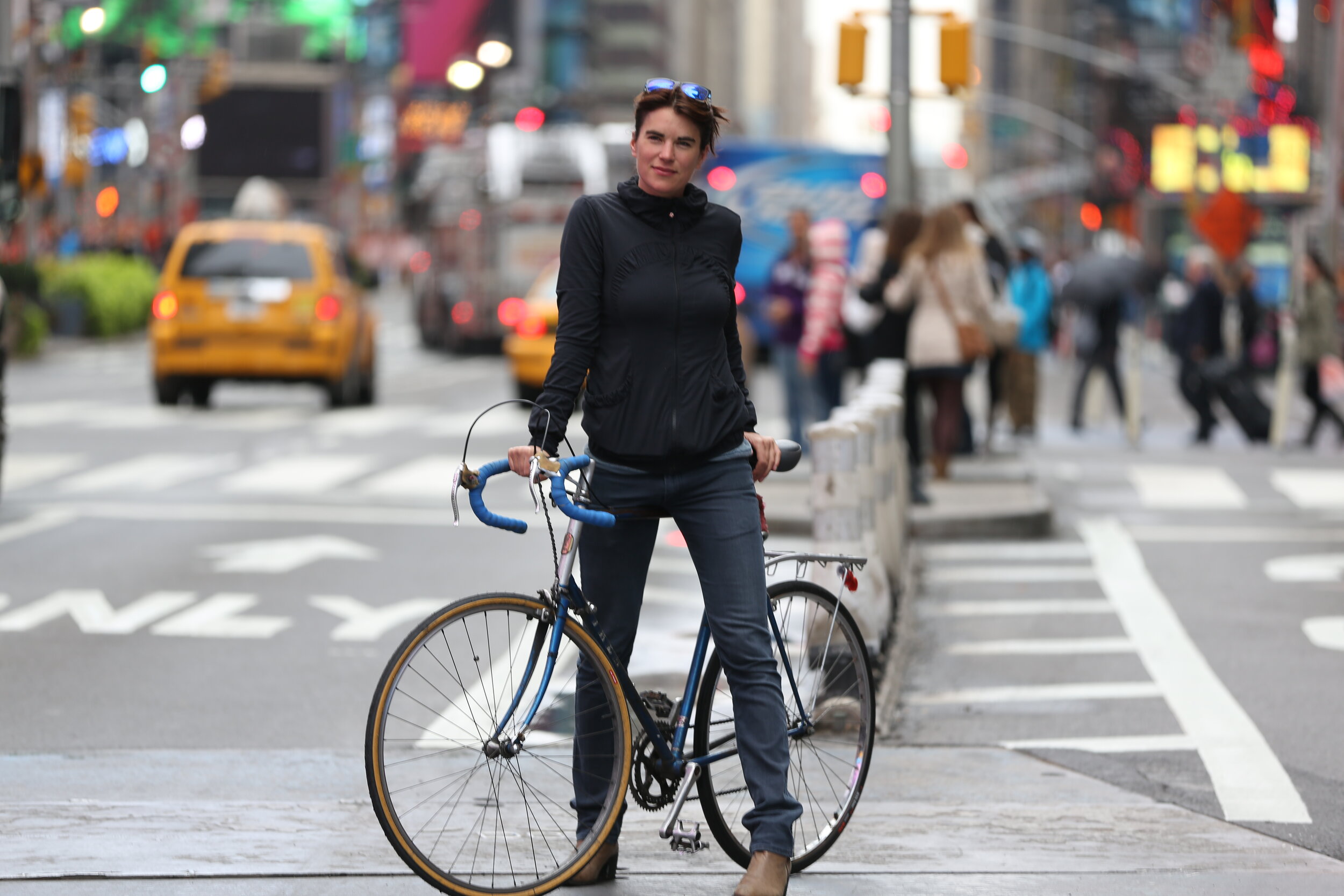
Photo: Lisa Smidt
NEW YORK CITY gives me courage and inspiration. Riding around on my bike here feels like I am surfing the waves of the city. There is so much energy! Of course, you do have to be alert at all times, focused and relaxed at the same time, kind of like a Zen monk on two wheels. Oh, and on a practical note: the blue bike-share system Citibike works great if you don’t have your own bike!
Ride to Red Hook in Brooklyn, over the Manhattan Bridge, landing in Dumbo (neighborhood Down Under the Manhattan Bridge Overpass). Along the East River, through industrial wastelands, and discover at the end of the road this old village that used to be a Dutch settlement called ‘Roode Hoek’. You’ll find you can look Lady Liberty right into the eyes, amongst red-brick warehouses, fishermen, and boats. Maybe have a Key lime pie (!) at Steve’s Key Lime Pies, or a special dinner at The Good Fork. There’s a bar called Sunny’s, straight from a Tom Waits song, rundown, smokey, with a bartender cracking jokes.
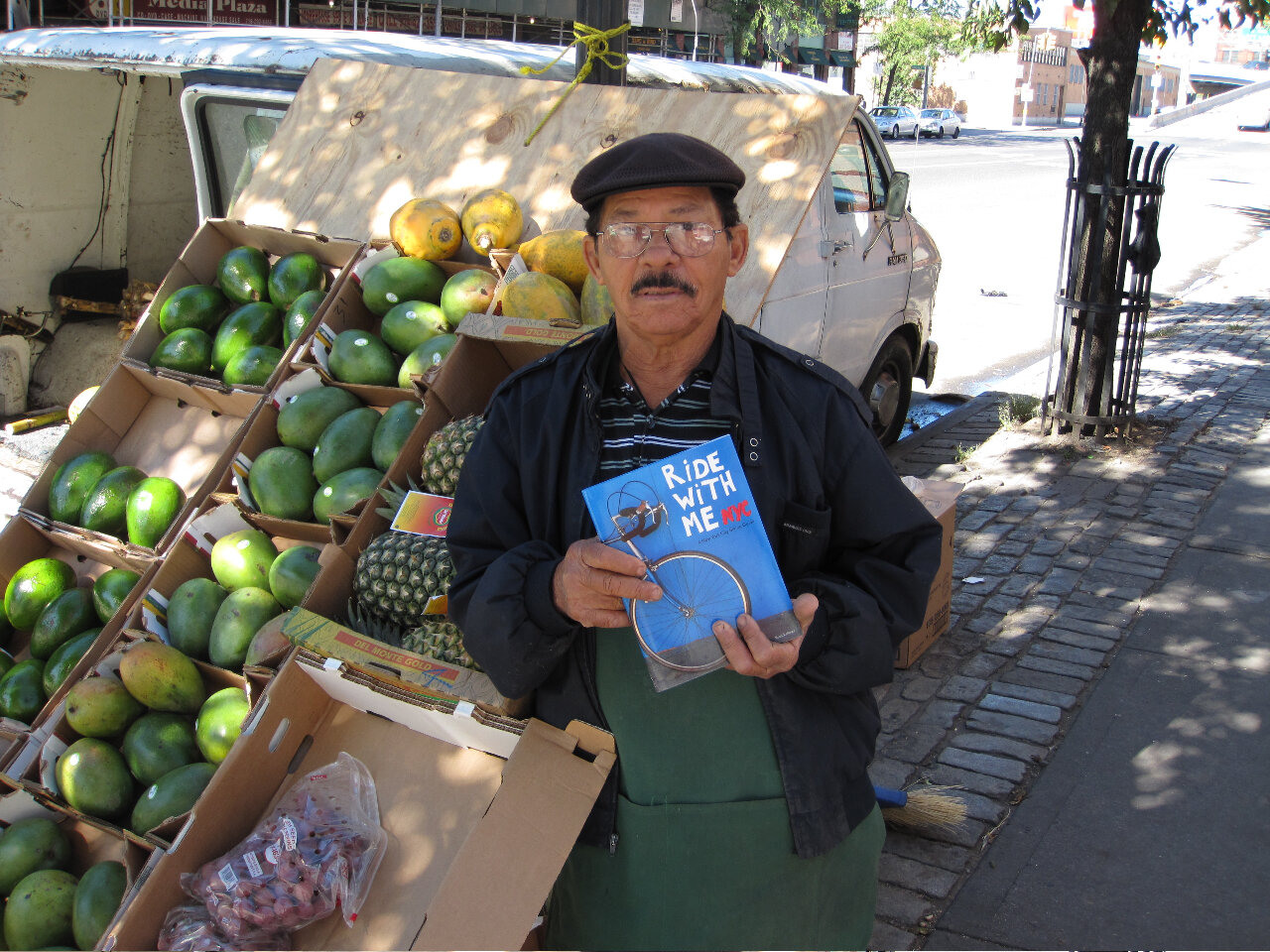

Or ride down along the Hudson River over the greenway — no cars just skaters, runners and cyclists — until you see the Statue of Liberty and Ellis Island. Maybe take a ferry to Governors Island, a historical military base transformed into a car-free, green, and arty play zone.
Ride from Dumbo all the way to Greenpoint, Brooklyn, riding through the Hasidic Jewish area, feeling like you are back in time, with the men wearing black fur hats and the women long skirts and wigs, pushing vintage strollers down the street. Hit the Brooklyn Roasting Company for a pitstop (either in Dumbo or on the way to Williamsburg). In Williamsburg and Greenpoint are tons of nice shops, cafes, and restaurants. Just riding around on your bike, watching the street life and art, is a pleasure too.
If you want more, make a detour to East Williamsburg/Bushwick, still a bit rough, with many murals, warehouses, artist spaces, and many cool bars and restaurants. A weird and wonderful place — completely hidden at the end of a tiny alley — is the Australian restaurant Carthage Must Be Destroyed. Here, they painted everything pink and serve super fresh and original dishes.


Maybe it all makes sense after all. I lived in Barcelona when I was 18, studied Psychology in Amsterdam, Art Therapy in New York City, traveled a lot, and kept a diary to write and draw in. I look at the city as a psychologist, using my bike to be free and get a grip at the same time. To get inspired, and connected to the people and places around me. Riding a bike is both an art and therapy, making ourselves, and the world around us, a better place.
Ride on!
xxxRoos

Photo of Roos: Chris Prins
Additional Photo Credits: Cover image of Roos on the Brooklyn Bridge in NYC: Theo Westenberger
All other photos/artworks/illustrations: Roos Stallinga

Psychology Fringe Festival
The Psychology Fringe Festival is giving us some much needed alternatives for ways forward and ways of being. They are bringing to the fore increasingly urgent conversations created by the circumstances of our rapidly evolving world by the people who understand them most. That’s a new kind of festival that we all need to exist.
“The more we can talk about mental health – and the more ways we find to talk about it, sing about it, rap, act, paint, photograph and so much else then the more chance we have of improving wellbeing more generally. Mental health isn’t something that belongs behind the clinic-room door or in the professor’s office. It belongs to all of us. ”
A small team of clinical psychologists established the Psychology Fringe Festival and the accompanying Beyond the Therapy Room Conference to present ‘different voices, opinions and perspectives on mental health’ and to ask how we can create a more psychologically caring society. That’s a perspective that we badly need.
Though it operates alongside the Division of Clinical Psychology’s annual conference, The Psychology Fringe Festival is very much publicly orientated. Its aim is to explore clinical psychology and mental health in a broader way, to think about how we relate to one another as human beings rather than focusing on a purely medicalized approach to difficulty and distress which we’re maybe more familiar with.
In that spirit, the festival uses art-based formats, such as dance, theatre, poetry, comedy, philosophy, art and workshops, and has touched on poverty, LGBT issues and the media as well as mental health. Programs and performances are often delivered by people with lived experience of mental health services, such as DanceSyndrome, Heart to Heart Theatre, and Neural Knitworks.
Its sister program, The Beyond the Therapy Room conference similarly focuses on celebrating innovative ways of working, highlighting what we can do beyond one-to-one therapy to engage with wider issues affecting people’s mental health, including the social and political climate.
Following successful events in London, Liverpool, Cardiff, and Manchester, the Psychology Fringe Festival is giving us some much needed alternatives for ways forward and ways of being. They are bringing to the fore increasingly urgent conversations created by the circumstances of our rapidly evolving world by the people who understand them most. That’s a new kind of festival that we all need to exist.
Alternatives for supporting us through our everyday lives are popping up, but as clinical psychologist and one of the festival’s cofounders Will Curvis advises, we need to engage: “Show up at the conference and festival. Coming to events, meeting like-minded people, getting involved in these services - there’s a lot of opportunity to be active.” See you there next year?
To find out more: www.psychologyfringe.com / Twitter @ClinPsychFringe / Facebook @psychologyfringe

Navigate from here.
Have you ever been lost? Totally stuck? Grasping for something? So much so that you’ve sat in front of your computer, not knowing what to type into Google, not knowing where to look, so you’ve simply typed ‘help’. You had no idea how to square that work situation that was escalating, you didn’t know how to get beyond the heartbreak of losing someone you love, you didn’t have a clue how to get your aging parents to listen to any of your well-thought out advice, your boss was driving you crazy, your kids equally so, and you were knackered beyond compare. So, you just typed ‘help’. And really what you were doing was looking for the answer to a really simple question: ‘What can I do?’ But the answer still didn’t come.
If Lost Start Here attempts to answer that question by exploring each week exactly what you can do. We’ll cover a café that deals with anxiety, a museum that can teach us about empathy, a group of blokes hanging out in their sheds. We’ll get to an organization that offers mental health walks, another that focuses on getting out of our heads and into nature. We’ll feature a festival that encourages creativity, a community allotment project that takes on aging, and a collaborative art project that invites participants to make connections, material and otherwise.
This platform will focus on what we believe is an emerging new sector that’s all about how to be a person in the world. This includes initiatives that range from inspired classes and smart idea sessions, to hands-on practice studios and maker sessions. Initiatives that have arisen across different sectors, away from just wellness to the domains of culture, science, and the humanities. Initiatives that are people-centered, have a deep appreciation of experience and design, are open and accessible to all, and are often playful. Initiatives that represent something that people can return back to, again and again, and offer a longer-term relationship to making something work better (so not the quick-fixes).
Other people, or maybe you, are building the frameworks and creating the structures to help people negotiate their lives, from multiple perspectives and in very different ways than what went before. There’s a sector developing that’s aims at helping our emotional and psychological well-being, but it hasn’t yet been pulled together as an effective and necessary response to all our life’s problems.
If Lost Starts Here attempts to do just that, to respond to the conundrum of tons of advice, shifting evidence and approaches, and the very real question of where and how you can actually do this. As you read through, your bit is to find the thing that appeals to you, to show up to something and see how it goes. To engage.
So, let’s get started…