

Studio Pottery
Reconnect with the practice of making in this light-filled and spacious pottery workshop located in the heart of Belgravia.
Go here if: You are seeking a break from the noise of the city and are looking to connect with the practice of making.
What is it: Founded by Lucy Attwood and Gregory Tingay in 2019, Studio Pottery London is a light-filled and spacious workshop for all who are attracted to making with clay, from absolute beginners to more experienced potters.
Why you need it: Uniquely located in central London in the heart of Victoria as part of the Eccleston Yards development, the studio has been created as a place of calm and community. A carefully curated working studio and gallery space provides a perfect environment for city-dwellers to come together to learn and create.

Photo: Yiki Dong, Studio Pottery, London

What they offer: Intimate classes across the two teaching classrooms with six wheels in each as well as a dedicated area that has been carefully designed to give members premium space. The central area, with its library, kitchenette and facilities, gives opportunities for the community to socialize.
Members and students are also welcomed by a resident potter into their private studio for one-to-one throwing and mentoring sessions, while an evolving teaching team and an in-house technician — who monitor the studio kilns and glazing room — provide support for the studio community.
For inspiration, take a look at the curated windows and displays of historic and contemporary ceramics (some of which are also for sale to visitors).
We asked Directors and Co-Founders, Lucy Attwood and Gregory Tingay what makes Studio Pottery different:
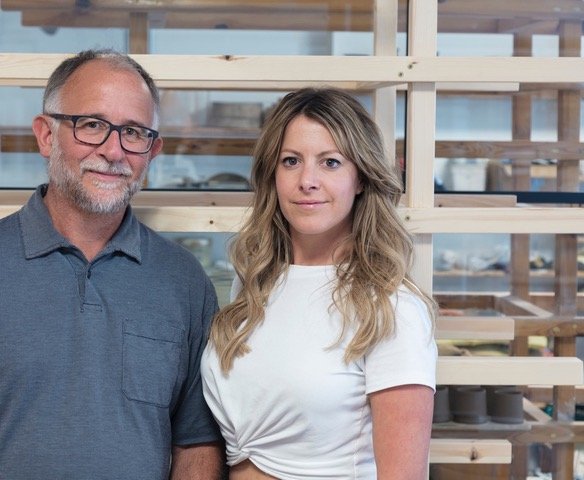
“Our focus is throwing – working with clay on the wheel. The studio also provides space for hand-building. This traditional craft provides a counterbalance to the hyperactive, mechanised, and technologically saturated metropolis.
The hands-on practice of throwing opens dormant creativity and encourages therapeutic transformation. Engaging with clay, the practitioner slows down, assimilating technique and mastering knowledge through careful repetition. It is a holistic, gradual and joyous experience, connecting the potter to a living history of human making.
Our lineage flows directly from Bernard Leach and the 20th Century revival of studio pottery – enshrined in our name. At the heart of Studio Pottery London is the desire to form a community around a shared ethos and love of pottery in all its forms.”
— Gregory Tingay, Co-founder
“Pottery can be a wonderfully social activity, as well as a solitary path of meditative practice. Our studio respects both.
We provide group taster introductions, 5 week foundation courses, and run a regular schedule of ongoing mixed ability classes that you can book according to your availability.
Our expert teachers not only lead our group sessions, they offer on-one-on tuition, which is an excellent way to learn and grow in confidence on the wheel. If you would like the flexibility of coming in your own time you can become a member, enjoying exclusive access to our members area, equipped with several wheels and workspaces.
Our studio is also available for private hire, and our team has a wealth of experience arranging workshops for private functions and one-off experiences.”
— Lucy Attwood, Co-founder

Turning Earth Ceramics
"Like a gym membership for potters", discover four pioneering London studios cultivating craft both as an accessible hobby and as a viable career.
Go here if: You want to learn a new skill, make work in ceramics, be part of a community, find new ways to relax and unwind, nurture your creativity, or even develop your career.
What is it: Turning Earth's pioneering ceramics studios are for everyone, from beginners to part-time professionals, and can now be found in four London locations: Hoxton, Leyton, Tottenham and Highgate. They offer classes and open-access membership, "like a gym membership for potters".

Turning Earth Hoxton

Turning Earth Highgate
Why you need it: Turning Earth's mission is to cultivate craft both as an accessible hobby and as a viable career (they offer a full-time professional studio, In Production, in Leyton). They want to contribute towards a broad adult curriculum that will improve the quality of life in the city.
What they offer: All the ways to try making and develop skills: Tasters, 8 or 12-week beginners courses, intermediate courses, week-long courses, weekend-long courses, private workshops, and monthly membership.
For members, they also organise improvement workshops, like their very popular raku parties, and they have exclusive access to their quarterly ceramics markets.

Turning Earth Leyton

Turning Earth Tottenham
What makes it different: The community and atmosphere are unique to each of their studios. Someone might join for the craft and end up staying for the friends and a 'second home' discovered.
What else do you need to know: They are open every day till late except on Mondays. If you’re not local you can see the wide diversity of skills and techniques on their Instagram which is often updated with pots made by their members in the studio.
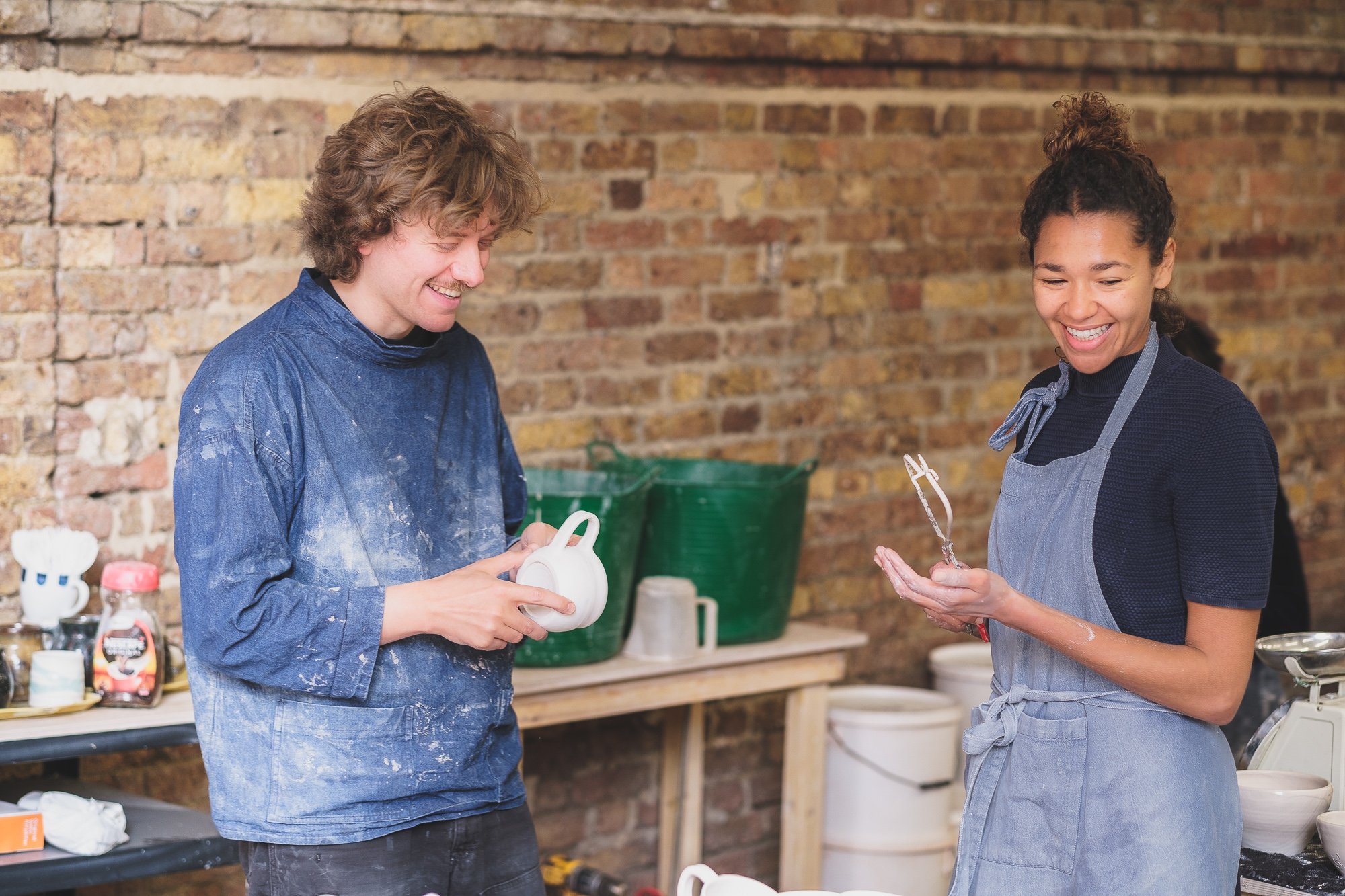

In their own words: Turning Earth was founded by Tallie Maughan. Their first studio, Turning Earth Hoxton, opened in December 2013. Following a model popular in the US, it was the first dedicated open-access ceramics studio in London.

“Turning Earth is indebted to the Arts and Crafts movement at the beginning of the 20th century, which suggested that there should be no separation between utility and art.
Our vision rests in the intuited feeling that we will naturally make life more beautiful when we take our aesthetic awareness, our right-brained feeling for things, as seriously as we take our rational understanding of the world.
We exist to enable people to make beautiful physical objects, and in so doing to make their lives more beautiful: more centred, more fulfilled, more present to what they truly care about.
We feel that in making this movement, we are encouraging a broader social shift towards living with care in our world.”


The Makerie | In Conversation with Ali DeJohn.
We talk to Ali DeJohn, founder of the Makerie retreat, about why self-care and creativity are inextricably linked.
Starting something takes a huge amount of courage and commitment. That’s particularly the case if you are an introvert. We chatted to Ali DeJohn, founder of the Makerie—a beloved roaming creative retreat—about how she overcame her fear and realized her dream of making a nourishing space that puts the emphasis on self-care as much as technique.
Claire: Have you always been a creative person?
Ali: Yes, I have always loved creativity. Ever since I was a child, I found the most joy in making things with my hands. I went to a preschool where creativity was a major focus, and I think that sewed some creative seeds. It’s something that I carried with me all my life.
Claire: Did you continue your interest in creativity into adulthood? What were you doing before the Makerie?
Ali: I had a career in event planning. I worked for the Chicago marathon for seven and a half years and before that I worked for a small family-owned business doing all types of events. Both were great experiences.
When I had my children, I decided to stay home. I had always loved the idea of being a stay-at-home mum and I was so grateful that I was in a place where I could do that. As I really wanted to infuse creativity into our home and into our family, I started reading blogs for inspiration, which were booming at the time. There was so much rich content and so many people caring about creativity that I found my community in that world.
As much as I loved being at home with my children,I remember standing in my mom’s kitchen and bursting into tears because I felt so lost in who I was in the midst of motherhood. I had never really considered myself a driven career woman, but I realized how important it was to still maintain something of my own in this journey of being a mom.
Claire: That must have been such a powerful realization. I have a young family and I relate to that idea of losing aspects of yourself and not realizing that it’s happening until you realize that it has happened. How did you deal with that?
Ali: Though I loved to make things, it was really hard to do that in the rhythm of a life with two young babies. So, when a creative retreat popped up on some different blogs that I read, I thought well maybe I could go to that. But another part of me said, “well you’re not really an artist, you don’t really deserve to go.” This inner dialogue went back and forth, and finally, there was just this little tug at my heart, which said, “just go, you should just try this”.
So, I went to my one and only creative retreat. I was terrified but what I found was profound. What I was making, the colors I was choosing, the aesthetic I found myself creating, helped bring me back home to myself. I remembered who I was again, and it was such a joyful, powerful experience to discover that. I also really loved connecting with other people who cared deeply about creativity. I came home from that experience so incredibly filled up.

Claire: How did you go from that first taster of a creative retreat to starting the Makerie?
Ali: There was no intention at all at that time of doing my own version, but, maybe unconsciously, I knew that one day I would embark on that journey too. During the creative retreat experience, I wrote down all the things I loved and areas that would have made it feel more complete for me.
I came home and told all my friends about it, as I wanted them to share in this enormous amount of happiness and inspiration that it brought to me. I searched for a similar experience close to home and when I couldn’t find what I was looking for, somewhere that I wanted to take them to, or that I wanted to go to myself, I decided to start my own version.
Claire: What did that look like for you?
Ali: It was a really big step. I spent a year meeting with different people in our creative community to share my idea, and everyone I met with thought it was a wonderful concept, that it would be well received, and encouraged me to go for it. Everywhere I turned I was getting a green light, but I was still hesitant to move forward because it felt scary and vulnerable, on top of me being a quiet, introverted person at heart.
My husband grew tired of my waffling between doing it or not, so I had to have a heart to heart with myself. Would I rather try and fail? Or move on with my life wondering ‘what if’? At the end of the day, I realized I could live with failing if that’s what happened, but I couldn’t live with never trying and always wondering what could have happened.
Claire: How did you deal with that tension? How did you care for yourself over that time as you were making this big shift in your life?
Ali: I don’t think I did, and I still struggle with that self-care piece for myself. Honestly, I just poured my heart and soul into the first retreat. My kids were so little, and I don’t know how I did it. I just cared so much, and I still do, about creating a sacred and special space for people to practice and prioritize their creativity because it can be so hard to find in our daily rhythm and lives


Claire: You had a very clear vision for the shape of that pause that people could take out of their lives. What were the values that you were trying to bring into that first experience?
Ali: My main aim was to find a setting that was really conducive to nourishment. The space, the venue, and the environment that people walk into are crucial. For that first retreat, we chose the Colorado Chautauqua, in Boulder, which happens to be three miles from my house. It is an amazing, sacred place with community workshop spaces, cozy cabins, a dining hall, and even hiking trails out the back door.
It also has an iconic history. There was a Chautauqua movement over a hundred years ago, in which a group of people gathered together to celebrate secondary education, establishing pop-up camps where they would teach art and music and theatre. I felt like the Makerie spoke to the exact meaning of what the original Chautauqua was.
Claire: How have things changed for you since that first retreat in Colorado?
Ali: It’s been a huge organic journey that’s still continuing on its own path. The iterations have changed depending on various partnerships, the treasured teachers and artists I’ve worked with, and unique venue opportunities that have come my way. We offer varied retreat models in different locations, and have even hosted two retreats in France. I never dreamed of doing an international retreat so that was such a special opportunity.
Currently I am focused on smaller, more intimate retreats, with at the most 16 people. We feature one artist and a focused creative medium, so students are able to explore it on a deeper level. The model that we started with, allowing the participants to choose a variety of four half-day classes, was able to accommodate a large group and also involved more logistical feats. It was a playful and unique structure and maybe one day we’ll go back to that model. But for now, the smaller retreats are working well, particularly given that I now have two teenagers.
Each year we have anywhere from 3 to 7 retreats that are held across the country, and it changes every year based on different venue opportunities. Looking ahead to 2020, we have some special retreats planned in Boulder; we’re exploring a beautiful studio space in the mountains of Colorado; and planning another retreat in New Hampshire with paper flower artist Tiffanie Turner in the barn where she did an artist in residency. We’ll see what else next year brings!
Claire: Your teachers are such a vital part of your retreats. What qualities are you looking for in the artists who come to teach at The Makerie?
Ali: It’s important that the artists I choose to work with not only have teaching experience, but have a nurturing aspect to them too. Inviting adults into a creative space requires a teacher that is skilled in nourishing creativity in adults. Our teachers are crucial in making the experience feel encouraging, inviting, safe and warm.


Claire: You also attract high-caliber artists to work with (such as the retreat with Rose Pearlman in Boulder.) There can sometimes be a hierarchy between the kind of artist who has gallery shows and those who do workshops, but here you’ve managed somehow to bring the two together.
Ali: I don’t think of choosing teachers in this way. I find them through various paths and take the time to research what they’re currently doing, the types of workshops they are hosting and explore if a collaboration feels right. I’m grateful the teachers I work with trust me with their gifts and I make a special effort to make sure they feel as nourished as our participants. If they feel cared for, they are going to be able to do their best job. I’ve had so many teachers comment that when they leave our retreats, they feel inspired and filled up, instead of exhausted, and I cherish that.
Claire: How as a host do you create such a welcoming and accepting space for both your workshop leaders and your attendees?
Ali: For me, every step of the way counts and sends a message. From the second someone registers to walking through the door, I try to create a warm environment and an invitation to be part of something special. I want our participants to feel that they are loved and appreciated from the very beginning. When they arrive at the retreat, they are greeted with a hug and a genuine feeling of excitement that they are there. The teacher plays a big part in the role of creating a safe space by holding the room in a calm, capable and loving way.
There’s also the sense of entering a space that feels inspiring. When I visit a potential venue, I know within minutes if it’s going to work. There’s not a magic formula other than my intuition and it’s tied to my aesthetic preferences and senses. It’s a similar feeling when you’re looking to buy a house. You can feel the energy and whether or not it’s right.
Claire: Your approach at the Makerie feels very person-centered. You lean into ideas of imperfection, slowing down, being in conversation with the person next to you. I love how you place people right next to craft in importance for how you conceive these events. Why is this hosting/ nurturing aspect such a large piece of it for you?
Ali: Someone once described their experience at the Makerie as coming home to themself. I thought that was so beautiful and exactly what I hope people feel when they come to our retreats. It’s a magical thing to watch the transformation that happens when people take time to nurture their creativity and make beautiful things with their hands. I care deeply about each person who attends our retreats and that’s the heart of everything I do.


Claire: I have this strong belief that creativity and wellbeing are very strongly linked. My sense is that you do to. Why do you position these retreats within wellbeing and self-care rather than just as a creative workshop?
Ali: Creativity and self-care are almost the same thing. I look at creativity as one of the pillars of self-care, in addition to moving your body, making healthy food choices, taking care of your mind, and finding human connection.
There are two things at play: One is nourishment from the inside, that people have to give themselves in this process; and then there’s nourishment from the outside, which is what I work hard to create. When you combine the two, it’s a magic combination of whole-body nourishment from head to toe.
Creativity is the cornerstone of what we do and a back door into mindfulness. It’s like yoga for the mind and a way for people to drop into themselves without having to sit in a formal meditation. I love how creativity can take care of your mind and soul in a similar way.
Creativity can also be a way to connect not only with yourself but also with the person next to you. You can be making something and not even say a word, but someone can look at your aesthetic choices and gain an understanding into who you are and what you’re about. Your creativity speaks for you and you’re able to connect with people on a special level by what you’re creating with your hands.
Claire: Do you think that there’s been a shift in understanding of what creativity can do for people? I get the sense more and more that it’s a tool that’s sitting closer to wellbeing.
Ali: Absolutely. Just look at the plethora of coloring books for adults. That in and of itself shows you how everyone is craving a quiet mind. The enormous amount of information we’re all being asked to hold in this day and age is impossible to keep up with. We’re all looking for a joyful out and can’t escape it all, but there are many ways to slow down and find quiet in beautiful ways. Retreats of every kind are popping up as more and more people realize how valuable it is to step out of your everyday rhythm of life to nurture something you love.
Claire: Do you find that people coming to you are first time creatives, who had a similar sense as you that their creativity was somehow dormant and they want to find a way to reconnect with that, or are you finding its people who already have creative leanings that are very much alive who are wanting to develop that aspect of themselves more?
Ali: It’s all of the above, as very few classes require experience. All we ask is a willingness to come with an open heart.


Claire: Do you see yourself as an artist or an amateur? I ask this because often as creatives we take the role of facilitator and it can be hard to hold that space of creativity for ourselves.
Ali: I see myself as a joyful, amateur artist. I dabble in all kinds of creative endeavors - from knitting to embroidery to ceramics to drawing. I just completed 100 days of stitching, which was a fun and challenging practice. I love to try my hand at so many different things and don’t consider myself an expert in anything. I love making anything with my hands.
Claire: Finally, how has founding the Makerie impacted you? We’ve talked about how setting up something like the Makerie impacts the people who come through the door, but I wonder how it has transformed you?
Ali: It has been such an unexpected journey that continues to teach me more than I ever imagined. Here are some of the many lessons I’m learning:
The Makerie gives me rich personal growth. When someone comes to a retreat, I might not know the underlying reason they are there and I have learned to separate out what I need to hold and what someone else is carrying. I used to absorb everything, including everyone’s collective energy at a retreat, and would come away exhausted and depleted. I have learned to lovingly hold a space for other people outside myself, helping me stay nourished and healthy.
I’ve also learned that no one really knows exactly what they are doing. We’re all in the same boat of figuring it out as we go and that’s a refreshing thing to remember.
Keep doing things with a pure, heart forward intention. If I make a decision from this centered place, I know it will lead me to positive places.
Take my own advice to nourish my own creativity. It’s strange how hard it can be to carve out time for something that brings me so much joy. Making by hand nurtures my soul and will always be part of my life.
To find out more about the Makerie, check out the Website, Instagram, and Facebook

