
What If Your Career Is Successful but It’s Burning You Out?
Feeling burnt out or questioning your career? Explore how to manage your energy, rethink success and find work and purpose that help you feel more alive.
There is a moment in my conversation with career and life design coach Selina Barker when we find ourselves talking about pianos.
Selina is in the middle of a significant career and business transition. After 20 years of helping other people navigate career change, she has found herself questioning the way she has built her own working life. Some of that process has been frightening. At one point, she describes sitting in her garden panicking that her business might be over. But alongside the panic, something else has appeared: space.
She has more time to read. More time to draw. On the morning we recorded our conversation for A Thought I Kept, she had played the piano instead of sitting down immediately to work.
There was something about that detail that stayed with me. Because when we talk about career change, purpose and burnout, we can quickly turn them into another enormous life problem to solve. Should I leave my job? Retrain? Start a business? Find my purpose? Make more money? Make less money but be happier? What am I supposed to be doing with my life? But perhaps there is another question we can ask first.
Where is my energy going, and what is it creating in return?
When the life you created starts to deplete you
Selina’s career crisis didn’t begin because she suddenly stopped loving her work. In many ways, the opposite was true. She still loved coaching. She loved her journals, her membership and helping people flourish. What had become exhausting was everything she believed needed to surround that work.
She talks in our conversation about absorbing a particular story about what being a successful coach should look like: the six-figure business, the big programmes, the marketing, the recognition, perhaps eventually the bestselling book and a place on Oprah’s sofa.
Every industry probably has its own version of that sofa. There are the promotions we’re meant to want, the job titles that demonstrate we are progressing, the businesses that should keep growing, the salaries we should aspire to, the audiences we should build. We can become so accustomed to these measures of career success that we stop noticing whether we ever chose them.
That is where I think burnout and purpose become interesting companions. We often think about burnout as a problem of too much: too much work, too much responsibility, too many demands, too little rest. And of course, sometimes it is. But our conversation made me think about the exhaustion that can also come from spending enormous amounts of energy maintaining a version of success that no longer feels like our own.
You can be very good at something and still not want to keep doing it in the same way.
You can have worked hard to get somewhere and discover you don’t particularly want to stay.
You can even love the essential part of your work while being exhausted by the life you have had to construct around it.
None of those necessarily mean you have chosen the wrong career. But they might mean there is something worth listening to.
Purpose isn’t only about what you do
Purpose is one of the ten pathways to wellbeing we explore at If Lost Start Here and in our new book, and I think we can sometimes make it much grander than it needs to be.
We imagine that finding our purpose means identifying our one great calling. We search for the right job or the right contribution, hoping that once we find it everything will click into place.
Selina’s thought kept offers a slightly different way in. It comes from the writer, philosopher and civil rights leader Howard Thurman: “Don’t ask what the world needs. Ask what makes you come alive, and then go and do that because what the world needs is people who have come alive.”
Selina first encountered those words more than 20 years ago, when she was at the beginning of her career and deeply concerned with making a difference. She was involved in environmental campaigning and remembers being preoccupied with the question of how she could help save the world.
The problem was that the way she was approaching that purpose was exhausting her.
Thurman’s words gave her permission to turn the question around. What if her own needs, pleasure, joy and fun were allowed to matter too? What if making a difference didn’t require sacrificing herself in the process?
It became one of the guiding ideas of her career. And I think there is something particularly important in that for anyone experiencing burnout, considering a career change or wondering what their life’s work might be.
Purpose doesn’t have to ask only: What useful thing can I do?
It can also ask: What happens to me while I am doing it?
Burnout can become something we simply accept
One of the reasons I wanted to talk to Selina is that burnout comes up so often in the work I do. There is a point at which feeling exhausted and overwhelmed can start to seem almost unremarkable. We talk about dragging ourselves towards the weekend, desperately needing a holiday, being unable to switch off, feeling permanently behind or having nothing left by the end of the working day.
And somewhere along the way, we can start to believe this is simply what having a career, caring about our work and managing an adult life feels like.
Selina pushes against that assumption.
When she wrote Burnt Out, she was interested in the moment when someone reaches the point of thinking: I cannot keep going like this. I cannot cope like this anymore.
Her work also acknowledges that burnout doesn’t always look the same. For some people there is a strong emotional component, particularly when they are continually caring, helping or over-giving. For others, the depletion is mental: endless decisions, problem-solving, worry, household administration, work and the feeling that the brain simply never gets to switch off.
This is especially relevant to the way many women have been taught to think about purpose. Selina talks about the deep cultural programming that can equate being a good woman or a good person with looking after everybody else. Our value becomes attached to how useful we can be, how much we can hold and how little we appear to need ourselves.
Purpose without attention to our own wellbeing can very easily become self-sacrifice.
What if you managed your energy, not only your time?
This is where another of Selina’s ideas becomes useful. While researching Burnt Out, she encountered the idea of managing energy rather than simply managing time. It became a turning point in how she understood burnout: if burnout is an energy crisis, perhaps we need to become much more curious about where our energy comes from, what depletes it and what restores it.
Selina works with five different kinds of energy: physical, emotional, mental, motivational and spiritual.
Physical energy includes both movement and rest. Emotional energy asks us to look after our hearts: feeling our feelings, seeking support when we need it and making room for pleasure, creativity and play. Mental energy requires periods of focus but also genuine opportunities for our minds to switch gears and recover.
Motivational energy brings us particularly close to purpose. It asks bigger questions about our values and the life we are creating, but also what helps us keep moving through the difficult or boring parts of that life.
And spiritual energy is broader than religion or faith. Selina talks about nature, meditation, prayer, ritual and the things that connect us to something beyond our immediate thoughts and to-do lists.
Suddenly, “I don’t have enough energy” becomes a much more interesting statement.
Which energy is depleted? What has been drawing from it? What replenishes it? Is my working life asking too much from one part of me while giving very little back?
Those questions might tell us something that another productivity system cannot.
Career change doesn’t always mean changing everything
I also loved Selina’s honesty about what career change looks like from inside it. At first, she thought everything might need to go. But as she allowed herself to explore that possibility, she began to realise that she didn’t want to abandon the heart of her work at all. The coaching could stay. The journals could stay. The parts that made her feel useful, connected and alive could stay. What needed to change were some of the assumptions surrounding them.
That distinction matters because when we are burnt out or unhappy at work, it is easy to think we have only two options: keep going or blow everything up. Real career change can be much less linear. Sometimes we do need to leave. Sometimes we retrain, change industries, start businesses or close them. But sometimes the external life changes surprisingly little while our relationship with it changes enormously.
The useful question might not immediately be Should I quit my job?
It might be: What is the baby and what is the bathwater?
What is still meaningful here? What am I only doing because I think I should? Which parts of my work give me energy? Which parts continually require me to force myself through them? What version of success am I trying to maintain, and whose definition was it in the first place?
What does success look like when you include yourself?
This might be the question I have thought about most since recording the episode. Selina talks openly about her previous desire for recognition and the realisation that external recognition could become a “hungry ghost”: something she could keep feeding without ever reaching the point where it finally felt like enough.
Her emerging definition of success sounds much simpler. She wants to do work she knows she is good at and that helps other people. She wants to pay her bills and put some money aside. And she wants time to read, draw and play the piano.
When she described it, I remember thinking: Oh. That sounds really good. Not because it should become anybody else’s definition of success, but because it sounded like hers.
Perhaps that is part of our Purpose pathway too. Purpose is not only about discovering what we can contribute to the world. It is also about becoming more discerning about the life we want that contribution to create.
You might want the promotion and the responsibility that comes with it. You might want to build the enormous company. You might want to write the book, change careers, become brilliant at what you do or make a lot of money.
Or you might want enough work, enough money and enough time left over to play the piano.
The important part is noticing whether the definition you are working towards belongs to you.
Start with what makes you come alive
Towards the end of our conversation, I ask Selina what “aliveness” means to her now. Her answer isn't about permanently operating at maximum energy. In fact, it is almost the opposite.
Aliveness, for her, has become connected to presence. Sometimes that means being completely engaged in a conversation or absorbed in meaningful work. Afterwards, it might mean sitting in the garden, putting her feet on the grass, listening to the birds and allowing her energy to shift again. That feels like a much kinder way to think about purpose.
We don't have to find the one thing that will make us leap out of bed every morning for the rest of our lives. We can start by paying attention. Notice the work that absorbs you. Notice the people around whom you feel more yourself. Notice what you are curious about. Notice what leaves you depleted and what restores something in you. Notice where you are forcing and striving. Notice the small things you keep wishing you had more time for. And perhaps notice, too, where your life has slipped onto autopilot.
Because purpose isn't necessarily waiting somewhere outside us to be discovered. Sometimes we find our way towards it by paying closer attention to where our energy already wants to go.
Listen to Selina Barker on A Thought I Kept
In my full conversation with Selina Barker on A Thought I Kept, we explore burnout, career change, energy management, external validation, redefining success and what it might mean to create a working life that supports rather than continually depletes us.
If you are feeling burnt out, questioning your career or simply wondering whether there might be another way to live and work, listen to the full episode: Ask What Makes You Come Alive with Selina Barker.
And if these questions feel particularly close to where you are right now, you don't have to work them out alone. Our coaching sessions can support you through burnout, career change, feeling stuck at work or the bigger question of what you want your life's work to be. Together, we can make space for what you're feeling, understand what is depleting you and begin exploring what you might want to move towards next.
What If Confidence Isn't What You Need?
Waiting until you feel confident? Women's leadership coach Sadia Ghazanfar shares why courage comes first, how to overcome perfectionism, imposter syndrome and self-doubt, and why being brave enough to start something new can change everything.
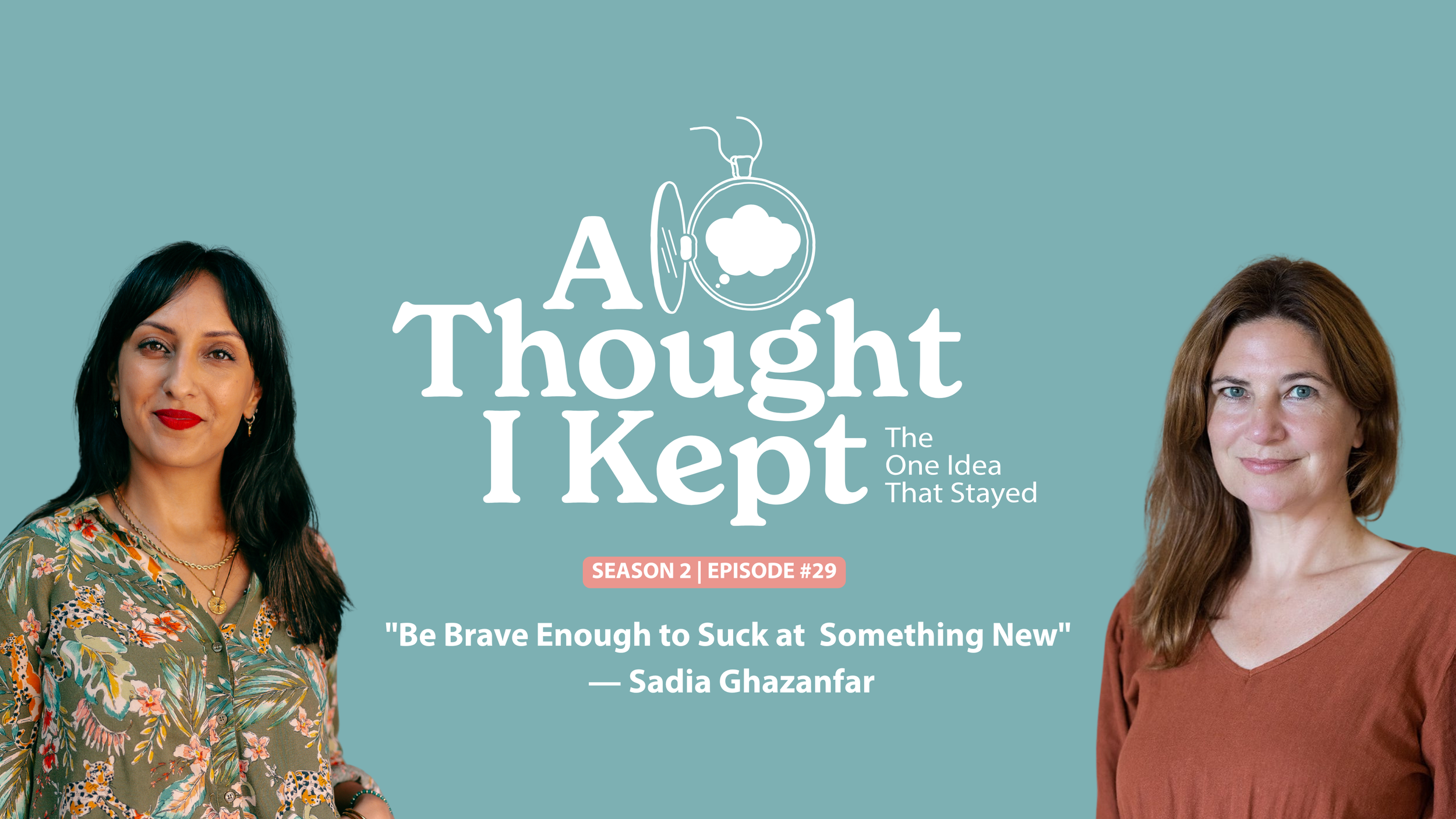
One of the questions I've found myself thinking about recently is this: what's something you're willing to be bad at? Not because you're naturally gifted at it. Not because you know you'll eventually master it. But because something about it feels interesting enough, hopeful enough, or alive enough that you're prepared to keep going anyway.
It's not a question we ask ourselves very often. Instead, many of us spend our energy trying not to look inexperienced, uncertain or unprepared. We polish. We perfect. We compare ourselves to people who seem effortlessly capable and quietly decide we'll begin when we feel more confident.
But what if confidence isn't actually where we begin?
That’s what I get into with this week's guest on A Thought I Kept, Sadia Ghazanfar, women's leadership and career development coach and founder of Slay Your Dragons. The thought she has carried with her for years is beautifully simple:
"Be brave enough to suck at something new."
At first it made me smile. Then it made me feel unexpectedly relieved. We live in a world that expects us not to suck. We see the outcomes of other people's efforts: the bestselling books, the polished speakers, the successful businesses, the perfect performances. What we rarely see are the years of uncertainty that came before them, the uncomfortable first attempts, the moments when someone wondered whether they should give up altogether. We're comparing our beginnings with somebody else's middle, and it's no wonder so many of us decide not to start at all.
One of my favourite moments in our conversation came when Sadia talked about confidence. So many women arrive in her coaching sessions believing confidence is what they need before they can apply for the promotion, change careers, launch the idea or finally speak up. But she sees it differently. Confidence isn't the starting point; it's the result. First comes courage. Then comes practice. Then comes competence. Confidence follows afterwards.
It's such a subtle shift, but it changes everything. Instead of waiting to feel different before we act, we allow ourselves to become different through the act of trying.
We also talked about perfectionism, another companion for so many of us. I loved Sadia's perspective that perfectionism isn't who we are; it's a behaviour that may once have protected us but perhaps no longer serves us. There's something deeply hopeful about that distinction. If perfectionism isn't our identity, then maybe we don't have to carry it forever. Maybe we can gently experiment with behaving differently instead.
As we spoke, I found myself thinking about how often uncertainty masquerades as failure. We assume that not knowing means we're on the wrong path. That feeling awkward means we shouldn't be there. That struggling is evidence we aren't capable. Yet every meaningful thing I've ever learned has begun with exactly those feelings. Coaching. Writing. Speaking. Hosting this podcast. None of them started with confidence. They all started with awkwardness, uncertainty and a willingness to keep going anyway.
Sadia also spoke openly about burnout and the pressure so many women feel to hold everything together. There was a time when she was navigating a demanding leadership role, retraining as a coach and renovating a house all at once. She kept pushing until eventually her body simply wouldn't let her anymore. It's a story that will feel familiar to many people because we often pride ourselves on coping. We tell ourselves we'll figure it out alone. We keep going because stopping feels impossible. Yet sometimes the bravest thing we can do is ask for help before our bodies ask for us.
Listening back to our conversation, I realised that "be brave enough to suck at something new" isn't really about being bad at something. It's about giving ourselves permission to be learners again. To remember that learning has always been messy. That curiosity is often more useful than certainty. That possibility only exists when we're willing to step into something we don't yet know how to do.
This podcast itself is an example of that. I started it because I'd always wanted to make a podcast. Those early episodes were wonderfully imperfect while I figured out the technology, the interviewing, the editing and the rhythm of the conversations. Perhaps they're still imperfect now. But every week I learn something. Every week I become a little more comfortable with not knowing everything. And every week I'm reminded that the joy was never in getting it right first time. It was in beginning.
So if you're arriving here today feeling unsure of yourself, wondering whether you're ready for whatever comes next, perhaps this week's thought is one to keep.
Be brave enough to suck at something new.
It may not feel elegant. It probably won't feel comfortable. But it just might be the beginning of something you couldn't have imagined yet.
Listen to the conversation
In this episode of A Thought I Kept, Sadia Ghazanfar and I explore perfectionism, confidence, courage, burnout, emotional capacity, leadership, asking for help and why learning something new can become one of the most freeing things we ever do.
Listen to "Be Brave Enough to Suck at Something New" — Sadia Ghazanfar wherever you get your podcasts.
Looking for support?
If this conversation resonated because you're feeling overwhelmed, stuck, burnt out or uncertain about your next step, you don't have to figure it out alone. Explore my one-to-one emotions coaching sessions and together we'll make sense of what's really going on beneath the surface, so you can move forward with greater clarity, self-compassion and courage.

What If You're Not Stuck?
If you feel stuck in a job, relationship or life transition, you may not be lacking motivation. Explore the emotional reasons we get stuck and how to find your next step with compassion and clarity.

A few years ago, I noticed that "stuck" was becoming one of the most common words people used in coaching sessions.
"I feel stuck in my job."
"I feel stuck in my relationship."
"I feel stuck where I live."
"I feel stuck in my life."
The details were always different, but the feeling underneath was remarkably similar. There was frustration, restlessness and often a fair amount of self-judgement. People would arrive convinced they should know what to do next. They should be making a decision. They should be taking action. They should have figured this out by now.
The assumption was always the same: if I'm stuck, something must be wrong. Yet the more I listened, the more I began to wonder whether stuckness was being misunderstood.
We tend to treat feeling stuck as a problem to solve. We assume it means we're procrastinating, lacking confidence or avoiding the obvious next step. We tell ourselves to be braver, more decisive, more motivated. We read the books, make the lists and search for clarity.
But what if feeling stuck isn't always a sign that you're failing to move forward? What if it's carrying information? What if, instead of asking how to get unstuck, we became curious about what stuckness might be trying to tell us?
Sometimes We're Not Stuck. We're Grieving.
One of the most overlooked forms of grief is grieving something that hasn't technically ended. You can grieve a workplace while still working there. You can grieve a relationship while still being in it. You can grieve a place you've outgrown while still calling it home. Often what we're grieving isn't the reality itself but the version we hoped it would become.
The manager who never recognised our contribution. The role that promised growth but delivered exhaustion. The relationship we believed would deepen. The future we imagined for ourselves that doesn’t feel like it will ever arrive.
When we're carrying that kind of grief, movement can feel surprisingly difficult. Part of us is still looking backwards, still hoping, still waiting for something to become what we needed it to be. We may find ourselves endlessly analysing what to do next when the real work is acknowledging what has already been lost.
Sometimes we're not stuck because we don't know the answer. Sometimes we're stuck because we're still mourning the fact that the answer isn't the one we wanted.
Sometimes We're Not Stuck. We're Protecting Ourselves.
One of the most compassionate questions I know is: what is this behaviour trying to protect?
Many of the things we criticise ourselves for are actually forms of self-protection. Staying quiet may protect us from rejection. Keeping ourselves small may protect us from visibility. Not applying for the job may protect us from disappointment. Not leaving may protect us from uncertainty.
Particularly when we've experienced setbacks, betrayals or repeated disappointments, our protective instincts can become incredibly sophisticated. We stop hoping. We lower expectations. We convince ourselves the grass isn't greener. We tell ourselves we're being realistic.
Yet underneath that realism there is often a quieter truth. We are trying not to get hurt.
The difficulty is that protective strategies have a habit of outliving their usefulness. What once helped us survive can eventually prevent us from growing. We become trapped not by our lack of courage but by the very strategies that once kept us safe.
Understanding that doesn't mean forcing ourselves to change overnight. It simply allows us to meet ourselves with curiosity rather than criticism.
Sometimes We're Not Stuck. We're Exhausted.
There is a version of stuckness that has nothing to do with clarity and everything to do with capacity. Many people are trying to make life-changing decisions while carrying far too much. They're burnt out at work, overwhelmed at home, supporting everyone else, navigating uncertainty and wondering why they can't summon the energy to reinvent their lives.
Everything feels harder when we're exhausted. The future feels smaller. Possibilities feel further away. Decisions that might have felt manageable a year ago now feel impossible.
In those moments, asking "What should I do?" may be the wrong question. A more useful question might be: "What do I need?"
Sometimes what looks like stuckness is simply a nervous system asking for rest, support and recovery before it can contemplate what comes next.
Sometimes We're Not Stuck. We're Waiting for Certainty.
If you've ever told yourself that you'll move once you're sure, you're in good company. Most of us are waiting for certainty. We want to know the next job will be better. We want reassurance that the move will be worth it. We want proof that we're making the right decision.
The problem is that certainty is rarely available in advance.
Most of the meaningful decisions in our lives are made without guarantees. We don't know how relationships will unfold. We don't know how jobs will turn out. We don't know how future versions of ourselves will feel about the choices we're making today.
What often keeps us stuck isn't uncertainty itself but the belief that we need certainty before we can move.
The people I admire most aren't necessarily the people who are most certain. They're the people who have learned to trust themselves in uncertain situations. They know disappointment is possible. They know things may not go to plan. But they also know they can respond, adapt and begin again if needed.
Sometimes We're Not Stuck. We're in Transition.
Some chapters of life have no obvious label. The old version of your life no longer fits, but the new version hasn't fully arrived. You can feel the shift happening, but you can't yet see what it's becoming.
These periods can be deeply uncomfortable because they don't offer the neat narrative arc we're looking for. We want a map. We want progress. We want to know we're heading somewhere. Instead, we find ourselves in a kind of hallway between two rooms.
Yet transition has its own purpose. Beneath the uncertainty, we are gathering information. We are discovering what matters. We are testing assumptions, developing resilience and becoming someone capable of inhabiting the next chapter.
The growth is real, even when it isn't visible.
Sometimes We're Not Stuck. We're Choosing.
This may be the most uncomfortable possibility of all. Sometimes we are making a choice. Not necessarily forever. Not necessarily consciously. But a choice nonetheless.
We may be choosing the known discomfort of today over the unknown discomfort of tomorrow. We may be choosing security over possibility, familiarity over uncertainty, stability over growth.
The challenge is that we often resist acknowledging the choice because we don't like the options available to us.
Yet there can be enormous relief in admitting it.
"I am choosing to stay in this job for now."
"I am choosing not to move yet."
"I am choosing to remain here while I work out what comes next."
The circumstances may not change immediately, but something important does. Agency returns. When we acknowledge our choices, we stop seeing ourselves as trapped and begin seeing ourselves as active participants in our own lives. We can then ask different questions. What is this choice giving me? What is it costing me? What need is it meeting? What would need to change for a different choice to become possible?
What If the Opposite of Stuck Isn't Movement?
We often imagine that the opposite of stuck is action. A resignation letter. A difficult conversation. A move across the country. A dramatic leap into the unknown. Sometimes it is. But increasingly, I wonder if the opposite of stuck is trust.
Trust that you can grieve what didn't happen. Trust that disappointment is not the end of the story. Trust that uncertainty is survivable. Trust that your instincts deserve a hearing. Trust that when the time comes, you'll know enough to take the next step.
Perhaps feeling stuck isn't always a sign that you're failing to move. Perhaps it's an invitation to understand what is really happening beneath the surface.
Because once we do that, movement often arrives naturally. Not because we've forced ourselves into action, but because we've stopped fighting the wisdom hidden inside the pause.
Explore Emotions Coaching
If you're feeling stuck in work, relationships, a life transition or simply in your own head, emotions coaching can help you understand what's really happening beneath the frustration.
Together we'll explore the emotions, needs, beliefs and protective patterns shaping your experience, helping you move from self-judgement towards greater clarity, self-trust and agency.
You don't need to know what comes next. You just need somewhere to start.

What If Feeling Lost Isn't the Problem?
Feeling lost doesn't always mean something is wrong. Explore how the Enneagram, self-awareness and the lifelong process of becoming ourselves can help us reconnect with who we are and what matters most.

A few weeks ago, I found myself down an Enneagram rabbit hole.
If you've never come across it before, the Enneagram is a personality framework that describes nine different ways of moving through the world. Unlike many personality tools, it isn't particularly interested in what you do. It's more interested in why you do it. What motivates you. What you're trying to avoid. What you long for. The stories you've come to believe about yourself and the strategies you've developed to navigate life.
I'd encountered it before, but this time I found myself lingering. Was I a Three? A Six? A Nine? The more I read, the less certain I became. Part of me could see myself in the achiever, someone who likes creating things, working towards goals and making ideas happen. Another part recognised the (anxious) planner, always trying to anticipate what might happen next and looking for a way to feel more certain. Then there was the peacemaker, the person who wants harmony, dislikes conflict and can lose sight of themselves whilst attending to everyone else's needs.
The answer mattered less than I expected. What interested me was noticing what happened as I tried to answer the question. What was I hoping the Enneagram would tell me? Why was I so drawn to understanding myself through this particular lens? And what was I really searching for underneath it all?
Perhaps the same thing many of us are searching for when life feels uncertain. More clarity wherever we can find it. And often that does mean starting with ourselves.
When we're struggling, it's often tempting to believe that the answer lies somewhere outside us. A new habit. A better morning routine. A different job. A clearer plan. A version of ourselves that is somehow more confident, more productive or more certain. Sometimes those things help. Sometimes change is exactly what's needed. Yet so often what we're really searching for isn't a better system but a deeper understanding of ourselves.
We want to know why we keep ending up in the same place. Why we say yes when we mean no. Why we struggle to make decisions. Why we feel anxious when everything appears fine on paper. Why success doesn't feel the way we expected it to. Why we're exhausted. Why we're stuck. Why we've somehow become strangers to ourselves.
The older I get, the less interested I become in fixing myself and the more interested I become in understanding myself. Not because understanding alone changes everything, but because it's difficult to move forwards when we're constantly fighting who we are. Before we can choose a different path, we often need to understand the one we've been walking.
When the Map No Longer Works
One of the things I've noticed through coaching, writing and conversations on the podcast is how quickly we turn feeling lost into evidence that something is wrong. We treat uncertainty as a problem to solve. We assume that if we could just find the answer, make the decision or create the plan, everything would settle down.
Yet when I look back on the periods of my own life when I've felt most lost, they often weren't signs that I'd failed. They were signs that something important was changing.
The life that made sense before no longer fit. The identity I'd been carrying was becoming too small. The coping strategies that had once protected me were no longer serving me. I wasn't lost because I'd gone off course; I was lost because the map no longer worked.
I think this is one of the reasons people are drawn to frameworks like the Enneagram. Not because they provide all the answers, but because they offer language for things we haven't quite been able to articulate. They help us notice patterns. They invite us to become curious about ourselves. They shine a light on habits, fears and motivations that have often been running quietly in the background for years.
Whether or not the Enneagram is your thing, I think it points towards something useful. We all develop ways of being in the world. We find strategies for staying safe, being loved, belonging, succeeding or avoiding pain. We learn what earns approval. We discover what feels dangerous. We adapt.
The challenge is that over time these strategies can become so familiar that we mistake them for who we are.
The person who always takes care of everyone else may no longer know what they need. The person who always achieves may no longer know what they actually want. The person who keeps the peace may no longer know what they think. The person who prepares for every possibility may no longer trust themselves to handle uncertainty. What began as a way of navigating the world slowly hardens into an identity.
Then one day we find ourselves questioning things.
Perhaps we're burnt out. Perhaps a relationship changes. Perhaps the children leave home. Perhaps a career no longer feels meaningful. Perhaps we simply wake up one morning with the uncomfortable feeling that something isn't quite right.
Often what we're experiencing isn't failure. It's an invitation to become more fully ourselves.
The Lifelong Process of Becoming Ourselves
One of my favourite ideas comes from the writer Cathy Rentzenbrink and it’s the idea of selfing: the lifelong process of becoming more fully who we are.
I love it because it feels so different from the language of self-improvement that surrounds us. Selfing isn't about finding a perfect version of yourself hidden somewhere beneath the surface. It's not about optimisation, reinvention or becoming someone new. It's about developing a deeper relationship with yourself over time. It's about becoming more honest about what matters, more aware of your patterns and more compassionate towards the parts of yourself you've spent years trying to outrun.
Seen this way, there is no final version of you waiting to be discovered. There is only an ongoing conversation between who you have been, who you are and who you are becoming. To me that feels both more realistic and more hopeful.
If you're in a time of life where you're questioning things, feeling disconnected, uncertain or stuck, perhaps the invitation isn't to rush towards an answer. Perhaps it's to become curious.
What keeps repeating in your life? What feels out of alignment? What role are you playing that no longer fits? What are you longing for? What have you stopped listening to? What part of yourself have you lost touch with?
You don't need the Enneagram to ask those questions (though it’s always fascinating to explore). You don't need a personality framework, a diagnosis or a five-year plan (though for some of us they can offer something we are searching for). Sometimes the most important thing is simply creating enough space to hear your own answers.
Feeling lost can be frightening because we assume we're moving away from ourselves. Yet sometimes we're moving towards ourselves. Sometimes the confusion arrives because an old story is loosening its grip. Sometimes uncertainty is what it feels like before something truer emerges.
The challenge is not to solve yourself too quickly. The challenge is to stay curious long enough to discover who you're becoming.
If you're feeling anxious, disconnected or uncertain, explore the resources at If Lost Start Here. From our Guide to Life and wellbeing journal to one-to-one coaching and community, everything we create is designed to help you find your grounding when life feels a little off course.

What Happens When We Stop Listening to Our Feelings?
Emotional avoidance can look like busyness, people-pleasing, anxiety, overwhelm, and burnout. Explore what happens when we disconnect from our feelings and how to start listening again.

For years, I thought not feeling was a skill. Being able to put difficult emotions to one side seemed practical, sensible, and even admirable. If something hurt, I carried on. If I felt anxious, I pushed through. If I was grieving, overwhelmed, uncertain, or angry, I told myself there would be time for that later.
Later, of course, rarely came.
It's only in recent years that I've realised how many of us are taught some version of the same lesson: that our feelings are a problem to solve rather than information to understand.
Sometimes the message is obvious.
"Toughen up."
"Don't be so sensitive."
"Stop overthinking."
"Just get on with it."
Other times it's much more subtle. We absorb it from workplaces that reward productivity over humanity. Families that don't talk about emotions. Social media feeds that celebrate resilience but rarely vulnerability. Cultures that tell us to stay positive no matter what.
Over time, many of us become experts at emotional avoidance. We stop listening to ourselves.
The Cost of Emotional Numbing
When people think about avoiding emotions, they often imagine dramatic denial or repression. But emotional numbing can look surprisingly ordinary.
It can look like staying busy.
It can look like always being the capable one.
It can look like endlessly researching solutions instead of sitting with uncertainty.
It can look like scrolling, working, tidying, planning, helping everyone else, or finding one more thing to cross off the list.
From the outside, life can appear completely fine. Inside, however, something starts to go quiet. The challenge with numbing difficult emotions is that we rarely get to choose which feelings disappear. When we turn down the volume on anxiety, grief, fear, disappointment, or anger, we often dampen joy, excitement, pride, connection, and hope too.
We don't just lose access to difficult emotions. We lose access to ourselves.
The Emotional Ailments That Often Follow
Many of the struggles people bring to coaching aren't caused by emotions themselves. They're caused by years of ignoring them.
Anxiety can become louder when we repeatedly dismiss what it might be trying to tell us.
Overwhelm can build when we override our limits for too long.
Burnout often follows prolonged periods of disconnecting from our needs.
People-pleasing can flourish when we become more attuned to everyone else's feelings than our own.
Indecision can emerge when we've lost touch with the internal signals that help us know what matters.
Even feeling lost can sometimes be a symptom of emotional disconnection.
After all, emotions are one of the ways we orient ourselves in the world. They tell us what feels safe, meaningful, threatening, exciting, important, unfair, or deeply wanted.
Without them, we can find ourselves moving through life with the map folded shut.
Why We Learn to Disconnect
Most of us don't disconnect from our feelings because we're broken. We disconnect because, at some point, it helped.
Perhaps feeling wasn't welcomed in your family.
Perhaps sensitivity was mocked.
Perhaps you learnt that achievement earned praise while vulnerability attracted criticism.
Perhaps you were carrying responsibilities that left little room for your own emotional life.
Perhaps you simply became very good at surviving.
Emotional avoidance is often an adaptation before it's a problem. The difficulty comes when a strategy that once protected us starts limiting us.
What If Feelings Aren't The Problem?
One of the biggest shifts in my own life has been moving from seeing emotions as obstacles to seeing them as information.
Not instructions. Not facts. Not something that must be acted upon immediately. But information.
Anxiety might be highlighting uncertainty.
Anger might be pointing towards a boundary.
Sadness might be asking us to acknowledge a loss.
Frustration might reveal a need that isn't being met.
Joy might show us what we want more of.
When we stop fighting our feelings, something surprising often happens. They become easier to understand. And when we understand them, we can respond rather than react.
Starting to Listen Again
You don't need to become someone who endlessly analyses every emotion. You don't need to share everything you feel. You don't need to become a different person altogether. But it can be worth becoming curious.
The next time you find yourself distracted, overwhelmed, anxious, stuck, exhausted, or disconnected, try asking:
What might I be feeling right now?
And what might that feeling be trying to tell me?
The answer may not solve everything. But it might reconnect you with the person who has been there all along, quietly trying to get your attention. And sometimes that's where finding your way starts.
Explore Emotions Coaching
If any part of this feels familiar, emotions coaching can offer a space to slow down and listen to what your feelings might be trying to tell you.
Many of us spend years pushing emotions aside, questioning them, fearing them, or simply trying to get through them. Together, we explore what's underneath anxiety, overwhelm, uncertainty, people-pleasing, burnout, and other everyday emotional struggles—not to get rid of your feelings, but to better understand them.
Because emotions aren't interruptions to life. They're part of how we find our way through it.
If you're ready to have a different relationship with what you're feeling, I'd love to help.
Find out more about emotions coaching today.
What to Do When Life Falls Apart and You Feel Lost
When a relationship ends, someone dies, or you lose your job, it can feel like you’ve been pushed out of the life you built. Read this guide to navigating unexpected change, uncertainty, and rebuilding self-trust without rushing to fix everything.
There are moments in life when the ground gives way without your consent.
You didn’t choose the ending. You didn’t plan the disruption. A relationship ends because someone else makes a decision. A parent dies. A health diagnosis lands. A job disappears. And suddenly you are standing outside the life you built, holding pieces that no longer fit together.
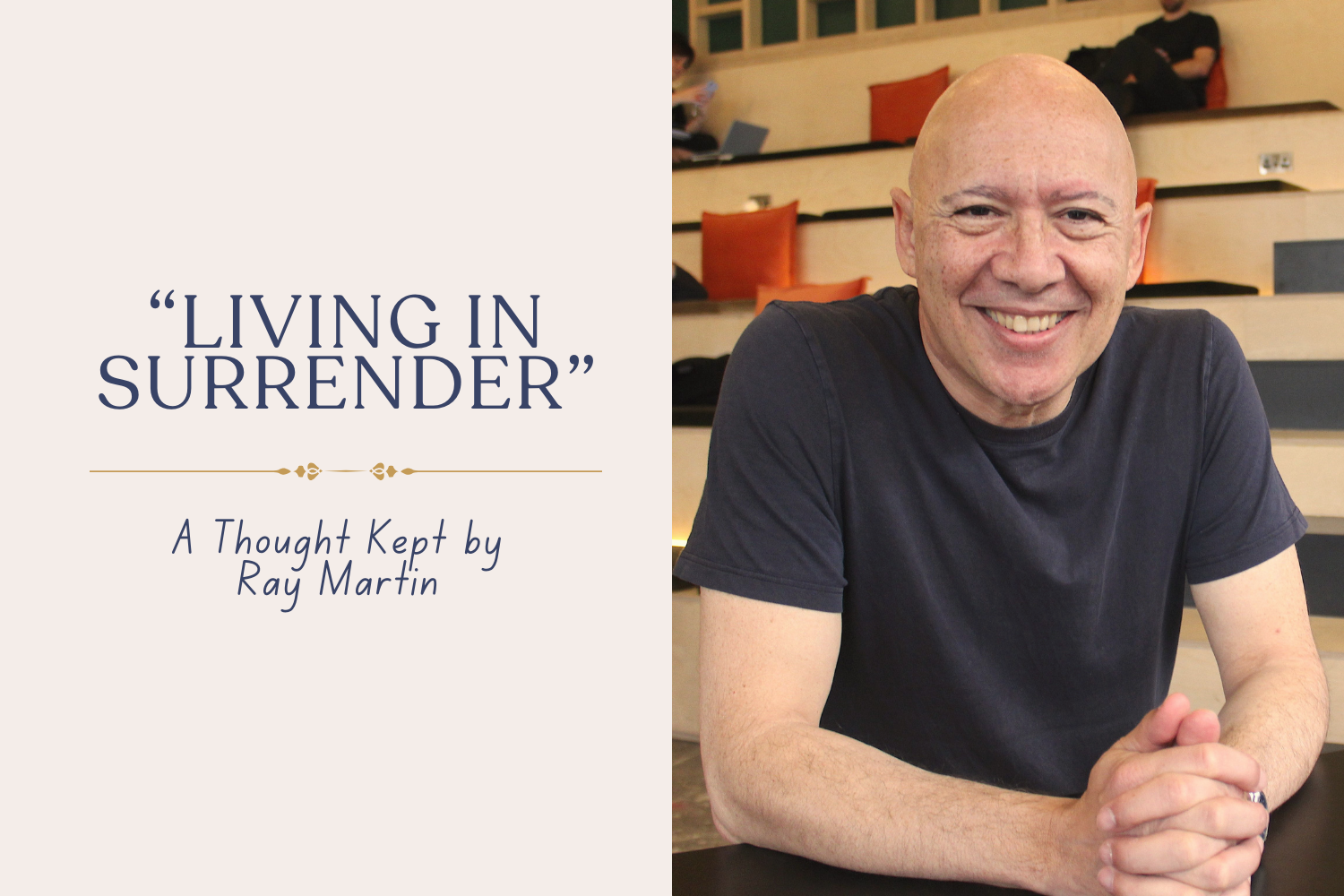
In my recent conversation with Ray Martin on A Thought I Kept, what struck me most wasn’t the romance of fourteen years of travel. It was the year that came before it. In a single stretch of time he lost his marriage, his business partnership, and his father The identity he had constructed — successful businessman, husband, son— fractured all at once.
He didn’t wake up one morning and decide to reinvent himself. Life pushed him out.
And that is often how it happens.
When something unexpected pulls the rug from under us, the first instinct is to restore what was. To fix. To replace. To rush toward a new beginning so we don’t have to sit in the in-between. Ray became fascinated by this middle space — what William Bridges calls the neutral zone The place where the old life has ended but the new one hasn’t fully formed. From the outside, nothing looks dramatic. Inside, everything is shifting.
If you are in that space, it can feel disorienting. You might not recognise yourself. The roles that once organised your days no longer apply. The confidence that came from knowing who you were can wobble. You may feel lost not because you are indecisive, but because the map you were using is no longer valid.
Ray’s core thought — the one he kept — is living in surrender
Not surrender as defeat. Not resignation. But surrender as a different way of orienting when control has already slipped from your hands.
He began to pay attention to where his energy went. After visiting an elephant sanctuary and an orphanage, he couldn’t stop thinking about them. Instead of dismissing that tug as sentimental, he followed it. That eventually led him to train for and run a marathon to raise money, something he had never imagined doing before
What I take from that is not “run a marathon.” It is this: when life has already dismantled your plans, perhaps you can afford to listen more closely to what quietly draws you.
Unexpected endings often strip us back to something more elemental. Ray speaks openly about how, earlier in life, he overrode his instincts in order to stay in character After everything fell apart, he found he could no longer ignore those nudges. He began treating life as a series of experiments rather than a fixed destination
There is something gentle in that framing. If you have been kicked out of the life you built, the pressure to “get it right” next time can be immense. An experiment carries less weight. It allows you to try, to notice, to adjust.
Another shift that came for him was around feeling. He moved from living primarily in his head to allowing himself to express emotion more freely. That matters when we are navigating grief, anxiety, or overwhelm. Emotional states are not permanent addresses. They are places we pass through. Letting yourself feel does not mean you will be swallowed by it. Often it means the feeling can move.
He also rethought the idea of “ties.” Work, relationships, community, home. The issue, he suggests, isn’t being tied to something. It’s being unconsciously tied When life tears away a tie without your permission, there can be freedom hidden inside the shock. Not the freedom you would have chosen, but the freedom to ask: what do I now choose, consciously?
Later in the conversation, Ray talks about calculating how many days he might have left — around 5,700 at this stage Not as a dramatic countdown, but as orientation. If time is finite, what is worth fighting? What can be softened? What is no longer necessary?
When the unexpected happens, we often look for certainty. For guarantees. For a clear five-step plan. What Ray’s story offers instead is steadier and perhaps more honest. You may not get certainty. But you can cultivate attention. You can notice what feels alive, even faintly. You can allow the neutral zone to do its quiet work inside you.
Being lost is not always a failure of planning. Sometimes it is the inevitable consequence of loving, committing, building — and then losing.
If you find yourself outside the life you built, perhaps the question is not immediately “What should I do next?” Perhaps it is “What is drawing me, even now?”
You can listen to the full conversation with Ray on A Thought I Kept:
And if you are in the middle of your own unexpected transition, our coaching sessions at If Lost Start Here offers a place to think, feel, and find your footing again without pressure to rush toward a new identity.
You are allowed to be in between. You are allowed to listen before you leap.
Struggling With Comparison? Rethinking Confidence and Self-Trust
Comparison and competition can quietly shape how we see ourselves. In this conversation, we explore confidence, self-trust, and the beliefs we carry through life.
This is how it might go. You’re scrolling, or reading, or listening to a podcast, and you notice a flicker of feeling when someone else shares good news. A promotion. A book deal. A confident post about work they love. You’re pleased for them — genuinely — and yet something tightens. A question forms that you don’t quite want to look at too closely.
What does this mean about me?
Moments like this don’t usually come with drama. They’re small, everyday, easy to brush past. But they can linger. And over time, they shape how we see ourselves, how we show up at work, and how much space we allow ourselves to take.
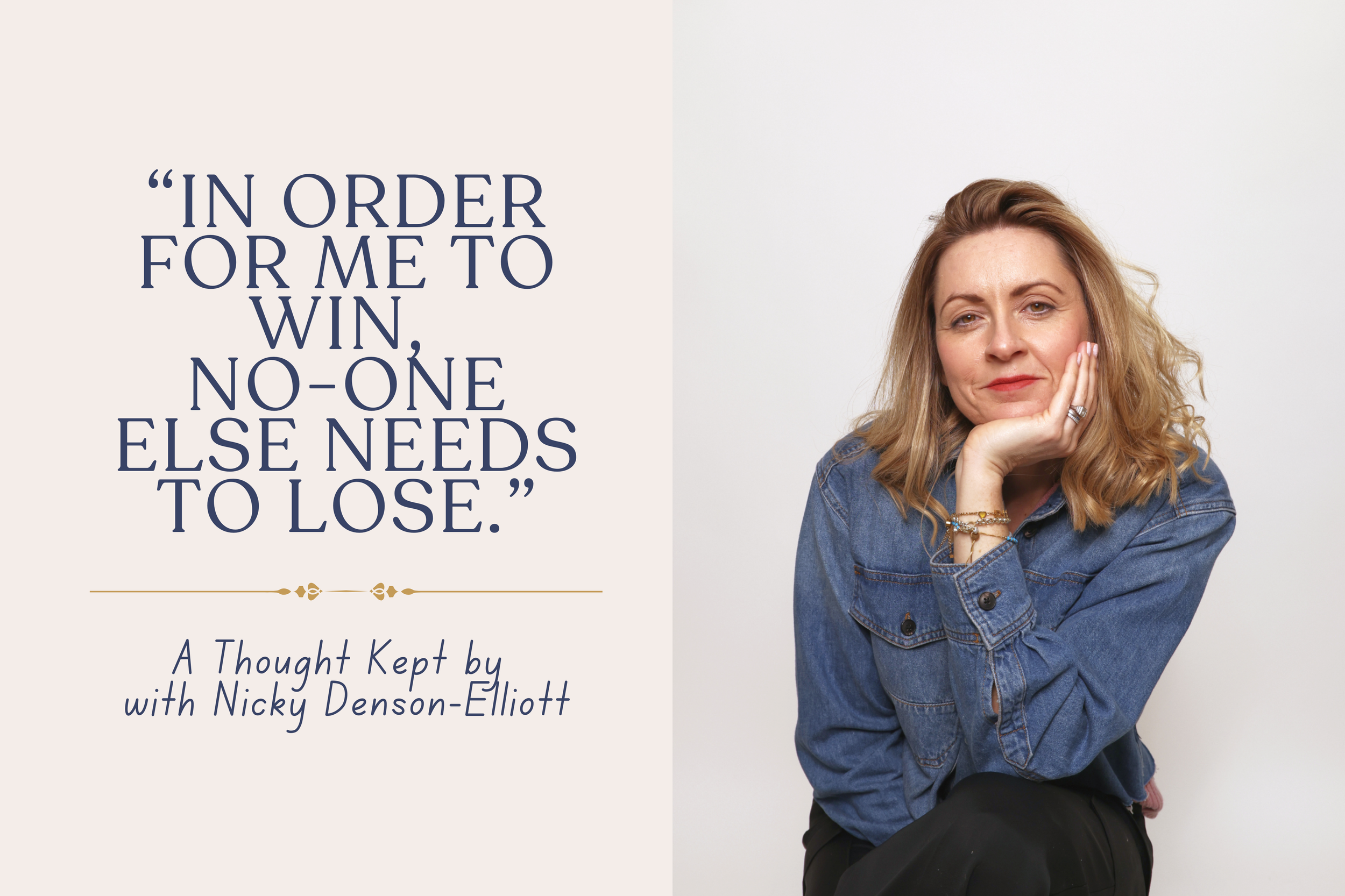
This week on A Thought I Kept, I spoke to Nicky Denson-Elliott, and she brought a thought that disrupted that familiar inner pattern:
In order for me to win, no one else has to lose.
It’s one of those ideas that seems obvious when you first hear it and then quietly radical the longer you sit with it.
Because so much of our inner landscape has been shaped by the opposite belief. That success is scarce. That confidence belongs to certain people, not others. That if someone else steps forward, there’s less room for us. These ideas don’t usually announce themselves as beliefs. They show up as feelings: comparison, jealousy, self-doubt, hesitation.
Nicky spoke about how deeply this conditioning runs, especially for women. How it can shape our relationship with money, confidence, and visibility. How it influences the way we price our work — often not based on its value, but on what feels safe. How it quietly sets women against one another, even when connection and solidarity are what we most want.
What’s important here is that none of this is a personal flaw. These are not thoughts we invented. They’re learned. Reinforced. Picked up over time in workplaces, families, schools, media, and culture. When they surface, they can feel intensely personal but they rarely originate there.
And when life already feels full or uncertain, carrying these inherited ideas can make everything heavier. You might notice it in how hard you are on yourself. In the way you second-guess decisions. In the tension you feel around confidence — wanting it, distrusting it, worrying what it might cost.
One of the most grounding parts of the conversation with Nicky was her refusal to replace one set of rules with another. There was no invitation to be bolder, louder, or more confident in a performative sense. Instead, she talked about noticing. About recognising when a familiar reaction appears and asking, with curiosity rather than judgment: Is this actually mine?
That question alone can create a shift.
Because when we start to see that some of our thoughts are inherited rather than chosen, we don’t have to wrestle with them in the same way. We don’t have to argue ourselves out of feeling jealous or small or unsure. We can simply recognise the pattern, and loosen our grip.
This matters not just for our inner world, but for how we move through everyday life. Especially work. Especially relationships with other women. Especially moments where confidence feels like something other people have access to, and we’re still figuring it out.
Letting go of the myth of competition doesn’t mean pretending everything is fair or easy. It doesn’t mean denying ambition or discomfort. But it does open up a different orientation — one where someone else’s success doesn’t automatically diminish our own, and where confidence can be something we grow into, rather than something we perform.
For many of us, this kind of rethinking doesn’t arrive as a neat turning point. It shows up gradually. In small pauses. In moments where we choose not to rush to judgment — of ourselves or others. In the realisation that uncertainty doesn’t mean we’re failing; it often means we’re paying attention.
If you’ve been questioning old ideas about success, money, confidence, or what it means to be doing “well” in life, you’re not behind. You may simply be noticing that the old maps don’t quite match the terrain anymore.
Nicky’s thought offers a steadier way of orienting. It reminds us that life isn’t a zero-sum game. That generosity — toward ourselves and others — isn’t naïve, but grounding. And that self-trust doesn’t come from fixing or perfecting ourselves, but from recognising which beliefs were never designed to support us in the first place.
You don’t need to know what comes next. You don’t need to replace every thought at once. Sometimes it’s enough to notice which ideas make life feel smaller, and to wonder — without urgency — what it might be like to set one of them down.
If this resonates, listen to the full conversation with Nicky on A Thought I Kept.
And if you need help exploring some of the feelings you have around comparison — jealousy, self-doubt, hesitation — or what confidence even means to you, explore our emotions coaching sessions.
Feeling Stuck Until You’re “More Confident”? Curiosity Might Be a Better Place to Start
If you’re waiting to feel confident before making a change, curiosity can help you move forward.
“I’ll do this when I feel more confident.”
We tell ourselves we’ll speak up, make the change, apply for the role, take ourselves seriously, or move forward once confidence arrives. Once we feel braver, clearer, more certain about who we are and what we want.
But confidence has a habit of staying just out of reach.
Not because there’s something wrong with us, but because confidence is rarely the starting point we imagine it to be. For most people, confidence grows through experience, not before it. The problem is that waiting to feel confident can keep us stuck, circling the same questions, postponing decisions, and quietly reinforcing the idea that we need to become someone else before we’re allowed to act.
This is where curiosity offers a different way in.
Curiosity doesn’t ask you to believe in yourself. It doesn’t require certainty or bravery. It simply invites you to explore. What would happen if you tried this? What might you notice if you took one small step, not to prove anything, but to learn?
When you approach change with curiosity, the stakes are lower. You’re not asking yourself to succeed; you’re allowing yourself to gather information. A conversation becomes an experiment rather than a test. A new direction becomes something you’re exploring rather than committing to forever.
This shift matters because it changes how we relate to ourselves. Instead of measuring every move against an imagined ideal, curiosity keeps us in contact with our actual experience. Each step, however small, offers insight rather than judgement. Over time, that insight builds self-trust — and confidence follows.
Many people who want to feel more confident are really looking for something deeper: a sense that they can trust themselves, that they’re allowed to make choices without constant second-guessing, that they don’t need to have it all worked out in advance. Curiosity supports that kind of confidence because it stays close to what’s real. It helps you learn what fits, what doesn’t, and what feels meaningful in your own life.
If you’re feeling stuck, unsure, or waiting for confidence before you move forward, curiosity can be a more accessible starting point. It allows movement without demanding certainty. It gives you permission to begin where you are, rather than where you think you should be.
If confidence, decision-making, or feeling stuck are recurring patterns for you, coaching can be a supportive space to explore them more deeply. Coaching isn’t about fixing you or telling you what to do; it’s about understanding what’s going on beneath the surface and finding ways to move forward that feel steady, realistic, and impactful.
You don’t need to wait until you feel confident. You can start by getting curious.
How to Handle Your Emotions When You’re Feeling Lost or Overwhelmed
Feeling lost or overwhelmed by your feelings? Learn how to handle your emotions when you struggle to understand them.
There’s a moment many of us might recognise.
You’re trying to make a decision, move something forward, or simply get through the day — and your emotions feel louder than you’d like them to be. Anxiety edges in. Frustration bubbles up. Self-doubt has an opinion. And suddenly it feels harder to think clearly, trust yourself, or know what the next step might be.
When that happens, it’s easy to conclude that the problem is your emotions. That you’re feeling too much, or handling things badly. That if you could just calm down, be more confident, or stop overthinking, everything would be easier.
But what if the issue isn’t having emotions — it’s that most of us were never taught how to handle them well?
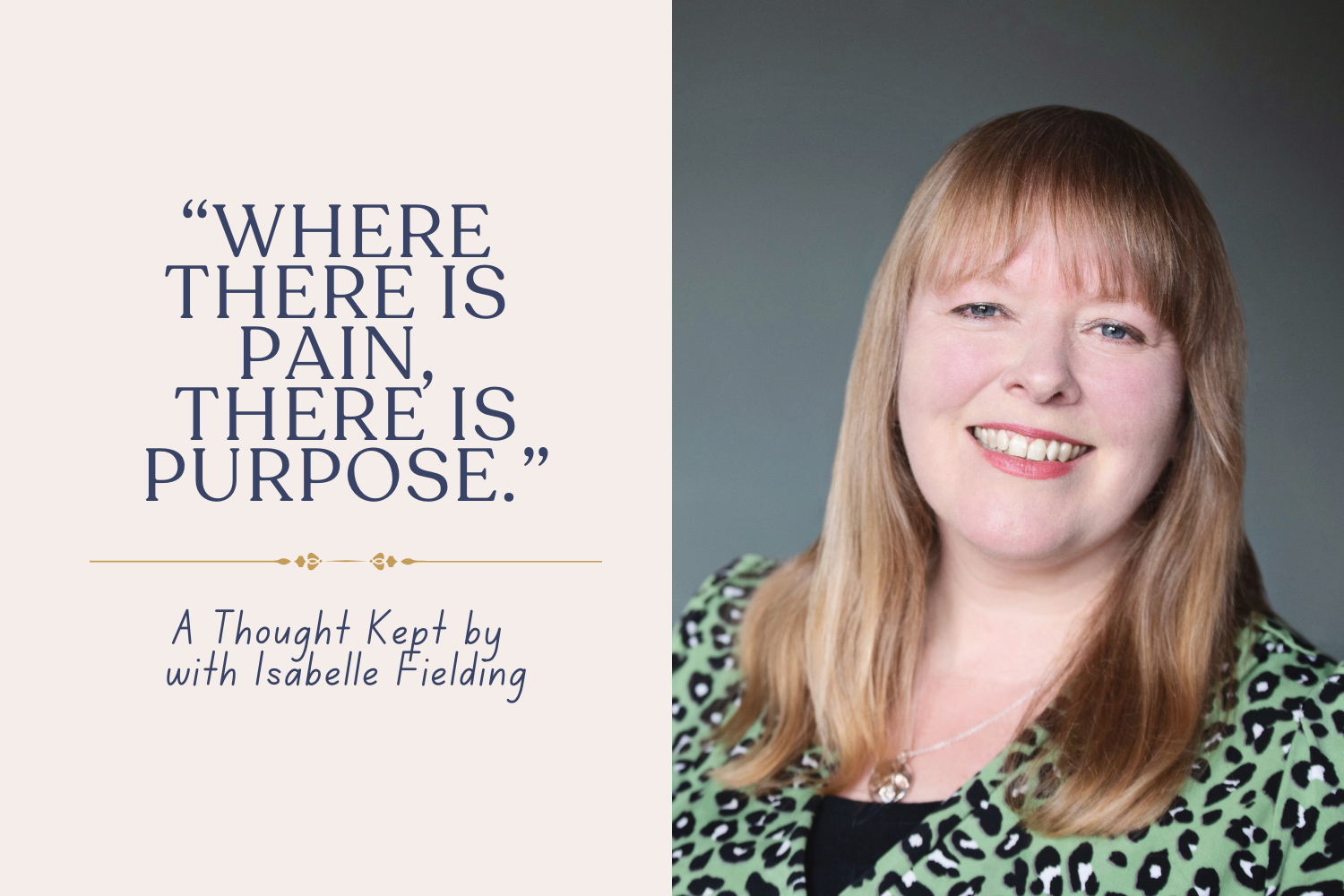
This question sat at the heart of a recent conversation on our podcast A Thought I Kept, with Isabelle Fielding. Isabelle works with individuals and organisations navigating change and uncertainty, and her work is grounded in a simple but often overlooked idea: emotions are part of being human, and learning how to relate to them is a skill — not a personality trait.
One of the key ideas Isabelle shared was this: Where there’s pain, there’s purpose. Not pain as something to glorify or push through, but pain as a signal. An indication that something matters, that a value is being touched, that attention is needed.
For many people who arrive here feeling lost, this is already a reframe. Because when emotions feel uncomfortable, our instinct is often to control them, deny them, or move away from them as quickly as possible. We tell ourselves we shouldn’t feel this way. We judge the feeling. We add a second layer — frustration, shame, self-criticism — on top of the original emotion.
Very quickly, things escalate.
Isabelle spoke about how emotions often stack like this. You feel anger, then feel ashamed of feeling angry. You feel anxious, then criticise yourself for being anxious again. Before long, it’s hard to know what you’re actually feeling — just that it’s too much.
Handling emotions better doesn’t mean stopping that first feeling from arising. It means learning how not to pile everything else on top.
In the conversation, Isabelle used an image that makes this easier to picture. Imagine being in the sea, trying to hold a beach ball underwater. It takes constant effort. Your arms ache. And eventually, no matter how determined you are, the ball bursts back to the surface — often catching you off guard. That’s what it can be like when we try to suppress or ignore our emotions. They don’t disappear; they resurface later, often louder and harder to manage.
A more sustainable approach is to let the ball float.
To allow emotions to be present without pushing them away — but also without letting them take over. Isabelle described this as learning to carry emotions lightly, rather than holding them right in front of your face. They’re there, but they don’t get to drive every decision.
This is where handling emotions becomes less about control and more about relationship.
Instead of asking, How do I get rid of this feeling? we might ask, Can I notice this without being overwhelmed by it?
Instead of assuming emotions make us unreliable, we can start to see them as information — not instructions.
Anxiety might be signalling uncertainty that needs time. Frustration might be pointing to a boundary or a mismatch. Self-doubt often appears where we care deeply about doing something well. None of these emotions tell us exactly what to do next but they can help us understand what’s going on inside us.
For people feeling lost, this can be grounding. Because it means you don’t have to wait until you feel calm, confident, or certain before you’re allowed to move forward. You don’t need to change who you are to begin handling things better.
Another important distinction Isabelle made was between experiencing an emotion and becoming it. Feeling anxious is not the same as being an anxious person. Feeling unsure doesn’t mean you can’t be trusted. Emotions are states — they come and go — even when they feel sticky or familiar.
Learning to handle emotions better often starts with noticing this difference.
It might mean pausing long enough to name what you’re feeling, without immediately reacting or analysing it. It might mean recognising when a second emotion — shame, irritation, self-judgment — has joined the first. It might mean allowing yourself to feel something without demanding that it resolve straight away.
This isn’t about emotional mastery. It’s about emotional steadiness.
At If Lost Start Here, we often talk about finding your footing rather than finding answers. About orientation rather than certainty. Learning to handle your emotions is part of how to navigate life. Not because emotions give you a perfect map, but because they help you stay connected to yourself as you move through change.
You may still feel unsure. You may still feel conflicted or overwhelmed at times. But handling emotions better doesn’t mean eliminating those experiences — it means being less knocked off course by them.
And that can make a real difference when you’re trying to move forward gently, in your own way.
If you’d like to explore this further, the full conversation with Isabelle Fielding is now available on our podcast A Thought I Kept.
And if you’re feeling lost or unsure and want support in understanding and handling your emotions, explore our coaching sessions.
The Thoughts That Stayed When the Year Felt Hard
A gentle end-of-year reflection drawn from A Thought I Kept — thoughts that helped when life felt overwhelming, uncertain or hard to navigate.
Some years are easy to summarise.
They arrive with neat headlines: “the year everything changed”, “the year it all came together”, “the year of big decisions".
And then there are the other years. The ones that feel harder to pin down.
This has been one of those years for many of us.
A year where you might not have clear answers. Where you feel more tired than triumphant. Where you’re still carrying questions about work, identity, relationships, or simply how to feel okay in the everyday.
When we started the podcast A Thought I Kept, we weren’t looking for big breakthroughs or polished wisdom. We asked a much simpler question:
What’s the thought that stayed with you — when everything else fell away?
As the year draws to a close, those are the thoughts we keep returning to. Not because they fixed everything, but because they helped us navigate life just that little bit better.
Here are some of the ideas that stayed — especially when the year felt heavy, overwhelming, or uncertain.

When Thinking Harder Wasn’t the Answer
One of the strongest threads running through this year’s conversations was the idea that clarity doesn’t always come from effort.
In our conversation with Katie Driver, we talked about how thinking clearly often begins with paying attention, not pushing for solutions. That sometimes the most helpful question isn’t “What should I do next?” but “What am I noticing right now?”
For anyone ending the year feeling mentally overloaded, this idea might help you create space for, rather than force, clarity.
That might look like fewer inputs. Quieter mornings. Walking without headphones. Letting your thoughts arrive without interrogating them.
When life feels hard, this kind of attention can be grounding — a way to feel less lost without needing a map.
Listen to the episode with Katie Driver on A Thought I Kept.
Learning to Trust Yourself Again (Slowly)
Another thought that stayed came up in conversations about self-trust.
Not the confident, decisive version of self-trust we often imagine — but a quieter kind. The kind that grows when you stop overriding yourself.
Several guests spoke about moments where they realised they had been ignoring their own signals for years: exhaustion, resentment, numbness, restlessness. And how wellbeing didn’t begin with adding more practices, but with listening.
If this year left you feeling unsure of yourself, this matters.
Self-trust isn’t rebuilt by grand declarations. It’s rebuilt in small acts:
pausing before saying yes
noticing what drains you
letting your feelings be information, not obstacles
That idea alone — my feelings are trying to tell me something — was one many of us kept.
Explore episodes on emotions, attention and self-trust wherever you listen to A Thought I Kept.
Overwhelm Isn’t a Personal Failure
Overwhelm came up again and again this year. Not as something to eliminate, but as something to understand.
In conversations about work, creativity and leadership, guests reflected on how overwhelm is often a signal that our systems — not our selves — need adjusting.
If you’re ending the year feeling overwhelmed, anxious or behind, this thought matters:
Overwhelm isn’t proof you’re failing. It’s information that’s pointing to too much noise, too many expectations, too little rest, or too little support. And noticing that is already a form of progress.
This is especially important at the end of the year, when reflection can quietly turn into self-criticism. These conversations reminded us that kindness — toward ourselves — is not a soft option. It’s a stabilising one.
You Don’t Need to Fix the Year to Learn From It
One of the most reassuring ideas to come out of the podcast this year was this:
You don’t need to tidy the year up to take something meaningful forward.
You can let it be unfinished.
Many guests spoke about learning through living, not through tidy conclusions. About carrying insights forward even when situations hadn’t resolved.
For anyone feeling lost or disconnected right now, that’s an invitation to stop forcing meaning — and trust that some understanding unfolds later.
Sometimes the thought you keep doesn’t explain everything.
It simply keeps you company.
Keeping these Thoughts Close
As we reached the end of the year, we realised something else: these ideas are easy to forget when life gets loud again.
That’s why we gathered the thoughts that stayed into a printable poster designed by Amanda — a way to live with them, not just read them once. Something to glance at on a difficult day. Something to remind you that you’re not alone in these questions.
You can shop the printable poster here — a collection of thoughts kept from the first year of A Thought I Kept.
And if any of these reflections resonated, we’d love for you to explore more.
Listen to A Thought I Kept — conversations about wellbeing, emotions, work, identity and self-trust, because when the year feels hard, sometimes the most helpful thing isn’t a plan — it’s a thought worth keeping.
Feeling Held in a World That Keeps Asking for More
Exploring overwhelm, anxiety, and what it means to feel held — especially when you’re carrying too much and don’t know how to slow down.
There’s a particular kind of overwhelm that doesn’t come from doing too much — but from holding too much.
Holding work.
Holding family life.
Holding emotions, expectations, plans, worries.
Holding it all together, often quietly.
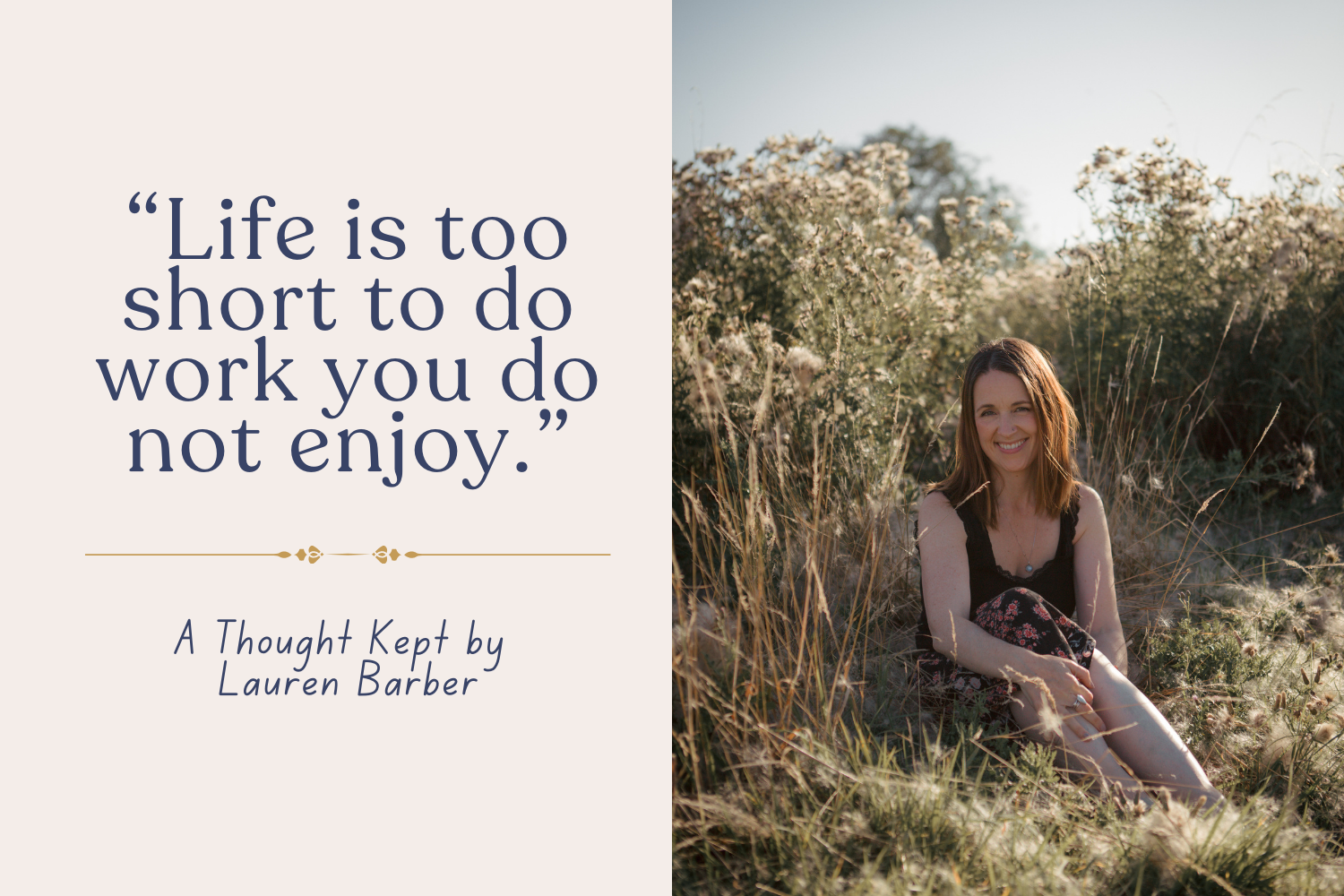
It’s something that came up again and again in my recent conversation with Lauren Barber on the podcast A Thought I Kept. We didn’t set out to talk about overwhelm directly, but as we spoke, it became clear that this sense of being unheld — of carrying more than feels sustainable — sits beneath so many of the feelings people describe as stress, burnout, anxiety, or simply feeling lost.

What does it mean to feel held?
When we talk about being held, we often imagine something external: support from others, community, care, someone stepping in. And that matters — deeply. But Lauren spoke beautifully about another layer of holding too: the ways we hold ourselves when life keeps asking for more than we feel we have to give.
In the episode, she shared how anxiety has been a long-term companion for her — not always loud or dramatic, but often living quietly in the body. In the gut. In the mornings. In the constant background hum of hypervigilance. That feeling of being alert even when things are technically “fine”.
What struck me was how she described mistrusting good feelings. How, when you’ve spent a long time braced for difficulty, calm can feel unfamiliar — even unsafe. Ease doesn’t always land as relief; sometimes it lands as something to be suspicious of.
Many of us recognise this, especially when we’re overwhelmed. We might know what would help — rest, space, gentleness, support — and still struggle to let ourselves receive it.
Overwhelm isn’t always about doing too much
One of the ideas that stayed with me from this conversation is that overwhelm isn’t always about volume. Sometimes it’s about imbalance.
We’re holding a lot — but not being held in return.
Lauren talked about motherhood as a clear example of this. There are things in life that drain us simply because they have to be done. Meals, logistics, care, responsibility. We don’t always have the option to step away from them. And in those moments, the question isn’t “how do I escape this?” but “how do I support myself within it?”
Lauren spoke about counterbalancing — about finding small, everyday ways to bring nourishment back in. Not as a fix to the problem we can’t yet get to, but as a quiet form of care.
Putting music on while making breakfast.
Going for a walk, even when it’s inconvenient.
Wearing a favourite pair of earrings on an ordinary day.
These aren’t grand gestures. But they matter. Because they help the body feel a little safer. A little less alone. A little more held.
The quiet cost of never being held
So many people we speak to at If Lost Start Here tell us they feel disconnected — from themselves, from their energy, from what they want. Often, that disconnection isn’t because they don’t care, or don’t know. It’s because they’ve been holding so much, for so long, without anywhere to rest.
When you’re constantly in that state, your nervous system doesn’t get the message that it’s okay to soften. Even moments of rest can feel uncomfortable. Even joy can feel fragile.
Lauren shared how somatic practices — working with the body, not just the mind — have helped her rebuild a sense of safety from the inside out. Not by forcing calm, but by meeting what’s there with compassion. By learning, slowly, that feelings move. That sensations pass. That being held can be something you practise, not something you wait for.
Feeling held as a practice, not a destination
One of the most grounding ideas from this episode is that feeling held isn’t a one-time experience. It’s not something you achieve and then move on from. It’s a rhythm. A return.
It shows up in how you treat yourself when you’re tired.
In how you respond to anxiety rather than fighting it.
In whether you allow yourself small moments of care without earning them first.
This feels especially important at times of year when everything speeds up — when expectations multiply and space shrinks. When we’re told to reflect, plan, connect, celebrate, and keep going, all at once.
In those moments, being held might look less like changing everything and more like asking a quieter question: “What would help me feel supported right now?”
Work, energy, and being held
At the heart of Lauren’s story is a thought she’s carried since her early twenties: “Life is too short to do work that you do not enjoy.”
Lauren spoke about learning to notice when her work drains her energy — when she feels flat, depleted, disconnected. And how those sensations have become signals rather than something to push through.
For many people, changing work isn’t immediately possible. But even then, the episode offers a gentler invitation: to notice where energy is leaking, and where it might be replenished. To bring more of what you need into your days, even when the structure stays the same.
Feeling held, in this sense, is about staying connected to yourself — even in imperfect conditions.
A gentle invitation
If you’re feeling overwhelmed, unheld, or quietly disconnected right now, you’re not failing. You’re responding to a world that often asks for more than it gives back.
My hope is that this conversation with Lauren offers a pause. A moment of recognition. Perhaps even a small sense of being held — enough to help you take the next gentle step.
Listen to the full episode of A Thought I Kept: How We Learn to Feel Held with Lauren Barber — available on Spotify, Apple, or wherever you listen to podcasts.
And if you’d like more thoughtful reflections, tools, and ideas for everyday life, especially for those moments when you feel lost or overwhelmed, join our mailing list. You don’t have to hold everything alone.
How to End the Year with Intention (Before the New One Begins)
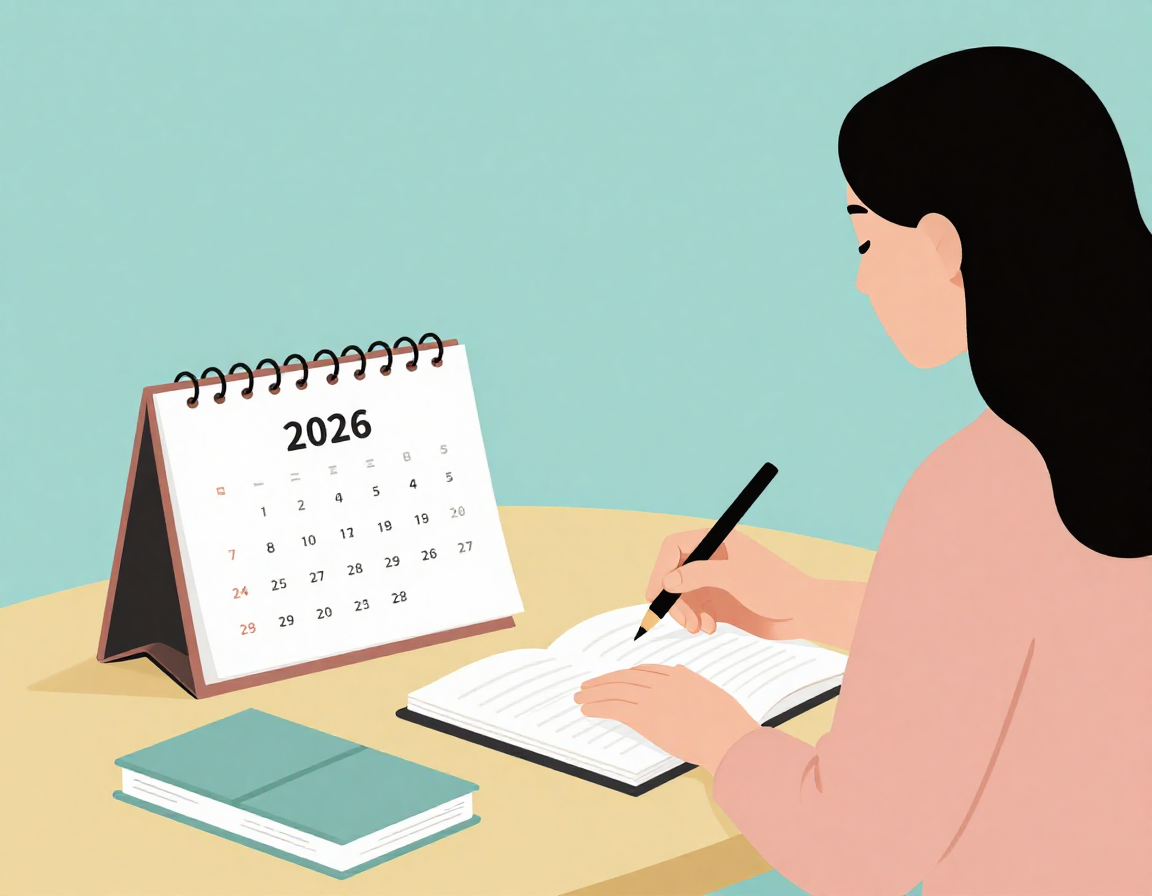
December doesn’t have to be a sprint to the finish line. Here's a slower, more intentional way to reflect on the year behind you and quietly begin the next one with clarity and care.
December is often framed as a finish line: A final push. A test. A moment to evaluate everything and rework yourself before the clock strikes midnight. But what if we made space for something different?
What if the end of the year wasn’t a judgment point but a waypoint?
A natural pause to notice, gather, and begin again, without rushing?
This isn't though about anticipating resolutions. It’s more about recognising what this year asked of you and how you met it. It’s about taking stock of what mattered, what’s changed, what still hurts, and what you want to carry forwards (or quietly leave behind).
So here’s an invitation to end the year on your terms, whatever that means to you.

Step 1: Reflect Without the Pressure to Perform
This time of year can stir up all kinds of emotions — joy, grief, gratitude, burnout — often tangled together. So the first thing to do is simple:
Pause and notice. Instead of listing wins or judging what you “did enough of,” try asking:
What did I learn about myself this year?
Where did I feel most like me?
What surprised me, softened me, challenged me?
These are the kinds of reflections that grow self-trust, rather than self-criticism.
You could:
Write a “reverse bucket list” — things you experienced, even if small, that mattered
Map your year by seasons or quarters and list one lesson or moment from each
List three things you coped with or made space for, even if they don’t “look impressive” on paper
Growth isn’t always visible. This is the season to witness it anyway.
Step 2: Begin Again Without Reinventing Yourself
January can come with a lot of noise. New habits. Fresh starts. Big goals. But most meaningful change is quiet and ongoing.
So instead of asking, “What do I need to fix about myself?”, try this:
What do I want to protect, grow, or honour more in the year ahead?
A few questions that can help:
What helped me feel steady this year and how can I make space for more of that?
What small boundary, rhythm or mindset actually worked?
What’s something I’m curious about right now?
And one of our favourite ideas:
Choose a word — not as a resolution, but as a companion. Something that gently anchors your direction, without pressure. Words like ease, play, curiosity, rooted, or enough can be guideposts.
Yours doesn’t need to be “clever”. It just needs to feel like a hand on your shoulder, reminding you of what matters.
Step 3: A Gentle Reflection Practice (That Won’t Overwhelm You)
If you’re unsure where to start, try this 10-minute reflection ritual:
→ Write a letter to yourself from the end of next year.
Write as if it's already happened.
What moments are you grateful for?
What did you let go of?
What surprised you in the best ways?
What would you thank yourself for doing (or not doing)?
This isn’t about setting fixed goals. It’s about listening to what your life might want to become.
You can keep the letter, hide it in a book, or revisit it this time next year.
Or Try This: Your End-of-Year Clarity Toolkit
If journaling isn’t your thing, try choosing one of the following prompts to explore this December — in a voice note, a walk, or a conversation with a friend:
What are you proud of that no one else saw?
What helped you come back to yourself this year?
What do you know now that you didn’t in January?
Where did your energy feel most alive and how can you follow that in 2025?
Sometimes clarity doesn’t come through strategy but through honesty.
When This Season Feels Tender
Not everyone loves this time of year. For some, December brings exhaustion. Loss. Isolation. Or the sense that you’re not where you “should” be.
So here’s your permission slip:
You don’t have to optimise December.
You don’t have to write a perfect wrap-up post or choose a guiding word.
You are allowed to be in progress — unfinished, unsure, still becoming.
A different year is coming. But you don’t need to earn it. You only need to arrive in it as yourself.
This year has already shaped you. You’ve likely grown in ways you didn’t expect. And the new year? It’s not a blank slate you have to earn — it’s just the next page.
Take what you need from this season. Leave the rest. You’re already enough to begin again.
Want to Step into the New Year With Support?
If you're ready to approach 2025 with more clarity, confidence, or simply a better relationship with yourself, I’m now opening up a small number of coaching spots for the new year.
This isn’t about fixing you. It’s about creating space to explore:
What you actually want next — beyond the noise
How to hold boundaries without guilt
How to reconnect with energy, meaning and emotional steadiness
And how to live your life in a way that works for you, not just around you
We’ll work at your pace, with tools and reflections tailored to you.
If that sounds like something you're curious about, you can read more here and book a free discovery call here or drop me a message with any questions.

Recognizing the Moment Change Arrives
Feeling stuck? Learn how to recognize when it's time to change, what to do next, and how to take small steps forward with clarity and confidence.
You might not notice it at first.
The pivot point of life isn’t always dramatic. It doesn’t always come as a bolt of lightning or a cinematic moment of clarity. Often, it’s quieter—a realization whispered in the stillness, a feeling that won’t let go, a sentence you catch yourself saying under your breath:
"Something has to shift."
Maybe it’s exhaustion from a situation you can’t tolerate anymore. Maybe it’s a spark of curiosity about what else could be possible. Maybe it’s simply that tiny flicker of okay—the moment you stop resisting and start allowing yourself to see a different way forward.
The question is: How do you recognize it? And what do you do when you do?
How to Know When Change is Calling for Your Attention
If you’re standing at the edge of something different but unsure if it’s time, consider these signs:
You feel restless, even when everything looks fine on the surface.
Your current life doesn’t quite fit anymore, like a sweater that has shrunk in the wash.
You keep circling the same thoughts, sensing that what worked before isn’t working now.
You find yourself drawn to new ideas, places, or people who reflect a version of yourself you haven't fully stepped into yet.
You hear yourself saying “I can’t do this anymore” or “There has to be another way.”
If any of this resonates, change might already be in motion—even if you can’t see the full picture yet.
What to Do When You Know It’s Time
Start Small:
The biggest misconception about change is that it has to be sudden or drastic. It doesn’t. Sometimes, the most profound shifts begin with one small step—a conversation, a decision, a quiet commitment to yourself.
Embrace Discomfort:
Change is rarely easy. The moment right before transformation often feels the most uncertain. But discomfort doesn’t mean you’re on the wrong path; it means you’re cultivating something new.
Get Clear on Your “Why”:
What are you moving toward? If the answer is “I don’t know yet,” that’s okay. Sometimes, all you need to know is what no longer fits. The clarity about what comes next will follow.
Reframe Setbacks:
Feeling stuck or taking a step backward doesn’t mean you’re failing. It means you’re learning. Every moment of hesitation or doubt is part of the process—it’s data, not defeat.
Surround Yourself with Support:
You don’t have to navigate change alone. The people, spaces, and resources around you influence your ability to step forward. Find those who help you move in the direction you want to go.
You Don’t Have to Have It All Figured Out—You Just Have to Begin
Here’s what we know:
The best time to change isn’t when you feel completely ready—it’s when you recognize the need for change.
Every significant transformation begins with a single decision to explore what’s next.
If you’re at that pivot point—standing at the threshold but unsure how to step through—we’re here to help.
Explore our coaching sessions.
This isn’t about forcing a transformation. It’s about clearing just a little more space—so you can finally see what might be ahead.

How to Know It’s Time for a Change: Understanding Avoidance vs. Approach Motivation
Feeling stuck in life? Learn how to recognize if you're running away from something (avoidance motivation) or moving toward something better (approach motivation) and what to do next.
Something needs to change. But what?
Maybe you’ve been circling the same thoughts for weeks, months, years even. You know something isn’t working, but the specifics feel murky. Should you quit the job? End the relationship? Finally book the trip, sign up for the course, or move to that city you can’t stop thinking about?
Or maybe it’s more subtle. A feeling of restlessness. A quiet dissatisfaction. You keep going through the motions, but a part of you knows: this isn’t it.
So how do you know when it’s time to change?
One of the most powerful ways to understand your desire for change is through the lens of “avoidance motivation” and “approach motivation”— two psychological forces that shape every decision we make.
And once you understand which one is driving you, the next step becomes clearer.
Are You Running Away or Moving Towards?
Every decision we make is guided by either avoidance motivation or approach motivation.
Avoidance Motivation is about moving away from something that feels bad—pain, stress, burnout, dissatisfaction.
Approach Motivation is about moving towards something that feels good—fulfillment, excitement, joy, purpose.
Both are valid. Both are powerful. And both can be the spark for real change. The key is knowing which one is currently guiding you and whether it’s enough to propel you forward.
Avoidance Motivation: When You Just Can’t Anymore
Avoidance motivation kicks in when you hit your limit.
It’s when:
You can’t face another Sunday night dread before Monday.
The relationship is more draining than supportive.
Your body is exhausted from stress, but you keep pushing through.
You feel trapped, uninspired, disconnected from yourself.
It’s the feeling of enough is enough.
And yet, while avoidance motivation can push us to act, it doesn’t always lead to intentional change. It can be reactive: quitting impulsively, burning bridges, retreating without a plan.
If avoidance is your main driver, pause. Ask yourself: What do I actually want instead? Not just what you want to escape, but what you want to move toward.
Because that’s where approach motivation comes in.
Approach Motivation: When You Feel Pulled Towards Something More
Approach motivation feels different.
It’s when:
You get a spark of excitement thinking about what could be.
The idea of a new path feels energizing, not just like relief.
You’re drawn towards something, even if it’s uncertain.
You start imagining a version of your life that fits better.
Approach motivation is about expansion rather than escape.
When you make a change based on what excites and compels you, rather than just what you’re running from, you’re more likely to create something lasting and meaningful.
But here’s the challenge: many of us wait until avoidance motivation is unbearable before we take action.
We wait until we’re drowning in burnout before we rethink work. Until a relationship is completely broken before we acknowledge it’s not right. Until we hit rock bottom before we start listening to ourselves.
What if we didn’t wait? What if we started paying attention the moment we felt that first pull towards something better?
Where Are You Right Now?
If you’re standing at the edge of change but feeling unsure, ask yourself:
Am I more focused on what I want to leave behind, or what I want to move towards?
Is this decision based on desperation, or is there something I’m genuinely excited to create?
If I gave myself permission to change, what would I step into?
And if the answers feel unclear, that’s okay. This is the work we do.
Your Next Step: Let’s Find Your Direction
Change doesn’t have to be something you have to struggle with alone. Whether you’re running away from something that no longer fits, or being pulled towards something you can’t quite name yet, we can help you navigate this moment.
Our coaching sessions are designed for this exact stage of life. The one where you know something needs to shift, but you’re not sure what or how.
The first step isn’t about having all the answers. It’s about deciding that you’re ready to explore what’s next.

Feeling lost in the wellness world? Here’s how to find your way back.
Feeling overwhelmed by wellness trends? Discover how a personalized well-being prescription can help you reconnect with yourself and thrive in your everyday life.
The wellness world can feel like an endless cycle of "shoulds" — wake up early, meditate, run five miles, eat perfectly clean, and somehow stay balanced. But what if all those routines don’t fit into your life? What if, instead of feeling better, you feel even more overwhelmed by the pressure to do more?
Well-being Isn’t One-Size-Fits-All: Here’s What Really Matters
We’ve all been there — staring at the screen, scrolling through endless wellness advice that promises to change everything, only to feel discouraged when we can’t seem to keep up. It’s hard not to compare ourselves to others and feel like we’re falling short. The truth is, that the wellness industry has created an unattainable standard for many of us. It suggests that wellness is only for those with time, energy, and resources to spare, and it forgets that real people have real — often messy, unpredictable, and busy — lives.
But here’s the thing: wellness shouldn’t make you feel like you’re failing. True well-being isn’t about working your way through someone else’s routine. It’s about reconnecting with yourself, finding balance, and doing what works for you. Whether it’s carving out time for a walk in the park, engaging in creative activities, or simply taking a deep breath amidst the chaos of daily life, well-being is deeply personal.
A Personalized Well-being Prescription: Tailored to Your Life
That’s why we’ve developed Bespoke Well-being Prescriptions. Instead of a one-size-fits-all approach, we focus on creating a personalized well-being practice that works for you. This isn’t about keeping up with wellness trends — it’s about understanding what truly makes you feel good and building that into your daily life.
With our program, you’ll receive a Bespoke Prescription for Everyday Life, which includes practical tools, emotional support, and Culture Therapy recommendations. These sessions are designed to explore what well-being means to you personally, and how you can create space for it in your unique reality.
We start with a free call to get to know you and your needs. From there, you can choose a 90-minute starter session or dive into our twelve-session program, where we’ll guide you step-by-step to craft a sustainable well-being practice that fits your life. Whether you’re searching for emotional balance, creative fulfillment, or just more peace, this program will help you get there.
From Overwhelm to Balance: Your Well-being, Your Way
Imagine waking up feeling like you have a handle on your day — not because you’ve mastered the perfect routine, but because you’ve crafted a well-being practice that fits into your life effortlessly. You feel more grounded, more connected to yourself, and more capable of handling life’s ups and downs.
With your Bespoke Well-being Prescription, you’ll have the tools and insights you need to feel better, not just today, but every day. You’ll experience the benefits of a life that feels good to you — one where you’re thriving emotionally, mentally, and physically, without the pressure to be someone you’re not.
Ready to begin your journey? Find your unique way to better well-being today with a free call and see where life can take you.

How to manage emotional flooding and navigate overwhelming emotions with confidence
Overwhelmed by your emotions? Learn how to navigate emotional flooding and reclaim a sense of calm!
Imagine standing in the middle of a storm, with emotions swirling around you like a fierce wind. You’re deeply connected to your feelings, yet when it comes to expressing them, it’s like trying to catch raindrops with your bare hands—impossible to grasp and slipping away before you can make sense of them.
This is the experience of “emotional flooding”, an archetype defined by Zoe Hawkins and Jo Wheatley that explains the unconscious default we have with our emotions under pressure. In this case, emotions flood over you, leaving you feeling overwhelmed, misunderstood, and trapped in an inner world that feels hard to escape.
For some of us, emotional flooding can feel like a daily struggle. You might find yourself deeply feeling everything, but unable to articulate what’s happening inside. This can be incredibly frustrating and isolating, as you feel misunderstood—not just by others, but by yourself as well.
Emotions become so overwhelming that they feel frightening, and this fear only makes the experience more intense.
The result? You might find yourself avoiding situations that could trigger these emotions, or even trying to escape them when they arise, leaving you feeling ashamed and disconnected.
Navigating emotional flooding: Steps to build emotional capacity and resilience
But what if you could change the way you experience your emotions? What if you could find a way to navigate through the storm, turning those overwhelming feelings into something you can understand and manage?
While the emotional flooding archetype might feel like it’s taking over your life, there are steps you can take to build greater emotional capacity and find your way back to calm.
Building emotional capacity isn’t about pushing your emotions away or pretending they don’t exist. It’s about embracing them, understanding them, and learning how to express what’s happening inside. By taking specific steps, you can start to regain control, even when emotions seem overwhelming.
Reclaim your emotional balance: Building resilience against emotional flooding
Here are three essential steps to help manage emotional flooding and build greater emotional capacity:
Increase Self-Awareness:
Begin by tuning into your emotional landscape with mindfulness practices or journaling. By regularly checking in with yourself, you can start to recognize the patterns and triggers that lead to emotional flooding. This awareness is the first step toward managing your emotions, as it helps you catch the storm before it becomes overwhelming.
Practice Emotional Regulation:
When emotions start to feel too big to handle, pause and take a moment to breathe. Deep breathing and reflection can help you ground yourself and decide how to respond instead of reacting impulsively. Explore healthy ways to express your emotions—whether through talking to a trusted friend or an emotions coach, engaging in creative outlets, or moving your body. This helps prevent the buildup of emotions that leads to flooding.
Build Resilience:
Emotional flooding can make you want to avoid intense experiences, but building resilience involves facing these challenges rather than running from them. Use positive self-talk to remind yourself that emotions, while intense, are not bigger than you. Set boundaries to protect your emotional energy and seek support when needed. Over time, these practices will help you feel less overwhelmed and more in control, even in emotionally charged situations.
By incorporating these strategies into your life, you can start to shift from feeling overwhelmed by emotional flooding to managing your emotions with confidence and grace. It’s about turning the tide and reclaiming your inner peace, even when the storm hits.
Taking back control: Navigating emotional flooding with confidence
Ready to take control of your emotions and stop feeling overwhelmed? Join our Emotions Coaching Taster Sessions this month and start your journey towards emotional balance and resilience today!
Reserve your spot now and discover how you can transform your emotional experience with expert guidance.

Why September is the best month to reconnect with your emotions
Start the new season believing that your feelings matter. Discover how our Emotions Coaching Taster Sessions can help you learn how to have a happier relationship with all your feelings.
As the school year kicks off and the busy days of September begin, it’s easy to get swept up in the whirlwind of to-do lists and schedules. But amid all the chaos, have you taken a moment to check in with yourself? How are you really feeling as you step into this new season?
The Quiet Shifts of September
This morning, I found myself alone with my thoughts for the first time in weeks. After a summer of juggling endless responsibilities, I realized how easy it is to let our own emotions slip through the cracks. We’re so focused on making sure everyone else is okay that we often push our own feelings aside.
September brings with it a mix of emotions: the anxiety of what’s to come, the frustration of everyday challenges, and maybe a touch of nostalgia for summer’s freedom. But there’s also hope—the hope of a fresh start, a blank page, a chance to reset. Yet, how often do we actually give ourselves the space to explore these feelings? Too often, we believe that our emotions don’t matter, that we need to hide them or put them on the back burner because everyone else’s need come first.
It’s Time to Prioritize Your Emotions
But here’s the truth: your emotions are just as valid as anyone else’s. They’re the key to understanding where you are right now and where you want to go. This September, instead of simply going through the motions, why not take a moment to tune into what you’re feeling? Whether it’s excitement, anxiety, or something in between, every emotion has something to tell us.
That’s why we’re offering for the first time single online sessions to introduce you to emotions coaching. These sessions are designed to help you reconnect with your feelings, validate them, and use them as a guide for navigating the months ahead.
Emotions were the missing piece for us, and they might be for you too.
Unlock a New Perspective This September
Imagine starting this new season not just with a fresh schedule, but with a renewed understanding of yourself. By taking the time to check in with your emotions, you can transform how you approach not just September, but every aspect of your life. You deserve to feel heard, understood, and empowered—because your emotions matter.
Ready to give yourself the attention you deserve? Join us for an emotions coaching taster session and discover the power of understanding and embracing your feelings. Let’s make this September the start of a better relationship with your emotions..
Click here to book your session and take the first step towards a more fulfilled, emotionally aware you.

The Creativity Cure | How creativity can positively impact your well-being
Learn how to fold more creative activities into your everyday life, so that you can feel happier.
In the moments when we feel most stuck or disconnected, we can overlook how turning to creative practices could help us feel better.
Engaging in creative activities has been found to boost mental health, improve our mood, and help us feel more connected to ourselves and the world around us.
Sometimes though the routine of work, chores, and responsibilities can leave little room for creativity and self-expression. We can get caught in a cycle of endless tasks and relentless deadlines.
If we also have a natural interest in creative pursuits, we can find this lack of an outlet leads us to feel blocked and uninspired. We can start to miss the joy of creating for the sake of creating.
5 Ways to access the well-being benefits of creativity
If you’re curious about exploring your own creativity for well-being purposes, or you long to reconnect with your artistic side, here are some steps to get you started.
1. Try New Creative Outlets:
Experiment with different creative activities, such as painting, writing, dancing, or playing a musical instrument. Trying new things can spark your creativity and open up new possibilities.
2. Set Aside Creative Time:
Make time for creativity in your daily routine. Set aside a specific time each day or week for creative activities, and treat it as a non-negotiable part of your schedule.
3. Join Creative Communities:
Connect with others who share your creative interests. Join local art classes, writing groups, or online communities where you can share your work and get inspired by others.
4. Embrace Imperfection:
Don't worry about creating something perfect. Allow yourself to experiment, make mistakes, and have fun with the creative process. The goal is to enjoy the activity itself, not just what it produces.
5. Seek Inspiration:
Surround yourself with inspiration by visiting museums, attending concerts, reading books, or exploring nature. Inspiration can come from anywhere, and exposing yourself to new experiences can fuel your creativity.
Creativity offers numerous ways to reconnect with yourself, other people, and the world around you.
How could you fold more creative activities into your everyday life, so that you can feel happier?
Find your way to more creativity
Creativity is one of our company’s core values. It’s also one of the areas of our lives that we explore in our online well-being course Find Your Way.
Here’s just a glimpse into how we’ll help you explore more creativity in your everyday life so that you can feel good.
If you’re curious about how to bring more creativity into your life for better well-being, learn more about Find Your Way here.