
Five of our Favourite Museums for Finding Awe and Wonder
A visit to a museum can be one of those everyday adventures that helps inspire us in our daily lives, feeds our curiosity, and brings a sense of awe and wonder into our days. Here’s a round-up of five museums in London that recently offered the life pick-me-up that we needed.
Where do you go to locate awe and wonder? For us, it’s often a museum; that combination of the architecture of the space, the works in the galleries, the storytelling of the displays and exhibitions, and the people sharing the experience with us (plus the cafe and bookshop, of course).
A visit to a museum can be one of those everyday adventures that helps inspire us in our everyday lives and feeds our curiosity.
Here’s a round-up of five museums in London that we recently visited when we needed a life pick-me-up when all the things got a little too much.

Just the central atrium space on entering The Design Museum’s new home on Kensington High Street brings pause enough; but then the journey through approximately 1000 objects in Designer Maker User, the permanent collection display that contains everything from typewriters to roadsigns, is the experience we need to stimulate our (often neglected) creative minds.
For us, The Design Museum, one of the world’s leading museums on design and architecture, helps us to pay attention, to notice the details, the choices, that shape the things we use daily. The story of how we work, how we connect, and how we live our lives is told within these galleries (and sometimes it’s an odd sensation to look back on past iterations and realize that for a moment the promise they held was the future).
Look out for exhibitions that explore sensation in The World of ASMR, social and environmental issues in the work of Bethany Williams, and colour and play in the installations of Yinka Iloria.

A museum to break your heart and put it back together again: From the very first wall that reminds you that ‘Heathcliff was a foundling. Harry Potter was fostered… and Han Solo was adopted’, to the display of tokens that allowed a parent to reclaim a child, the Foundling Museum reveals the intimate stories behind the UK’s first children’s charity. Founded as a place for abandoned and neglected children by Thomas Coram, London’s first and only foundling hospital opened in 1939 (it took 17 years to raise the funds). Though the hospital has long closed, its purpose is still vital. As the current director, Caro Howell recently said, “This museum is unlike any other museum in the world, because for care-experienced young people, who have experienced such isolation and grown up without family, this museum gives them ancestry.”
But the museum also tells another story, one of artists and philanthropy; this was England’s first public art gallery (and a precursor to the Royal Academy) and artists (including William Hogarth, Charles Dickens and George Frideric Handel) created works to bring the public into its spaces. Today, The Foundling Museum celebrates the impact artists have had on children’s lives for over 270 years, from continuing to work with vulnerable young people to creating newly commissioned pieces that speak to the history of the museum itself (by artists such as Yinka Shonibare and Michael Craig-Martin).
Look out for the exhibition Superheroes, Orphans & Origins: 125 years in Comics.

We’ve often lost ourselves down the corridors of the V&A. For a time we were lucky enough to work close by and visit in our lunch hour – walking its many galleries, room by room, over years (though always finding ourselves back in the fashion galleries). The building in which the V&A is housed itself inspires awe, but it’s the vast collection spanning 5000 years of history and 1.2 million objects that inspires wonder. There’s Michelangelo’s David, Grayson Perry’s vases, Julia Margaret Cameron’s photographs, Alexander McQueen’s evening dresses and William Morris wallpaper, as well as ceramics from China, a theatre and performance collection and even a Glastonbury Festival Archive. And it’s all free to visit.
Now with a site in Dundee, a collection in Stoke on Trent, galleries in China, and future new London locations the Young V&A and the V&A East, this cultural behemoth continues to enthrall. For a taste of its magic wherever you are, watch the V&A film’s Creativity: It’s What Makes Us, or book a spot on one of their many online programs.
An exhibition to look out for Fashioning Masculinities: The Art of Menswear. An event to attend: Friday Late.

Tate Modern, always. Is there anywhere else like the Turbine Hall? Or the repurposed industrial tanks? Or the view from the iconic Lightbox on Level 6? Since it opened in May 2000, Tate Modern has dominated London’s cultural life and the South Bank. But though the building exists on a monumental scale, the artworks offer a more intimate experience: we recommended finding spaces away from the crowds (particularly in the permanent collection displays) and trying some techniques for Slow Looking.
Seek out Yayoi Kusama’s Obliteration Room and the artist’s Infinity Rooms, Lubaina Himid’s theatrical exhibition and Magdalena Abakanowicz’s woven sculptures. Participate in the Drawing Bar. And lose yourself in the wonder of modern and contemporary art (even if you don’t fully understand it).

What does home mean to you? This museum can help you reflect on that question.
Tracing how our homes have changed over a period of 400 years, this museum looks at how they are more than the spaces in which we play out our lives, but also hold emotional meanings around ideas of belonging, safety, and mental wellbeing. The Rooms Through Time Display traces a single room – the main living space – and how it evolved in middle-class households from 1630 to today offering a fascinating insight into how the way we organize our lives, our families, and our work, has changed dramatically in that period. Moving from a hall where all the household (including servants) ate together to a loft-style apartment in 1998, we get glimpses of lives once lived as well as some nostalgic moment’s along the way (like remembrances of our grandparent’s house).
Located in a row of former almshouses (whose architectural lines are traced in gold on the floor) in Hoxton, the Museum of Home reopened in 2021 (though it has existed in some form on the site since 1914) after a rebrand and refurbishment, so it’s definitely worth a visit even if you think you know it. Though on a domestic scale, there’s wonder to be hand exploring the spaces and witnessing just how much life has changed and continues to change, and how that’s impacting us – rightly or wrongly - on a daily basis.
Look out for the Museum’s Festival of Sleep and the Great Pajama Party.
Where would you add to this list? Which museums do you visit for bringing more awe and wonder to your everyday life? Let us know the places that you’d recommend we add to our guide for life.

The Freud Museum
London’s Freud Museum shares the legacy of the founder of psychoanalysis while giving the practice of therapy modern relevance.
Go here if: you ever wondered why we go to therapy.
What is it: The Hampstead home, now museum, of the founder of psychoanalysis Sigmund Freud and his daughter, pioneering child psychoanalyst, Anna.
What you need to know: Though Freud spent most of his life in his beloved Vienna, he was forced to flee to England ahead of the Second World War. He was to spend only one year in London before his death in 1939, but he brought to his new home an outstanding collection of over 2000 antiquities, objects, and books as well as his famous couch. These remain on display in the Queen Anne property; his treatment room and library veritably untouched. The Viennese apartment that he left behind was similarly transformed into a museum dedicated to Freud and recently underwent a four million Euro makeover, but here the driving theme, with its empty rooms, is one of absence and exile.
What they offer online and off: During closed times, you can still take a virtual tour of the museum, or attend a talk, event, or workshop such as one on the psychological effects of racism or another on attachment, desire, and chemical distractions. Also, a new podcast Freud in Focus, presented by Tom DeRose and Jamie Ruers, takes a close look at some of Freud’s texts.
Why we think it matters: Although much of Freud’s work has been contested, his impact on the way in which we continue to approach our mental health is enduring. The museum strives to keep his legacy relevant with a recent exhibition on melancholia that included UCL’s Psychoanalysis Unit and the current exhibition “1920/2020: Freud and Pandemic” makes connections between the current moment in which we’re living, and Freud’s own time when he published his seminal (and somewhat controversial) Beyond the Pleasure Principle and Other Writings and his own daughter Sophie died of the Spanish flu. The Museum has also commissioned contemporary artists such as Sophie Calle, Louise Bourgeois, and Mark Wallinger to create temporary pieces placed within the museum, giving Freud’s work, and that of his daughter Anna, new meanings.
In their own words: “The Freud Museum exists to promote the intellectual and cultural legacies of Sigmund and Anna Freud for the learning and enjoyment of all. While caring for the house and collections, we aim to highlight the relevance of Sigmund Freud, Anna Freud and psychoanalysis in the contemporary world.”
Something for now: Therapy curious? Explore podcasts, TV shows, and books that approach the practice of therapy in an open way. Therapy ready? We’ve pulled together some modern-day resources that are rethinking how we access the talking cure — now at some distance from Freud’s early treatments —and bring it into our modern lives.

The Museum of Broken Relationships
For when you don’t get your happily ever after, the Museum of Broken Relationships shows that you are not alone in your heartbreak.
Go here if: you didn’t live happily ever after.
What is it: When love stories end, we tend to purge our lives of our former partners. We burn letters, destroy souvenirs, throw away the detritus of our lives together. The Museum of Broken Relationships exists to provide an alternative, preserving objects that hold memories of our once beloveds. It holds a collection assembled entirely from mementos from broken relationships that still mean something to someone and that have lasted beyond the relationships that they eulogize.
What you need to know: The Museum started over a decade ago as a slightly quirky art installation by former couple visual artist Dražen Grubišić and film producer Olinka Vištica. As they were dismantling their own four-year relationship, they realized that they had objects that told their story, that held traces of their relationship, and nowhere to put them. Grubišić and Vištica gathered some of these together with similar objects from their friends, and curated an exhibition that could tell their love stories and serve as a testament that though over, these moments in time existed, they mattered.
Capturing a collective emotional nerve, the Museum of Broken Relationships has evolved into a permanent museum in Zagreb, where it opened in 2010. It now has over 3600 objects in its collection. Another venue in Los Angeles is temporarily closed. The Museum continues to travel internationally — with 58 previous iterations to date across the world including recent displays in New Zealand, Canada, Japan, and Romania
Why you’ll love it: The Zagreb museum will take you through thematic displays that chart emotions associated with a breakup. Its displays offer a fascinating walkthrough of others’ relationships, exploring what lingers at the end of a breakup through the physical objects that capture experiences of the lovelorn: An iron used on a wedding suit, the marriage’s only relic. A scab, from a literal wound. A love letter from a 13-year old to his first love, written when fleeing war-torn Sarajevo. A toaster (Colorado, 2006-10) taken on moving out –“How are you going to toast anything now?’ Not all relationships are of the unrequited kind. Next to a pile of Werther’s Originals is the caption, “I got these for you, but you died first.”
How to bring this into your life wherever you are: The online space exists very much in tandem with the offline one, with a virtual collection of personal objects that tell the stories of lost love. You can still donate your own items and tell your own story. A book inspired by the museum shares a similar emotional journey through people’s relationship souvenirs. If you make it to Zagreb, you can visit the Brokenships Café for emotional eating. Not a possibility, watch The Broken Hearts Gallery movie inspired by the same idea.
Why we think it’s special: The pain at the end of a relationship can make us feel singularly alone. We can feel like the only ones who have ever experienced the rejection, hurt, and frustrations that this moment can bring. But the Museum of Broken Relationships with its collection of stories shows us that relationships end for all of us, however that happens. We’ve all been down that road, or close to there. Reading these captions offers comfort; these objects bear witness to our stories, allowing us to realize that even in this, we are not alone.
Unusually for a museum, the Museum of Broken Relationships sits in parallel with our everyday lives; its existence shifts what a museum can be. The Museum of Broken Relationships more closely reflects the actuality of our personal lives, the messiness of our emotions, the randomness of the things we come to value and those we come to love and will one day let go.
In their own words: “Museum of Broken Relationships is a physical and virtual public space created with the sole purpose of treasuring and sharing your heartbreak stories and symbolic possessions. It is a museum about you, about us, about the ways we love and lose.”
Something not to do: We’ve deleted all the emails, torn all the notes, obliterated from our lives all remnants of past loves, and just occasionally we’ve come to regret it. Yes, the choice of our younger selves to destroy all reminders made absolute sense. It was a ritual that could help ease any ending, but did we erase something of our narrative as well? Sometimes we’d like a glimpse of who that person was we fell so heavily for, and who we were when we did that. Moments that we could have captured in time through random stuff, and held onto as treasured, even if the person involved in those memories is no longer with us.
To find out more: Website / Instagram / Facebook / Twitter
See also: Love Stories Museum / Museum of Failure

EPIC: Irish Emigration Museum
Though we’re mostly about small in the places we bring into our guide, sometimes we need to go big, like EPIC big.
What is it: Only Europe’s Leading Tourist Attraction 2019 & 2020 (although it opened relatively recently in 2016), this interactive museum on the famed River Liffey in Dublin’s docklands isn’t afraid of epic narratives as it covers over 1,500 years of Irish history and the stories of the 10 million people who left Ireland behind.
Why you’ll love it: A feeling of discovery and exploration is built-into the labyrinthine floorplan which takes you on a journey through the emigrant experience with mostly digital installations that are high engagement and participatory, and often awe-inspiring in the ways the emigrant experience is shared. You’ll pass through passport control, sit within intimate booths with conversational stories, share the perils of the emigrant journey, and even walk on the darker side of this history as you learn the global impacts of Irish emigrants.
What you need to know: It was Irish emigrant, Annie Moore, who made history in 1892 as the first person to be processed through Ellis Island’s gates though her story of what happens after makes you doubt the reality of the American dream as it came to be foundational to the nation in which she arrived.
What they offer from wherever you are: The virtual tour had our preteen confidently running through the rooms and following his curiosity as if he was there, the boundary between the physical and the virtual so porous these days. Also, check out their interactive library and Online Educational Resources for our distance-learners.
Why we think it matters: As the world turns this very week – with a new US president proud of his Irish heritage and with a different set of policies than the previous administration — we’re hopeful that the debate around immigration can shift too, becoming less caustic, a sense of humanity restored to the discussion. EPIC shows the extraordinary reach of Irish emigrants – the museum itself was co-founded by Neville Isdell, the Irish-born former CEO of Coca-Cola – and how they have shaped the world in fields as diverse as sport, culture, politics, science, and technology. Immigration has become a highly complex, and often emotionally driven, debate. But we’re always struck by these stats (about the US experience specifically) that counter the belief that immigrants negatively impact the nations in which they arrive: in 2017 although 13.7 percent of the US population are immigrants, they make up 30% of new entrepreneurs. In fact, companies such as Amazon, Apple, and Google were founded by immigrants or their children, while Microsoft is headed by an immigrant.
EPIC tells the complex story of one nation’s emigrants, but it stands in for impacts felt by migration elsewhere and pulls back the narrative of human movement to something more people rather than politics based.
In their own words: “Go beyond the stereotypes at EPIC The Irish Emigration Museum. You won’t find leprechauns or pots of gold here, but you’ll discover that what it means to be Irish expands far beyond the borders of Ireland through the stories of Irish emigrants who became scientists, politicians, poets, artists and even outlaws all over the world. Discover Ireland from the outside in and find out why saying “I’m Irish” is one of the biggest conversation starters, no matter where you are.”
Participate: If you are based in the US, support the work of the ACLU on immigration, advocate for DACA. and be mindful of your own inherent biases around migration.

Golden Hare Books
Edinburgh’s Golden Hare Books keeps the city’s literary tradition alive with its thoughtful curation.
What is it: An award-winning (Bookshop of the Year 2019 UK & Ireland) indie bookstore to warm your heart (and hands by its wood-burning stove) in Edinburgh’s village within the city, Stockbridge.
What you need to know: Founded in 2012 by Sir Mark Jones – previously the Director of the Victoria & Albert Museum and the National Museums of Scotland – this is a bookstore as curated space in both how it looks and what gets to be included. Covers face out and draw attention to great design, creating an immediate visual hook for potential readers and making objects of the books themselves.
The range of its small careful selection of books changes constantly –‘the idea is that you never visit the same bookshop twice.’ Golden Hare is known for bringing in a wide range of choices, including works in translation, books by women, and diverse children’s authors
How to bring this into your life: It’s all about the reading subscription, Postbooks, which sends a beautifully packaged fiction or non-fiction book(s) each month specially chosen for you, often around a theme, like Green Transformation, and with its own reading guide. The key difference though is that Golden Hare supports indie presses and small publishers in its choices such as Charco Press, Tilted Axis, or & Other Stories, widening your reading from the usual suspects and making sure more writers get attention from readers.
Golden Hare is also a bookstore where you can become a Member, and during usual times there is an active book club and Sunday Stories reading club for kids. Golden Hare has pivoted to the ways we now shop: click and collect, and Saturday bike deliveries.
Why it caught our attention: This is a bookstore that works hard. It does a lot. Not just in its active support of indie publishers but its reach within the local community and that of the city of Edinburgh. In 2019, Golden Hare hosted its first book festival with local partners and it co-hosts the Edinburgh Book Fringe with Lighthouse Books. Books are embedded in the cultural life of Edinburgh – a UNESCO City of Literature. It was famously here that J.K. Rowling wrote some of her Harry Potter series and Arthur Conan Doyle, Sherlock Holmes. Golden Hare keeps the tradition alive of supporting local voices and creating a place for the writing community.
In their own words: “We are a knowledgeable team of self-confessed reading addicts who have been selling beautiful and important books since 2012.
Our charming independent bookshop is situated in Edinburgh's Stockbridge, where you can find an ever-changing collection of fiction and non-fiction for readers of all ages. We hold close to 2000 titles covering all genres of writing from cookery to travel, from flower arranging to science fiction - and many more topics in between.”
Lost at home: It's winter where we are. Maybe there too. Cozy down with a book. Choose one of Golden Hare’s winter picks: Once Upon a River by Diana Settenfield, The Snow Child by Eowyn Ivey, and The Changeling by Victor LaValle. While purchasing, make a resolution not to buy from internet giants (take this resolve into the rest of 2021).
While here: Seek out Golden Hare collaborators café Lovecrumbs and Smith & Gertrude, as well as If Lost favorites the Royal Botanic Gardens and Lifestory.

The Vagina Museum
The world’s first museum is more than a display of gynecological anatomy. It’s dedicated to a serious discussion of women’s health, feminism, and sexuality.
What is it: The world’s first bricks-and-mortar museum dedicated to what have often been the unmentionable parts of a woman’s body.
What you need to know: Now in its starter space in Camden Market, The Vagina Museum has serious ambitions — the hope is for a permanent larger space in the next couple of years — and serious credentials — founded by science communicator Florence Schechter with sex tech entrepreneurs and gynecologists alongside global health specialists on hand to advise. Get over the titillation/gawping/shock factor (of which there is very little – this is not the vibe) and you are down to vital questions around gender and sexuality, feminism and equality, health and reproductive rights. With exhibits like Muff Busters and Periods that go straight to the taboos, The Vagina Museum takes on what we think we know about women’s bodies and what we actually need to know.
Why you’ll love it: A lot is going on down there and as women, we know there are impacts that go beyond biology (hopefully some of our menfolk know that too now). The mission statement in itself has us excited from raising awareness of gynecological health through to ‘challenging heteronormative and cisnormative behaviour.’
Why we think it’s different: Come on, it’s a museum about women’s bits, about vulvas and vaginas, and the other parts that gynecologists rather than the museum-going public are more acquainted with (though let's face it half of us have them so there’s a contradiction there).
Women’s bodies have been horrifically and frustratingly relegated. Men’s bodies have been used as the standard for modern medicine, women take medicines constructed with the male anatomy in mind, women’s pain is often minimized, we even have longer waiting times in A&E, students are only now learning about menopause along with sex education in schools, and serious mental health symptoms are often put down to gender-biased ideas of hysteria, anxiety, and emotional spirals. Also, there has been a 500% increase in vagioplasty between 2002 and 2012, period poverty still affects thousands of women and girls worldwide, and 200 million women and girls globally have undergone female genital mutilation. We could sadly go on and on.
But for now, let’s add to that list: that many of us who identify as women can point to moments when our own experience of our bodies and minds weren’t taken seriously and understood in ways that could have helped us see a way through and got us the help we needed.
Get beyond saying Vagina, and you get to some of the starkest issues facing women today.
How to bring this into your life: Severely impacted during the spring lockdown, The Vagina Museum has just completed a successful crowdfunding project to reopen in October. To continue their work and continuing operations, you can support them through the online store. Their FAQ’s also has one of the best guides as to the difference between vulvas and vaginas that we’ve read for a while (maybe even ever) if you need an anatomy refresher.
In their own words: “The aim of the Vagina Museum is to destigmatise the vagina, vulva and gynaecological anatomy. Through destigmatisation comes empowerment for all people with vulvas. …. feminism has fought very hard to have women viewed as something other than objects, as people and not just sex objects or baby vessels. Objectification of women is wrong. But for many people, their vagina is a part of their identity and directly affects their lives. It is one part of a greater whole that makes the person. By shutting down discussions about vaginas, it makes it difficult to address issues that are directly related to them like FGM and sexual violence. That must end and the first step is by acknowledging that vaginas exist and they deserve respect.”
To find out more: Website / Facebook / Instagram / Twitter
If you’ve visited The Vagina Museum or you know of other places that look at a healthy connection between women’s minds and bodies let us know about it. Things change all the time and we want to make sure we’re bringing you the most up to date information and the latest places.

The Natural History Museum
Illustrator Michaela Hobson revisits an old favorite, London’s Natural History Museum, and finds a place for inspiration, knowledge and respite.
“The Museum is a world-class visitor attraction and leading science research centre.
We use our unique collections and unrivalled expertise to tackle the biggest challenges facing the world today.
We care for more than 80 million specimens spanning billions of years and welcome more than five million visitors annually.”
London’s Natural History Museum exhibits a wide range of the natural world throughout time. I'm sure many of you have heard of it (and maybe you've even been there already!) but I had to share it, as it's one of my favourite places to visit. Entry to the museum is free, which makes it accessible to everyone. It also means that you can visit as many times as you like—which I've definitely taken advantage of—taking a couple of trips in the same week so that I could go at my own pace and fully enjoy the experience.
Besides the main appeal of learning all about plants and animals throughout history, I go to The Natural History Museum because it's a great place to escape the busy world outside. The building is so spacious that even when there are lots of people, you don't feel like it's overwhelming and crowded. You can stroll around the exhibits at your own speed, stop for a bite to eat in one of the cafes and spend time being fascinated by everything you see. I come out every time feeling like a child because I've learned so many new things that I want to share with everyone.

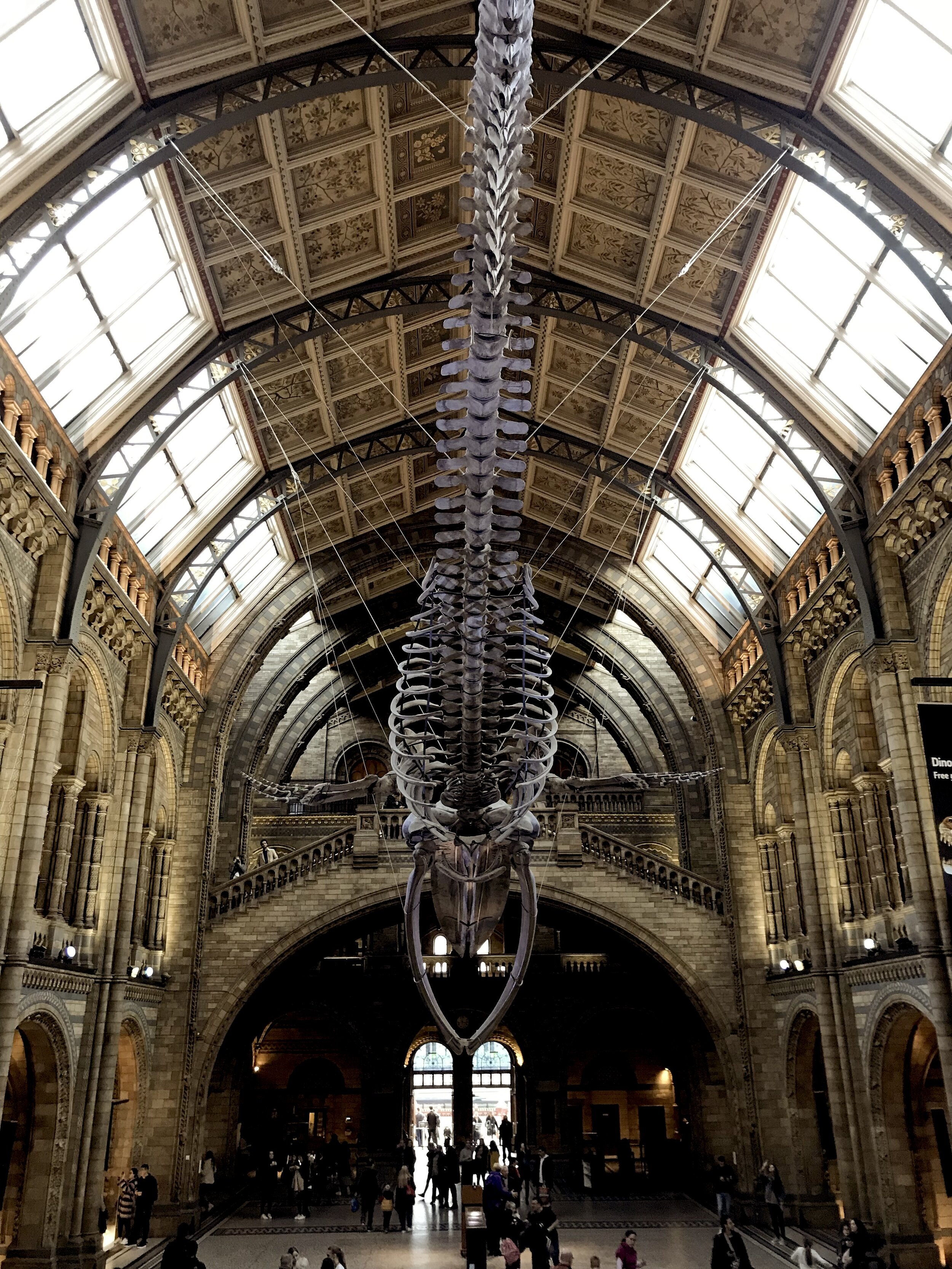

As a creative, I've also found that it's a hub of inspiration. The building itself is a work of art—with grand staircases, stained glass windows and detailed brickwork. There's an endless source of beauty around every corner, which is what I love about it the most. Stop in one of the many places to sit around the building to admire the exhibitions for as long as you need to take them in.
The Natural History Museum is a place to seek out if you're looking to relax and also be creatively refreshed. I’ve found that being in nature is one of the best ways to calm my mind, so why not learn about the history of it too.

ARoS Aarhus Kunstmuseum
ARoS refers to itself as a ‘mental fitness center’ which we just love. We’re very much on board with that approach to our museums.
“ARoS is the perfect place for social interaction. It is a place where visitors are presented with new perspectives and opportunities to broaden their outlook. In all its diverse activities, ARoS wants to radiate attractiveness, relevance, and integrity. ARoS, therefore, is an outstanding universe appealing to both the heart and the brain. Looking at art is very like standing on a trampoline. You need to be moving in order to gain something from it and, after a time, you find yourself jumping higher and seeing more of the world. This is what art is about at ARoS. It is mental fitness. ”
Usually, when an art museum decides it wants to be one of the top 10 in the world, it focuses on building a stellar collection of masterpieces. ARoS Aarhus Kunstmuseum is doing it differently by focusing on its connections with the local community and society at large. That means it’s committing to us as people not just us as an audience.
Take its latest exhibition, Tomorrow is the Question, which faces our possible futures as humans given the crises we're in and is one of the many initiatives at the museum inspired by the UN seventeen sustainable development goals (others include Hunger and Poverty). There’s the awe-inspiring rooftop work by Olafur Eliasson, Your rainbow panorama, as well as James Turrell’s wondrous expansion of the museum with the Next Level, and the ARoS Triennial, which in 2017 looked at nature and environmental issues in contexts beyond the museums walls. Plus there’s Art & Yoga, artists in residence, and an emphasis on local food and craftsmanship in its culinary offerings. It is this commitment to 'experience, insight and reflection' that is making ARoS, one of Europe’s largest museums, also maybe one of its most relevant.
In fact Director Erlend Hoyersten is explicitly making good health and well-being a goal for this contemporary arts institution:
'A good life is a life full of meaning and social relations. We humans need to commit ourselves, to know things, and to mean something to others. Joy is not about predictability, control or absence of pain. Joy is often about something we cannot be quite sure of. Art disrupts. Art asks questions. Art helps us to see what does not yet exist. Only by imagining a better world can we actually get a better world. If you can think it, you can do it.’
ARoS refers to itself as a ‘mental fitness center’ which we just love. We’re very much on board with that approach to our museums. Here we get to reach as people for whatever it is we need in our lives: curiosity, connection, awe and wonder amongst these. Giving ourselves over to new ideas, to new ways of being, to new visual languages, means we also get to give ourselves over to an expanded sense of ourselves, of our worlds and of each other.
Watch this video: it will give you shivers for how our museums can function differently. Campfires for today? Absolutely.
To find out more: Website https://en.aros.dk / Instagram @arosartmuseum / Facebook @ARoSArtMuseum / Instagram @arosartmuseum