
Manchester's Hidden Gems for Quiet Moments
Even in a bustling city like Manchester it’s possible to seek out calm spaces. Writer Olivia Heath takes us on a tour of the places she turns to when life gets too much.
If you live in a city, in any region of the country, you won’t be a stranger to overcrowded parks and lively cafes that limit quiet time alone to the four walls of your bedroom. Sometimes, there's nothing more beneficial to us than getting up, getting out and reconnecting with the world around us.
But sadly, more often than not, the thought of this can seem drastically unappealing. When you’re feeling anxious, sad, or overwhelmed, busy environments can quite easily make you feel worse, ultimately cutting you off from society and convincing you that the external world is something to be fearful of.
It's not, but it’s probably going to take a little more persuasion before socialising is something that you start to enjoy again. Taking it one step at a time, here’s the best of Manchester's hidden gems for quiet moments.
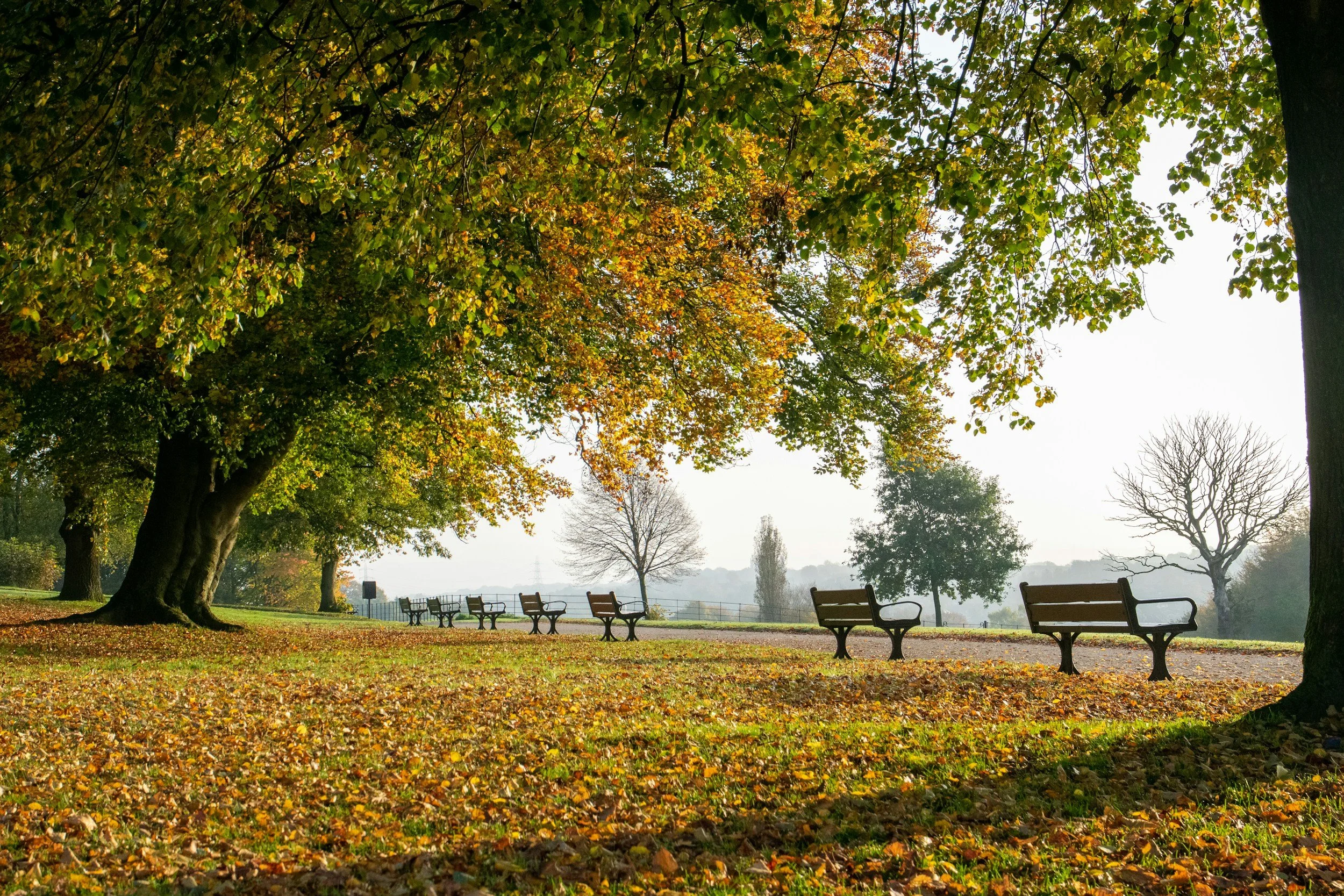
Peel Park
Peel Park is located towards the north of Manchester, in a nearby city called Salford. From the city centre, you can reach Peel Park in just 15 minutes by tram, or in 30 minutes if you’d prefer to walk. Peel Park, even during the hotter summer months, rarely gets overcrowded and is certainly big enough to find a quiet spot where you won’t be disturbed. There are various benches scattered around the park, but you may want to take a blanket or cushion for extra comfort.
New Islington Marina
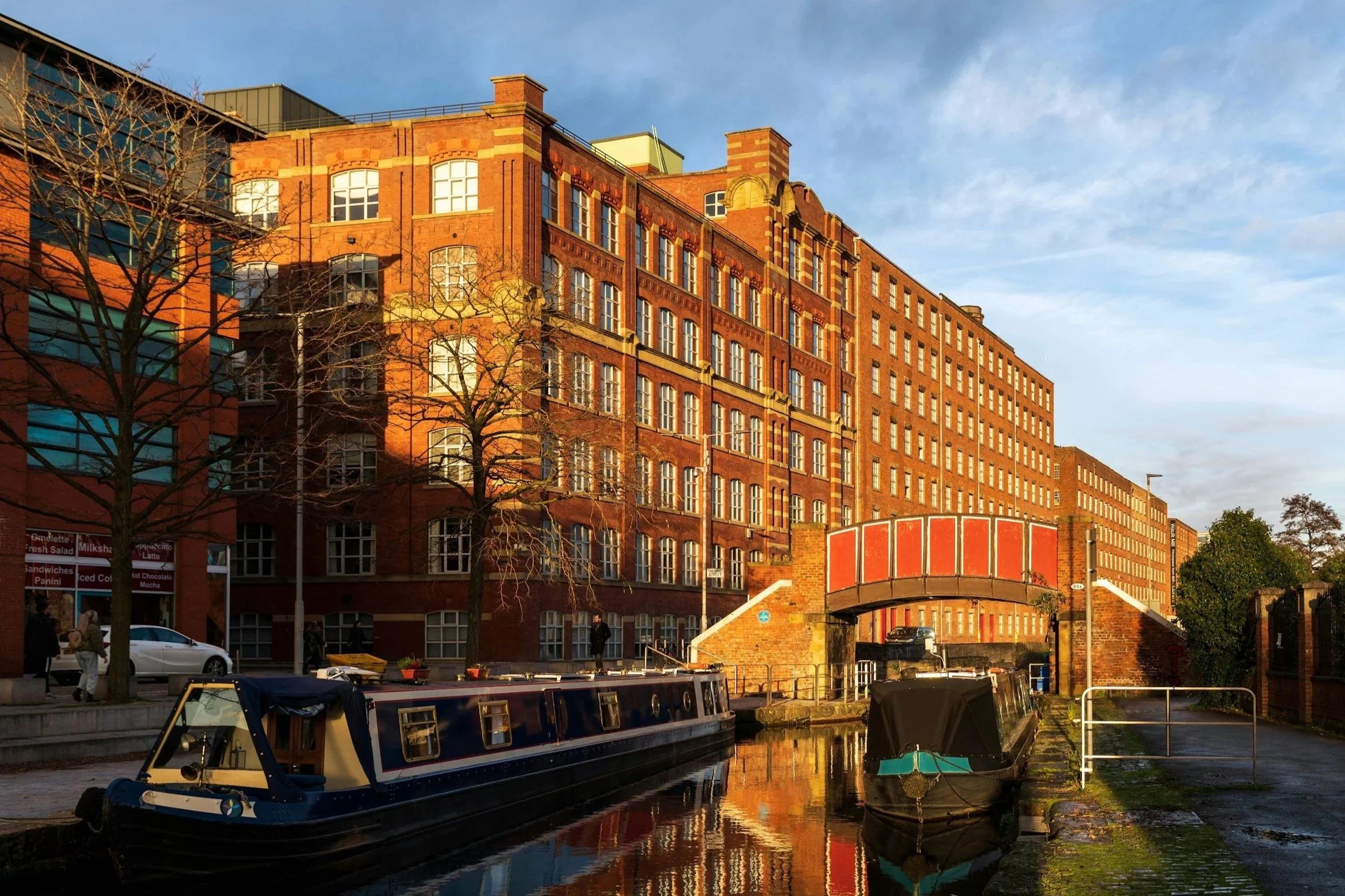
Heading back into the city, and just a short walk from Manchester’s Northern Quarter, you will find a quiet, waterside retreat where you can watch barges pass by as they travel along the canal waters. Within the New Islington neighbourhood, there are also a number of friendly cafes serving hot drinks and light bites if you get peckish. The New Islington Marina is just a ten-minute walk from Piccadilly, so it offers the perfect location to unplug and reset, even if you don’t have much time.
Chorlton Green Market
Spending time by yourself doesn’t mean you have to do nothing at all. In fact, finding a quiet activity can be a useful distraction if you’re feeling caught up in your thoughts and emotions. It’s good to support local businesses where you can, and Chorlton Green Market is the perfect place to start. This relaxed street market is located just south of the city centre. On the final Saturday of each month, you can peacefully explore their vintage craft market with pop-up food and art stalls too. Although it might feel intimidating to be around other visitors of the market, the experience might serve as a way to gently push you beyond your comfort zone and connect with the Chorlton community and residents.
The Reading Room At Manchester Central Library
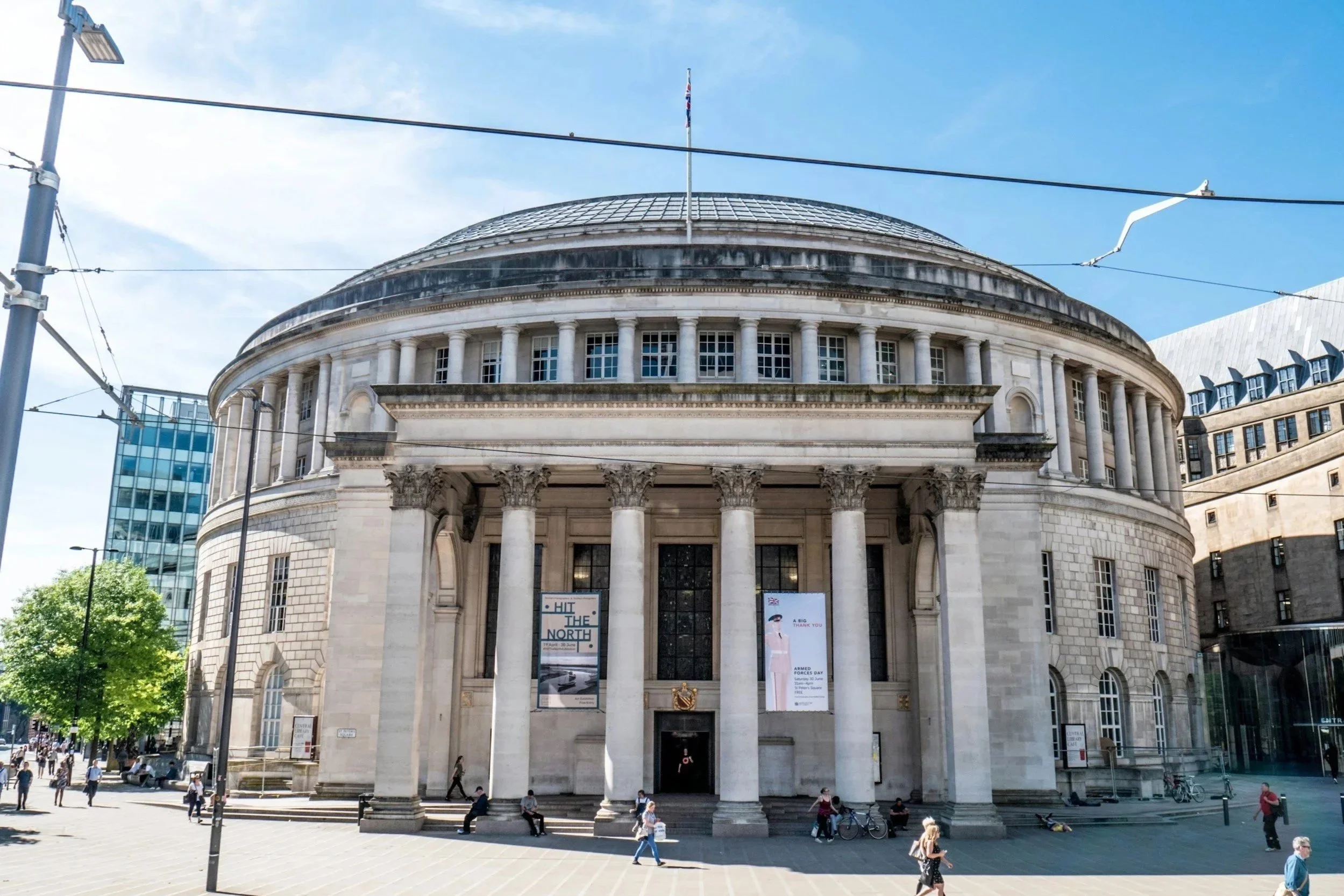
In any city, you can always rely on a library to provide a secluded and quiet spot where you won’t be disturbed. Luckily, in Manchester, there are a few different libraries you can choose from. The Manchester Central Library is a public library used by students of the city’s universities, as well as the general public. Within the library itself, situated on the first floor, you will find a space lined with bookshelves and comfortable seating where you can sit and either work or read for as long as you need. The reading room is a calming spot filled with plenty of natural light from the glass above it.
St Mary’s Church
Visiting a church can be a great way to get away from the hustle and bustle of the city and can be surprisingly restorative and calming. You can find St Mary’s Church on Mulberry Street, and enjoy its fascinating architecture and history just a short distance away from Manchester’s city centre. St Mary's, like many other churches in the city, is open during the day and is typically quietest during the mid-afternoon. You won’t be expected to take part in any religious activities when visiting the church. Everyone is welcome to enter, sit quietly, and enjoy a moment of peace if they wish.
Interested in writing for us? Read about our submission guidelines here.

Frazzled Cafes
With Frazzled Cafes, our mental wellbeing has hit the High Street. Comedian Ruby Wax has created safe spaces to talk at M&S locations across the UK.
“We live in a time where to have a life crammed to the hilt is considered a success story. But with all this pressure, so many of us have nowhere to go to meet and talk about it. Frazzled Cafe is about people coming together to share their stories, calmly sitting together, stating their case and feeling validated as a result. Feeling heard, to me, has always been half the cure.”
Modern life burn-out is as ubiquitous as M&S but we have this idea that we have to be all in with therapy or medication to deal with it. And we’re not knocking either (we have been and sometimes still are there), but sometimes we just need access to what we see as mental health maintenance, safe spaces to talk it out and talk it over. That’s where the network of Frazzled Cafes come in. They fill that gap between sitting alone with something, with the struggle and the frankly frazzled feelings that infiltrate our lives and our days, and pouring resources like money and time into talking cures, to committing to sessions and schedules. We need both. In fact we need all the different things, the different kinds of spaces and initiatives that might meet us where we are and hold us for the time that we’re there in whatever way we need, without judgment and with compassion.
Frazzled Cafes were launched a couple of years ago by the comedian Ruby Wax, who has recently become known as the popular author of books that include How to be Human, in which she discusses with a monk, and a neuroscientist the fundamentals of how we function as people, and A Mindfulness Guide for the Frazzled, an approachable and funny course in mindfulness. During the tour for her books, Wax had people again and again come up to her needing to talk and that was her lightbulb moment—that we all are running on empty and still finding our way through, and that we all need a way of expressing that feeling while connecting with others who are probably experiencing the same thing.
On why that word ‘Frazzled’, Wax explains: “A neurobiologist might say that someone is ‘stuck in a state of “frazzle”. They mean that, for this person, constant stress is overloading the nervous system, flooding it with cortisol and adrenaline; their attention is fixed on what’s worrying them and not the job in hand, which can lead to burn-out.”
The genius of the idea though is that Wax reached out to M&S, the widely beloved British High Street institution, to host these talk gatherings. And with that one call, you are in seriously stigma busting territory. If the venerable M&S is in that space of talking about our emotional and psychological lives, then surely that’s ok and allowed. Plus, who doesn’t want to spend time in an M&S after hours where the sessions are held?
Frazzled Cafes now take place in M&S locations across the UK, in their cafes and sometimes community rooms. Recently the idea was also tested at High Street Bakery Le Pain Quotidien. People are invited to RSVP beforehand and some weight is given to those who have attended before. Each session lasts 75-90 minutes and starts with a meditation to bring people into the room and ground their experience. The meetings are run according to the rules of therapeutic spaces, with a set of guidelines that promotes ideas of confidentiality, kindness and support.
If you interested in joining one of these meet-ups, sign-up for the newsletter which announces dates and venues and will link you to the RSVP for each cafe session. Just note that Frazzled Cafes are keen to point out that this is not designed to replace therapy but rather fills a need that most of us have just to be heard.
In our busy, often overwhelming lives, sometimes all we need is a safe space to talk. Frazzled Cafe is that space. And with that the issue of our mental wellbeing has now hit our high-street. Let’s keep it there.
To find out more: Website www.frazzledcafe.org / Twitter @frazzledcafe / Facebook @frazzledcafeuk / Instagram @frazzled_cafe

Jodrell Bank
Jodrell Bank is one of those truly special places for a spectacular, constant, reason. Right here is one of the biggest and most powerful radio telescopes in the world.
“Take new and exciting approaches to presenting the wonders of science in a way that engages our visitors emotionally as well as intellectually, evoking wonder, surprise, humour and, above all, curiosity.”
We’ve been coming to Jodrell Bank Discovery Center since we were kids. And now we take our own kids. That sense of awe and wonder that we experienced way back then (even though we went there on school trips which somehow make everything boring), that hasn’t gone away for us, and now it captures our younger generation too.
Since we came in our school uniforms (we won’t say exactly when that was), Jodrell Bank has undergone a bit of a revamp. Our kids get a much nicer café then we ever had, though we get the benefits of that too, as well as majorly remodeled visitor buildings. The striking Planet Pavilion contains the world’s largest clockwork Orrery (a to-scale working model of the solar system) and in the Space Pavilion you now get to hear the Big Bang.
But Jodrell Bank is one of those truly special places for a spectacular, constant, reason. Right here is one of the biggest and most powerful radio telescopes in the world. The giant, Grade-1 listed, Lovell Telescope. This monumental white bowl has been sat in the green fields of Cheshire since 1957. Positioned right beside the Manchester-Crew train line, I’d pass it every day on my way to school, and it has never ceased to blow my mind. Looking out of a train window, the Lovell Telescope would denote an escape from the quotidian, from the banal, from our diminutive human lives. It would signify space and the universe, the capacity for us to know the unknowable, mysteries of an astronomical scale. It would communicate escape.
At a distance, the Lovell Telescope is symbol of authority for what man-made science can do. Much, much closer —you can walk right up to its base—it maintains that sense of awe, but it also conveys our humility, our very much non-man-made place in the universe. As it transcends time, the Lovell Telescope is beginning to show the wear and tear of its own life, it begins to feel fragile. When we last visited, the train-track base was covered in scaffolding, which seemed surprisingly prosaic when you think about what this thing can do. It felt oddly like it might break if moved [sorry all those Uni of Manchester science hearts that just died when I typed that]. And it does move – it’s one of the largest steerable telescopes in the world, with the bowl changing position depending on which part of the sky it needs to track.
Jodrell Bank is a place full of these kind of dichotomies. It’s an analogue escapees dream: while here, you are asked to switch off all devices, so that they don’t interfere with the powerful radio observations. Which is a permission giving of a kind we like. There’s a sense of play, of curiosity, in the exhibits on display, and the grounds that allow free-roaming, but there’s also the weighty responsibilities and ambitions of the science authored here to further our knowledge and capacity to get beyond dreaming. And now there’s even camping, bringing the vast imaginative possibilities of this place to a 4-day annual summer festival, appropriately called bluedot. With an audience of 25,000, science just got way more accessible, as it plays with music, art and culture, and bands like The Chemical Brothers, Flaming Lips and Elbow, as well as Manchester’s own Halle Orchestra, get to drop by. But best of all—we think anyway—bluedot takes place right next to that giant telescope (sometimes incorporating it into the show) and you get to unzip your tent, probably on a frosty Mancunian morning, and be right there with it.
We can majorly lose our minds on that. As we always have done, a bit, just being here with the Lovell Telescope and its universal pull.
Website www.jodrellbank.net/ Twitter @jodrellbank/ Facebook @JodrellBankOberservatory

Psychology Fringe Festival
The Psychology Fringe Festival is giving us some much needed alternatives for ways forward and ways of being. They are bringing to the fore increasingly urgent conversations created by the circumstances of our rapidly evolving world by the people who understand them most. That’s a new kind of festival that we all need to exist.
“The more we can talk about mental health – and the more ways we find to talk about it, sing about it, rap, act, paint, photograph and so much else then the more chance we have of improving wellbeing more generally. Mental health isn’t something that belongs behind the clinic-room door or in the professor’s office. It belongs to all of us. ”
A small team of clinical psychologists established the Psychology Fringe Festival and the accompanying Beyond the Therapy Room Conference to present ‘different voices, opinions and perspectives on mental health’ and to ask how we can create a more psychologically caring society. That’s a perspective that we badly need.
Though it operates alongside the Division of Clinical Psychology’s annual conference, The Psychology Fringe Festival is very much publicly orientated. Its aim is to explore clinical psychology and mental health in a broader way, to think about how we relate to one another as human beings rather than focusing on a purely medicalized approach to difficulty and distress which we’re maybe more familiar with.
In that spirit, the festival uses art-based formats, such as dance, theatre, poetry, comedy, philosophy, art and workshops, and has touched on poverty, LGBT issues and the media as well as mental health. Programs and performances are often delivered by people with lived experience of mental health services, such as DanceSyndrome, Heart to Heart Theatre, and Neural Knitworks.
Its sister program, The Beyond the Therapy Room conference similarly focuses on celebrating innovative ways of working, highlighting what we can do beyond one-to-one therapy to engage with wider issues affecting people’s mental health, including the social and political climate.
Following successful events in London, Liverpool, Cardiff, and Manchester, the Psychology Fringe Festival is giving us some much needed alternatives for ways forward and ways of being. They are bringing to the fore increasingly urgent conversations created by the circumstances of our rapidly evolving world by the people who understand them most. That’s a new kind of festival that we all need to exist.
Alternatives for supporting us through our everyday lives are popping up, but as clinical psychologist and one of the festival’s cofounders Will Curvis advises, we need to engage: “Show up at the conference and festival. Coming to events, meeting like-minded people, getting involved in these services - there’s a lot of opportunity to be active.” See you there next year?
To find out more: www.psychologyfringe.com / Twitter @ClinPsychFringe / Facebook @psychologyfringe