

Queer LifeSpace
Discover San Francisco’s Queer LifeSpace which offers safe, affordable and accessible support for the queer community. We invited them to tell us about their approach and how people can access their services from wherever they are.
“Evidence-Based Training & Mental Health Services for the LGBTQ+ Community. For Queer People. By Queer People.”
What is it? We are a small, mental health non-profit based in the Castro neighborhood of San Francisco. We specifically focus on providing low-cost therapy to people in the queer community.
Why do people need it? There is a huge need for mental health support in the queer community. We also recognize that the cost of living in the Bay Area is challenging for many so we strive to create a safe, welcoming, and affordable place for our fellow queer people to find the help they need to navigate life's challenges.
What do you offer? We often participate in community events such as the Castro Street Fair. Our website has descriptions of our services, including individual, couples, and group therapy sessions. We just celebrated our 10-year anniversary with a fundraising daytime brunch and drag show Gala.
What makes it different? Our rates are sliding scale and start at $30 for an hour-long session, which, in the Bay Area, is very hard to find. Our organization is also a training site for emerging queer therapists. Because we are a small nonprofit, we have the freedom to create and run our own programming as we see fit. For example, we have a brand new program called EQUARTY, which supports up-and-coming queer artists in the Bay Area. We have another program called Rural Youth Outreach which offers free therapy to queer youth in remote and rural areas of California who may not have easy access to therapy due to their location. There are more plans to expand our programming beyond just therapy.
What do people need to know? We are now seeing clients on Zoom or in person, depending on client preference and therapist availability.
Tell us a little about your story: We understand how important it is to cultivate a space where people can be themselves. As a result, we make great efforts to pair our therapists with clients that share similar life paths. Because of the way we are structured, we aren't limited to a certain number of therapy sessions per client. Clients can attend sessions at QLS for as long as they need.
How can people be inspired by your space wherever they are? Queer mental health could always use more attention in mainstream society. We encourage anyone to talk about the need for mental health support, whether personally or as a culture.
Where inspires you? The strong queer community of the Bay Area is an incredible source of support. We draw upon the wisdom of the queer ancestors who have paved the way for us to do what we do today.
Main Image: Photo by Shingi Rice on Unsplash

Knockout
We find out about London's Premier LGBTQ+ Boxing Club and the role that both the mind and community can play in physical wellbeing.
What is it? Knockout is a safe space for the LGBTQ+ community and their allies to gather together and pursue a healthier lifestyle through the sport of boxing. We are a fitness training group that recognises the health of the body comes through the security of the mind and community.
Why do people need it? This space was started as a secure and safe space for queer athletes who prefer non-team sports. Boxing is traditionally a sphere that is rife with difficulties for queer athletes, in regards to competitiveness and homo/transphobia. Knockout is a place where not only can these athletes find respite from these domineering structures, but also find individual and inner strength through a style of boxing not typically found in most other gyms. We focus on community and elevating the individual through the group.
What do you offer? A competitive boxing workout that challenges the body but is also tailored to the individual. We have some members who compete, but our core members are there to focus on their physical well-being.
In addition to this, we are a community that likes to deepen our bonds together by organising social events, karaoke nights, pub nights, and watching fights together.
We are also active in supporting other LGBTQ ventures, through charity drives and other forms of support. We organise 5k, 10k, and half marathon runs through our members, and help members find other sports and hobbies all with the mission statement of promoting LGBTQ+ rights and ideals.
What makes it different? Boxing is a hyper-aggressive individualistic sport that focuses on competitiveness and is typically taught in a harmful manner that isolates and can be damaging to the individual. Our trainers focus on combating these stereotypes to produce strong boxers that are developed through shared bonds and training together.
We emphasise positivity and connection, and work hard to welcome everyone to be a vital member of our community. Our training focuses on everyone who walks in the doors, leaving no one behind. For those who wish to, we encourage meeting strangers and learning something new from them. A Boxer steps into the ring alone, but we prove that the road to the ring can only be walked with friends and family.
What do people need to know? Boxing is a very intense sport and tends to attract introverted people. We are respectful of this and strive to provide a safe space for everyone, regardless of background. It is an intense workout, but highly rewarding, physically and mentally.
Currently, our trainings are held at the Sobell Center in North London, and are open to boxers of all levels. We have 2-3 coaches on hand in order to provide adequate attention to individual training, and thus are able to accommodate boxers of all skill levels.
For first-timers wishing to try out the sport, please come in comfortable trainers/running shoes, loose shorts, and a loose top. Freedom of movement is key. Please see our web page for more details.
Tell us a little about your story: Wanting to create a club run by queer people for queer people, to create a safe space and break down the barriers LGBTQ+ people feel when engaging in sport, Knockout London was born over a few drinks in the Duke of Wellington in Soho in January 2016. In the last six years, the club has expanded from a handful of people to a community of almost 200, with 2 classes available a week (and more coming soon), and supporting fighters participating in white-collar boxing events.
How can people be inspired by your space wherever they are? Our group focuses on community. We train strong individuals to become leaders but recognise that the individual is a construction of the community they are a part of. Competitive boxers are not created in gyms, but rather through the love, support and connection to the community around them. A strong Boxer gives back to their community and is active through charitable works and social events. It is not enough to carry these principles of Charity and Community only when one trains, but also throughout one’s everyday life.
Where inspires you? Any of the strong LGBTQ+ voices trying to bring positive changes to our community, whether they are activists (Munroe Bergdorf), actors (Elliot Page) or professional athletes (Jake Daniels). But also our members, all come to the club with their own stories, and our social events are a great opportunity to hear about their inspiring journeys.
Anything we're missing? We are a safe space for all members of the LGBTQ community and their allies, which means our members come first and foremost. Please be respectful of an individual’s right to privacy.
HausWitch
Think you know witchcraft? Think again with this space in Salem redefining Witchcraft for modern times.
Go here if: you are seeking strategies for self-care, are ready to push against some social boundaries, and want to make your home the sanctuary you need it to be.
What is it: A metaphysical lifestyle store for the modern witch, or those curious about what that even means, in Salem – yes, that Salem.
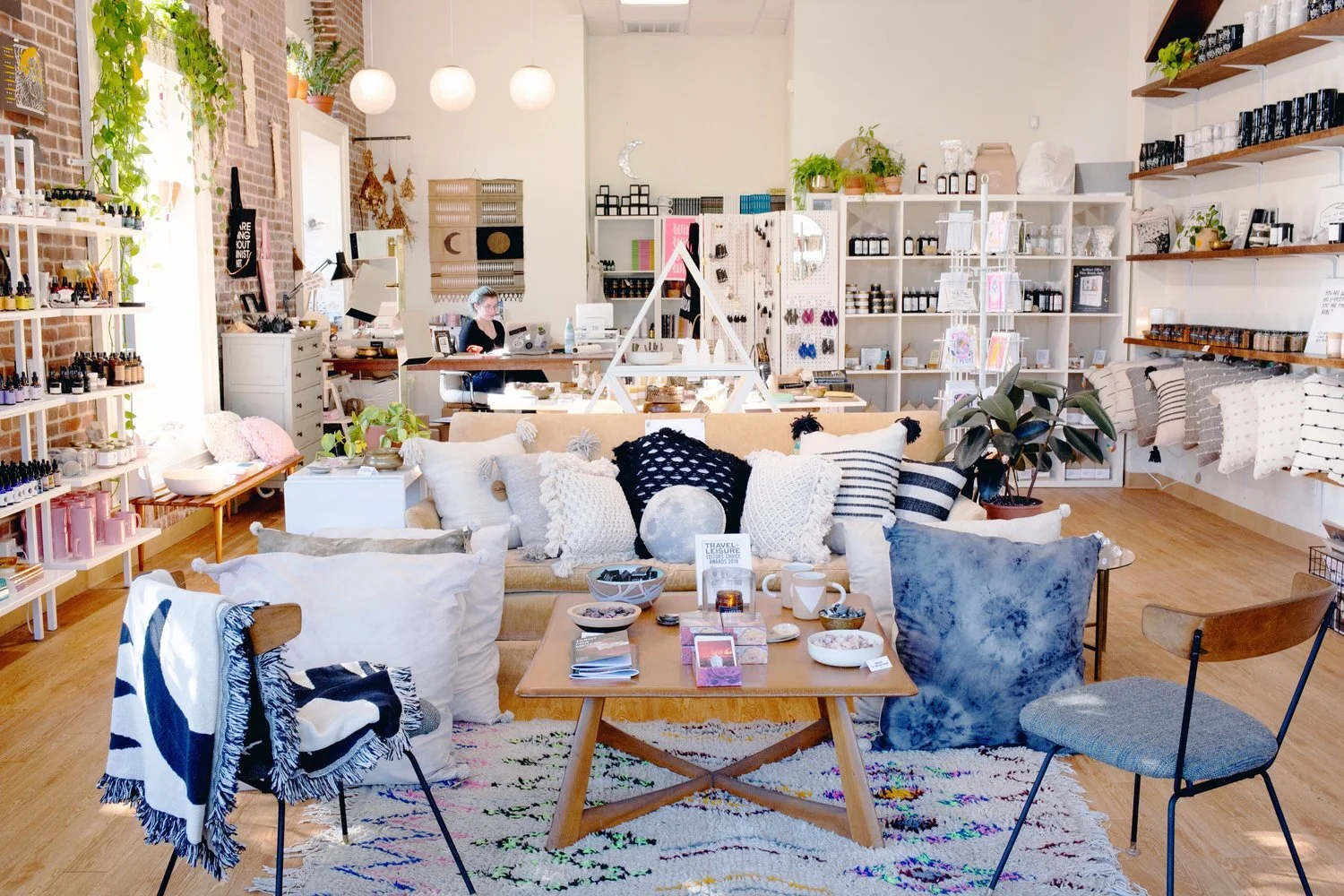
Why you’ll love it: Founder Erica Feldmann opened HausWitch in 2015 after completing her graduate studies in the sacred feminine and witchcraft at Simmons College and as a positive space to bring magic into our everyday lives and homes. This isn’t the version of witchcraft told in fairytales or Halloween stories or even those witch trials: it’s not black peaked hats, cauldrons, and evil incantations. Rather its more Scandi design and modern twists: the storefront is light-filled, combining a keen eye for interior decoration with products that reframe witchcraft for contemporary times, bringing in ideas of self-knowledge, empowerment, healing, intuition, mindfulness, and nature-inspired spirituality.
What you need to know: The Treasure Palace as Feldmann refers to the storefront holds minimally designed items for the modern witch (some serious, some playful): incense, spell kits, candles, and potions as well as throw pillows, cleaning products (from own brand LightHaus) and ceramics (‘Witches are the Future’ ). HausWitch also hosts workshops for developing intuitive skills, such as tarot reading or astrology, and that offer safe spaces for women to share, learn and support one another.
How to bring this into your life: HausWitch has just opened up again after a year of being closed due to the pandemic but you can still shop the collection from wherever you are, attend an online workshop or even bring in some magic to your home with Feldmann’s book, HausMagick.
Why we think it's different: Witchcraft is being reframed; we’re increasingly curious about what it represents, what it can provide, and how we can bring it into our lives. In a moment when we’re struggling to live within the constraints of our modern-day world, for the curious and the seekers, witchcraft offers alternative ways into healing and reflection. Its rituals can ground our days, its practices offer self-care to orientate us in spiraling lives. But witchcraft is also about empowerment, about resistance. HausWitch offers ways to slow down, tune in, recognize, but it also offers ways to push against, make space, be heard.
When you get beyond the narrative that has represented witches as outsiders, you get to one that reveals that witches are often those who have pushed against patriarchy, social norms and spiritual expression denoted narrowly. As Feldmann has said: "It's more about feeling empowered, wanting to change the world and connecting to your own intuition."
Witchcraft here sits closely with feminism, with women no longer silenced, reclaiming their powers and making space for themselves in a world that better reflects who they really are (Also shop: “A simple spell against the cis hetero white supremacist patriarchy”. ) For Feldmann, the meaning of witch is ‘Women in Total Control of Herself’ — with women here meaning all gender identities. HausWitch is an intersectional space that is consciously open to “all genders, sexualities, ethnicities, abilities, and anyone who feels like they are in need of a truly supportive and safe environment in this ever-changing world.” Feldmann’s wife Melissa Nierman teaches workshops here (currently offering Past Life and Clairvoyant Energy Readings) and runs NowAge Travel.
In their own words: “HausWitch Home + Healing is a modern metaphysical lifestyle brand and shop, providing Salem locals and visitors with a selection of witchy and handmade products from independent makers from around New England and the US! HausWitch combines the principles of earth magic, meditation, herbalism, and interior decorating to bring magic and healing into everyday spaces.”
Inspired to: We’ve all been tied to our homes this year in ways that may have made us love our spaces slightly less than usual. This spring, find a way to reconnect to where you are. In her book HausMagik, Feldmann suggests rebuilding our relationship to our own space by decluttering, being attuned to what feels good and what doesn’t, bringing in greenery and crystals, and burning sage to reset the energy of a room. Our homes are the spaces that can hold and sustain us through the less cozy outer world; this spring find a way to make it your own again, restorative and replenishing for whatever comes next.

Arium Botanicals
A plant shop in Portland that does it all just that little bit differently, from the plants they stock to how they think about the environment.
Go here if: you are a collector or seeker of botanical curiosities no matter your existing knowledge about houseplants.
What is it: As much for plant lovers as curiosity seekers, Portland’s Arium has become known for its wide variety of different species and types of plants. In a city that has an abundance of plant stores and a fervent plant community, you’ll find here special interest and rare plants that you may not be familiar with or haven’t seen before, as well as the advice and information that makes you confident about taking them home (they may be unusual but that doesn’t necessarily make them hard to care for).
Partners in business and life Anthony Sanchez and Tylor Rogers started Arium online before finding their forever home in a former Land Rover repair shop. They transformed the garage into a bright open space with white walls and a garage door that opens to let in the light, and brought in wall-to-wall foliage, with hanging displays, moss column growing plants, and greenery seemingly everywhere.
Why you’ll love it: We’re in the midst of a houseplant boom that’s been tied to social media posting millennials who understand the wellbeing benefits of bringing plants indoors: four in five 16 to 24-year-olds own at least one houseplant, with a fifth of plant owners buying them for their wellness benefits. One-third of new gardeners are millennials.
With leaves of subtle colors or unusual shapes, decorative patterns, and broad textures, Arium steps into the space that owner Tyler Rogers grew through his own wildly popular Instagram account, @Urlocalplantboy. The space celebrates ornamental horticulture and searches out truly unique specimens while making them approachable, if not coveted.
Each plant is given its botanical name, from the huge leaves of the Alocasia “Regal shield”, a sweet Ficus Altissima, and cork growing Hoya Obovata Mount. When you go there might be Begonia “Cracked Ice”, Philodendron “Pink Princess” and Alocasia “Silver Dragon”.
What you need to know: The name ‘arium’ is a play on terrarium (earth + container); here the store is given its Latin meaning: ‘a space or vessel that contains something’. It’s rather magical to think of Arium as the container of the green world owners Rogers and Sanchez have conceived to inhabit it.
How to bring this into your life: Currently Arium is open to the public with COVID-care measures in place, though workshop programs, book signings, and events are not yet back up and running. Look out for announcements on social media for when they begin again. They also ship within the US.
Why we think it's different: A vegan and queer-owned business, which the owners have declared a safe space for “all sexual orientations, gender identities, religions, and races” and that also takes its conservation standards seriously. Arium donates monthly to Conservation International and doesn’t stock plants on the IUCN Red List of Threatened Species. All their plants are ethically sourced from certified U.S. nurseries, and they use their space to educate about plants that face extinction or habitat loss, condemning the poaching of plants or wild collection. Beyond horticulture, they also support the local creative community in Portland by stocking a selection of ceramics made by local makers.
In their own words: “We initially started Arium as a means of making unusual plants that can be implemented in design and in the home. We firmly believe there is a plant for everyone and that no question is dumb or illegitimate. Like us, we all started somewhere. Making our space welcoming, a place for learning, and geek out about plants. We are proud to be a space for beginners all the way to avid collectors.”
Something to do: Our plant parenthood journey started small – as many with a single succulent. Choose a plant that you love to cultivate and bring into your home (doesn’t have to be the celebrity Fiddle Leaf Fig). Build up your gardening muscle slowly. It's ok not to have a collection of 60, start with one and see how it makes you feel. Do you like owning a plant, do you like looking after it, does it make you feel good? If it's too much pressure, feel free to abandon your houseplant journey. But if it incites something positive, bring in plant number 2.