

What Happens When We Stop Listening to Our Feelings?
Emotional avoidance can look like busyness, people-pleasing, anxiety, overwhelm, and burnout. Explore what happens when we disconnect from our feelings and how to start listening again.

For years, I thought not feeling was a skill. Being able to put difficult emotions to one side seemed practical, sensible, and even admirable. If something hurt, I carried on. If I felt anxious, I pushed through. If I was grieving, overwhelmed, uncertain, or angry, I told myself there would be time for that later.
Later, of course, rarely came.
It's only in recent years that I've realised how many of us are taught some version of the same lesson: that our feelings are a problem to solve rather than information to understand.
Sometimes the message is obvious.
"Toughen up."
"Don't be so sensitive."
"Stop overthinking."
"Just get on with it."
Other times it's much more subtle. We absorb it from workplaces that reward productivity over humanity. Families that don't talk about emotions. Social media feeds that celebrate resilience but rarely vulnerability. Cultures that tell us to stay positive no matter what.
Over time, many of us become experts at emotional avoidance. We stop listening to ourselves.
The Cost of Emotional Numbing
When people think about avoiding emotions, they often imagine dramatic denial or repression. But emotional numbing can look surprisingly ordinary.
It can look like staying busy.
It can look like always being the capable one.
It can look like endlessly researching solutions instead of sitting with uncertainty.
It can look like scrolling, working, tidying, planning, helping everyone else, or finding one more thing to cross off the list.
From the outside, life can appear completely fine. Inside, however, something starts to go quiet. The challenge with numbing difficult emotions is that we rarely get to choose which feelings disappear. When we turn down the volume on anxiety, grief, fear, disappointment, or anger, we often dampen joy, excitement, pride, connection, and hope too.
We don't just lose access to difficult emotions. We lose access to ourselves.
The Emotional Ailments That Often Follow
Many of the struggles people bring to coaching aren't caused by emotions themselves. They're caused by years of ignoring them.
Anxiety can become louder when we repeatedly dismiss what it might be trying to tell us.
Overwhelm can build when we override our limits for too long.
Burnout often follows prolonged periods of disconnecting from our needs.
People-pleasing can flourish when we become more attuned to everyone else's feelings than our own.
Indecision can emerge when we've lost touch with the internal signals that help us know what matters.
Even feeling lost can sometimes be a symptom of emotional disconnection.
After all, emotions are one of the ways we orient ourselves in the world. They tell us what feels safe, meaningful, threatening, exciting, important, unfair, or deeply wanted.
Without them, we can find ourselves moving through life with the map folded shut.
Why We Learn to Disconnect
Most of us don't disconnect from our feelings because we're broken. We disconnect because, at some point, it helped.
Perhaps feeling wasn't welcomed in your family.
Perhaps sensitivity was mocked.
Perhaps you learnt that achievement earned praise while vulnerability attracted criticism.
Perhaps you were carrying responsibilities that left little room for your own emotional life.
Perhaps you simply became very good at surviving.
Emotional avoidance is often an adaptation before it's a problem. The difficulty comes when a strategy that once protected us starts limiting us.
What If Feelings Aren't The Problem?
One of the biggest shifts in my own life has been moving from seeing emotions as obstacles to seeing them as information.
Not instructions. Not facts. Not something that must be acted upon immediately. But information.
Anxiety might be highlighting uncertainty.
Anger might be pointing towards a boundary.
Sadness might be asking us to acknowledge a loss.
Frustration might reveal a need that isn't being met.
Joy might show us what we want more of.
When we stop fighting our feelings, something surprising often happens. They become easier to understand. And when we understand them, we can respond rather than react.
Starting to Listen Again
You don't need to become someone who endlessly analyses every emotion. You don't need to share everything you feel. You don't need to become a different person altogether. But it can be worth becoming curious.
The next time you find yourself distracted, overwhelmed, anxious, stuck, exhausted, or disconnected, try asking:
What might I be feeling right now?
And what might that feeling be trying to tell me?
The answer may not solve everything. But it might reconnect you with the person who has been there all along, quietly trying to get your attention. And sometimes that's where finding your way starts.
Explore Emotions Coaching
If any part of this feels familiar, emotions coaching can offer a space to slow down and listen to what your feelings might be trying to tell you.
Many of us spend years pushing emotions aside, questioning them, fearing them, or simply trying to get through them. Together, we explore what's underneath anxiety, overwhelm, uncertainty, people-pleasing, burnout, and other everyday emotional struggles—not to get rid of your feelings, but to better understand them.
Because emotions aren't interruptions to life. They're part of how we find our way through it.
If you're ready to have a different relationship with what you're feeling, I'd love to help.
Find out more about emotions coaching today.
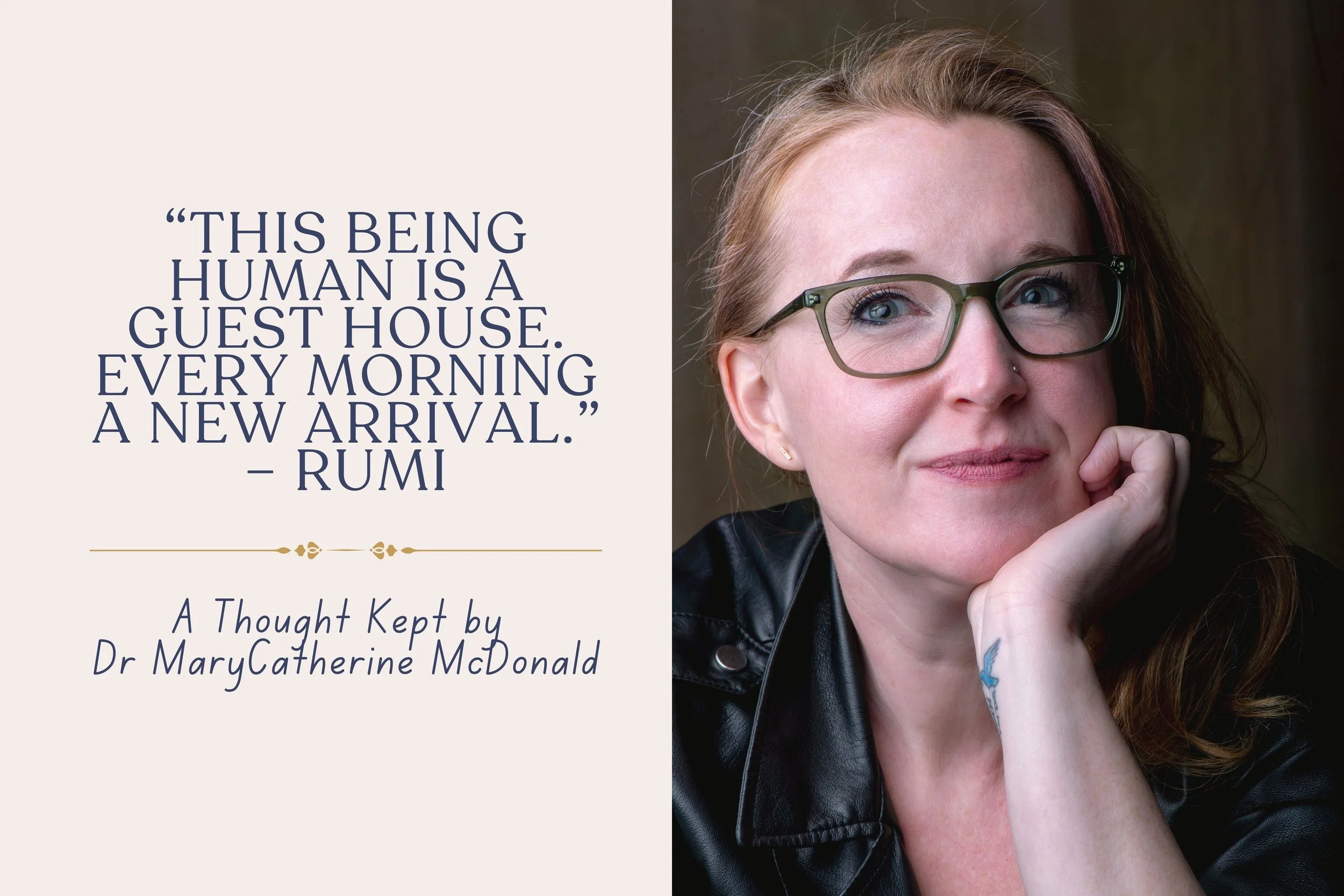
How to Have a Better Relationship with Your Emotions (Without Trying to Fix Them)
Struggling with anxiety, overwhelm, or difficult emotions? Explore a gentler way to relate to what you feel — without fixing, avoiding, or pushing it away.
Ok we need to talk about emotions because there can be so much going on with that aspect of our lives — much of it unseen. Maybe there’s a sense that we should be handling them better. That we should feel calmer, clearer, more in control. That if anxiety shows up, or grief lingers, or something in us feels heavier than it “should,” then something has gone wrong.
So we try to manage what we feel. We minimise it, move past it, explain it away. We tell ourselves we’ll deal with it later, or that it isn’t that big a deal, or that other people have it worse. We learn, often without realising it, to close the door on parts of ourselves that feel inconvenient or uncomfortable.
And yet, for many of us, that doesn’t actually make things easier. It just makes us feel more disconnected. From ourselves, from other people, from what’s really going on.
In a recent conversation on A Thought I Kept, I spoke with Dr MaryCatherine McDonald about this — and in particular, about a simple but quietly radical idea: that our emotions might not be something to fix or control, but something to relate to.
She shared a poem by Rumi that has stayed with her for years, about being human as a kind of guest house, where emotions arrive as visitors. Joy, anxiety, grief, irritation. Some welcome, some less so. All of them coming and going, whether we invite them in or not .
It’s such a different way of seeing things.
Because many of us have been taught to do the opposite. To decide which emotions are acceptable and which need to be shown the door. To believe that if something uncomfortable is present, then something must be wrong — and the goal is to get back to a more “acceptable” state as quickly as possible.
MaryCatherine described living like that for years. Feeling as though she was at war with her emotions, trying to control them, contain them, make them behave. And underneath that, a quieter belief: that if anxiety or grief were there, they would take over. That they might ruin everything.
It’s a feeling I recognise, and one I see often in my work. That fear of what might happen if we really let ourselves feel what’s there.
But what if the work isn’t to get rid of what we feel?
What if it’s to sit down with it?
To offer it a chair, rather than pushing it out of the room. To get curious, even gently, about why it’s here. Not because we want to analyse it or solve it, but because we’re willing to be in relationship with it.
That idea of relationship feels important.
Because emotions don’t arrive neatly, one at a time. They overlap. They contradict each other. We can feel anxious and hopeful, tired and grateful, grieving and still find something to laugh at. And yet, we often try to simplify that complexity into something more manageable. I am anxious. I am fine. I am coping.
But that can leave us feeling stuck. As though we’ve become the emotion, rather than someone experiencing it.
What I found grounding in this conversation was the idea that we don’t have to identify so completely with what we feel. We can be in it, without it being all of us. We can let something move through, rather than holding onto it as a fixed state.
And that matters, particularly when things feel heavy.
MaryCatherine talks about something she calls “rehearsing loss” — the way our nervous system, often shaped by past experiences, tries to protect us by anticipating what might go wrong. Imagining endings before we’ve fully lived the beginnings. Bracing ourselves, just in case.
It makes sense, when you see it like that. It’s not weakness. It’s protection.
But it can also make it harder to access the moments that are here. The small, ordinary experiences that carry something lighter in them. A conversation that lands. A moment of connection. A flicker of joy that doesn’t erase what’s hard, but sits alongside it.
This is something else she reframes beautifully — the idea that joy isn’t something we reach once everything is sorted, but something that appears in the middle of things. Not fluffy or superficial, but steady and tenacious. Something that helps us stay, rather than escape.
And maybe that’s part of what a different relationship with our emotions can offer.
Not a life where we only feel the “right” things. But a life where we feel more of what’s real, without it meaning something has gone wrong.
Where we can notice when we’re trying to push something away, and instead soften, even slightly, towards it.
Where we don’t have to be at war with ourselves.
If you’re someone who has been trying to manage or control what you feel, it might be worth asking a different question.
Not “how do I fix this?”
But “what might it be like to sit with this, just for a moment?”
There’s no perfect way to do that. No right or wrong response. Just a gradual shift, over time, from resisting what’s there to being alongside it.
And if that feels unfamiliar, you’re not alone in that either.
If you’d like to explore this idea further, you can listen to my full conversation with Dr MaryCatherine McDonald on A Thought I Kept. It’s a thoughtful, honest exploration of emotions, grief, joy, and what it means to be in relationship with what we feel.
And if you’re looking for a little more support in understanding your own emotional world, you can also explore my emotions coaching sessions — a space to gently make sense of what’s going on, at your own pace.

Hi There, About Those Emotions You’ve Been Putting Off...
Feeling emotionally overwhelmed but too busy to process it? Learn why emotional postponement may not be working for you—and how to start paying attention to what you’re feeling again.
…You meant to get to them, didn’t you? The tightness in your shoulders, the lump in your throat, the exhaustion you can’t quite name. But there were emails to send, dinner to cook, a child to reassure, a parent to check in on. There was a day to get through.
So, you did what you always do. You told yourself: later.
Later, when things slow down. Later, when work isn’t so demanding. Later, when the kids don’t need you as much. Later, when there’s finally space for you to feel whatever it is that’s been hovering in the background.
But here’s the thing about later: It keeps moving.
The Habit of Emotional Postponement
Somewhere along the way, we started treating emotions like a luxury—something we’ll get around to when everything else is handled. We file them away under “To Be Dealt With", telling ourselves that now isn’t the right time. We think we’re being practical, responsible, even strong.
And yet, emotional postponement might not be doing all the things we hope it is.
The feelings don’t disappear. They show up in different ways:
In the way your body holds tension that no amount of stretching seems to release.
In the numbness when someone asks how you really are, and you don’t even know where to start.
In the way small inconveniences—traffic, a forgotten password, a misplaced set of keys—feel like the last straw.
Even though we’re too busy to acknowledge all we’re feeling, often our emotions are there anyway, just under the surface coming out in other ways — we’re just not noticing.
And sometimes, when we’re too busy to feel what’s really happening is that we’re afraid to. Because what if we start feeling and don’t know how to stop? What if we unravel? What if it’s just… too much? What if we don’t have the time to deal with all that comes up?
Midlife, Overwhelm & The Fear of Feeling
This emotional deferral becomes particularly acute in midlife. By now, we’ve learned the mechanics of coping: We smooth the edges, take the sting out, keep ourselves functioning. But at what cost?
The cost of feeling emotionally disconnected—not just from others, but from yourself.
The cost of waking up one morning and realizing you don’t quite recognize the person you’ve become.
The cost of knowing something needs to change, but not knowing how to start.
Women in midlife often find themselves in a paradox: feeling overwhelmed, yet somehow also feeling numb. The weight of responsibility, constant decision-making, and emotional caretaking leaves little space for their own emotions. The more they push them aside, the more distant they feel from their true selves.
And emotions? They don’t disappear. They wait. They show up as tension, exhaustion, irritability, or a vague sense that something is missing.
As Dr. Sharon Blackie writes, midlife is “a profoundly alchemical process, designed to transform us from the inside out.” But we can’t transform if we don’t allow ourselves to feel.
So, Where Do We Begin?
Maybe the answer isn’t about finding more time for emotions, but recognizing they’re already here. Woven into our everyday moments. They’re in the tightness of our breath, the way we move through our days, the things that irritate us, the things that bring unexpected tears to our eyes.
Maybe the question isn’t whether we can afford to feel.
Maybe it’s whether we can afford not to.
If you’ve been feeling emotionally overwhelmed, disconnected, or stuck, emotions coaching can help you navigate this phase with clarity and confidence.
Find out more about this month’s Midlife + Emotions Sessions here.

Do you feel disconnected from your own emotions?
Feeling emotionally disconnected? Learn three effective strategies to help you reconnect with your emotions and overcome emotional stonewalling.
You’re not alone if you find yourself feeling distant from your own feelings. Many of us have learned to avoid emotions as a way to cope—maybe it seemed safer, or maybe it just felt easier to ignore them than face them head-on. But over time, this can lead to a sense of numbness, like you’re cut off from yourself. It might even feel like you’re just going through the motions, without any real connection to your inner life.
Learning to block emotions out
According to Zoe Hawkins and Jo Wheatley, emotional stonewalling can become a natural response when we believe our feelings are too overwhelming or simply not worth acknowledging. It’s like building an invisible wall to protect ourselves from discomfort. The wall keeps us from feeling the heavy stuff—like sadness, fear, or anger—but it also keeps us from feeling the good things, like joy, connection, or peace.
Maybe you’ve told yourself that emotions just get in the way of being productive, or perhaps you grew up in an environment where expressing feelings wasn’t encouraged. Over time, avoiding emotions can become second nature. You push feelings aside, focus on getting things done, and ignore the subtle signals your body gives you. You might even feel like you don’t have any emotions at all—until one day they overwhelm you, and it feels like everything comes rushing in at once. It’s exhausting, isolating, and leaves you feeling like you’ve lost control.
What if there was another way to feel?
Imagine what it would be like if you could start gently lowering that wall. Not tearing it down all at once, but slowly creating space for yourself to feel—at your own pace, without fear. It’s possible to reconnect with your emotions in a way that feels safe and manageable. Instead of being overwhelmed, you could learn to accept emotions as they come, understanding them without letting them control you.
Reconnecting with your emotions doesn’t have to mean diving into deep waters all at once. It’s about small moments—like pausing to check in with yourself during the day, letting yourself experience how you feel, and learning that emotions are just part of being human. In fact, allowing yourself to feel can help you build deeper connections with others, feel more in control of your choices, and even experience greater joy in everyday moments.
Three strategies to reconnect with your emotions
Name Your Feelings Without Judgment
A simple yet powerful way to begin reconnecting with your emotions is by naming them. When you feel something—whether it’s frustration, sadness, joy, or something else—try to pause and say it to yourself: “I feel [emotion].”
This helps you become more aware of what you’re experiencing without judging yourself for it.
Remember, there’s no “wrong” emotion to feel—each one is just part of your experience in that moment.
Practice Body Awareness
Emotions don’t just live in your mind—they also show up in your body. Take a moment during the day to notice how your body feels. Are your shoulders tense? Is your stomach in knots?
When you start to recognize where emotions manifest physically, it becomes easier to identify and acknowledge them. Try a simple body scan, starting from your head and moving to your toes, noticing any sensations.
This gentle practice can help you reconnect with your feelings by tuning into how your body is reacting.
Journal for Five Minutes a Day
Writing can be a powerful tool for exploring emotions. Set aside just five minutes each day to write down how you’re feeling. It doesn’t need to be perfect or even make sense—just let your thoughts flow.
Journaling helps you release emotions you might not even realize you’re holding onto, and it creates a safe space for you to be honest with yourself.
Over time, this practice can help you feel more comfortable acknowledging and processing your emotions.
Taking the First Steps Toward Emotional Reconnection
It’s okay if reconnecting with your emotions feels intimidating. After all, you’ve built these walls for a reason, and they’ve protected you in many ways. But now, you can begin to learn that emotions aren’t something to fear—they’re a part of you, and by allowing them in, you’re taking an important step toward living a fuller life.
What might change if you started to gently accept your feelings instead of pushing them away? Imagine being able to name how you feel without judgment, to understand your emotions without fear, and to experience deeper relationships—both with yourself and with others. You can begin to feel again, one step at a time, in a way that works for you.
If you’re ready to begin lowering those emotional walls, our ‘Feel Again’ one-on-one coaching sessions are here to support you.
This October, take the first step toward reconnecting with your emotions in a safe, supportive environment. Book your session today and start your journey to emotional balance.