

FOLDE: A Conversation with Co-founder Karen Brazier
We spoke with Karen Brazier about how Dorset’s FOLDE is connecting more people with nature and how this contributes to their, as well her own, wellbeing.
Let’s start with, what FOLDE is. It feels like a bookstore that goes beyond just books. One for curiosity seekers and nature lovers.
That’s a pretty good description. FOLDE doesn’t really fit neatly into your typical shop categories, e.g. bookstore or gallery. Our starting point is our theme - the nature and landscape of our home county of Dorset - and everything else tends to follow from that. In addition to our core collection of nature-writing books, we sell art and traditional craft from local artists and makers that in some way celebrate our county’s nature, lore or landscape. That could be through subject matter or the use of locally sourced materials. We also sell a carefully curated range of items that enhance your experience of being outdoors, from field kettles for making a fresh cup of tea when you’re out on a walk, to quick-dry towels for use after wild swimming.
What led you to start FOLDE and create a space in your community?
We jokingly call FOLDE our pandemic-induced midlife crisis but its origins began long before the first lockdown. We met over the garden fence (quite literally, our gardens back onto each other) and, as our friendship developed, we discovered that we had both reached a point in our corporate careers where we wanted to make a change. It wasn’t just work-life balance; our jobs were taking us away from Shaftesbury, our beautiful hilltop town, physically and mentally, just as we were waking up to the fact that regularly spending time outdoors in the Dorset countryside was vital to our wellbeing. We wanted to find a way of rooting ourselves in the heart of the place that had given us so much, of celebrating it and protecting it, whilst also giving ourselves more time just to be here.
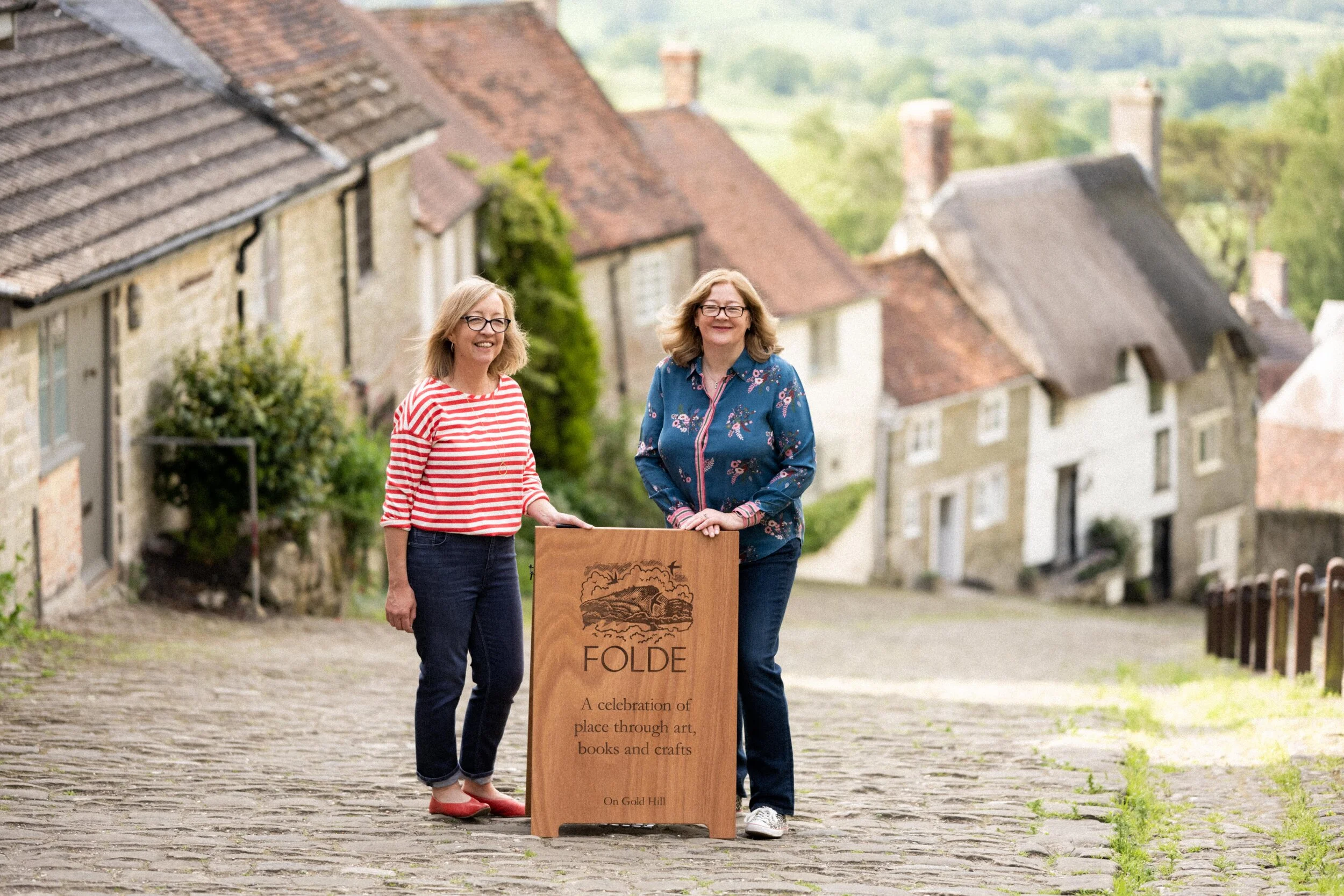
All Photos: Matt Austin
Tell us about your three themes: Land. Sea. Self.
Quite simply, these are the things that make us tick, from swimming in salty waters to striding across the Dorset hills. The products we sell are broadly grouped around the ‘land’ and ‘sea’ themes, while ‘self’ addresses our central aim of helping more people to discover how a greater connection with nature can contribute significantly to their own wellbeing.
What has been your own experience of the therapeutic value of nature?
It’s fair to say that we had both experienced a degree of burnout in our previous careers, which had taken its toll on our mental and physical health. For me (Karen), it took some years to discover that there was a sanctuary to be found in getting outside; in my twenties and early thirties, I used to think the answers I sought were waiting in a shopping mall. My partner has always been an outdoorsy sort of person and when I was at my lowest ebb, he knew that it would help me to get outside, even on those days when all I wanted was to stay under the duvet. His persistence paid off and gradually, over a period of years, I grew to truly love walking, on the Dorset coast in particular, and I became better at managing my stress levels. I found that being outside gave me the tools I needed to recalibrate as well as a deeper connection with nature that helped me to make sense of my place in the world. Regular walks are now essential to my wellbeing, supplemented by year-round sea-swimming, and I border on the evangelical about the therapeutic benefits of both.
As for Amber, she had spent her childhood growing up in various small villages in West Dorset, and found that the sense of community, nature and belonging had become something of a beacon to her through her adult years. Travel was a big part of her previous working life and, while she enjoyed the experiences, she found she always yearned for the green hills and vales of Dorset. It keeps her grounded and connected to the earth, and it’s home to the footpaths she treads when she needs time to think. It also helps her to appreciate the seasons, and the changes that come with them.

During the pandemic many of us turned to nature for our mental wellbeing? Were you surprised by that? Do you think this is sustainable as something in people’s lives now?
No, we weren’t entirely surprised. Over the past decade or two, we had both found great comfort in noticing the rhythms of nature. No matter what else is going on, the sun always rises and sets, the seasons come and go; these rhythms are a constant among the more chaotic aspects of life. But in order to notice these things, you have to allow yourself to experience nature, and this can sometimes push people out of their comfort zones.
In recent generations, so many of us have come to live and work in a context that is entirely separate from nature. It doesn’t help that until relatively recently, the outdoor recreation industry was heavily geared towards white men dressed in Gore-Tex and if you didn’t look like that, it was easy to think, ‘well, that’s not for me.’ However, when our options for entertainment, exercise and socialising were suddenly and so dramatically curtailed by lockdown, it was not surprising that the simple act of taking a daily walk outside brought nature into closer focus for so many of us and, in so doing, allowed us to discover our fundamental human need to connect with it.
Whether it is sustainable is a good question. We like to think it is, and if the burgeoning number of nature-writing titles being published is anything to go by, we don’t think people’s interest in the subject shows any signs of waning, whether that’s wild swimming or planting a bee-friendly garden. That said, we are acutely aware that it is largely dependent on people’s access to green space, and the pandemic highlighted that there are significant societal inequalities in this regard.
On returning to the UK after 14 years away, we’ve been struck by how outdoorsy it’s become here, from wild swimming and camping to coastal hikes and paddleboarding. What do you think has accounted for this shift and where do you see it going next?
There’s definitely a much greater awareness in the UK of the physical and mental health benefits of outdoor pursuits and, to a certain extent, social media has glamorised the appeal of these activities: we can’t be the only ones to have looked at a photo of a dreamy coastal clifftop at sunset and thought ‘I want to be there’. Instagram in particular has effectively become a wanderlust travel brochure in terms of its ability to present aspirational images of beautiful outdoor experiences, and it is often said that Millennials prefer to collect experiences rather than tangible goods. It’s more than that, though. We think it also has much to do with the speed and relentless distractions of the digital age; spending time actively engaged with the outdoors is a brilliant antidote to that.
In terms of where it’s going, we hope that there will be a greater focus on diversity and inclusivity, as well as sustainability, although the sector still has some way to go in these areas.

What’s been your experience of starting a space in your community? What have been your joys and challenges? Anything unexpected?
It has been almost entirely a complete and utter joy. Shaftesbury is a close-knit town of largely independent businesses, which are greatly valued by the people who live here, particularly since the pandemic when they pivoted overnight to provide for the community at a time of great uncertainty. Support for local businesses has never been greater, and recognising this helped us to take the leap of faith and open FOLDE. We had tested the proposition online first and, when a space became available right here on the iconic Gold Hill, we took it as a sign that we should go for it. True to Shaftesbury form, we were met with a very warm reception by our community and, although we are in a good spot for tourists, it is our local customers who keep us going.
There are so many joys to doing what we do, from building relationships with the many talented artists and makers right here on our doorstep to having a presence at the heart of the town we love. The biggest joy, undoubtedly, has been growing our FOLDE community, both online and in-person, i.e. the people who share our love for this beautiful part of the world and want to swap stories about the places they’ve been and the outdoor experiences they’ve had. We’re aware that we don’t look like your typical outdoor action women and we think that this might sometimes help our customers to try something they haven’t done before, such as cold water swimming; very much a case of ‘if they can do it, so can I.’
As far as the challenges are concerned, sometimes it can be hard to find certain products that fit with our ethos without compromising on our sustainability standards. And given that it’s just the two of us, we’ve had to learn quickly about many different aspects of running a clicks-and-mortar business, from till systems to packaging to payroll. Perhaps the biggest challenge is knowing when to leave it alone; we’re having a lot of fun and we’re brimming with ideas about where we can take FOLDE but we have to remind ourselves that we don’t have to do everything in year one. Luckily, our other halves are good at reining us in.

We have a series called Culture Therapy, where we list the podcasts, books, TV shows, films, etc. that people can seek out in our different pathways. Which books probably (though if you have other media that relate let us know) would you recommend for people wanting to bring more nature into their lives?
Almost every book we sell helps people to find a closer connection with nature in one way or another but the ones we would specifically recommend are:
The Salt Path and its follow-up The Wild Silence by Raynor Winn. These are obviously very well-known titles but we recommend them because they speak volumes for the power of nature to heal and restore, and they remain among our bestselling books.
The Forager’s Calendar by John Wright. There’s no shortage of interest in foraging among our customers but John Wright’s often humorous book is by far our most popular title on the subject. Foraging is a great way to reconnect with the natural world: it makes you slow down, notice and engage with everything that’s going on in the hedgerows, all year round.
Grounded: How Connection with Nature Can Improve Our Mental and Physical Wellbeing by Ruth Allen. We are both avid followers of outdoor psychotherapist Ruth Allen’s Instagram account (@whitepeak_ruth) and were delighted when she published her first book. She is wise beyond measure, and the book is a visually appealing, soul-nourishing mix of practical exercises and mindful activities interspersed with personal stories and thought-provoking questions. You will often find yourself nodding in agreement.
In music, we are huge fans of British folk singer and conservationist Sam Lee. His most recent album, Old Wow, is a spellbinding love letter to nature but one that contains stark warnings about all that we stand to lose. Earlier this year, we took part in Sam’s ‘Singing With Nightingales’, an unforgettable, immersive and profoundly moving experience that highlights through music the threat to the nightingale and other endangered species.
We would also recommend Lost in the Cedar Wood, a collaborative, lockdown project between folk singer Johnny Flynn and nature writer Robert Macfarlane that brilliantly melds myth, poetry, landscape and music. The opening track, Ten Degrees of Strange, is a rambunctious song about trying to outrun anxiety by seeking joy and strength in landscape and movement.

What are your favorite places to reconnect with nature?
We both love to explore Dorset’s Jurassic Coast, which offers an embarrassment of riches for anyone who likes walking or swimming against some breathtaking backdrops. There’s something about walking through fields to a clifftop or beach that can make you feel as if you’re the first person to discover it. While the honeypot attractions such as Durdle Door and Old Harry Rocks can be unbearably busy in high season, there are still plenty of other lesser known places, particularly if you’re prepared to walk a little, or go earlier or later in the day.
For our daily fix, we are fortunate that our commute to the shop takes us along a wooded path known as Pine Walk, which is lined with soaring beech and pine trees, punctuated with views across to Melbury Beacon. This is the hill that features in the wood engraving that we commissioned from Dorset printmaker Robin Mackenzie to use as our logo.
How can people engage with FOLDE from wherever they are?
Our website offers an edited selection of our products for purchase online as well as journal articles about our favourite artists, books, walks and outdoor experiences. On Instagram, we share the daily goings-on in the shop as well as many of our outdoor adventures when we’re not behind the counter.
Anything we’ve missed? Anything that you’re excited to share?
FOLDE will be appearing as a pop-up at Planted Cities at King’s Cross from 23 to 26 September, which is an event that aims to bring people and spaces closer to nature. We’re also working on a series of readings and workshops with some of our authors and makers, such as basket-making with local willow weaver Yanina Stockings. In spring 2022, we plan to launch FOLDE Out, a series of walking retreats for people who are looking to explore Dorset whilst widening their outdoor experiences as part of a small and supportive group.

Ready to bring more nature into your life, wherever you are?


The Joy Cafe | A Conversation with Becky Playfair on community
We talk to the Founder of the Joy Cafe Becky Playfair on building a life-giving community cafe in one of the UK’s most deprived areas.
On an unusually hot summer morning in the little town of Boscombe, in England, I was introduced to a friend’s local cafe with a difference. As I stepped into the Joy Cafe, I lit up. In this converted shipping container, there was a hum of friendly chatter amongst families with young children and seniors sat together. The cheerful decor of sunshine yellow and dove gray gave the cafe a warm home-from-home feel. The smell of fresh coffee and sausage sandwiches wafted under my nose as I took in the delightful display of homemade brownies, cookies and cakes. As I ordered, I spotted a Suspended Drinks noticeboard whereby someone can buy an extra drink that gets ‘suspended’ on the board until someone who needs a free tea or coffee claims it. It’s a beautiful way for the locals to give or receive in their local community.
But the Joy Cafe offers so much more than free hot drinks and an insanely affordable menu of homemade food. It’s the little thoughtful details that reveal the heart and soul of this space, in initiatives that support the local neighborhood in heart-centered ways. The Joy Cafe provides positivity and connection to others through a variety of organized events and activities that bring different members of the community together in fun ways, that support mental wellness and ease loneliness.
Some of these include: Safe & Sound Ladies Craft where women can spend a couple of peaceful hours relaxing over a warm drink while crafting together. Awaken Conversations where guest speakers come and speak about personal development and life skills. Chess Club happens every week and there are regular community dinners for all ages that feature pop-ups from local cooks and food businesses. Local families who use the playground outside are supported with free breakfast mornings and art workshops during school holidays. Dotted around the Joy Cafe you can also find unstructured play opportunities for all ages with plenty of art supplies, books and board games on offer, perfect for rainy days.
The Joy Cafe was founded four years ago by Becky Playfair who had a vision to turn a rundown youth center in the park of Churchill Gardens, Boscombe (one of the most deprived areas in England), into a life-giving not-for-profit community cafe. From its first iteration as a pop-up bake sale with boxes of hula hoops, frisbees and crafting materials, the project progressed to a lease and planning permission to convert the old youth hut into a café. Key to making this happen was a JustGiving campaign to raise money in which 11 members of the Coastline Missional Community were sponsored to complete a 3 Peak Challenge, climbing the highest peaks in Scotland, England and Wales in just 24 hours!
I talked to Becky about the hard work and determination (with the huge support of the Coastline Vineyard Church and young volunteers) that helped make her dream of a very special community-centered cafe into a reality:


Sophie: How did the concept for the Joy Cafe first begin and why did you believe that it was needed?
Becky: I first had a dream to open a café when I was 18 years old. I was jogging (not very fast!) around my neighborhood in Birmingham realizing that I had little ambition but desperately wanted some! I wanted (and prayed for!) something to aim for in life. I wanted to dream big, to achieve, to make a difference, to have life goals. So, as I ran, I pondered, and prayed and pictured a café.
In the same moment I just knew that it would be more than your average British high street café. It might be a place where people had not just great food and drink but also got to encounter something more. A little bit of heaven on earth. Where people would feel safe, genuinely known, loved, appreciated and accepted. Where they would be spoken to, listened to, given hope, encouragement, a compliment, a smile, conversation or creative activity.
After studying Psychology at Exeter University, I moved to Bournemouth, then a year later to Boscombe, the most deprived area of Bournemouth. In the bottom 3% of deprived areas in the whole of the UK, the area was impacted by huge issues with drugs and alcohol, crime, poor housing, and health, etc. I moved into a house known as NO10 (the house number of where we were); we all worked part-time and gave the rest of the week to making a difference in our neighborhood. We opened our doors at NO10 and had all sorts for dinner and mentored in the local schools. Living in a truly beautiful but broken area, made me realize the need for a third space. Most of my neighbors lived in bedsits, they stood outside and smoked with only the rubbish bins to lean on. They were friendly but lonely. The communal space was the pavement. … they desperately needed a café and one that they could afford to buy coffee from!
Sophie: How did it progress from a pop-up to a proper cafe?
Becky: I started the pop-up Joy Café a year after moving to Boscombe. The two trestle tables, simple refreshments and kids’ activities were all stored in my hallway and taken in and out every day. We had an incredible first summer… local families loved us and thankfully so did the Council. They could see the transformative potential and gave us a chance. When the hut in the small park in the heart of the neighborhood became vacant, we were given the lease and allowed to renovate, making it fit-for-purpose. We’re been open as a “proper” café since February 2018.
Sophie: What were some of the challenges you found opening the Joy Cafe?
Becky: Getting the lease then planning permission for the renovations took ages and was beyond me! I would never have managed it without the support of a very wise surveyor from my church. Without his endless negotiations and skills, it wouldn’t have happened. But the toughest thing was definitely project managing the renovations. It took four months and though I had the most amazing team, largely made up of hugely generous and skilled volunteers who gave hundreds of hours to the project, I cried most days! (I was also wedding planning and later found out I had glandular fever… no wonder I was a mess!). I was consistently out of my comfort zone but somehow made it through! I’m now in my element being a barista, chatting with people, and building community.
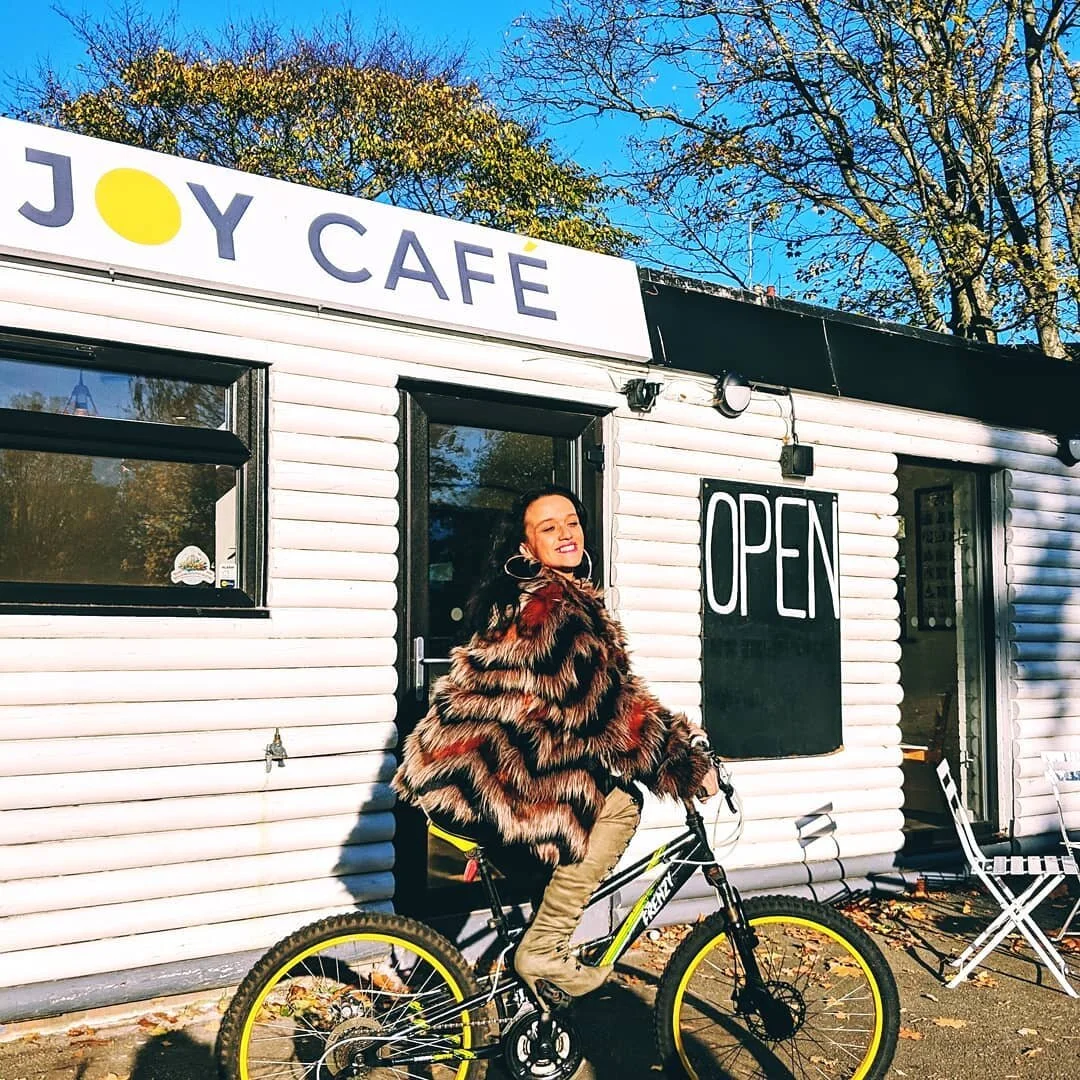

Sophie: What is the mission of the Joy Cafe and how did you want it to benefit the community?
Becky: Joy Café is a lush little café with a big heart for building life-giving community (our strapline). We want to create a safe space, a home from home. We want to be the friendliest café. We like to make people’s day. I love blessing people with the occasional free coffee or cake or go out of my way to make something off-menu that they’d love and really appreciate. We celebrate our customer’s birthdays with cards, banners and gifts. We also partner with local people, groups and organizations. We do Suspended Drinks. We love Young Volunteers and have the best and youngest baristas in Bournemouth. We want to try to listen to what our community and neighborhood needs or would like and do our best to make it happen. We have free bike repairs, chess club, creative events, eco-workshops, games groups... all sorts!
Sophie: How do you want people to feel spending time at the Joy Cafe?
Becky: Known, valued, accepted, listened to, themselves, joy, at peace, loved, part of a community.
Sophie: What are the ways that the cafe has impacted the local community, you as an owner and your staff?
Becky: So many people talk about the impact of the Joy Cafe… from local families, individuals, councilors, tradesmen, the police, people who used to live around the area and are now back… People from every area of society have commented on the dramatic and positive impact the Joy Cafe has had on the area and park. It's safer, busier, lighter, has a better atmosphere… because of the Joy Cafe. Yay!
Sophie: What are your hopes and dreams for the future of the Joy Cafe. And will there be more?
Becky: I love where we’re at and want us to continue growing. I don’t know whether there will be more Joy Cafes but if the opportunity arises then I probably wouldn’t say no!
To find out more about Joy Cafe, head to their Instagram or Facebook.

