
You Don’t Have to Change Who You Are to Move Forward
If you’re feeling lost, overwhelmed or unsure, today we’re exploring self-trust, ADHD, and why you don’t need to change who you are to move forward.
Sometimes the feeling of being lost doesn’t announce itself loudly. It slips in quietly, disguised as self-doubt or restlessness. You find yourself wondering why the things that seem to work for everyone else don’t quite stick for you. Why your energy rises and falls. Why you can be so capable one week and so uncertain the next. Why the common advice about confidence or consistency feels faintly misaligned, as though it were written for someone else.
Many of the people who arrive here are not looking to reinvent themselves. They are looking for steadier ground. They are tired of trying to fix what might not be broken.
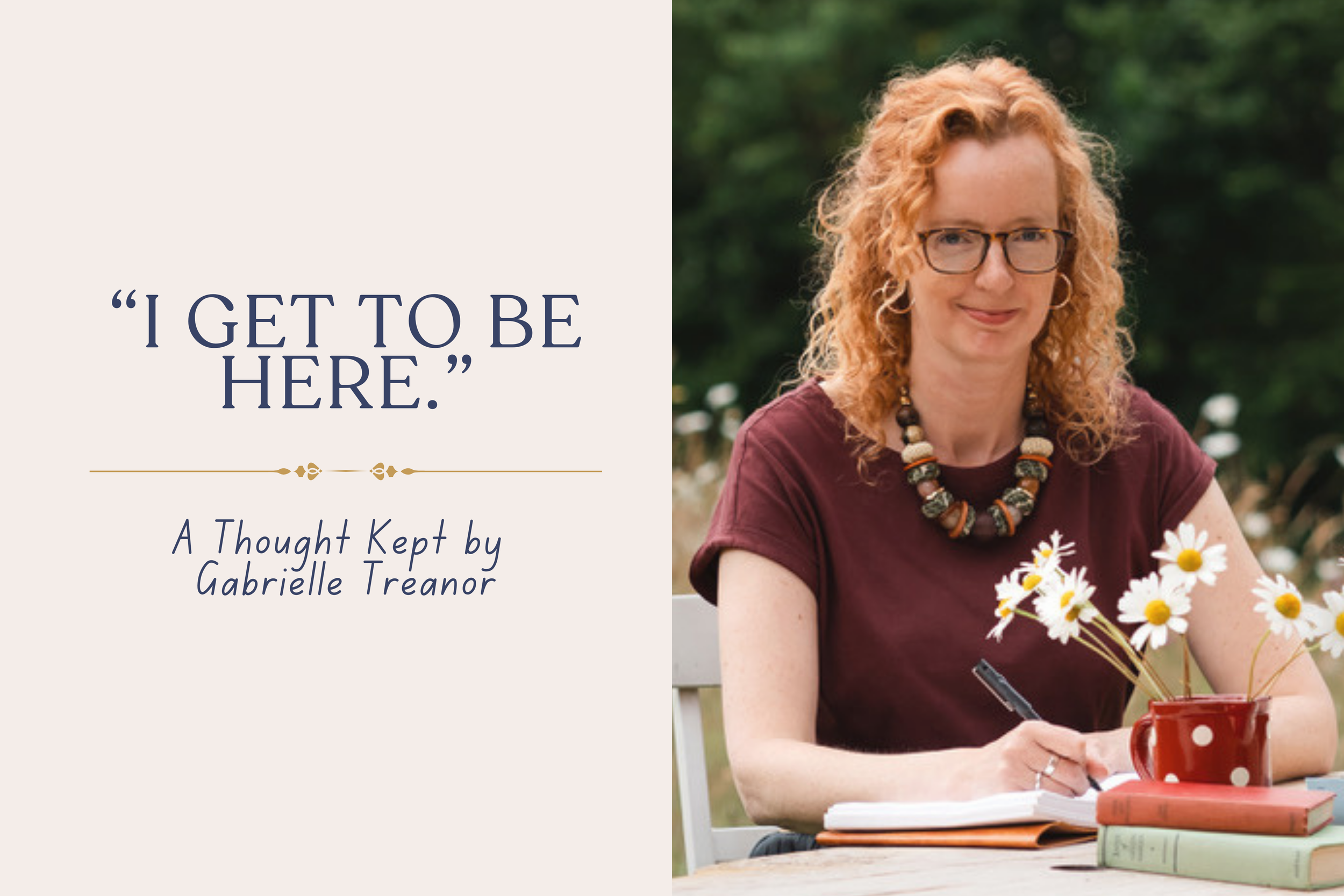
In a recent episode of A Thought I Kept, I spoke to writer and ADHD coach Gabrielle Treanor about a thought that had quietly reshaped her life: “I get to be here.”
When she said it, it wasn’t defiant. It wasn’t triumphant. It was calm. Considered. Almost surprised.
Gabrielle was diagnosed with ADHD in her late forties. For years she had assumed that her fluctuating motivation, her sensitivity, her tendency to procrastinate meant she simply wasn’t disciplined enough. She had tried to follow the prescribed routes to wellbeing — the routines, the systems, the ways of doing things “properly.” When she couldn’t sustain them, she thought the fault lay with her.
What changed was not her personality, but her understanding. Her brain worked differently. The expectations she had internalised were not neutral; they were shaped by a culture that prizes steadiness, productivity and linear progress. Realising this did not give her a new identity so much as a new understanding. A new willingness to stop apologising for the way she was wired.
I get to be here.
It is such a simple sentence, but it carries weight. It suggests that your presence is not conditional on becoming more efficient, more certain, more contained. It does not demand that you take centre stage; it simply reminds you that you belong in the room.
Many of us have been taught to make ourselves smaller in order to move through the world more smoothly. To temper our sensitivity. To soften our opinions. To be grateful for what we have and not ask for more. Even the language of wellbeing can subtly reinforce this shrinking — as though if we could only master the right practice, wake earlier, focus harder, meditate longer, we would finally become the sort of person who functions without friction.
But what if friction is not evidence of failure? What if it is simply information?
Gabrielle’s approach to wellbeing is rooted in experimentation rather than compliance. Instead of asking, “Why can’t I stick to this?” she asks, “What might work for me right now?” The difference is small but profound. It shifts the emphasis from self-criticism to curiosity. It acknowledges that we are not static creatures. Our energy shifts. Our capacity changes. The practices that nourish us in one season may not suit us in another.
For those of us who feel overwhelmed by self-improvement culture, this can be a relief. It allows us to step out of the exhausting cycle of starting and stopping, trying and failing, promising and abandoning. It invites us to pay attention to who we actually are, rather than who we think we ought to be.
If you are feeling unsure of your direction, it may not be because you lack ambition or courage. It may be because you have been trying to travel using someone else’s map.
To say “I get to be here” is to begin from your own coordinates. It does not solve everything. It does not remove uncertainty. But it offers a place to stand. From there, you can notice what feels steady and what does not. You can experiment gently. You can allow for inconsistency without interpreting it as collapse.
This is not an argument against change. Growth still happens. We still learn, adjust, stretch. But growth that begins from self-rejection rarely feels sustainable. Growth that begins from recognition — from a quiet acknowledgement of your temperament, your history, your rhythms — tends to be kinder.
If you are questioning whether the usual wellbeing advice works for you, that questioning may be wisdom rather than resistance. If you are tired of feeling behind, it may be because you have been measuring yourself against a timeline that was never yours.
You get to be here. As you are. With the brain you have, the experiences you carry, the particular mix of steadiness and fluctuation that makes you you.
If you’d like to hear the full conversation with Gabrielle, you can listen to the episode of A Thought I Kept where we explore this idea in more depth — including what it means to discover ADHD in midlife and how experimentation can replace striving.
And if you’re feeling especially untethered, our coaching sessions are here to help you explore these questions at your own pace.
There is no rush to become someone else. Sometimes the first step forward is allowing yourself to be exactly who you are.
Burnout and Neurodiversity: When the World Wasn’t Made for You
How neurodiversity helps explain burnout, overwhelm, and why common wellbeing advice doesn’t work for everyone.
There’s a particular sense of being absolutely and utterly lost that doesn’t come from not trying hard enough.
It comes from doing all the things you’re meant to do — reading the books, following the advice, showing up, pushing through — and still feeling as though something isn’t quite lining up. As if you’re working hard to fit into a life that doesn’t seem to hold you in the way you hoped it would.
For many people, this shows up as overwhelming exhaustion. Or confusion. Or a sense of being slightly out of step with the world around you. You might tell yourself you need more confidence, more clarity, more discipline. Or you might wonder why change seems to come more easily to other people.
This is often the moment people arrive here — not because they want to reinvent themselves, but because they’re looking for something steadier to stand on and anchor themselves in.
One of the things we keep returning to through the podcast A Thought I Kept is the idea that sometimes it’s not a new plan we need, but a new way of seeing. A thought that doesn’t tell us what to do, but helps us understand what’s already happening.
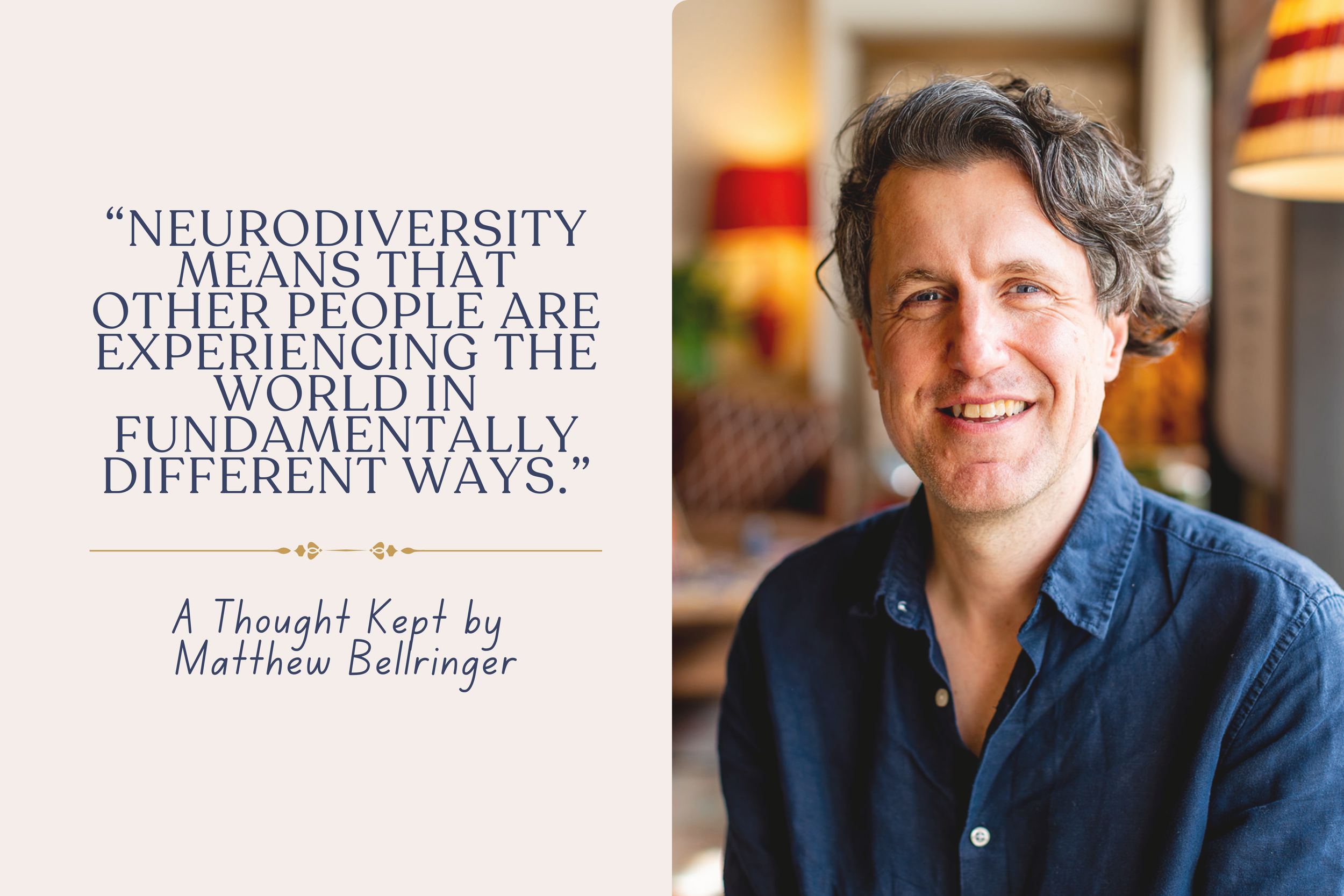
In a recent conversation, Matthew Bellringer shared one such idea. Their “thought kept” was:
“ neurodiversity — and more specifically, the understanding that people experience the world in fundamentally different ways.”
Not just think differently. Not just behave differently. But experience differently: how information lands, how emotions move through the body, how energy rises and falls, how environments feel, how much effort it takes just to get through the day.
Matthew spoke about how this understanding helped them make sense of years of feeling overwhelmed, burnt out, or misunderstood — not as personal failure, but as a mismatch between their nervous system and the systems they were trying to survive within. Burnout, in this light, wasn’t a sign of weakness or poor resilience. It was a signal. A body doing its best under sustained conditions that didn’t meet its needs.
This matters because burnout is often framed as something to “recover from” so we can return to how things were before. But if you’ve reached burnout — whether suddenly or slowly — it’s often because how things were before was never truly sustainable for you in the first place.
For people who are neurodivergent — diagnosed or not — this can be especially true. Many learn early on how to mask, adapt, and perform in ways that keep them functioning, even when it costs them deeply. They may appear capable, creative, competent, even successful — while quietly running on empty.
And for those who love, work with, or manage neurodivergent people, this idea opens something too. It invites a pause before judgement. A moment of curiosity instead of assumption. A chance to ask not “why isn’t this working?” but “what might be happening here that I can’t see?”
What’s important is that this idea doesn’t demand that you identify in any particular way. You don’t need a label for it to be useful. You don’t need to decide whether it “applies” to you. You can simply notice what happens when you hold the possibility that your experience of the world is valid, even if it’s not the dominant one.
Used as a lens, this thought can soften old stories. It can help explain why certain wellbeing advice has never quite landed. Why rest that looks like stillness feels agitating rather than restoring. Why structure can feel comforting for one person and constricting for another. Why what helps your friend recover leaves you feeling worse.
It can also return you to yourself.
Instead of asking how to fix what feels wrong, you might start asking gentler questions. What environments help me feel more like myself? Where does my energy actually go? What does my nervous system need to feel safe enough to rest, curious enough to engage?
This isn’t about optimisation or self-improvement. It’s about orientation. About finding a framework that helps you trust your own signals again, rather than overriding them in the hope of becoming someone else.
At If Lost Start Here, we believe that change doesn’t begin with pressure. It begins with understanding. With recognising that you’re not behind, broken, or failing — you’re responding, with more awareness, to the life you’re living.
Sometimes, one idea can hold that understanding for you when everything else feels wobbly. A thought you can return to when things don’t make sense. A lens that helps you see yourself, and others, with a little more compassion.
If this idea resonates, listen to the full conversation with Matthew Bellringer on A Thought I Kept.
And if you’re finding yourself at a point where you want support, explore the coaching and resources we offer here.