

Shop Small Special | Lifestory
Meander slowly online or off this Holiday Season with Scandi inspired concept store Lifestory.
What is it: A slow Scandi-oriented lifestyle store in Edinburgh.
What you need to know: Lifestory was founded in 2014 by Susan Doherty (who also started the city’s Hula Juice Bars) as Edinburgh’s first concept store — bringing together coffee and design — after being inspired by similar stores on her travels in places like Melbourne and Copenhagen. An airy, warm space, Lifestory offers a thoughtful edit of the Scandinavian-based (like House Doctor, ferm LIVING and Hay) and the Scandinavian-inspired (like Woolf & Moon and Kinshipped) with some Japanese simplicity added in there. During "normal times”, there’s coffee and cake for browsing the latest issue of Cereal.
Why we’ve included it here: Each independent store makes a circle of support: within the local community in which it’s located (with Lifestory located amongst the indies of Broughton Street) and the wider community of makers that it gives a platform to (in this case candle makers, jewelry designers, potters, graphic designers, furniture crafters). We often overlook the human in how we shop, the people behind stores, behind products and, behind our neighborhoods, so its good to be reminded of this by Susan: “Ultimately, the unique quality of Lifestory, as with all shops of this kind, lies with the owner’s relationship with the products, with the space itself and with their customers". A living wage employer, Lifestory also supports the people who work there.
In their own words: “Independently-owned and constantly evolving, Lifestory is a destination for lovers of Scandinavian design and lifestyle, considered products that share the traits of beauty and function.”
Our Christmas gift edit: We’re coveting many of the wall-based pieces such as Soo Burnell’s prints and the We Haven’t Located Us Yet print.
Something to do: Browse your neighborhood, even if virtually. Many independents have had to scramble to put their wares online in the last few months, extending their business ethos of bricks and mortar into digital platforms. That’s a huge transition and a very different way of working for many people who started shopfronts for the community aspect. This season if you’re not allowed, or able, to go out, take a virtual shopping journey through a local town, and shop like you would if you were able to meander with carols in the background and snow falling (yes, we’re romanticizing as we huddle inside). For inspiration, read this piece about how our neighborhood stores are coming together online.
To find out more: Website / Instagram / Twitter

Shop Small Special | Alice in Scandiland
We’re starting our Shop Small Holiday Special with Alice’s adventures in Scandiland.
When indie doors close at the most important time of the year (many shops make the bulk of their earnings in the run-up to the Holidays), our makers, shop owners, small-batch producers, and our communities struggle. In the weeks before Christmas, we’re focusing on independent stores that are anchor points in their neighborhoods, who support small themselves, and who make our worlds just that little bit better by existing.
In a moment when we can easily slip into the mass-produced at the expense of the environment, our makers, and ourselves — what do 80p black dresses really do for us and all those amazon deliveries we’re now relying on — we feel that shops that curate the handmade, that add to our high streets, and that give us places to go matter more than ever. If you can (we understand the competing pressures financially that many of us have this year), give independent stores in your community the gift of your support.
What is it: Scandinavian design comes to Cornwall courtesy of award-winning style blogger Alice Collyer.
Why you’ll love it: As with many independent stores, Alice in Scandiland started as a labor of love two years ago, when Alice decided to transform the inspiration for her blog and the vintage finds that she sold in her backyard She-Shed, into a bricks and mortar shop. Literally built out by Alice and her dad, Alice in Scandiland is very much an extension of her own home and life philosophy.
Why we think it matters: Hygge. Lagom. Fitka. Scandanavian concepts in living that have caught our attention, and which have themselves spun mini industries. But take away the quickly produced books and listicles that cash in on cool new words, pare all the trend styling back and they represent enduring healthy approaches to life. Alice got there before most of us, embracing the cult around all things Scandinavian (yes, we know they are better at everything than us now) when she started to makeover her own home by taking the things away she didn’t need and immediately felt the benefits of living with less.
Favoring a natural color palette and materials, integrating form with function, and bringing in light and nature where possible, Scandinavian design is all about creating a sense of stillness that is soothing in its calm. Its warm minimalism helps our environment too – items are made to last and owning less is foundational. If we’re fortunate to be able to work from home (and still not resent it), how we create our home environments will make even more of a difference to how we function. Alice may have been having adventures in Scandiland for a while, but they are adventures we can now share in worlds of our own making.
In conversation with 91 Magazine Alice says: “I love to champion independent makers, they are keeping amazing skills and crafts alive, putting their heart and soul into their creations. I firmly believe that it is these carefully considered pieces that add the meaningful finishing touches to a home and that’s not something you can buy for £3 in Primark. I am a strong advocate of buying less, but buying better.
It really doesn’t have to mean spending much more either, if you average it out over a year. It’s important that we all become more conscious consumers and support our local creatives. Add this with vintage, thrifted finds and it’s a total winner.”
In our gift guide: we recommend Sofia Lind’s white flower print, Laura Lane’s Cornish Textured Mug and for those thank you cards, Gemma Koomen’s note set.
How to bring this into your life: Want to recreate the pared-down look at home – think woven baskets, cozy textures, and handmade ceramics. Alice’s blog gives tons of tips. During usual times, Alice also acts as a small business mentor and hosts workshops including one on building as successful an Instagram platform as her own.

The Compassionate Frome Project a.k.a. Health Connections Mendip
How a small town in England is teaching us the value of community.
“Across the country, and across the world, people of good heart and goodwill are quietly working on imaginative projects to improve the quality of their own lives, the lives of those around them, and the world in which they live. Many such initiatives happen in relatively obscure places through the actions of ordinary people outside the usual centres of power who are motivated by that active concern for others which is the hallmark of compassion. Beyond the immediate benefits accruing from their work, those small committed groups may, consciously or unconsciously, be preparing the ground for radical change in the way society as a whole conducts its affairs. They are, in a real sense, encouraging us all to be more fully human.”
What is it: A different way of responding to the modern life ailments that present themselves at the doctor’s office, this experiment in connection as a remedy in the rural town of Frome has lessons for us all and has now been captured in the book The Compassionate Project: A Case for Hope & Humankindness from the Town that Beat Loneliness by Dr. Julian Abel and Lindsay Clarke.
What you need to know: People show up at their GP for reasons that go beyond the realm of medicine —social isolation amongst the elderly, loss of motivation due to developing an illness, fear stemming from changes in environment or lifestyle, a loss of self-esteem following a career or relationship shift — but they are often looking for an antidote that lies more in the realm of compassion.
Led by Dr. Helen Kingston, a GP in Frome’s Medical Practice, and Jenny Hartnoll, a local community development worker, the Compassionate Frome Project makes connections between people who need something to help their situation and the existing community resources that might respond to that need. Where gaps in initiatives exist, Health Connections Mendip develops new ones with the local community. The project has also established supportive infrastructure (such as arranging lifts and even accompanying clients shy of going alone) where there were issues of access.
Between 2013 and 2017, the Compassionate Frome Project led to a reduction in the rate of ER emergencies across the town by 15% at a moment when the county of Somerset in which Frome is located registered an increase of 30%.
Why you’ll love it: Those ten minutes you get with your doctor start to look very different within this model. Rather than prescribing a cure for loneliness, sadness, anxiety, or loss in the form of pills, another avenue is opened up that leads into the community, into interest groups, into motivations and connections of a different sort.
Why we think it's different: What we put into our lives — just as with food — has impacts on how we are able to live those lives. We now know that the quality of our social connections affects our health. Chronic loneliness increases by 20% the risk of early death. Good social relationships have been found to have more positive impacts on hypertension than medication, reduce inflammation, and minimize the risk of death more effectively than “losing weight, improving diet, and stopping smoking or drinking.” As authors Abel & Cole note in their book: “Though we identify ourselves as individuals, we actually live in the plural. We are interdependent beings cared for by the people around us who form those networks of relationship that provide us with support, companionship, and the basic necessities of life.”
The Compassionate Project has become a model for how we can improve our own situations by reaching out to the community around us and how we can attempt to resolve some of the modern conditions that are on the rise such as our sense of isolation, a growing lack of purpose, and a pervasive unease at our uncertain world, together. This idea is gaining ground: A Compassionate City Charter is being developed by the Welsh government and has been adopted by the towns of Plymouth and Inverclyde in the UK.
Something to do inspired by this project: Care for relationships in your life. Often we skim over the people in our lives, and invest our time elsewhere, like our careers or Netflix. Spend 15 minutes each day talking to someone you care about (from one of our favorite thinkers Dr. Vivek Murthy); write a letter, text, or WhatsApp message to someone you may have neglected; say hello to someone on your walk; put the phone away in the queue when you collect take-out or coffee, be aware of those around you. Even causal interactions impact how we feel and can lighten our days.

Magazine Brighton
Lost at home? Bring the world in with Magazine Brighton.
What is it: A renowned independent magazine store founded by long-term (since the age of 6) print-lover Martin Skelton.
Why you’ll love it: It’s a store with just thoughtfully selected indie magazine titles. Hundreds of them. Stacked on the floors, arranged on tables, front-facing on wall-shelves. Since it opened in 2014, the choice of titles has grown three-fold, which reflects both the stores growing audience and the growing indie publishing sector.
What you need to know: After years of traveling internationally and finding this very kind of store abroad, Skelton bet it all by bringing the concept to his adopted home town of Brighton. Keep in mind the context: people were more used to WH Smith for their magazines and London as the kind of place to position such an idea.
What they offer if you can’t get to Brighton (which is all of us at the moment): The online site now aims to replicate the density of the store, with lessons learned from the first and now second lockdowns on how to make things easily browsable (maybe too easily as we deposited way too many magazines in our cart while writing this). Magazine Brighton also posts the latest arrivals to their Instagram if you need inspiration and some new discoveries. Like Oh Mag and Openhouse.
Why we think it matters: Magazines were almost (almost) made for this moment. The push against the digital, the celebration of creativity in print, and the small-batch focus, all speak to our collective longing for less digital interfacing, less homogenized products, and less corporate gain. But for us, the reason we think magazines matter as much as they do, particularly now, is that they bring other voices into our homes and different stories into our lives. They are all about engagement.
When our worlds shrink to just four walls and that same world insists that we pay attention to its diversity, magazines hold space for lives lived differently, experiences outside of our comfort zones, and ideas previously unconsidered. This is particularly crucial when you realize that there is no algorithm in this bookstore, or within the pages themselves, shifting what you get to see. There is no dominant narrative. There is no ‘them’ and ‘us’ in curating these titles. Collectively this amalgamation of stories, images, and design, lends something of the normal again in how we’re able to converse and interact and be with one another.
Somewhere like Magazine Brighton is putting you back in control again of the content you get to consume and giving you an entry to connect with the world no matter what state it's in.
In their own words: “Al, my son-in-law, described our shop as ‘Like vinyl, but print’ and it’s a great phrase. Without trying to sound like one of those old intelligence tests, indy magazines are to conventional magazines as vinyl is to digital, artisan bread is to Wonderloaf, microbreweries are to the big brewers, farm-made cheese is to factory-made cheese, and so on. There’s nothing wrong with any of those things in their place but I think there’s enough people out there who want a balance as well.’ – Skelton talking to Mag Culture
Something to read: For a guide that’s all about getting to ok, we’d recommend these wellbeing focused magazines: Rising Issue – 01 // Mental Health Matters; What Do People Do? – Issue 2; Anxiety Empire – Issue 1, Positive Wellbeing — A Zine for Mums, Seed, and perennial favorite Flow.

FForest
As many of us have realized how vital nature is to how we function in our worlds, places like Fforest have been holding that idea for a while for us.
What is it: Oh that’s a tough one. We hesitate to put it in any of the buckets — glamping, nature retreat, lifestyle brand, eco camp, staycation — so we’ll go with this. Fforest is what happens when someone dreams something and makes it happen for all of us. Sorry, that’s not so helpful. Let’s jump to here:
What you need to know: Conceived by two London creatives, Sian Tucker and James Lynch, graduates of the Royal College and St Martins who had found a way to live the good life in Shoreditch and New Zealand, before taking some of that to Fforest. On 500 acres in Wales, they have created a magical place to pursue the simple life with their family of four boys and many, many others. Fforest takes form across specially designed places to stay — geodesic domes, hill and garden shacs, crog lofts, a stone farmhouse, and Kata Cabins. Each is furnished in that way that hand made can feel luxurious: with craft furniture, Welsh woolen blankets, and small touches like wildflowers in enamel jugs on arrival. What is in essence a thoughtfully designed situation makes the best of life, of our natural world, and the things right there in front of us (no, not washing up, your mobile phone, or screaming in-box). Rather they have built a spirit of slow, of play, of untethering,
While there: Book a pizza night in town at their tented restaurant in Cardigan or supper in the woods at Hydref (where you order ahead to reduce food waste, also note the repurposed 24 classroom doors), seek out ‘the bwythn’, a tiny pub that serves their own IPA, or if a sauna is more your style, head to the wooden cedar barrel. Getting out into the natural surroundings is encouraged, in fact, part of the religion here: walk the coastal path, find the National Trust beach Penbryn, or take a canoe along Teifi gorge. And if it all sounds very grown-up, that’s not true. Kids are very much welcome to run free — there’s even a family summer camp of sorts in the form of Gather 2021.
How to bring this into your life: All the wisdom for living the Fforest lifestyle at home is captured in Sian’s book: ”Fforest: Being, Doing, and Making in Nature.” Create a tiny bit of the magic, with star walks, wild swims, and den building.
Why it caught our attention now: In a year that has taught us the pleasure in the simple, in each other, and in nature (amongst many, many other hard-won lessons), Fforest has been ahead of us, speaking this language for a while. All the components of a good life – defined here as one lived slowly, locally and with meaning are woven into the ethos of this place: food is served to be collectively enjoyed, ingredients are sourced from the farm gardens, architecture from repurposed materials encourage a feeling of sanctuary. Think low environmental footprint, high human value. It’s all designed to linger: over sunsets and views, firepits and new friendships, in wildflower meadows and outdoor terraces. Life is lived in the details; how we spend time with each other and how we exist in place is not the stuff of life’s periphery but its core.
Favorite thing said about this place: “How to describe Fforest? Labelling it a campsite would be like calling El Bulli a café. Instead, picture a hip hybrid of Welsh farm and Japanese forest retreat, where you can get up close and personal with nature.”
In their own words: “The dream would be about celebrating how good ‘simple’ could look, feel and taste. The dream was to combine the life-enhancing feeling of living outdoors with the simplest of things all wrapped up in the luxury of a magical setting, underpinned by all the design and creative skills that Sian & I had learned over the years.” – James (@fforestchief)
One piece of advice we take from Fforest: As the cold sets in here, we’re taking Fforest’s advice to ‘Do Winter Well: Embrace winter with candles, fires, beautifully crafted food, long cozy lie-ins & woodland walks.” Add a thick blanket and cute PJs and we’re preparing to face this winter, maybe more alone than we like, but ready to get together when the weather turns again.

Another Place
In a moment when time is stretching out, Anthony Gormley’s “Iron Men” captures the wonder of shifting lives.
What is it: An extraordinary public artwork by British sculpture Sir Antony Gormley permanently installed on Crosby Beach in the North of England. One hundred cast-iron figures stand facing the horizon across a 2-mile radius of the beach. These naked figures were cast from the artist’s own body, though are rendered in different states of serenity. Since 2005, over 650,000 people have born witness to these “Iron Men”, while Turner Contemporary in Margate now has its own companion work Another Time XXI.
Why you’ll love it: In a moment when we’re being forced to live in the details of our lives, to notice changing colors on daily walks or even the differentiations in the wallpaper of our homes, Another Place is similarly about the passage of time. The subtle and major shifts that happen with these figures within a very demarcated area, feels like those that happen within our own individual – and now collective – experiences.
Sometimes the tide obscures the figures, sometimes it reveals them. Sometimes the shifting sands submerge them, before allowing them to emerge again. Barnacles grow along their limbs, rust disrupts the surfaces. The tides, the weather, the industrial backdrop, alter what this sculpture can be at different times of the day, in different seasons, in different years. Though it looks static, these weighty presences (weighing just under a ton each), when subject to nature are not permanently the same.
What you need to know: Oddly peripatetic themselves, the sculptures were previously exhibited on coastlines in Germany, Norway, and Belgium — and never found their way to their next destination, New York. In their own movements, and now final place, Gormley brings up the complex emotions associated with emigration, the anxiety around movement, the hope that such movement might bring, and the resoluteness when we find our place.
Why we think it matters: This is art not confined to the white-walled gallery. At the mercy of nature, open to anyone, Gormley recognizes the possibility of his work to capture the imagination of everyone from art pilgrims to dog walkers, beach lovers to sandcastle-building kids. Awe and wonder are held in these forms, the spaces between them and the spaces between those on the beach with them. Of Another Place Gormley has said:
“I want to see whether it’s possible for art to be everyone’s, in the same way that the sky is and it still seems to me, that that is the most exciting challenge in art. Can you make the conditions that surround us all the time, into an arena for a kind of awareness that wouldn’t exist before, and I guess Another Place is a good example of this, where we have a beach, we have tide, we have changing conditions of weather and night and day and into that you insert these works, but adequately spaced, to allow for people to walk between them and in fact it’s the space between that is critical always in the work.”
Or in their own words — well writer Jeanette Winterson’s: “Standing modestly at their posts, the Gormley bodies are guides. They have something of ancient Earth about them — these metal men, as though they have erupted out of the iron core of the world, uncertain of human form, not smoothed by millennia of natural selection, but only now cooled from molten. They could be an older life-form pushed up, tectonically, by a shift in the Earth’s plates, or returned from a past too old to imagine, through some yawn in time.”
How to bring this into your life: Take a masterclass with the artist: choose between Zabludowicz Collection talk, BBC’s quarantine drawing class or National Saturday Club’s body sculpting exercise.
To find out more: Website
Discover more places for life

The Good Life Experience
Is it too soon to start planning for a different year? The Good Life Experience is one festival that might get you back to enjoying everything that life has to offer.
What is it: Billed as a festival like no other, The Good Life Experience takes place over a long autumn weekend on a castle estate in North Wales and has all the things that you’d hope to have in your regular life — great music, creative expression, inspirational books, time in the great outdoors, incredible food — to give you a taster of The Good Life. Founded by Cerys Matthews, Steve Abbot, and Charlie and Caroline Gladstone in 2014 to be ‘more than just’, from its starting point of “powerful, memorable and — most importantly — FUN experiences.”, it has since expanded to include Summer Camps, a dog-diving competition, and a range of activities for our grown-up inner children like fairground rides, ax throwing, and blacksmithing!
Why you’ll love it: Sometimes we think of The Good Life like our guide made in festival format: it has all the components that we try to weave together in the way that we approach the world: connection, nature, wellness, untethering, purpose, meaning, awe, creativity and doing good. All that is needed for our wellbeing.
Or see it like a favorite lifestyle magazine that makes all the things recommended and talked about happen in the real world rather than just on the page, so there’s the latest authors talking about their writings, top chefs cooking their recipes with us, sustainably produced fashion and small independent makers to shop, and travel spreads on glamping that you get to inhabit for a few nights. It's all there for real-world engagement.
Or consider it like how kids feel when they get to a theme park and want to do all the things and they have that squeaky voice and excitement inside, but here it’s us grown-ups (though many of us with our kids) wanting to do all the things too. On our list are floristry and weaving, dancing to new bands then star gazing, faery card reading, and campfire cooking sessions.
In short, The Good Life Experience is a playground of the thoughtfully curated and frankly just fun for the curious and the seekers among us.
What you need to know: Are we allowed to plan ahead yet? If so, booking a slot at The Good Life Experience is high on our list of things to do for making 2021 nothing like 2020. (Tickets are already available for next year’s festival taking place from 29 April to 2 May and the waitlist for them has already started — which we’re now also on, sigh).
How to bring this into your life: The Good Life Experience is not just a festival anymore, it’s becoming a way of life to access year-round. And when lockdown happened (and is happening again) the team behind it got active: see a community shop in a pub, new podcasts and daily posters, Some Good Ideas, and a whole array of Good Life Experiences to do at home. At the time of writing, you can participate in the new project Lockdown Radio and an All Day Communion, a partnership with writer Mark Shayler. Out of festival hours, there are also weekend camps at sister project Glen Dye in Scotland and open through all the times their farm shop on Hawarden Estates.
Why we think it’s different: There was a moment not that long ago when making anything other than toast for breakfast was seen as the norm and self-care extended to a long bath. Maybe we learned knitting from our nans, or we tried Jamie Oliver when we needed to cook, or we got into the National Trust to go outdoors. But then something shifted, hugely. With the constant demands of our working and online lives, a planet on a horribly destructive path, and daily life that’s getting harder on our minds and souls, many of us are now seeking out the different and the good and the life-affirming. We’re looking for ways to connect with something slower, more meaningful, and dare we say it more human.
Such pastimes as wild swimming, crafting, and poetry, have become newly popular and widely sought out. Just think about those sourdough starters and new crocheted wall pieces that you started in Lockdown. We turn to other things when the world turns inside out, and often these are simple pleasures, the people around us, and the natural world.
Where once The Good Life Experience was a singular way of being, now more of us are open to experiences that help us find new ways of navigating our lives and having better, more joyful, and sustainable days as we do so. If The Good Life Experience becomes just an interruption in the year from all the things that make modern life what it is than that’s great, but taking new discoveries beyond the weekend has the capacity to help year-round.
In their own words: “At its core, this movement can best be defined, perhaps, as The Search for The Good Life; a life that’s fulfilled and considered, yes, but is also fun and values the things that matter... family, friends, a real connection with The Great Outdoors, proper food and drink, discovery, music that comes from the soul, great books, craft. All the things that don’t cost a great deal but that make life richer, more rewarding, and better fun.”
To find out more: Website / Instagram / Twitter / Facebook
Additionally try: The Big Retreat

Pilea Plant Shop
Head to Pilea to choose a houseplant that won’t just brighten your room but also brighten your day.
What is it: A gorgeous shop devoted to houseplants situated at the top of Frome’s hill of independents.
Why you’ll love it: With names like Monstera deliciosa cheese plants, Calathea lancifolia rattlesnakes, and Sedum burritos you might be confused about what you are choosing, and how to care for it. But at Pilea, it's all about bringing you together with a plant that you love and that you feel able to care for.
What you need to know: With everyday and exotic selections, the people who work here are happy to consult with you about which plant will thrive in your home. They’ll even send you on your way with a short guide to making your plant happy (ie keeping it alive).
How to bring this into your life: When the store closes, the carefully chosen plants head online. Workshops aren’t running at the moment, but when they are we recommend you check them out for some creative plant inspiration.
Why we think it matters: Bringing greenery into our home is an act of conscious self-care. Having houseplants around us has been connected to a better sense of calm and well-being, reduced anxiety, and a happier mood. They have even been connected to better concentration and improved memory, as well as physiological benefits like higher pain tolerance, lower blood pressure, and reduced headaches, fatigue, and cortisol levels. Add to this that some houseplants have been shown to improve air quality – NASA even has a list of which ones to buy for your homes. That Ficus plant that you may be coveting for your lounge looks good but it also supports human health.
In their own words: “Pilea plant shop provides beautiful and more unusual houseplants. It's really important that our customers feel confident taking a plant home to nurture. These days there are so many varieties of houseplants available. We love getting excited with people about the varieties that can be sourced, helping them understand how to look after them in their homes, replicating the tropical climates that the plants often originate from.”

Topping and Company
A beloved independent bookstore to escape to, even from your sitting room when necessary.
What is it: One of those independent bookstores to wander, with floor to ceiling books (complete with signature bookshelf ladders), heaving tables of the latest reads, and approachable staff.
Why you’ll love it: More than books (but there are so, so many), Topping supports writers (and their readers), with supper talks, one-day literary festivals, book signings, and reading groups.
What you need to know: There are now four of them: In 2002, Robert and Louise Topping opened the first bookstore in Ely, Cambridgeshire, in 2007 the Bath branch followed, in 2014 St Andrews and in 2019 the 4000 sq foot Edinburgh store (run by their now grown-up kids).
What they offer during whatever situation we find ourselves in: Can’t get to the shop for any reason (pandemics, life, general fatigue) you can call or go online to order books or get recommendations. You could even holler from the doorstep! Join their Signed Fiction Club or Signed Non-Fiction Club with a book a month selected by their booksellers sent your way. Some of the author events head online when regulations shift.
Why we think it matters: After some years out (children, work, smartphones), we found ourselves returning to books over the lockdown months. This after studying English Literature and always having a book in our pocket into our early grown-up years. But when doomscrolling became too much, and the world became an even heavier burden than usual to carry, we escaped into stories, into time spent curled up with a good read, into the simple pleasures of holding something in our hands that didn’t send push notifications. Books are a way back to a version of life that had been edged out by phones, click-bait, and ‘being busy’; they are an antidote to that to-do list that keeps you scrambling.
And one crucial thing to add, yes Amazon is all convenience, but it’s not all community or connection. Indie bookstores are truly some of our neighborhood’s special places — where else can you lose yourself in worlds, be led by curiosity alone, wander while forgetting what time it is? The fact that as legendary a bookshop as Paris’ Shakespeare and Company, and one as popular as New York’s The Strand have had to embark on public campaigns to save themselves, means that an even larger hole has opened up to swallow up these beloved places and we need to stop that, one book purchase at a time (you are the superhero that can save them in this analogy). Think about what you want to remain when life returns. For us, bookstores need to stay with us. There are souls are our cities (yes, we really believe that).
In their own words: Quite simply: “Explore The Universe From Your Sitting Room.”

Rawberry
A plant-based juice bar and cafe helping you feel good.
What is it: A vegetarian juice bar and café just off Winchester High Street
Why you’ll love it: Massive pink letters on the window announce its ‘Feel Good’ factor and once you step inside the bright café space (if allowed at the time of visiting) you’ll instantly get how different this place is.
What you need to know: What you eat affects how you feel – that’s the idea behind a menu of juices with names like ‘Belly Buddy’ and ‘Super Skin’ and Smoothies that include ‘Green is the New Black’. Caffeinated options go the Beetroot and Turmeric Latte route and there’s even a Superfood Hot Chocolate.
While there: Check out The Study Hub downstairs, 6 tables reserved for serious work, and getting out of the house when that option is available to us again.
What they offer beyond the cafe: Weekly juice deliveries – bringing bottled sunshine to you over grey days – and for those times when all the supermarket delivery slots are booked, opt for one of the essentials provisions and raw boxes. Also, see retail treats – like Soakin’s line of bath salts for when this world of ours is getting too much.
Why we think it matters: If you are of the post milk generation, believe that independents are crucial to healthy communities – this is a family run business - and sustainable sourcing goes hand in hand with your daily coffee – they serve River Coffee Roasters which makes sure the people who produce the beans benefit too – then places like Rawberry have a role on our High Streets. Our everyday choices like where we pick up our daily cup have impacts beyond just making us feel good (or awake), helping our communities, food producers, and even the animals taken out of the food system.
In their own words: ‘At Rawberry, we know it can be difficult to find alternatives on Winchester’s High Street; Whether it's vegetarian, vegan, gluten or dairy-free. Options are sparse. This is why for the last three years, from our beginnings as a humble market stall, we have been working on the alternative.’
To find out more: Website / Instagram / Twitter

The Vagina Museum
The world’s first museum is more than a display of gynecological anatomy. It’s dedicated to a serious discussion of women’s health, feminism, and sexuality.
What is it: The world’s first bricks-and-mortar museum dedicated to what have often been the unmentionable parts of a woman’s body.
What you need to know: Now in its starter space in Camden Market, The Vagina Museum has serious ambitions — the hope is for a permanent larger space in the next couple of years — and serious credentials — founded by science communicator Florence Schechter with sex tech entrepreneurs and gynecologists alongside global health specialists on hand to advise. Get over the titillation/gawping/shock factor (of which there is very little – this is not the vibe) and you are down to vital questions around gender and sexuality, feminism and equality, health and reproductive rights. With exhibits like Muff Busters and Periods that go straight to the taboos, The Vagina Museum takes on what we think we know about women’s bodies and what we actually need to know.
Why you’ll love it: A lot is going on down there and as women, we know there are impacts that go beyond biology (hopefully some of our menfolk know that too now). The mission statement in itself has us excited from raising awareness of gynecological health through to ‘challenging heteronormative and cisnormative behaviour.’
Why we think it’s different: Come on, it’s a museum about women’s bits, about vulvas and vaginas, and the other parts that gynecologists rather than the museum-going public are more acquainted with (though let's face it half of us have them so there’s a contradiction there).
Women’s bodies have been horrifically and frustratingly relegated. Men’s bodies have been used as the standard for modern medicine, women take medicines constructed with the male anatomy in mind, women’s pain is often minimized, we even have longer waiting times in A&E, students are only now learning about menopause along with sex education in schools, and serious mental health symptoms are often put down to gender-biased ideas of hysteria, anxiety, and emotional spirals. Also, there has been a 500% increase in vagioplasty between 2002 and 2012, period poverty still affects thousands of women and girls worldwide, and 200 million women and girls globally have undergone female genital mutilation. We could sadly go on and on.
But for now, let’s add to that list: that many of us who identify as women can point to moments when our own experience of our bodies and minds weren’t taken seriously and understood in ways that could have helped us see a way through and got us the help we needed.
Get beyond saying Vagina, and you get to some of the starkest issues facing women today.
How to bring this into your life: Severely impacted during the spring lockdown, The Vagina Museum has just completed a successful crowdfunding project to reopen in October. To continue their work and continuing operations, you can support them through the online store. Their FAQ’s also has one of the best guides as to the difference between vulvas and vaginas that we’ve read for a while (maybe even ever) if you need an anatomy refresher.
In their own words: “The aim of the Vagina Museum is to destigmatise the vagina, vulva and gynaecological anatomy. Through destigmatisation comes empowerment for all people with vulvas. …. feminism has fought very hard to have women viewed as something other than objects, as people and not just sex objects or baby vessels. Objectification of women is wrong. But for many people, their vagina is a part of their identity and directly affects their lives. It is one part of a greater whole that makes the person. By shutting down discussions about vaginas, it makes it difficult to address issues that are directly related to them like FGM and sexual violence. That must end and the first step is by acknowledging that vaginas exist and they deserve respect.”
To find out more: Website / Facebook / Instagram / Twitter
If you’ve visited The Vagina Museum or you know of other places that look at a healthy connection between women’s minds and bodies let us know about it. Things change all the time and we want to make sure we’re bringing you the most up to date information and the latest places.

Soul Circus Festival
Too soon to think about what your well-being looks like next summer? Not according to this Cotswold based glitterball of a holistic festival.
What is it: A summer festival that puts wellness at the center but keeps the fun going, set in the beautiful Cotswold countryside.
Why you’ll love it: If Downward Facing Dog in the company of hundreds and an openness to all things wellness is your thing, then this is the Summer weekender for you. Who needs wellies and stumbling drunk into tents when you can have tipis full of meditation, breathwork sessions from GOOP superheroes, and yoga to Beyonce (as in played not present). Don’t worry there’s still cocktails to be had, comedy for life-affirming belly-laughs, and serious dancing in the evening (Goldie and Norman Jay MBE have attended previous years).
What you need to know: Is it too early to think about summer festivals and spending long summer days outside (as we start to huddle indoors in 12 layers)? Seems not. Tickets are already on sale for 2021. Who knows where the world will be by then but this year Soul Circus managed to pull off a COVID secure festival with 46,000 attendees spread over 59 days of programs in Cheltenham’s Montpellier Gardens.
What they offer – from here and there: When our worlds closed down earlier this year, Soul Circus brought its festival to our homes with their on-demand platform. Still going strong you can recreate some of the magic in your living rooms, with videos that offer the same range of classes and events, with yoga, dance, pilates, HIIT, cooking classes, DJ sets, and coaching sessions. There are even Gong baths online.
Why we think it's different: This is one festival that gets that wellness isn’t just white lycra and the splits against beautiful sunsets. The 2020 event had a community mental health clinic in one of its tents to meet new needs after months of pandemic induced stresses. We are all struggling in our own ways and there are like a thousand ways (not an exact number) to respond to those needs. Soul Circus isn’t about how stretchy your body is, but about finding a way that works for you to recalibrate your life. Then you can take whatever it is you have discovered with you when you return to your everyday world.
In their own words: “Because at the end of the day, we’re here to expand your curiosities, provide you a safe place to explore your unknowns, and sprinkle just a bit of glitter into your every day.”
To find out more: Website / Instagram / Facebook
If you’ve visited the Soul Circus Festival or you love other wellness-based festivals let us know about it. Things change all the time and we want to make sure we’re bringing you the most up to date information and the latest places to go to find that mind/body connection.

Remedies at Apothe-cary
A modern-day apothecary to help with modern-day ailments deep in the Somerset countryside.
What is it: A modern take on the apothecary, this tiny independent in the Somerset town of Castle Cary feels like a cabinet of curiosities for wellbeing.
Why you’ll love it: For serious roaming and rabbit-hole potential. Densely packed with remedies for modern life, with useful signs to help you navigate and owner Nell to lead you to what you need.
What you need to know: We now know that it's complicated, what we buy. Even as we think we’re making good choices, sometimes we inadvertently support the thing we don’t want to. A cruelty-free product owned by a non-cruelty free abiding parent company, a reduced waste product that is part of a complex production chain, a supplement that has lost all its goodness by the time it makes it back to your kitchen.
Here they’ve done all the work for you of tracing a product and making sure it's all the things you hope it will be: like wildcrafted, organic, vegan, cruelty-free, and sustainably sourced. Remedies at Apothe-cary makes it easier to find the most holistic version of whatever snacks or skincare, supplements or scents, you need to restore some equilibrium in your life.
What they offer (online and off): We love The Dispensary – weighing out therapeutic teas or naturally mined salts. There’s something of the child in us about seeing those glass jars opened for our grown-up treats. The store is currently building up its online shop so check back for developments.
Why we think it matters: We’ve all been goopified to some extent. We know by now that what you put in your body, affects not just how you look but how you feel. A packet of Karma Bites might do more for you than a pack of Cheetos, a bath in Epsom salts more restorative than one in Mr. Matey (though got to love those bubbles). Everything is connected, and having a holistic understanding of the impacts of what we consume helps us feel better within those bodies and minds of ours.
In their own words: “Our interest in health and wellness embraces the traditional and medicinal role of plants, herbs, and earth minerals, including ancient Ayurvedic principles - as well as the evolving science of nutritional medicine. We have researched to find the acclaimed, from award-winning organic and food-grade health supplements to decoctions, balms, essential oils, and flower essences.”
To find out more: Website / Instagram / Facebook
If you’ve visited Remedies at Apothe-cary or you know other modern wellness places let us know about it. Things change all the time and we want to make sure we’re bringing you the most up to date information and the latest places to go to help.

Brigade Bar + Kitchen
At Brigade Bar + Kitchen, food is bringing brighter futures to London’s homeless.
“The first thing that cooking does, and professional cooking, is that it gives you structure. And that’s exactly what people need when they have a highly complex situation where they have lost everything. Probably structure is the one thing that they are desperate for.”
What is it: On London’s South Bank, heaving with history in a converted brick fire station similarly heaving with history (built after the Great Fire, it’s one of the capital’s oldest), Brigade Bar + Kitchen is not just a lovely place to escape for a meal, but a vital place for people who are homeless or at risk of homelessness to escape their situation.
What you need to know: Founded by Simon Boyle, Beyond Food of which this restaurant is the public-facing part, offers cooking apprenticeships, opportunities, and support for people who have been displaced. The figures of those helped are a testament that it is having an impact: 3,500 people have been through Breakthrough Kitchen, 1,200 through Freshlife, and 825 have graduated from Get Stuck In, with 133 people now employed full time
Why you’ll love it: Beyond Brigade is built on generosity. And we’re not saying that lightly. Even during the bleakest days of the pandemic, Boyle didn’t stop making good things happen through food. During the lockdown, and as his own restaurant closed, Boyle and his team kept working with other restaurants to bring meals to those in need and to redistribute food to hospitals, food banks, and direly impacted communities. Boyle set up the Beyond Food support line, offering mental health resources for people in the hospitality sector — from chefs to pot washers to servers — experiencing financial hardship, loneliness, and lost motivation. As the hospitality industry still struggles from the impacts of COVID 19, Hospitality Made Again is helping it survive.
How to bring this into your life: If you are someone in the hospitality sector who has been furloughed or are out of work check out Made Again, which offers a 100% free program for positively approaching this situation.
Also Invisible Chips. Yep, these exist: 0% fat, 100% charity (read a three pounds fifty donation to help Hospitality Action). Or you can directly support the work of the Beyond Food Foundation by buying new cookbook Feast with Purpose that includes recipes from 140 chefs.
Why we think it matters: Work is so integral to our sense of self. It gives us something to focus on, it allows us to be part of something bigger, it offers financial and life stability. For the homeless community that Boyle works with it also offers a different life and a different future. Through programs that support over 100 people each year, Beyond Food takes on some of the social issues that keep people homeless including health problems, substance abuse, housing shortages and benefit dependency, and some of the personal ones such as low self-esteem, a sense of hopelessness, and lack of purpose, to create the infrastructure for different lives.
In their own words: “Our solution is based around simple, good food. Cooking it and serving it. At Beyond Food, we aim to inspire people to begin the process of developing skills and attitudes that can become the foundation for their work and life for the future. We bring freshly cooked food into the lives of vulnerable people, as it plays a crucial role in helping them stand on their own two feet. It helps them live healthier lives. Learning the basics of cooking, equips them with building blocks to create lives full of purpose. Good food, kitchen skills and harnessing a sense of vitality, lays the groundwork towards helping them contribute and belong in society.”
To find out more: Website / Instagram / Facebook / Twitter
If you’ve visited Brigade Bar + Kitchen or you know other restaurants with purpose let us know about it. Things change all the time and we want to make sure we’re bringing you the most up to date information and the latest places to go to help.

Potts Coffee
Liverpool’s Potts Coffee gives a plant-based lifestyle a modern outlook and brings compassion to a neighborhood cafe.
What is it? A 100% plant-based coffee shop
Why you’ll love it: With a modern design, this is not your hippy hangout but a cozy entry into the world of veganism (through pancakes and lattes!)
What you need to know: A café that cares: about animals, about the environment, about the neighborhood. Potts Café makes sure to weave ideas of ethical sourcing, sustainability, and community into their coffee business. But these are not just of-the-moment trends but translate into real-world solutions — fairtrade beans, compostable takeaway containers, reclaimed furniture, and products from local producers, farmers, and makers.
Why we think it matters: Plant-based lifestyles are shown to reduce the environmental impact of animal-based food systems. Consuming more vegan meals and snacks has real-world impacts, by minimizing water and land use, creating less pollution, slowing down deforestation and even saving lives by promoting human health. Plus, it feels good to support a business that is dedicated to doing good in the world. (Eating here is basically selfless self-care. Just saying.)
In their own words: “One lazy Sunday morning our founders, Jonny & Danielle had a dilemma - they wanted great coffee and a great vegan brunch. Being coffee enthusiasts and brunch lovers - they wanted somewhere that they could get both. From there, their mission was to create an entirely vegan coffee haven in Liverpool city centre - fulfilling the needs of brunch lovers in the city, whilst striving to make the world more compassionate (& delicious).”
How to bring this into your life: This one needs a visit if you are in the area, particularly for their vegan brunch which started it all. From home, you can shop their merchandise (our eyes are on the Be Kind Tote bag.) Or start your own plant practice by replacing cow milk with oat in your morning coffee.
To find out more: Website / Instagram / Facebook / Twitter
If you’ve visited Potts Coffee and have something to add here, or if there’s another plant-based community cafe that you love, let us know by emailing us at hello@ifloststarthere.com.

Luminary Bakery
A bakery with a purpose, Luminary offers second chances and hope along with those cinnamon buns.
“When you enter that door you will experience love, kindnesses and respect. You will never be the same. If you are broke they will glue all your pieces back in a way that won’t be broken again. Luminary will give hope. They will give you strength.”
What is it: Cinnamon Swirls. Carrot Cake. Vegan choc chip cookies. Lattes from New Ground. And behind it all an award-winning social enterprise offering socially and economically disadvantaged women a better future.
What you need to know: A bakery with an impact, and some serious fangirls. Founded by Alice Williams as a baking course in 2014 in a Bethnal Green Church for the women in her community severely impacted by poverty and violence, Luminary Bakery has now grown to two London café bakeries (in Stoke Newington and Camden) and an endorsement from Meghan Markle in her guest editorship of Vogue. Over the intervening years, and still very much today, Luminary’s courses, support programs, work experience, community infrastructure, and employment have provided both a safe space and a second chance to women in London who are in situations of “multiple disadvantages”, such as gender-based violence (domestic abuse, prostitution, sexual exploitation, human trafficking and honor-based violence) and experiences of homelessness, mental health issues, substance abuse and the criminal justice system.
What they offer (online and off): If you live locally, make it your go-to café. Further away, support their work through donations to campaigns such as #shareherfare — reallocating the money you may be saving not commuting towards the cost of travel for their trainees. Or buy one of their cute aprons, tote bags and the Rising Hope cookbook which includes recipes and inspirational stories from the courses. A favourite idea is to order Letterbox Brownies delivered to a friend’s door (only UK for now). Or if you want to get even more involved, offer your skills to become a mentor or volunteer.
Why we think it’s special: The things that build our days, the tiny rituals like ordering a coffee, can build the lives of others. That’s from who gets to be employed as baristas and bakers, to sourcing ethically, to being a vital contributor to a local community. Luminary works on all those levels going beyond the café/bakery model to transforming the lives of the people in the neighborhoods that it serves. Our daily rituals can make a difference in our communities – that daily coffee, even those special occasion orders (wedding cake anyone) – can benefit others in ways that Williams has already imagined for you.
In founder Alice Williams’ words: “Meeting women experiencing extreme poverty, disadvantage, and violence was the inspiration for starting Luminary. Too often, violence and trauma isolate us from community, when that is the very thing we need most. Every woman has shown immense courage to survive her circumstances alone, but it is only when others embrace her that she can really start to fulfill her potential. Luminary is more than a bakery; it is a community and a sign of hope for so many.”
One piece of advice to do where you are: Ok we have two: One is general: Think about how you can ‘foster a culture of second chances’ in your own world. And two, much more specific: seek out their densely packed Resource Packs on Self-Care or Safety Planning for when home doesn’t feel safe or dealing with the impacts of the pandemic as a mum.
To find out more: Website / Instagram / Facebook / Twitter
If you’ve visited Luminary Bakery, or you have other businesses with a purpose that you’d recommend, tell us about it at hello@ifloststarthere.com.

Swimming to a Place of Calm
Simon Hodgson writes about what wild swimming, pebbly stones notwithstanding, does for his sense of wellbeing.
We’re walking through the woods alongside the River Dart. Four Hodgsons. Two grandparents. My sister and her family. Ten of us on a holiday week in Devon. It’s hot, even in the shade where we pick our way beneath the white willows, and tempers are quietly rising.
After a week of seaside postcards, fish and chips, and running to the railway bridge to watch the trains, we’ve had a fun day on Dartmoor (despite minor GPS shenanigans). Now we’re picking our way alongside the River Dart as it streams south past Buckfastleigh, Totnes and Stoke Gabriel towards the Channel.
This part of the day’s excursion—wild swimming in the Dart—is for me and I’m getting anxious. Is the water high enough? Will there be hundreds of people? Will we ever find the right spot? We’re following a friend’s map, scrawled on a Co-op receipt (ginger beer, Scotch eggs, malt loaf) and the directions look dangerously ambiguous. Grandparents’ sugar levels are as finite as fossil fuel; one false step and it’s “Bugger this, let’s go home for ice-cream.”
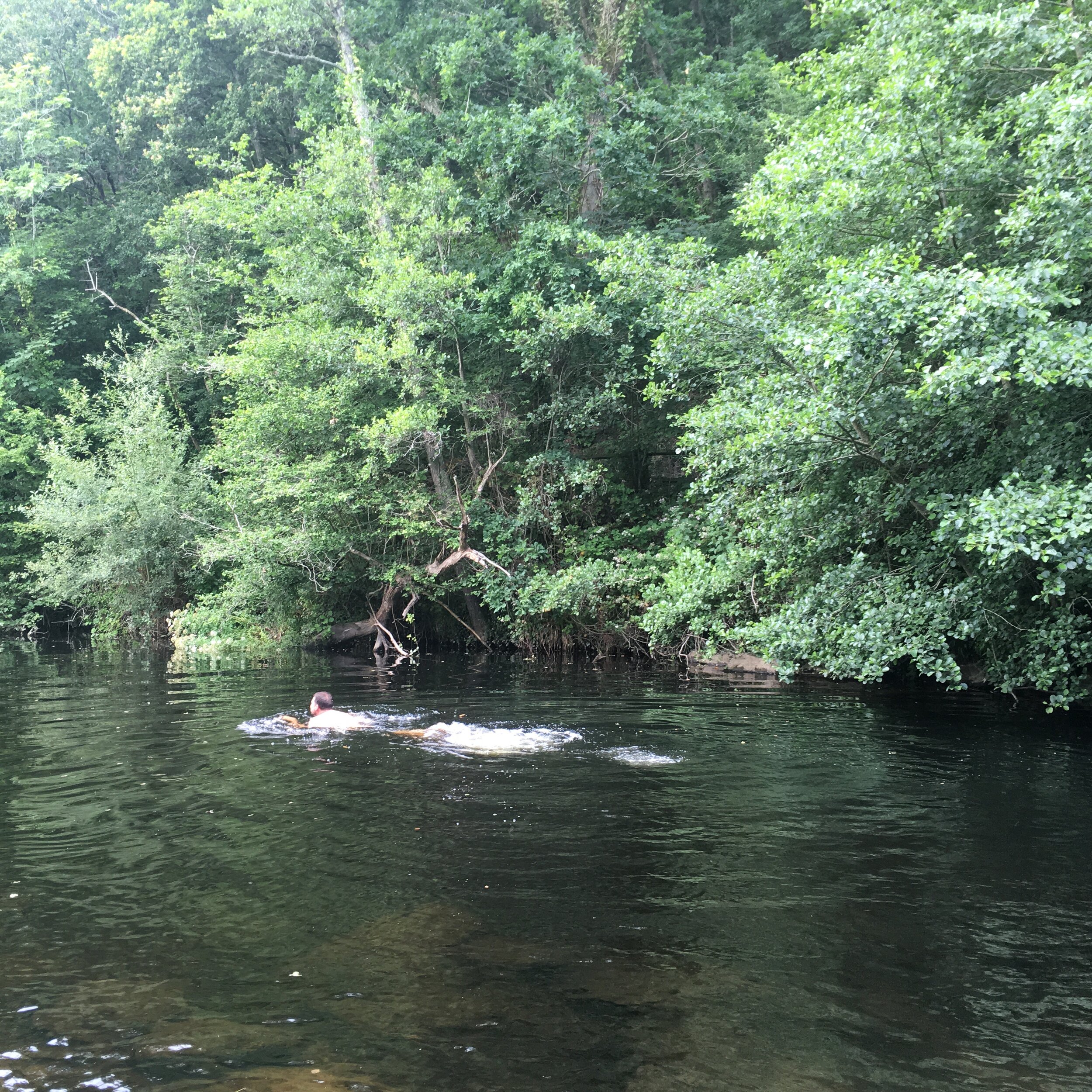
Yet there it is. A little clearing, a flat patch of grass, and a slow southward curve of the river with a shallow gravelly spot to enter the water. In moments, I’m in and then I remember the hypnotic, hydraulic draw of wild swimming.
Swimming in a river is a challenge, a rite of summer. That first moment on the toes, the creep of cold on the calves, then the heartstopping tingle on your chest. Even though it only lasts a few breaths, that sudden clenched exhilaration never disappears. What follows is calm—all the fears and questions and anxieties slip away—and I’m totally present, aware only of the sense of place, the scent of the woods, the light stippling the river, the trill and trickle of running water.
It’s not all roses, wild swimming. The stones are often jagged beneath your feet. There’s rarely a changing room to hand. There’s muck on the surface and weeds in the shallows. The cold is sometimes less hypnotic than hypothermic. But the reason I return to rivers like the Dart is the feeling of immersion. It’s not far from the way music can transport us. Wild swimming demands your attention, it impacts all your senses at once, it’s like music for your skin.


Tomato Education
Emotional Intelligence isn’t just for us grown-ups. Agata Dela Cruz talks to the owners of Tomato, a consciously designed toddler space in London about how it’s also for our little ones.
“Our approach promotes peace and a sense of interconnection with nature, one another and our diverse world. All our services and workshops are created with the intention to strengthen a family’s ability to be happy and healthy.”
Located on a leafy high street in East Finchley, London, Tomato Education is a Montessori-based community space dedicated to enhancing the emotional wellbeing of infants and toddlers. We love it because everything about the concept — from the physical space, the curriculum and community inclusion — has been designed to make families feel connected in unique ways that support their children’s learning experience.
We had the opportunity to talk to Laura Alvarado and Beth Fordham, the founders of Tomato Education, who both believe in prioritizing emotional wellness over academic success. As seasoned educators, former students, and now parents of their own children, they shared the same adverse reactions to the lack of mental and emotional support in the traditional school system. As Laura told us: “I’ve tutored since I was 16 years old and I’m 32 now, so that’s 17 years of continuously working with children and parents. In that time, I’ve seen a decline in children’s mental health and I’ve seen the rise and stress in parents.”.
But it wasn’t until 2017 — when Laura noticed in her neighborhood of Highgate, North London, that there were numerous holistic well-being establishments for adults but nothing for children — that the concept of Tomato Education was born.


At Tomato Education everything is viewed as a learning opportunity. Laura has a deep belief that teaching is absorbed through a child’s caretakers, their environment and the wider community. Tomato Education holistically integrates all three.
For starters, the environment of the learning studio has been carefully considered for how it affects the emotional well-being and development of children. The child-sized furniture, low shelves, and easy access to supplies and activities encourage children to foster a sense of independence and self-confidence when learning new skills. The muted colors, clean and organized wall spaces, natural lighting, and the presence of plants are all there to create a calm and soothing environment that allows children to focus and learn.
The classes and group sessions that are offered encourage the participation of parents to support and observe their child as a way to immerse themselves in understanding the Montessori method. Parents and teachers are encouraged to not intervene in the classroom, but rather to allow the children self-discovery, and what Laura calls the space to enter into "flow states." This practice allows a parent to learn about their child in a whole new way. It also offers an opportunity to extend some of the mindfulness principles Tomato Education teaches to their homes and beyond.
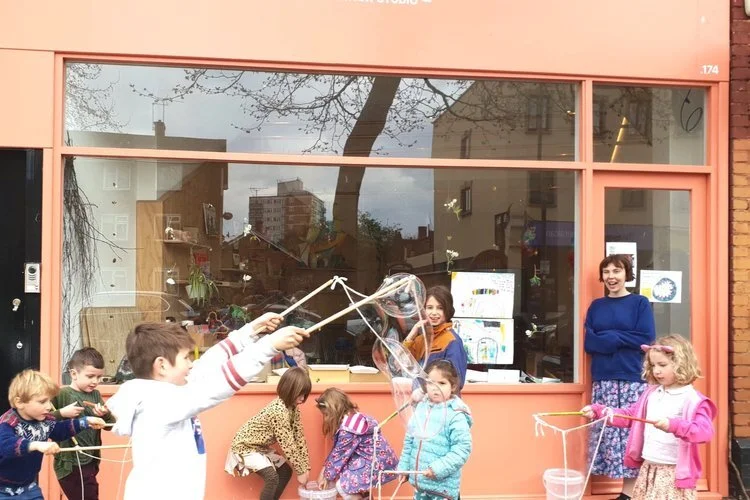

And Tomato Education is a place that welcomes a diverse range of families from all cultural and economic backgrounds. The studio space strives to be a place for parents to meet and build connections with others vested in the development of their children. Laura told us: "We arrange community bonding activities for our parents outside of all the child activities. We will try to do nights outs, going to a park or a coffee shop. Through those activities, parents become good friends and then they have birthday parties together with all their children so there's a lot of social events, which makes the community feel real."
Which benefits not just these children and their caregivers, but the community beyond. As our children learn so do we; their capacity for emotional intelligence allows us to stretch too.
To learn more about the programs and activities available at Tomato Education visit Website, Instagram and Facebook

The Natural History Museum
Illustrator Michaela Hobson revisits an old favorite, London’s Natural History Museum, and finds a place for inspiration, knowledge and respite.
“The Museum is a world-class visitor attraction and leading science research centre.
We use our unique collections and unrivalled expertise to tackle the biggest challenges facing the world today.
We care for more than 80 million specimens spanning billions of years and welcome more than five million visitors annually.”
London’s Natural History Museum exhibits a wide range of the natural world throughout time. I'm sure many of you have heard of it (and maybe you've even been there already!) but I had to share it, as it's one of my favourite places to visit. Entry to the museum is free, which makes it accessible to everyone. It also means that you can visit as many times as you like—which I've definitely taken advantage of—taking a couple of trips in the same week so that I could go at my own pace and fully enjoy the experience.
Besides the main appeal of learning all about plants and animals throughout history, I go to The Natural History Museum because it's a great place to escape the busy world outside. The building is so spacious that even when there are lots of people, you don't feel like it's overwhelming and crowded. You can stroll around the exhibits at your own speed, stop for a bite to eat in one of the cafes and spend time being fascinated by everything you see. I come out every time feeling like a child because I've learned so many new things that I want to share with everyone.



As a creative, I've also found that it's a hub of inspiration. The building itself is a work of art—with grand staircases, stained glass windows and detailed brickwork. There's an endless source of beauty around every corner, which is what I love about it the most. Stop in one of the many places to sit around the building to admire the exhibitions for as long as you need to take them in.
The Natural History Museum is a place to seek out if you're looking to relax and also be creatively refreshed. I’ve found that being in nature is one of the best ways to calm my mind, so why not learn about the history of it too.

Butser Ancient Farm
Writer Tiffany Francis-Baker takes us both back in time and brings us into the moment on the South Downs.
The farm sits in a small valley, just metres away from the A3 trunk road that roars its way between London and Portsmouth. You’d never guess it was so close—to drive down the dirt track is like being transported into another world, one serenaded by yellowhammers singing in the hedgerows, their golden feathers like turmeric in the morning light. This is Butser Ancient Farm in the South Downs National Park, where rosebay willowherb tumbles out of the earth like coils of pink rope, and adders sunbathe, hidden, in heaps of firewood.


At the heart of the farm is the Iron Age village that Butser has become most famous for, a cluster of six roundhouses with roofs like pointed witches’ hats against the sky. What is this place? The internet might indicate a museum or education center, but the truth is more ambiguous. It’s an archaeological research site, specialising in the construction of ancient houses using their archaeological footprints and sustainable materials. In one morning you can explore 10,000 years of British history, from the Stone Age longhouse, through to the Roman villa and Saxon mead hall—all with a cup of coffee in hand and plenty of time to greet the rare breed pigs, sheep and goats that lounge about in the sun.


To the south, at the base of a steep hill, the interior walls of the Neolithic longhouse are marked with wall paintings, streaks of umber pigment replicating a hunting scene from an archaeological dig in Turkey. On the northern edge of the farm, the Roman villa stands white and cool, complete with handcrafted mosaic, underfloor heating, and a walnut tree in the garden that is said to bring on a ‘heaviness of the head’, according to Pliny the Elder, if one sits beneath it for too long. And at the far end of the site, the Saxon mead hall glows with heat from the fireplace, a favourite roosting spot for one of the farm’s barn owls who shelters in the timber roof on dark winter nights.


Both staff and volunteers are drawn to this place through their love for an older, slower way of being. They are passionate, often eclectic, but never boring. In one day you might meet a woman weaving tapestries by the roundhouse fire, while the clink clink clink of the blacksmith echoes through the air as he forges a new sword. Elsewhere, a Roman cook drizzles honey over a batch of freshly grilled figs in the villa kitchen, as the treewright finishes hewing another timber beam in the Saxon workshop. You can smell the warmth of sleeping goats, the elderflower blossom and fire smoke, all caught in a time capsule that seems so very distant from the chaos of the modern world.


In spring, the biggest event of the Butser calendar takes place, rooted in the Celtic wheel of the year and the festival that marks the beginning of summer. Beltain (or Beltane) is held around 1st May, halfway between the spring equinox and summer solstice. At Butser, it’s a time to welcome in longer, warmer days, celebrated with live music, dancing, drumming, real ale and cider, crafts, local food, storytelling and ancient skills. As the sun sets, the festival finishes with the burning of a 30ft Wickerman, an inferno of cleansing fire and raging heat. Hundreds of people come together to bask in the Wickerman's flames, cider in hand, drummers beating their rhythm into the night, as each guest dares to escape modernity for a few short hours, hidden away in the dark wilderness of the South Downs landscape.