
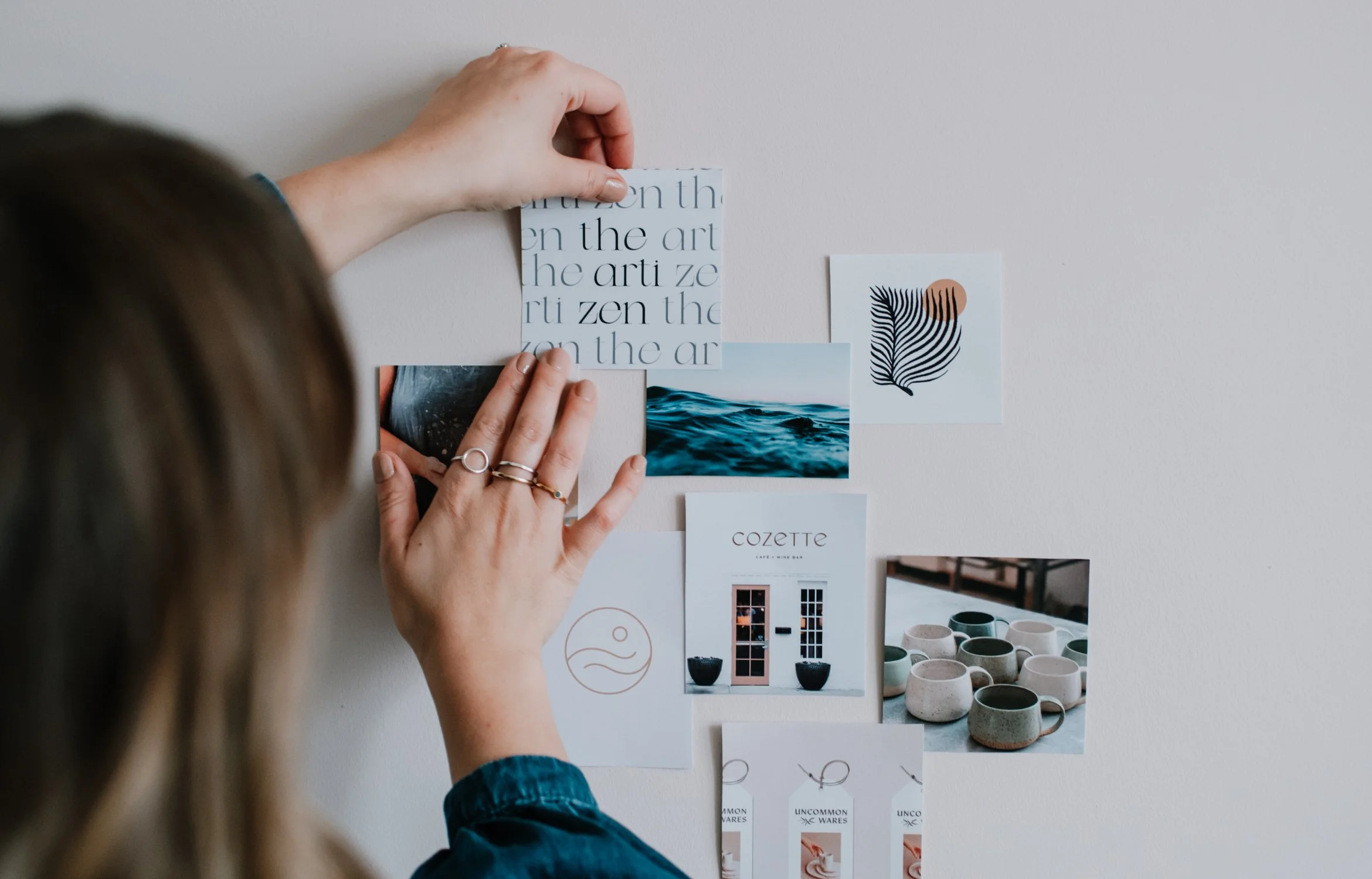
Finding presence through tactility by Sarah Robertson
How sensory activities and physical objects can bring us home to ourselves.
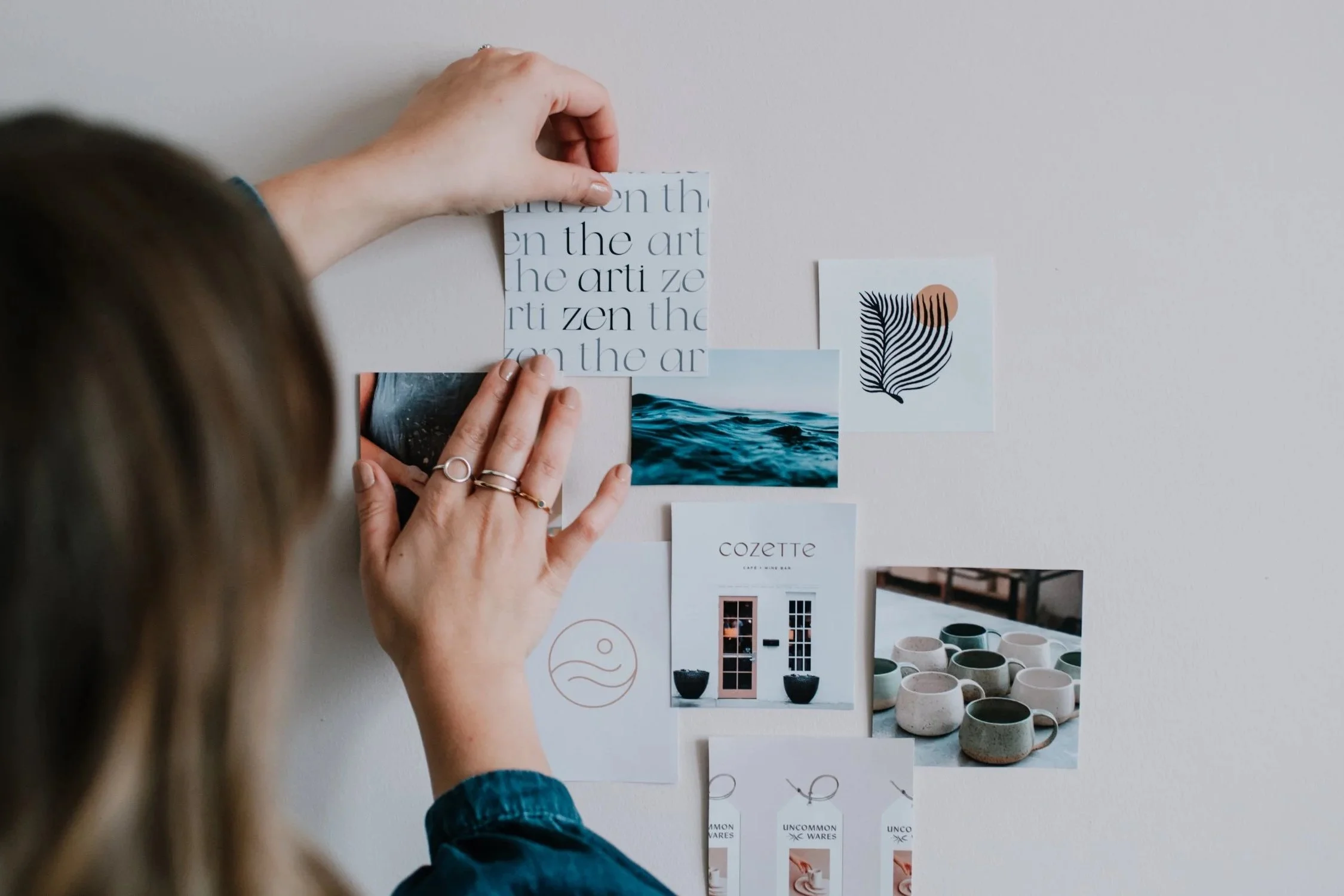
All photos courtesy Sarah Robertson
We are increasingly living in a state of digital abstraction, consuming stories and making connections through the blue light of our screens.
Yet we often finish a session of scrolling feeling strangely detached, as if we’ve travelled miles without ever having moved. So how do we find our way back?
How do we ground ourselves when the digital world pulls us toward endless distraction or when the rhythms of our own lives feel chaotic and overwhelming?
For me, the answer lies in tactility.
“The hands are the instruments of man's intelligence.”
— Seneca
Sensory rituals
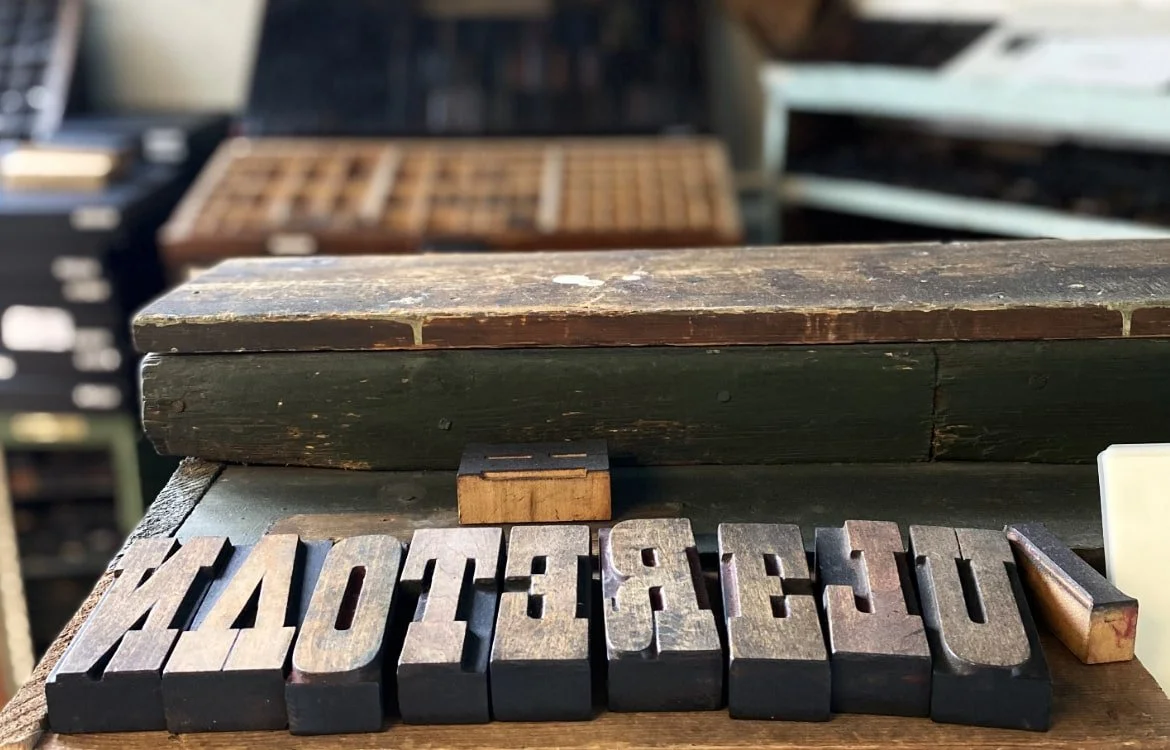
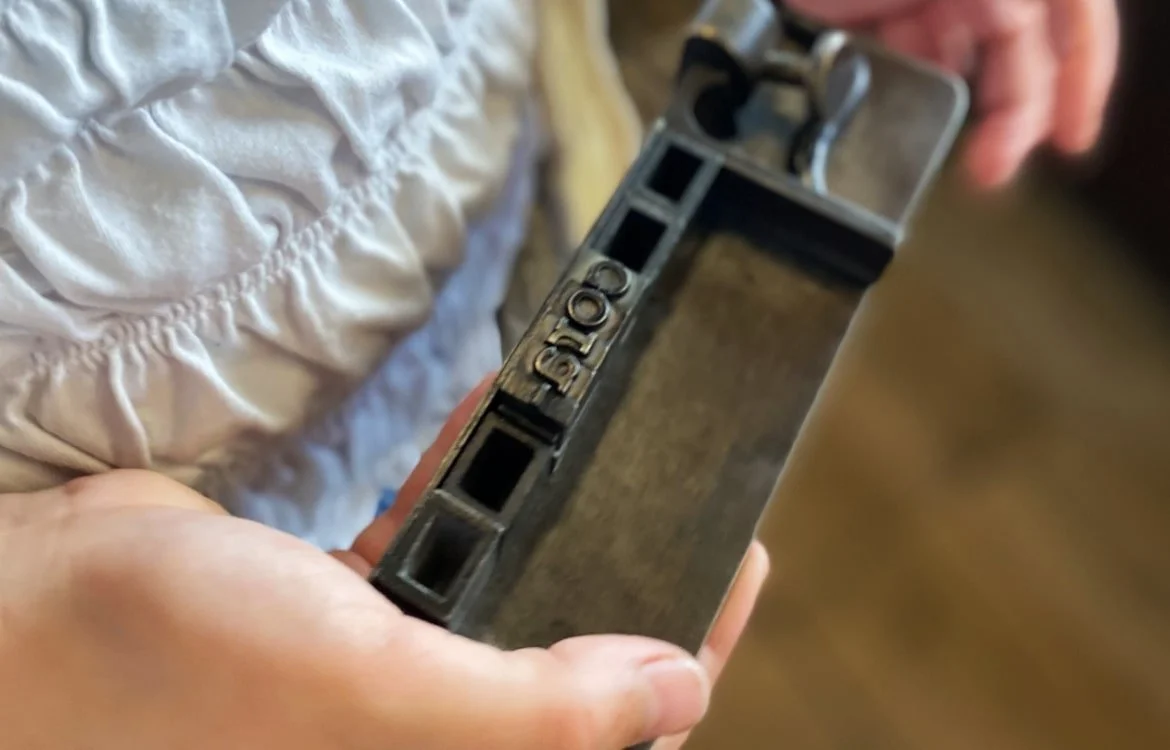
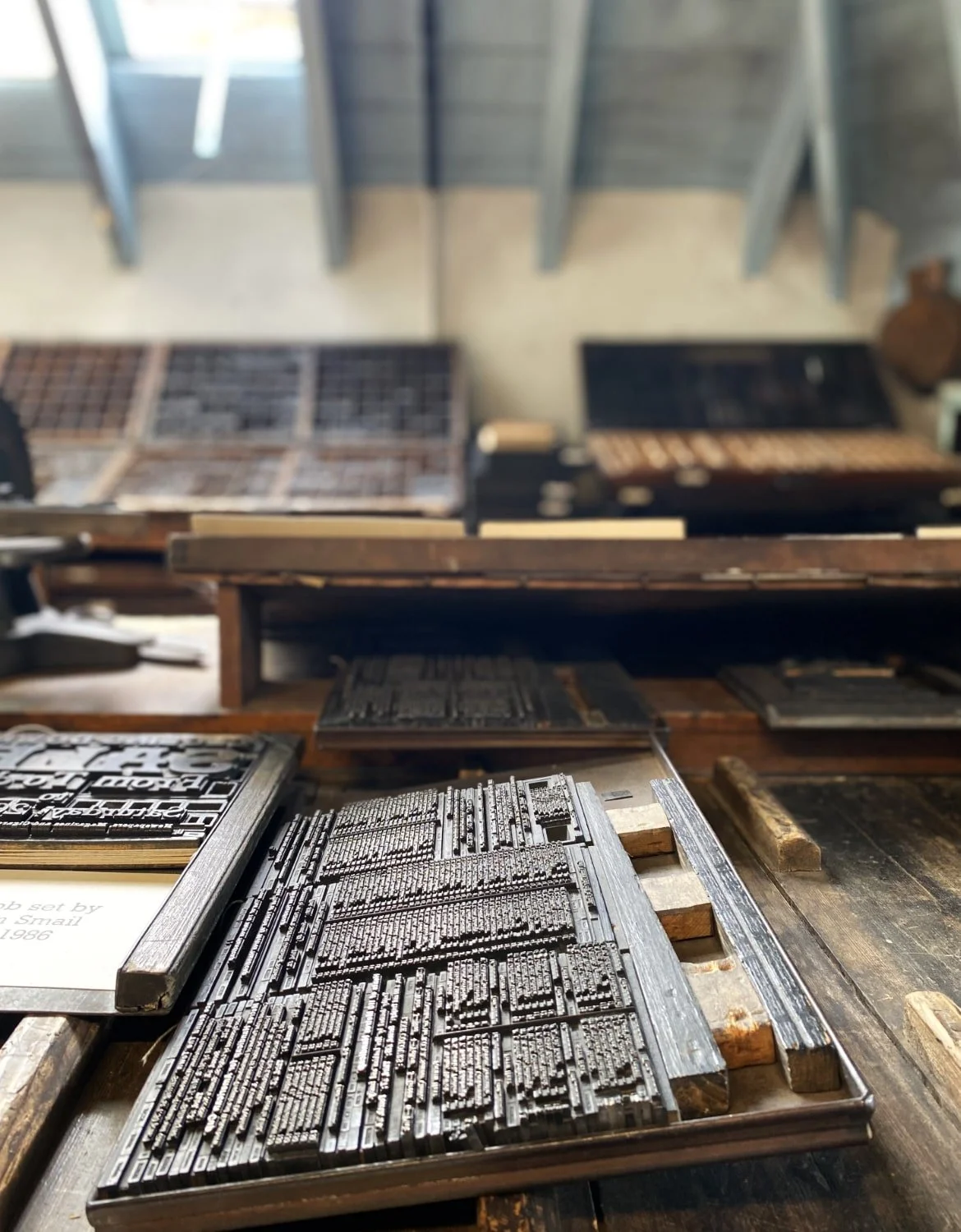
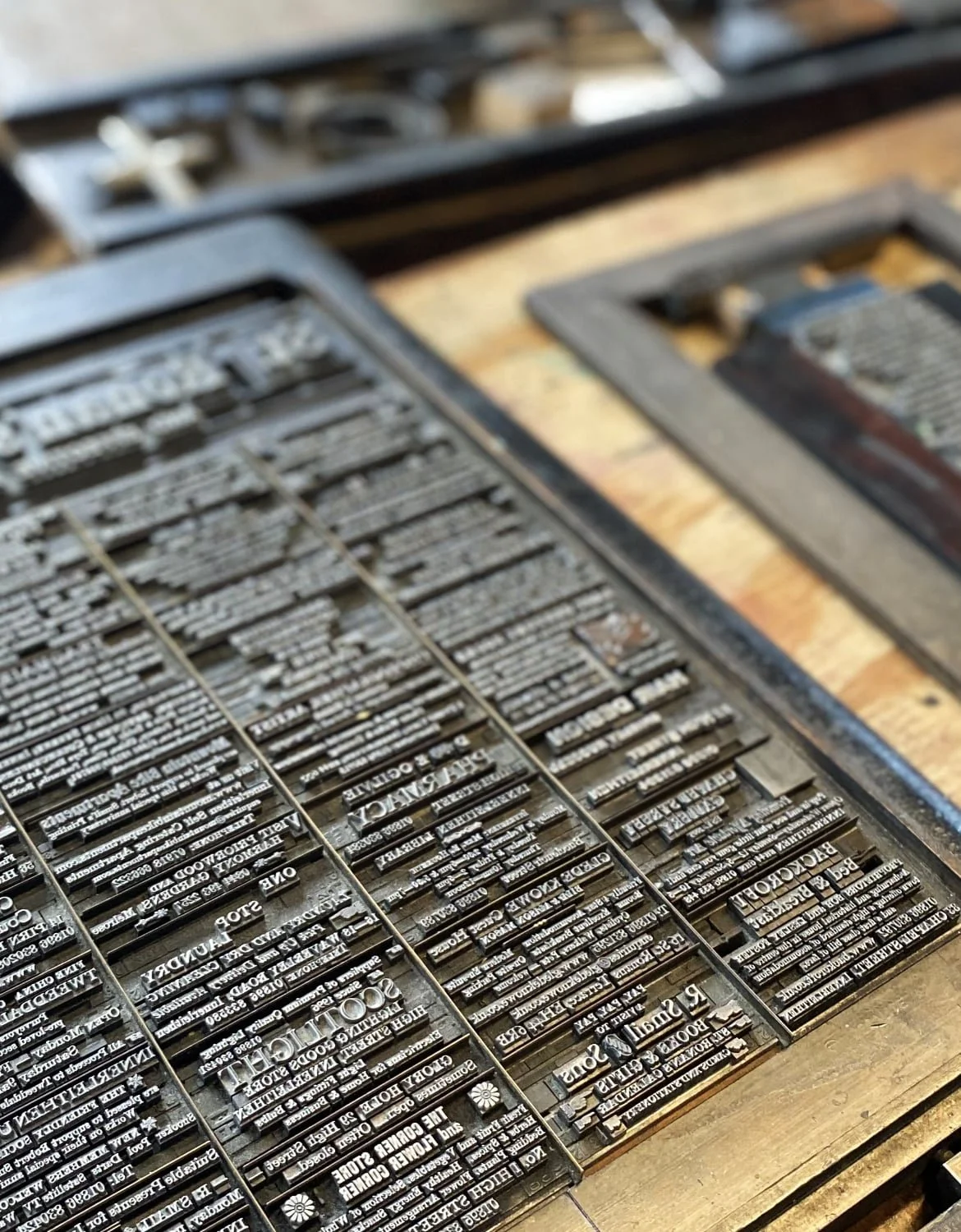
I recently took my daughter on a creative pilgrimage to Robert Smail’s Printing Works, one of the few remaining Victorian letterpress printers in the UK. It’s a quiet place, filled with the scent of ink and the rhythmic clunk and whirr of cast-iron machines.
Watching the type being laid one character at a time, I was struck by how much patience and presence are required in the physical act of making. As my daughter made her own bookmark, it struck me that there’s a profound magic in things that have weight, texture and even scent
The feel of paper, the impression of a letterpress print, the resistance of a pen as we write — these aren't just aesthetic preferences. They’re sensory signals, acting as anchors, pulling our attention away from the infinite expanse of the internet and back into the immediate, physical moment.
Objects as anchors
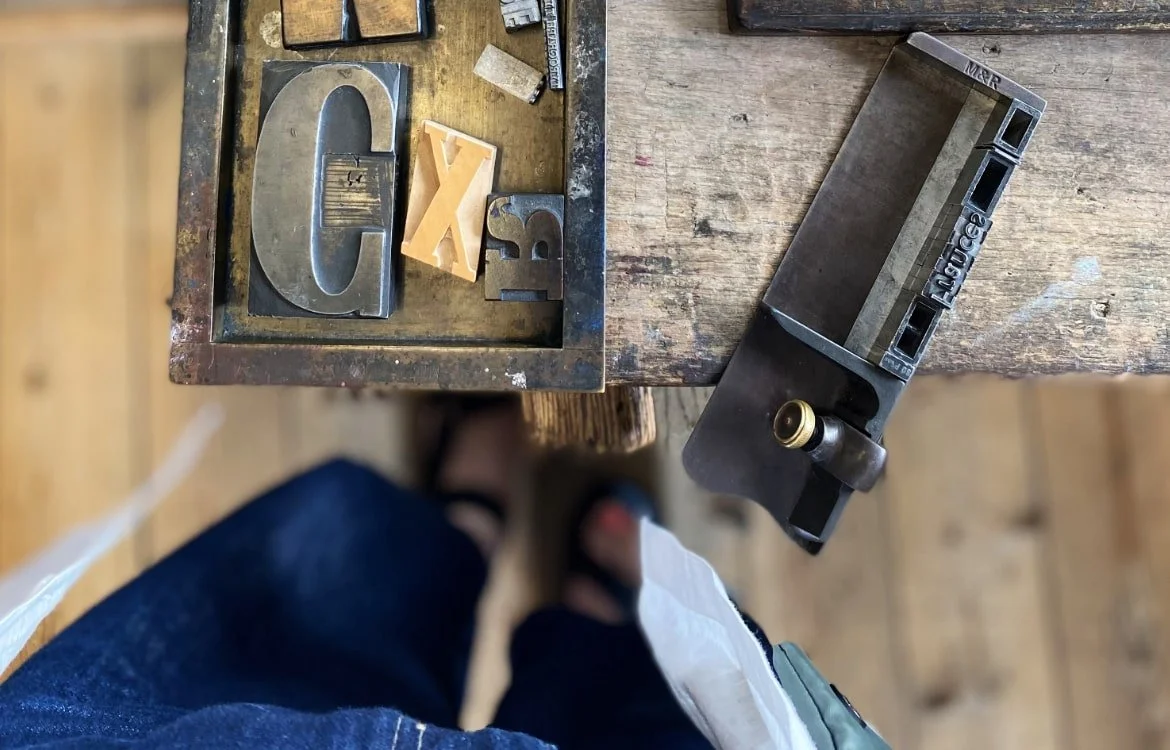
When we engage with a physical object — be it a beautifully bound book, a ceramic mug held in both hands or a wellbeing journal like those created by If Lost Start Here or Saorsa Psychology — we engage in ritual. We’re choosing a medium that requires us to slow down.
I’ve come to realise that these sensory moments aren’t about productivity; they’re about protection. They create a soft space for our thoughts and ideas to arrive. In a busy world that asks us for polish and perfection, the tactile world offers us permission to be messy. There’s a grace in imperfect action…the scribbles, the ink stains, the sketches. These moments signal to our nervous system that it is safe to land, to be.
This sense of ritual is something I used to enjoy exploring through the concept of the "Artist Date", a weekly practice of seeking out sensory, playful experiences to refill our creative wells, popularised by The Artist’s Way by Julia Cameron. Of course, it doesn't have to be an excursion to a printing works; it can be as simple as choosing a specific notebook for your morning reflections or finding joy in turning the pages of a new magazine.
Returning to self
The tools we use to care for ourselves matter. In seasons where our capacity feels limited, or life feels loud, these tactile anchors become even more vital.
For me, it’s a reminder that creativity and connection don't always require grandeur; they require mindfulness, maybe even playfulness. And I’ve learned that the value of these rituals isn't in the "finish line" or the end result. It’s in the returning; the decision to show up for ourselves and our curiosity, even when we feel uninspired.
By choosing the tactile, we choose the real. By choosing the moment, we choose to be here.
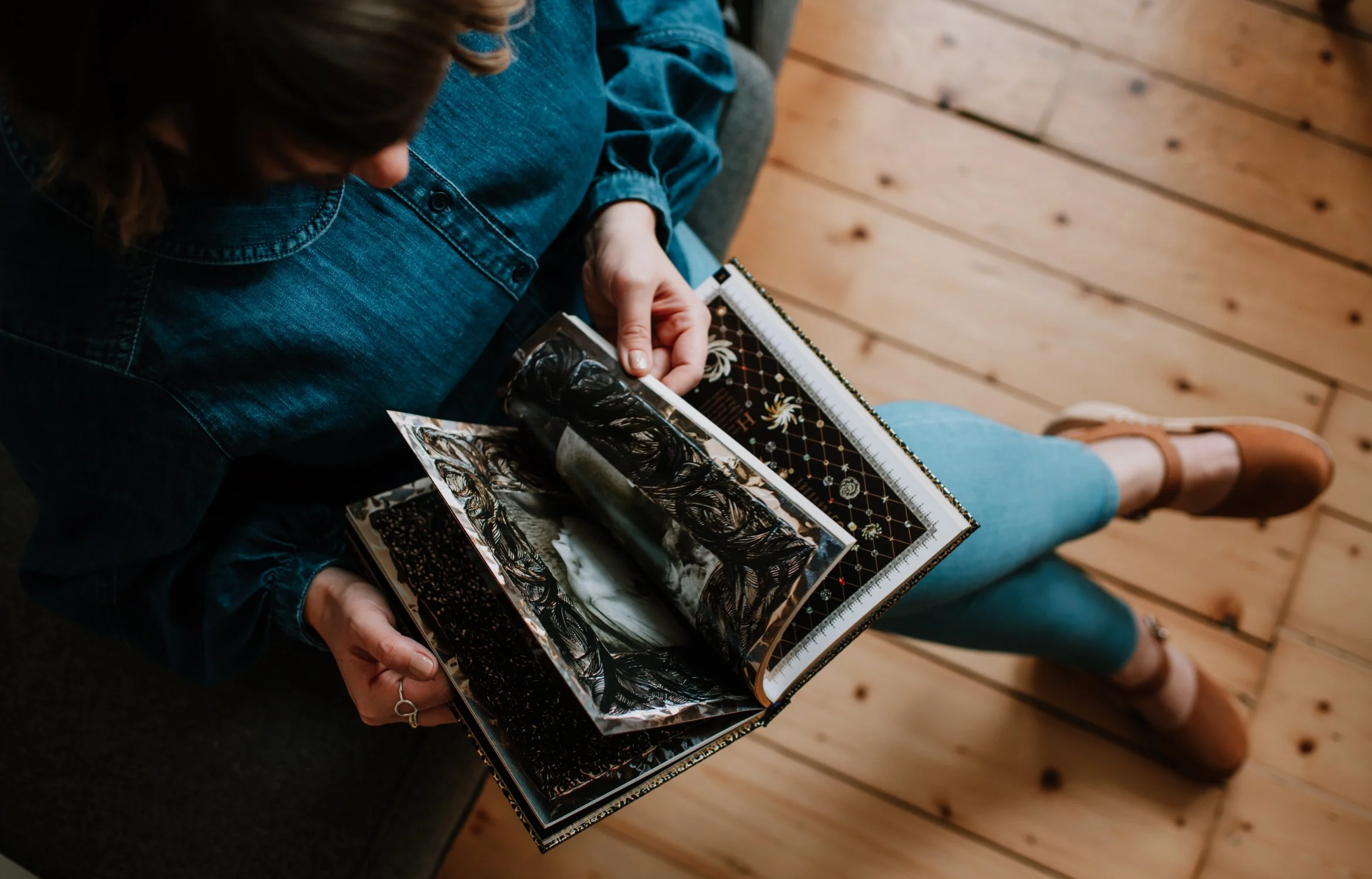
This love for the sensory is woven into the very fabric of my upcoming book, Shape Your Brand Story. This tactile companion for founders, makers and creatives is a beautifully crafted hardback — complete with gold foiling and accents — something to be held and enjoyed as you navigate the cycles of your branding and business journey.
Do you have a tactile ritual that helps you transition from the digital world into a more intentional space? Whether it’s the scratch of a fountain pen on paper or the ritual of opening a fresh journal, I’d love to know what helps you slow down enough to notice.
Sarah Robertson is the creator of the Brand Seasons® Method, a cyclical approach to branding and business that inspired the Brand Seasons® Playdeck and Playbook.
Through her storytelling studio, Fonn, she helps founders, makers and creatives define their vision, craft beautiful visuals and discover their voice. You can find more reflections on intentionality and creativity on her Substack publication, This Creative Life.
Sarah’s first book, Shape Your Brand Story, is being published with 91 Editions this autumn and is now available to pre-order.

Jodrell Bank
Jodrell Bank is one of those truly special places for a spectacular, constant, reason. Right here is one of the biggest and most powerful radio telescopes in the world.
“Take new and exciting approaches to presenting the wonders of science in a way that engages our visitors emotionally as well as intellectually, evoking wonder, surprise, humour and, above all, curiosity.”
We’ve been coming to Jodrell Bank Discovery Center since we were kids. And now we take our own kids. That sense of awe and wonder that we experienced way back then (even though we went there on school trips which somehow make everything boring), that hasn’t gone away for us, and now it captures our younger generation too.
Since we came in our school uniforms (we won’t say exactly when that was), Jodrell Bank has undergone a bit of a revamp. Our kids get a much nicer café then we ever had, though we get the benefits of that too, as well as majorly remodeled visitor buildings. The striking Planet Pavilion contains the world’s largest clockwork Orrery (a to-scale working model of the solar system) and in the Space Pavilion you now get to hear the Big Bang.
But Jodrell Bank is one of those truly special places for a spectacular, constant, reason. Right here is one of the biggest and most powerful radio telescopes in the world. The giant, Grade-1 listed, Lovell Telescope. This monumental white bowl has been sat in the green fields of Cheshire since 1957. Positioned right beside the Manchester-Crew train line, I’d pass it every day on my way to school, and it has never ceased to blow my mind. Looking out of a train window, the Lovell Telescope would denote an escape from the quotidian, from the banal, from our diminutive human lives. It would signify space and the universe, the capacity for us to know the unknowable, mysteries of an astronomical scale. It would communicate escape.
At a distance, the Lovell Telescope is symbol of authority for what man-made science can do. Much, much closer —you can walk right up to its base—it maintains that sense of awe, but it also conveys our humility, our very much non-man-made place in the universe. As it transcends time, the Lovell Telescope is beginning to show the wear and tear of its own life, it begins to feel fragile. When we last visited, the train-track base was covered in scaffolding, which seemed surprisingly prosaic when you think about what this thing can do. It felt oddly like it might break if moved [sorry all those Uni of Manchester science hearts that just died when I typed that]. And it does move – it’s one of the largest steerable telescopes in the world, with the bowl changing position depending on which part of the sky it needs to track.
Jodrell Bank is a place full of these kind of dichotomies. It’s an analogue escapees dream: while here, you are asked to switch off all devices, so that they don’t interfere with the powerful radio observations. Which is a permission giving of a kind we like. There’s a sense of play, of curiosity, in the exhibits on display, and the grounds that allow free-roaming, but there’s also the weighty responsibilities and ambitions of the science authored here to further our knowledge and capacity to get beyond dreaming. And now there’s even camping, bringing the vast imaginative possibilities of this place to a 4-day annual summer festival, appropriately called bluedot. With an audience of 25,000, science just got way more accessible, as it plays with music, art and culture, and bands like The Chemical Brothers, Flaming Lips and Elbow, as well as Manchester’s own Halle Orchestra, get to drop by. But best of all—we think anyway—bluedot takes place right next to that giant telescope (sometimes incorporating it into the show) and you get to unzip your tent, probably on a frosty Mancunian morning, and be right there with it.
We can majorly lose our minds on that. As we always have done, a bit, just being here with the Lovell Telescope and its universal pull.
Website www.jodrellbank.net/ Twitter @jodrellbank/ Facebook @JodrellBankOberservatory

The Bear Trail
The Bear Trail gives you full nature immersion in the up-to-your-knees/waist/neck mud version. This is an outdoor adventure assault course for adults and kids that starts with things to scramble over and ends in the showers!
“Love mud. Love life.”
We know that being in nature does good things for us like making us less stressed and more balanced in our everyday lives. The Bear Trail takes this idea and runs with it by giving you full nature immersion in the up-to-your-knees/waist/neck mud version. This is an outdoor adventure assault course for adults and kids that starts with things to scramble over and ends in the showers!
We got lucky, in a way. We went at the tail-end of a heatwave, so those deep pools of mud were still there but maybe not as abundant as at other times of the year. You can decide how much you are all in so to speak. You get to take the course at its own pace, and choose the risks that you are willing to take. If you’ve brought flip-flops (don’t) and are feeling kind of quesy about mushy wetness you can probably half-arse a few of the obstacles.
Regardless of your timidity level around dirt, its joyful scrambling, jumping, zip-lining, balancing, bouncing and climbing your way around the 28 obstacles. There’s no judgement if you don’t get anything right, actually no tuition to even tell you that. Adults are given as much credibility for being here as kids, there’s no feeling stupid for wanting to do what your 9 year old is doing. Just an open field to play in for everyone. As they say here, “Remember, mud washes off… experiences stay forever!”
Website: thebeartrail.co.uk / Facebook @thebeartrail / Twitter @trail_bear