For a long time, anxiety was a story I hoped I could outrun. My mum had experienced it in ways that were persistently debilitating, and somewhere along the way I had become frightened that her story might become mine. I made choices, built a life, moved forward. And still, when anxiety became more insistent in my forties, there was the feeling that something I had spent years trying to get away from had caught up with me.
Your story may be very different. Perhaps anxiety has accompanied you for as long as you can remember. Perhaps it has arrived during a difficult period, or appeared when, on the surface, everything seems fine. You might know exactly what you’re worried about, or struggle to explain why you feel so unsettled. What we share may be the wish for it to stop, and the exhaustion of trying to work out how.
One thing that has helped me better understand my own anxiety is noticing that I’m not only afraid of what might happen. Sometimes, I’m also afraid of how I might feel if it does. What if I panic? What if I can’t cope? What if the feeling comes back and I can’t get away from it?
What anxiety can feel like
Anxiety can be full of anticipation: the sense that a threat is waiting somewhere ahead of us. We may have something specific in mind — something happening to our children, our health, our relationships or our work. Or there may be a less defined sense that something is off, that we’ve forgotten something important, that something bad is about to happen.
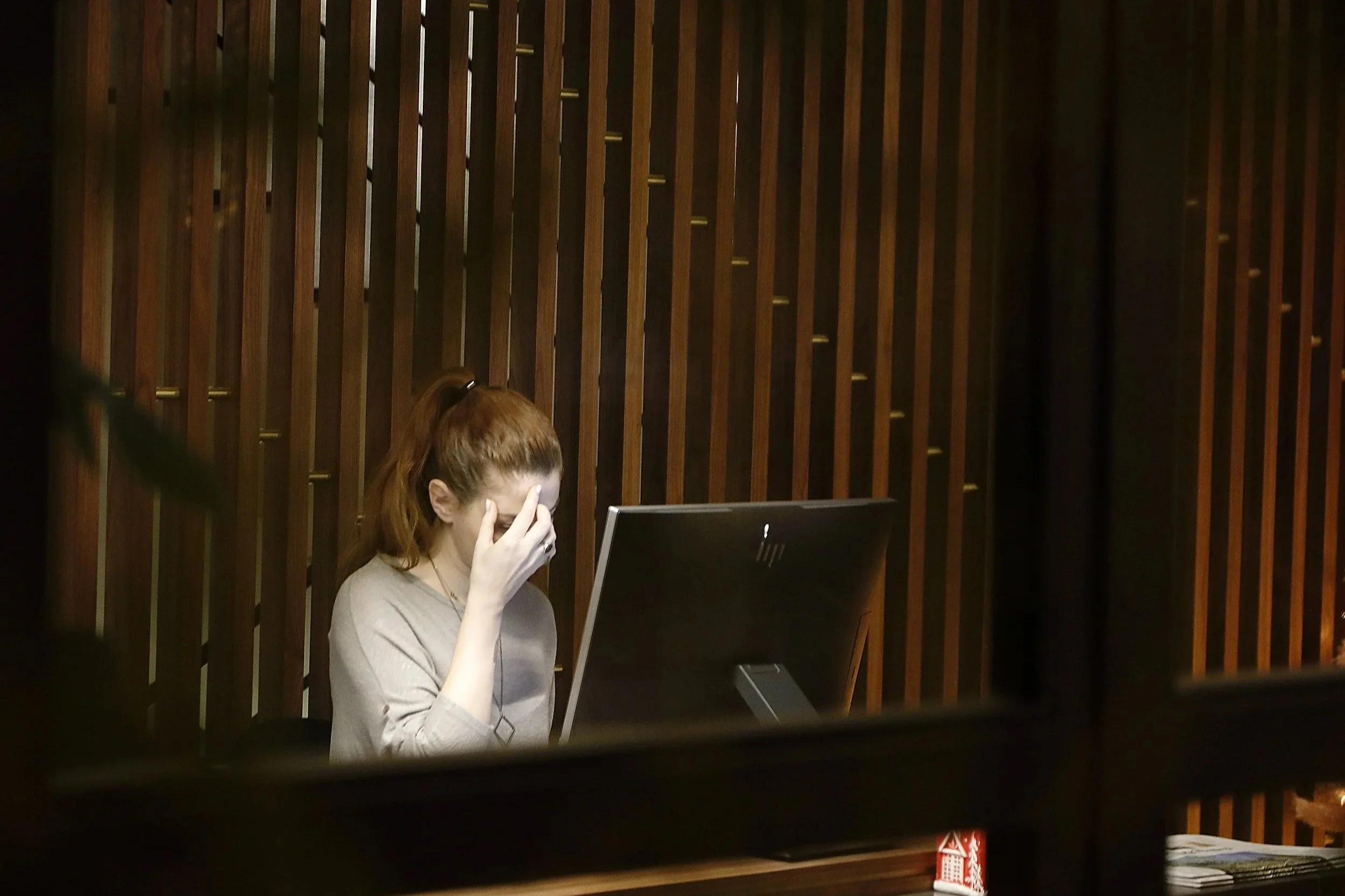
For me, it can feel like constantly scanning for possible outcomes, trying to get ahead of life with worry. My attention settles on small details or leaps towards the worst that could happen. Thoughts become repetitive, heavier, less kind. There can be irritability, difficulty concentrating and a restlessness that makes it hard to settle into whatever is actually happening.
Understanding how physical anxiety can be was important for me, too. It often sits in my stomach. At other times, I’ve experienced nausea, fidgeting, heart palpitations and difficulty sleeping. I have been to an emergency department believing I was having a heart attack when I was experiencing panic.
Anxiety can also affect what we do. We might want to leave, cancel, postpone or find someone who can reassure us. We might go quiet, become unusually accommodating or spend hours preparing for something that other people seem able to do without thinking. Sometimes anxiety gets me out of somewhere. Sometimes it keeps me stuck. Both can leave me wondering why an ordinary part of life has become so difficult.
Fearing the unknown and fearing the feeling
A study published in Molecular Psychiatry gave me another way to think about this. Researchers explored two related experiences: anxiety sensitivity, or fearing that anxious sensations might have harmful consequences, and intolerance of uncertainty, the difficulty of not knowing what might happen. In a study of 135 adults, including people with anxiety-related conditions and people without a current psychiatric diagnosis, these were associated with different patterns of brain activity during an avoidance task. It was a laboratory study, rather than a test of treatment, but the distinction offered me a useful question: what, exactly, am I frightened of?
Sometimes it is the uncertainty itself. We’re waiting for results, considering a change, wondering about a relationship or trying to make a decision without all the information we would like. We want to know that everything will be okay before we take the next step. And when that certainty isn’t available, our minds can keep searching for it, moving through possible outcomes as though enough thinking might eventually secure the future.
Sometimes it is the feeling we anticipate. We remember being panicked, overwhelmed or unable to settle, and become frightened of experiencing that again. The worry is no longer only about the meeting, the journey or the conversation. It is also about what might happen with us while we’re there.
For me, these can become tangled together. I’m imagining something difficult happening, anticipating how I might feel, and then responding to that anticipated feeling as though it has already arrived. Before anything has happened, I’m living with some of its emotional weight.
Finding somewhere to begin
I don’t think recognising this means we should immediately confront everything we fear. Sometimes we need rest, company, practical help or professional support. Sometimes there is a real problem that needs attention. But understanding a little more about the fear can help us choose a response that fits.
If I’m worried about something I can act on, there may be a conversation to have, information to gather or a manageable next step. If I’m repeatedly trying to answer a question that cannot yet be answered, I might need to notice how much the search for certainty is asking of me. If I’m frightened of the feeling itself, I can begin by asking what feels so difficult about it, and what support would help me meet it.
This is also where I find it useful to distinguish between feeling something and believing everything it seems to tell me. I can acknowledge that I feel anxious while remaining curious about the prediction: what am I imagining will happen? What do I know? What am I assuming? Is there something here that needs protecting, or am I trying to secure a guarantee that life cannot give me?
None of this requires me to be pleased that anxiety is here. Wanting relief makes sense. I’m interested in whether understanding it can give me a little more choice about what happens next.
When anxiety needs more support
Anxiety can range from occasional, manageable discomfort to something that seriously restricts everyday life. I hold that distinction in mind because of my mum’s experience, and because there have been moments when a doctor has used the words “generalised anxiety disorder” with me.
The World Health Organization describes anxiety disorders as involving intense, difficult-to-control fear or worry that causes significant distress and interferes with daily life. Effective treatments are available. If anxiety is persistent, worsening or affecting your sleep, relationships, work or ability to do everyday things, speaking to your GP or a qualified mental health professional is a worthwhile next step. You do not need to wait until you cannot cope.
A few questions to explore
You don’t need to work through all of these. Start with whichever feels most useful, perhaps with a notebook or someone you trust.
When I say “anxiety”, what does that mean for me — in my thoughts, my body and what I do?
Am I most afraid of what might happen, how I might feel, or both?
What am I imagining, and what do I actually know?
What feels hardest about not knowing?
What feels difficult about the anxious feeling itself?
What support would help me take one manageable step without needing complete certainty?
My relationship with anxiety is still something I’m learning about. But being able to ask more specific questions has helped me move beyond simply wishing it away. Sometimes the place to begin is understanding what I’m anticipating, what I’m feeling, and what might help me live the next part of my day.