
Confidence without self-rejection
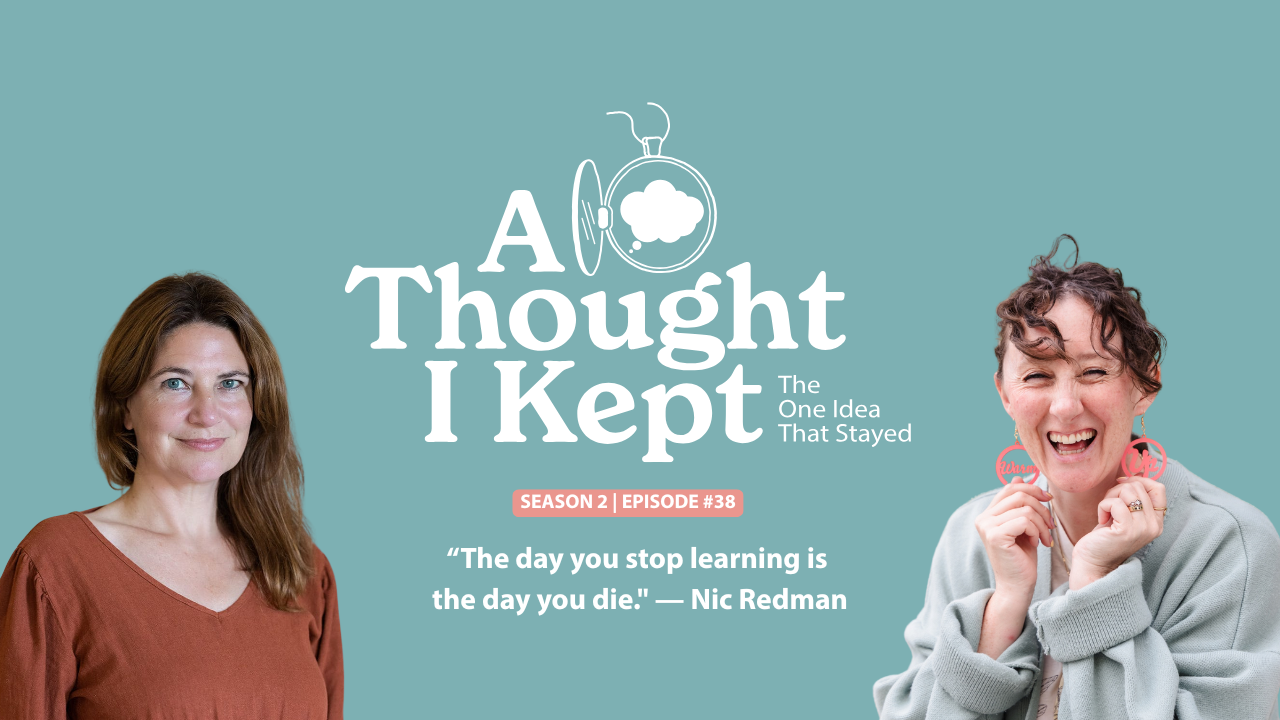
What if confidence doesn’t require changing who you are? A conversation with voice coach Nic Redman about finding your voice, becoming visible and growing without self-rejection.
I’ve spent quite a lot of my life thinking there was something slightly wrong with my voice. At various points it hasn’t been posh enough, then it’s been too posh, and now, after living in America for more than a decade, it can sound too American.
I grew up in Manchester. My dad is from Salford and sounds much more northern than I do. My mum grew up in Wythenshawe and had what we called her “posh voice” that appeared whenever she answered the phone. Then I went to a grammar school and absorbed all sorts of ideas about there being a right way to speak. I moved to California and my voice shifted again. And when I eventually moved back to the UK, I was surprised by how interested people were in placing me.
So I felt surprisingly vulnerable sitting down with voice coach Nic Redman for this week’s A Thought I Kept. There was a tiny part of me that wondered whether Nic would immediately hear everything that was wrong with my voice and just politely not mention it.
Which, as it turns out, says far more about my relationship with my voice than it does about Nic.
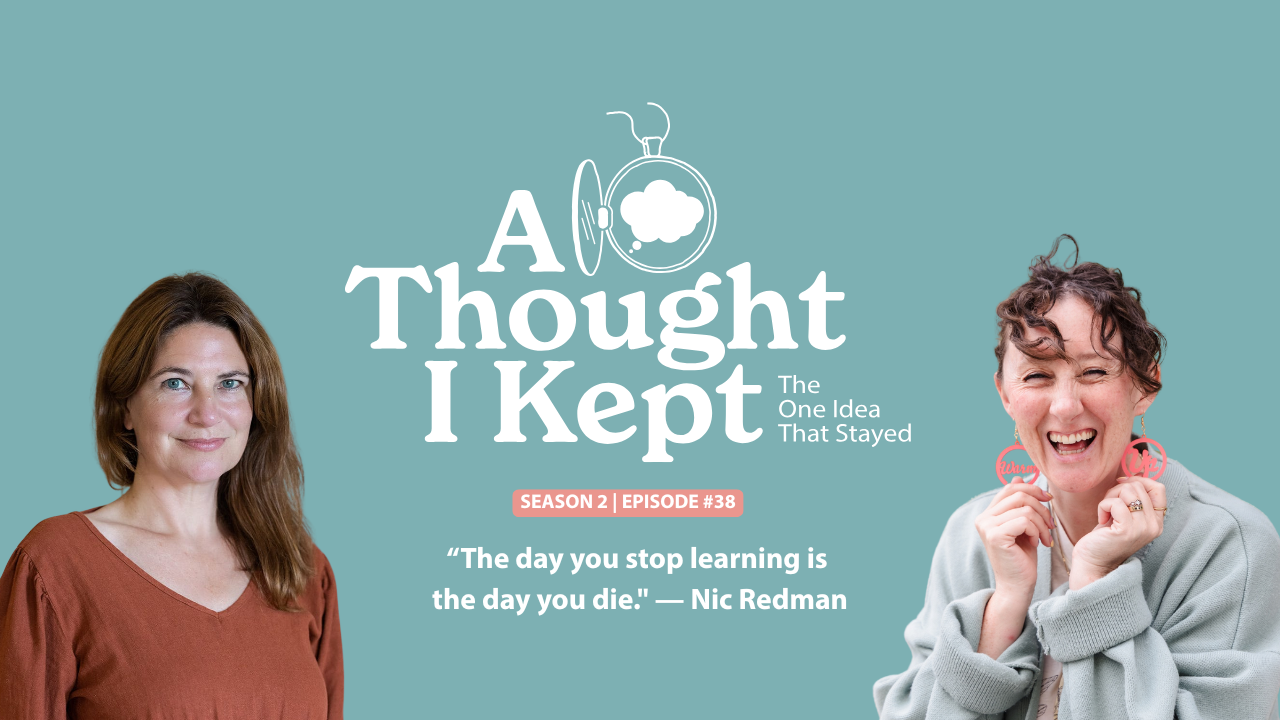
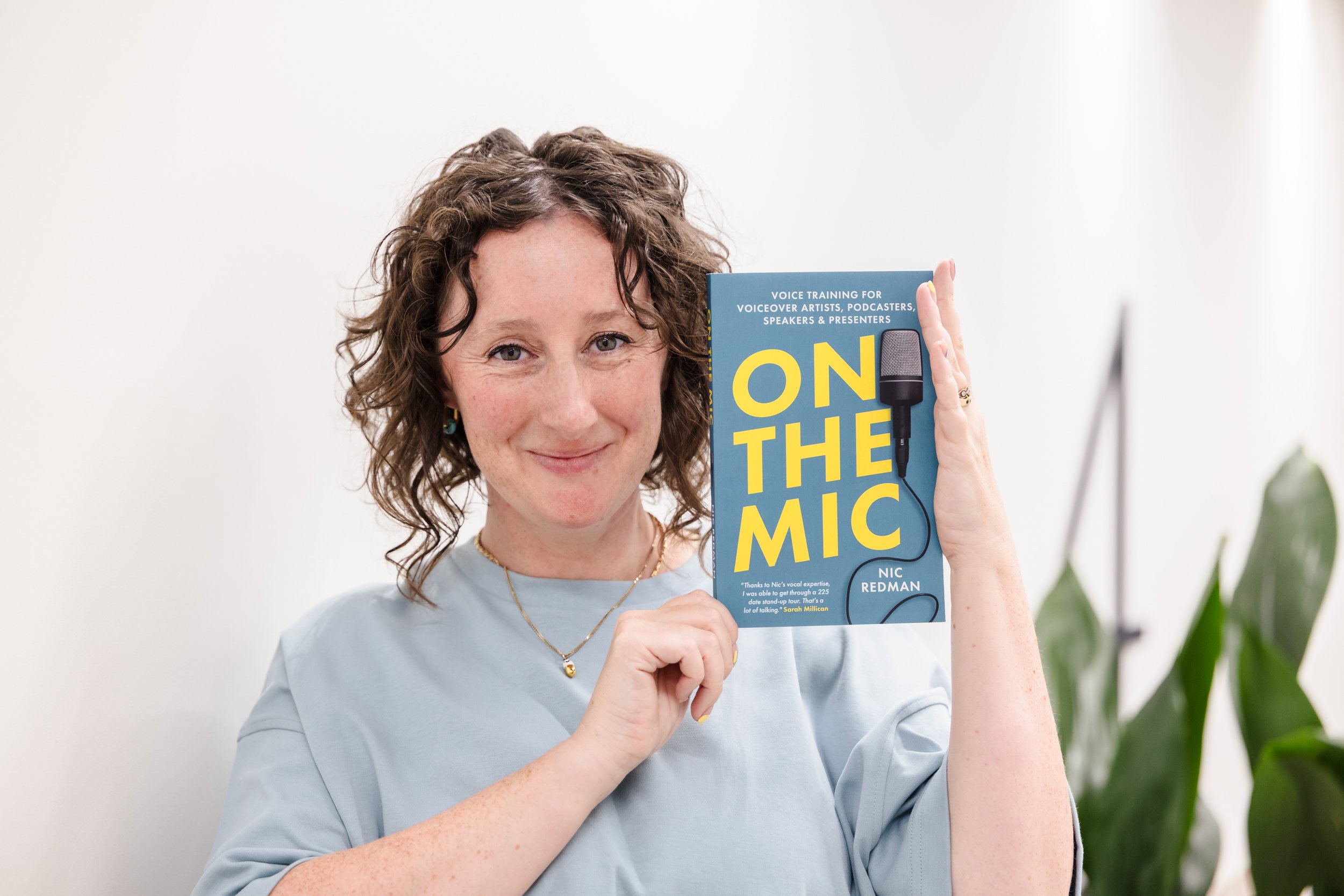
Nic is a voice coach and speaking director, author of On the Mic and host of The Voice Coach Podcast and The Voiceover Social. She works with everyone from performers to founders and senior leaders, but what I found most interesting about our conversation wasn’t how she could help us acquire a better voice. It was what happens when we become more curious about the one we already have.
Because our voices don’t exist separately from our lives. They carry geography and class, family and education, gender and culture. They are affected by who we grew up around, the places we’ve lived and all those messages we received — explicitly and otherwise — about who was allowed to speak, how loudly, with what accent and in what way.
They carry what is happening to us right now too. Nic talks about how anxiety, tiredness, stress, excitement and tension can all show up in our voices. As she puts it in our conversation, your voice is a product of everything you have experienced, as well as everything you are currently going through.
And all of that has made me think differently about confidence.
What does a confident voice sound like?
There has historically been a fairly narrow answer to this question. Nic talks about Samara Bay’s book Permission to Speak and the ways we have learned to associate power with particular kinds of voices. As Nic rather wonderfully puts it, “let’s be real, power has often nearly always sounded like a white guy.”
Which matters when we talk about becoming more visible.
There is so much encouragement, particularly for women, to speak up, take up space, share our ideas, make the presentation, start the business, go on camera, ask for what we want. I believe in so much of that. My word for this year is visibility, after all. But we aren’t doing any of these things in a vacuum. We’re doing them while carrying years of information about which voices belong in which rooms and what those voices are supposed to sound like when they get there.
Nic still works with people who have been told their regional accents might hold them back professionally. Others arrive wanting to sound more “professional”, “controlled”, “proper” or “intelligent”. But, as she points out, those words are incredibly subjective. What sounds professional to you might not sound professional to me because we are each bringing our own history with voice, class, accent, authority and belonging to what we hear.
We can work on articulation and clarity. We can understand our voices better and learn how to use them differently. But ultimately, Nic says, we only have so much control over how somebody else receives our voice.
I found that oddly freeing.
Confidence without self-rejection
Sometimes we might believe that becoming more confident requires us to reject something about who we are now.
I come across versions of this quite often in my coaching work. There can be an assumption that confidence exists somewhere on the other side of correcting ourselves. We’ll speak when we know enough. Put ourselves forward when we feel less anxious. Become visible when we’re more certain of what we’re doing. Use our voice when we’ve worked out how to make it sound right.
And of course we can learn and practise and change. This whole conversation with Nic is, in many ways, about learning. But I’m becoming increasingly interested in whether change has to begin from a position of this bit of me needs fixing.
I asked Nic whether she thought it was possible to love our voices, and I loved how realistic she was about her answer. Love is a big word, she said. Some people get there and some don’t. Perhaps what matters more is beginning to appreciate what our voices actually do for us: they allow us to connect with people, make somebody laugh, express an idea, order a coffee, talk to our children and say something that matters.
“I don’t think it’s necessary to love your voice,” Nic tells me. What matters is becoming comfortable enough with it that it can be free and expressive and do what you need it to do.
What if confidence isn’t about finally reaching the point where there is nothing left about ourselves that makes us uncomfortable? What if it can include the discomfort? What if we can want to grow without needing to dislike the person we are growing from?
Maybe there is a version of confidence that comes with more acceptance and less self-rejection?
Being visible while we’re still learning
Nic’s thought kept for this episode is “The day you stop learning is the day you die.” It’s deliberately dramatic, and we have some fun with that in the conversation, but I was interested in where it took us, particularly when we started talking about expertise.
Because being visible now can come with a strange pressure to know. We’re encouraged to find our thing and establish ourselves as the expert in it. To develop our methodology, our ideas, our manifesto. Then put those ideas online where, ideally, we will continue to confidently believe them forever.
Learning asks something quite different of us. It asks us to remain open to the possibility that there is something we don’t yet know.
Nic tells me about meeting one of her former teachers years after he first taught her and hearing him acknowledge that he would teach things differently now. She talks about her own book as a snapshot of her practice at a particular moment rather than the final word on how voice works. Research changes. Her practice changes. She learns something new from the people she works with and sometimes has to rethink what she previously believed.
I find that enormously reassuring, especially when I think about visibility. Because it offers another way of thinking about what it means to put ourselves and our ideas into the world.
We don’t have to be finished first. We can know something and still be learning. We can have something worth saying and still change our minds later. We can be good at what we do and remain curious about how we might do it differently. Perhaps confidence isn’t certainty at all. Perhaps sometimes it’s trusting ourselves enough to be seen while we’re still figuring things out.
This is my voice
Starting this podcast has made my own experiment with visibility very literal. Every week I hear myself. I watch myself. I put my voice out into the world. And slowly I’m having to come to terms with something very obvious: this is how I speak.
There’s Manchester in there. There’s school. There’s America. There’s moving home again. There are probably traces of every room in which I learned that certain ways of speaking were valued more than others. There’s also what’s happening in my life now because, as Nic reminded me, our voices carry that too.
Of course they do. And maybe I don’t have to get rid of all of that before I use mine.
Perhaps this is what I’m keeping from my conversation with Nic: the possibility that we can become more confident without first deciding there is something wrong with us. That we can become more visible without having to perfect what other people will see. That we can learn without turning our current selves into another improvement project.
And maybe we can even become a little more curious about the parts of ourselves — our voices included — that we’ve spent years thinking we needed to change.
Listen to my full conversation with Nic Redman on A Thought I Kept, where we talk about voice, confidence, cultural conditioning, learning, curiosity, play and what it might mean to find more power in the voice you already have.
And if this brings up something less about how your voice sounds and more about what makes it difficult to use it — whether that’s anxiety, overwhelm, uncertainty, self-consciousness or feeling that you need to get yourself “right” before you can be seen — explore our coaching sessions.