
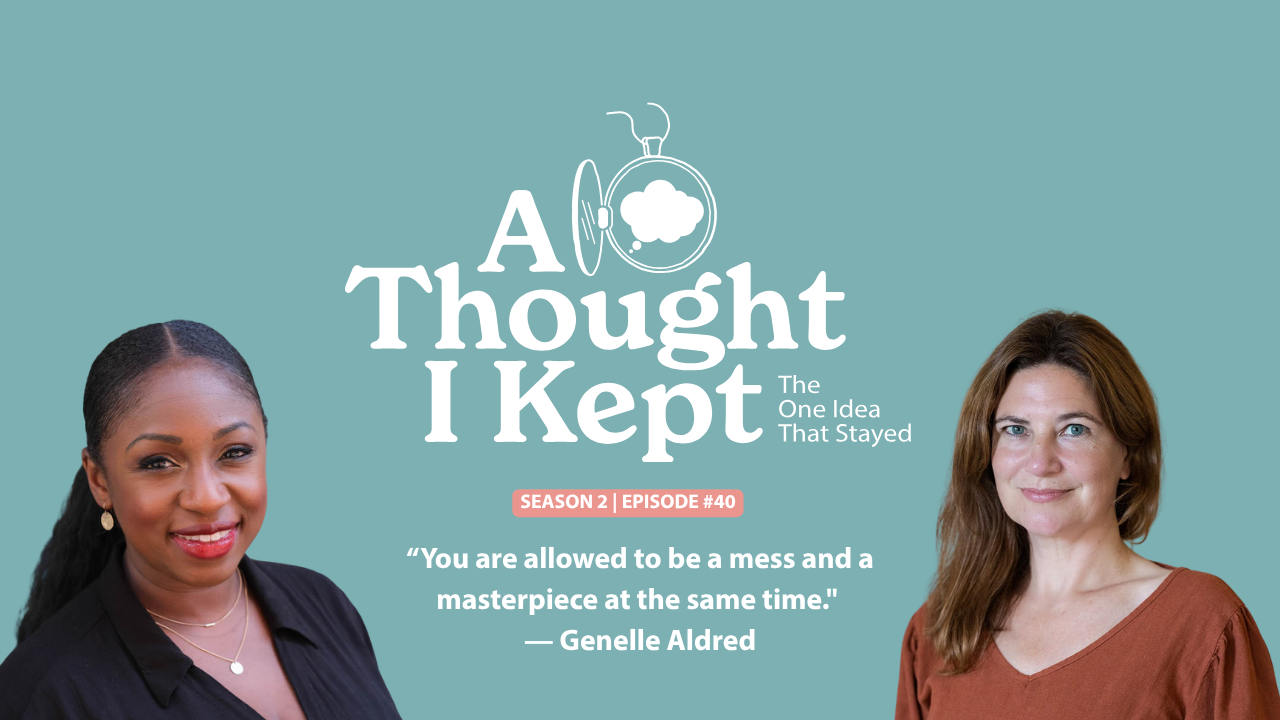
Which bits of yourself do you quietly edit away?
Do you hold back to avoid being too much? Explore confidence, self-trust and the parts of ourselves we quietly edit away, with insights from Genelle Aldred.
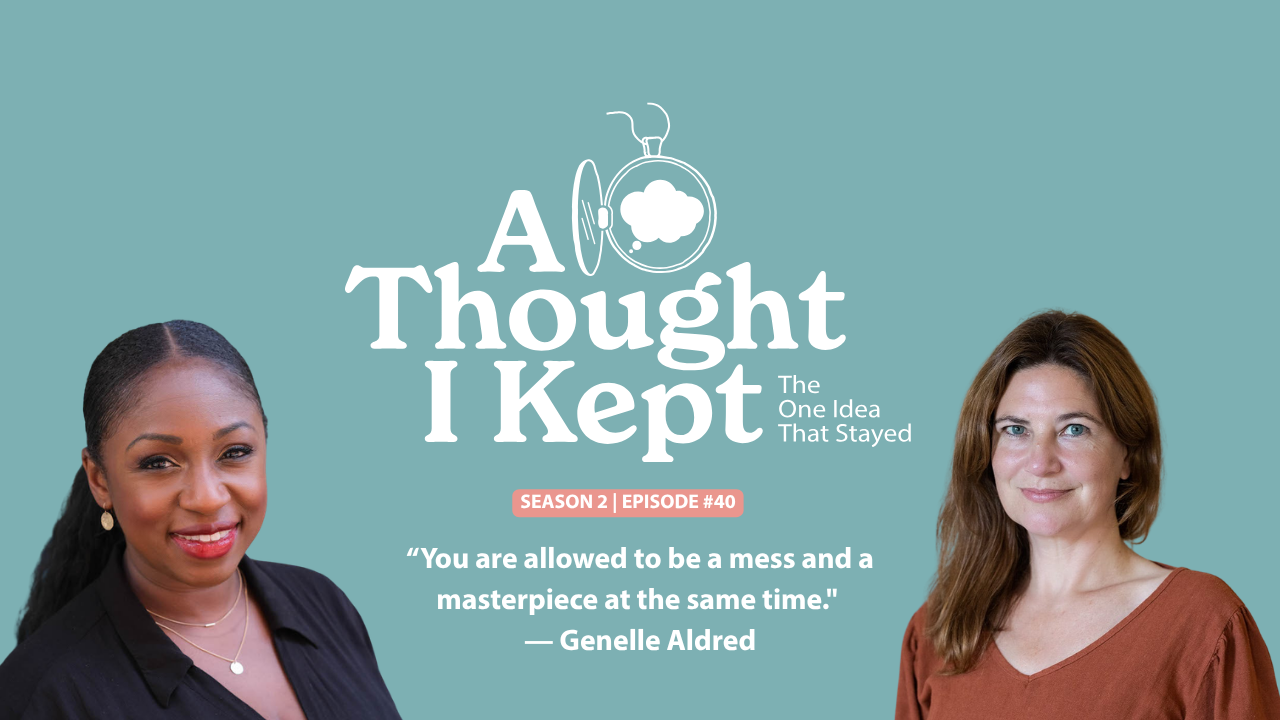
Perhaps you’ve had that moment after a conversation when you start going back over what you said. Were you a bit too direct? Did you sound like you thought you knew everything? Should you have kept that opinion to yourself? You might have felt perfectly comfortable while you were speaking, but afterwards not so much. Next time, you decide, you’ll soften it a little. Or say less.
It can happen with the good things too. You’re excited about something you’ve made, something you’ve learned, something you’re proud of. You want to share it, but then you hesitate. You wonder what people will think. And a small piece of you that wanted to be seen gets put away for another time.
I’ve been thinking about these moments since my conversation with broadcaster, communication strategist and author Genelle Aldred on A Thought I Kept. When I asked how she hoped to hold on to the thought she’d brought, her answer was: “By not quietly editing bits of myself away.”
We can so easily begin to lose parts of ourselves through small, everyday decisions about what does feel acceptable to show and we get less and less visible, and even confident, as we do so.
How the editing begins
Genelle’s thought was: “You are allowed to be a mess and a masterpiece at the same time.” And it gave us a way into confidence that felt much more human than the certainty and polish we might associate with it.
Even the beginning of our conversation offered an example of this. Genelle arrived feeling flustered after some client work and said so. We talked about the pressure to be calm and together, and how much more there is to connect with when someone can tell you how they actually feel. We could have done the usual exchange of “How are you?” and “Fine.” Instead, we got to share where we really were.
But being honest about how we’re arriving can feel risky. Genelle spoke about the expectations placed on women, and specifically her experience as a Black woman: how standing up for yourself or expressing a view can attract labels such as aggressive or too emotional. Those responses can begin to shape what you feel able to say.
As she described it, we start to self-filter, self-edit and minimise. We don’t want to appear messy. We don’t want to be wrong. We feel we should have everything worked out before we speak.
That context matters. The editing isn’t always something we’ve invented in our own minds. Sometimes we’ve learned from experience that certain parts of us receive a difficult response. It makes sense that we might become careful. But it’s worth noticing what that carefulness is beginning to cost us.
When one mistake becomes the whole story
One of the things Genelle suggested was how readily we judge ourselves by the worst thing we’ve done. We can do the same to other people. A moment when someone wasn’t there for us can become bigger than all the times they were.
I wonder how often we do this with our confidence. We have a difficult conversation and begin questioning whether we’re any good at communicating. We disappoint someone and start wondering whether we’re a good friend. We get something wrong at work and suddenly our experience seems to count for very little.
Genelle knows she’s good at communication. She also knows that she doesn’t get every conversation right. Sometimes people misunderstand her. Sometimes she makes a mistake and needs to apologise. Both things can be true.
There’s something useful to try here the next time you find yourself replaying a conversation: can you stay with what actually happened? Perhaps you interrupted someone, chose the wrong words or spoke before you’d understood. There may be something to acknowledge or repair. But can you do that without turning the moment into a verdict on who you are?
You’re allowed to acknowledge the masterpiece too
I think many of us can understand the relief of being allowed to be a mess. Being allowed to be a masterpiece might feel more uncomfortable.
Who am I to say I’m good at this? To trust my own judgement? To acknowledge that I have something valuable to offer?
For many of the women I work with, these questions can be difficult. We may be used to looking for reassurance from someone else, or qualifying a strength so quickly that we barely let ourselves acknowledge it.
Genelle brought a lovely, everyday example of holding different parts of herself together. She can post a silly meme or a picture of her dinner and also advise senior leaders on their communication. Enjoying one doesn’t diminish her ability to do the other.
Perhaps there’s a part of you that you keep separate because you worry it will undermine something else. Your playfulness and your expertise. Your sensitivity and your authority. What might become possible if you allowed them to belong to the same person?
What are you trying to say?
Genelle also spoke about the distance between saying what we mean and saying what we think will please the person listening. This might mean pausing to acknowledge this before we edit ourselves again.
What am I trying to communicate? What matters to me here? Have I changed my words to make them clearer, or have I removed the thing I wanted to say?
There is care in this too. Genelle was clear that we should consider how our communication affects others, while remembering to care for ourselves within it. We can take responsibility for our words and still allow ourselves to have a view, a feeling or a need.
You might try noticing one moment this week when you begin to edit yourself away. There’s no requirement to suddenly say everything. Just become curious about what you’re holding back, and whether you’d like to give it a little more room.
Listen to my conversation with Genelle Aldred on A Thought I Kept for more on confidence, communication and being allowed to be yourself.
And if you’d like some space to explore the feelings that come up around confidence, visibility or expressing what you need, you can explore emotions coaching sessions with me here..
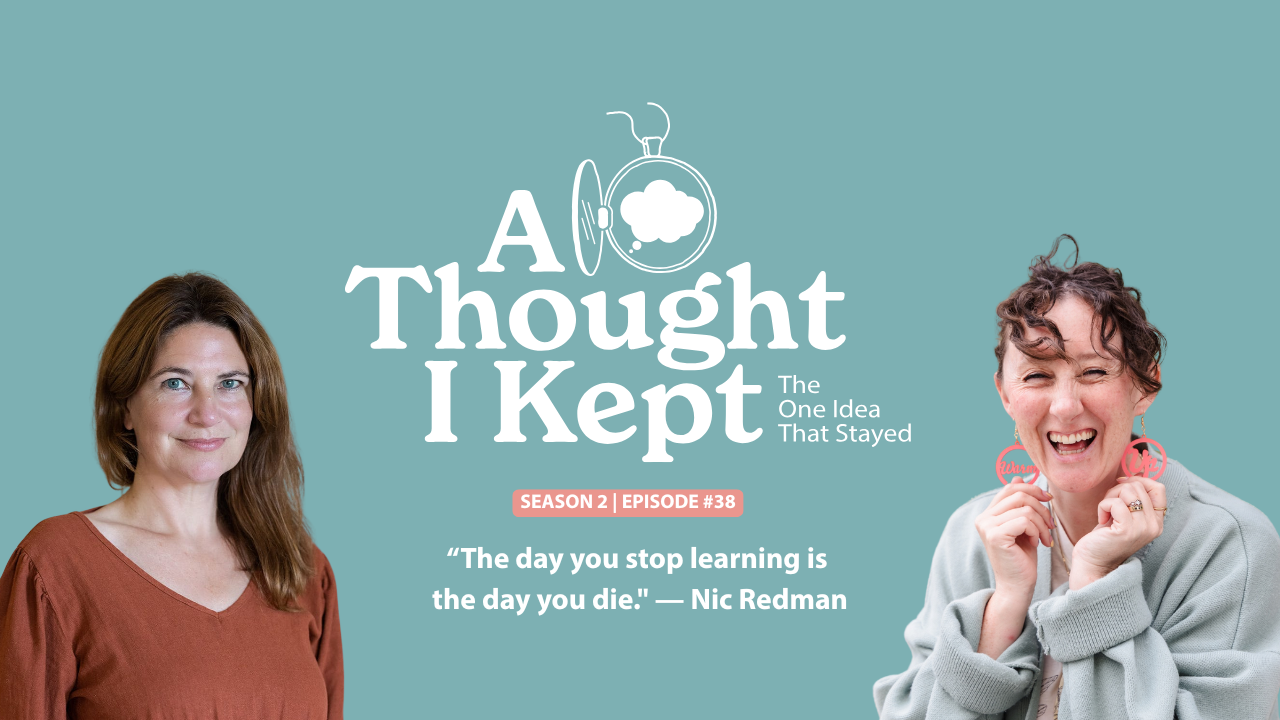
Confidence without self-rejection
What if confidence doesn’t require changing who you are? A conversation with voice coach Nic Redman about finding your voice, becoming visible and growing without self-rejection.
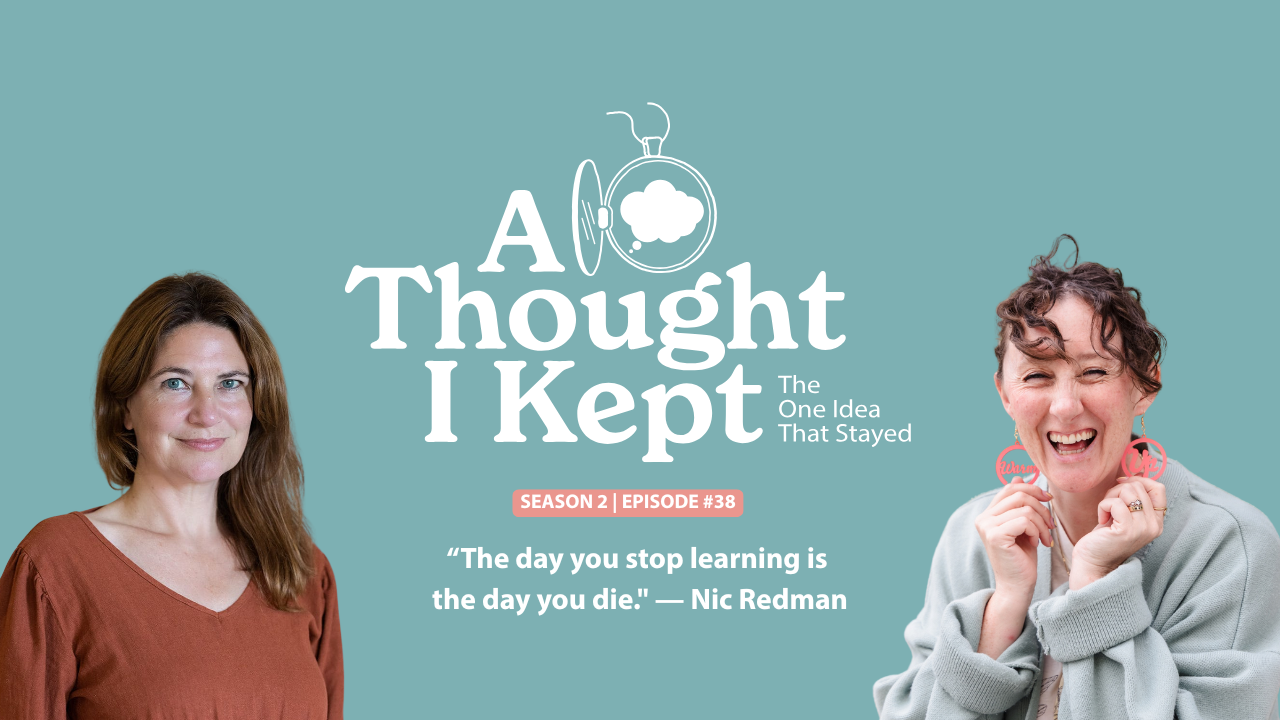
I’ve spent quite a lot of my life thinking there was something slightly wrong with my voice. At various points it hasn’t been posh enough, then it’s been too posh, and now, after living in America for more than a decade, it can sound too American.
I grew up in Manchester. My dad is from Salford and sounds much more northern than I do. My mum grew up in Wythenshawe and had what we called her “posh voice” that appeared whenever she answered the phone. Then I went to a grammar school and absorbed all sorts of ideas about there being a right way to speak. I moved to California and my voice shifted again. And when I eventually moved back to the UK, I was surprised by how interested people were in placing me.
So I felt surprisingly vulnerable sitting down with voice coach Nic Redman for this week’s A Thought I Kept. There was a tiny part of me that wondered whether Nic would immediately hear everything that was wrong with my voice and just politely not mention it.
Which, as it turns out, says far more about my relationship with my voice than it does about Nic.
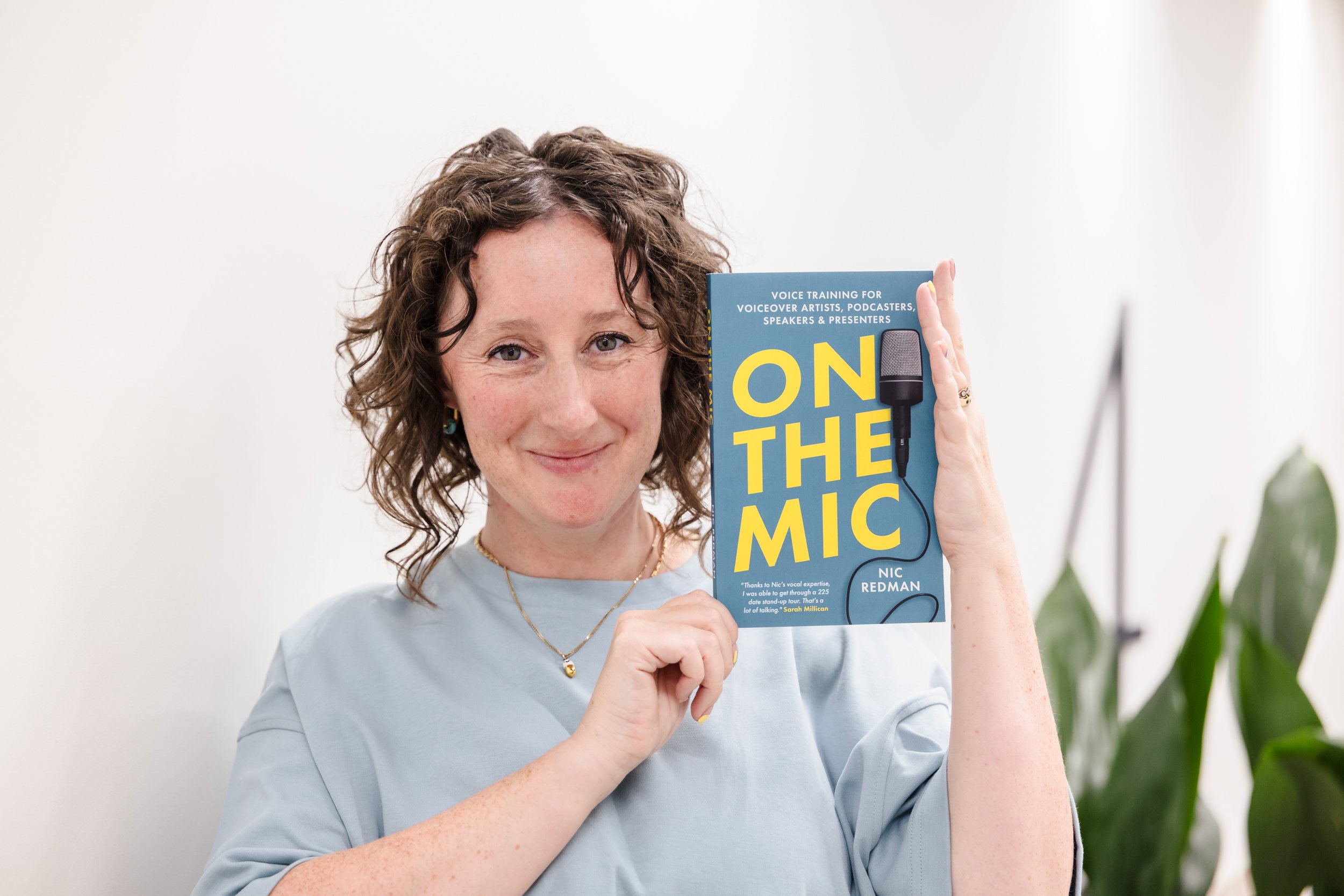
Nic is a voice coach and speaking director, author of On the Mic and host of The Voice Coach Podcast and The Voiceover Social. She works with everyone from performers to founders and senior leaders, but what I found most interesting about our conversation wasn’t how she could help us acquire a better voice. It was what happens when we become more curious about the one we already have.
Because our voices don’t exist separately from our lives. They carry geography and class, family and education, gender and culture. They are affected by who we grew up around, the places we’ve lived and all those messages we received — explicitly and otherwise — about who was allowed to speak, how loudly, with what accent and in what way.
They carry what is happening to us right now too. Nic talks about how anxiety, tiredness, stress, excitement and tension can all show up in our voices. As she puts it in our conversation, your voice is a product of everything you have experienced, as well as everything you are currently going through.
And all of that has made me think differently about confidence.
What does a confident voice sound like?
There has historically been a fairly narrow answer to this question. Nic talks about Samara Bay’s book Permission to Speak and the ways we have learned to associate power with particular kinds of voices. As Nic rather wonderfully puts it, “let’s be real, power has often nearly always sounded like a white guy.”
Which matters when we talk about becoming more visible.
There is so much encouragement, particularly for women, to speak up, take up space, share our ideas, make the presentation, start the business, go on camera, ask for what we want. I believe in so much of that. My word for this year is visibility, after all. But we aren’t doing any of these things in a vacuum. We’re doing them while carrying years of information about which voices belong in which rooms and what those voices are supposed to sound like when they get there.
Nic still works with people who have been told their regional accents might hold them back professionally. Others arrive wanting to sound more “professional”, “controlled”, “proper” or “intelligent”. But, as she points out, those words are incredibly subjective. What sounds professional to you might not sound professional to me because we are each bringing our own history with voice, class, accent, authority and belonging to what we hear.
We can work on articulation and clarity. We can understand our voices better and learn how to use them differently. But ultimately, Nic says, we only have so much control over how somebody else receives our voice.
I found that oddly freeing.
Confidence without self-rejection
Sometimes we might believe that becoming more confident requires us to reject something about who we are now.
I come across versions of this quite often in my coaching work. There can be an assumption that confidence exists somewhere on the other side of correcting ourselves. We’ll speak when we know enough. Put ourselves forward when we feel less anxious. Become visible when we’re more certain of what we’re doing. Use our voice when we’ve worked out how to make it sound right.
And of course we can learn and practise and change. This whole conversation with Nic is, in many ways, about learning. But I’m becoming increasingly interested in whether change has to begin from a position of this bit of me needs fixing.
I asked Nic whether she thought it was possible to love our voices, and I loved how realistic she was about her answer. Love is a big word, she said. Some people get there and some don’t. Perhaps what matters more is beginning to appreciate what our voices actually do for us: they allow us to connect with people, make somebody laugh, express an idea, order a coffee, talk to our children and say something that matters.
“I don’t think it’s necessary to love your voice,” Nic tells me. What matters is becoming comfortable enough with it that it can be free and expressive and do what you need it to do.
What if confidence isn’t about finally reaching the point where there is nothing left about ourselves that makes us uncomfortable? What if it can include the discomfort? What if we can want to grow without needing to dislike the person we are growing from?
Maybe there is a version of confidence that comes with more acceptance and less self-rejection?
Being visible while we’re still learning
Nic’s thought kept for this episode is “The day you stop learning is the day you die.” It’s deliberately dramatic, and we have some fun with that in the conversation, but I was interested in where it took us, particularly when we started talking about expertise.
Because being visible now can come with a strange pressure to know. We’re encouraged to find our thing and establish ourselves as the expert in it. To develop our methodology, our ideas, our manifesto. Then put those ideas online where, ideally, we will continue to confidently believe them forever.
Learning asks something quite different of us. It asks us to remain open to the possibility that there is something we don’t yet know.
Nic tells me about meeting one of her former teachers years after he first taught her and hearing him acknowledge that he would teach things differently now. She talks about her own book as a snapshot of her practice at a particular moment rather than the final word on how voice works. Research changes. Her practice changes. She learns something new from the people she works with and sometimes has to rethink what she previously believed.
I find that enormously reassuring, especially when I think about visibility. Because it offers another way of thinking about what it means to put ourselves and our ideas into the world.
We don’t have to be finished first. We can know something and still be learning. We can have something worth saying and still change our minds later. We can be good at what we do and remain curious about how we might do it differently. Perhaps confidence isn’t certainty at all. Perhaps sometimes it’s trusting ourselves enough to be seen while we’re still figuring things out.
This is my voice
Starting this podcast has made my own experiment with visibility very literal. Every week I hear myself. I watch myself. I put my voice out into the world. And slowly I’m having to come to terms with something very obvious: this is how I speak.
There’s Manchester in there. There’s school. There’s America. There’s moving home again. There are probably traces of every room in which I learned that certain ways of speaking were valued more than others. There’s also what’s happening in my life now because, as Nic reminded me, our voices carry that too.
Of course they do. And maybe I don’t have to get rid of all of that before I use mine.
Perhaps this is what I’m keeping from my conversation with Nic: the possibility that we can become more confident without first deciding there is something wrong with us. That we can become more visible without having to perfect what other people will see. That we can learn without turning our current selves into another improvement project.
And maybe we can even become a little more curious about the parts of ourselves — our voices included — that we’ve spent years thinking we needed to change.
Listen to my full conversation with Nic Redman on A Thought I Kept, where we talk about voice, confidence, cultural conditioning, learning, curiosity, play and what it might mean to find more power in the voice you already have.
And if this brings up something less about how your voice sounds and more about what makes it difficult to use it — whether that’s anxiety, overwhelm, uncertainty, self-consciousness or feeling that you need to get yourself “right” before you can be seen — explore our coaching sessions.
Feeling Stuck and Don’t Know What to Do Next? 5 Ways to Start
Feeling lost, restless or stuck and unsure what to do next? Here are five ways to find direction, build confidence and start moving before you feel ready.
You know there’s something else. That might actually be the most frustrating part because if you were perfectly happy with your life as it is, perhaps you could settle into it. But instead you keep having ideas. You look at jobs you could do, courses you could take, places you could move to, things you could make or start or write. One day you think you’ve figured it out. By the next morning, you’re not so sure.
You talk yourself into something and then straight back out again. Underneath all those ideas is this restlessness, a feeling that you want more from your life, or perhaps simply something different from it, but you can’t work out what that something is. So you stay where you are.
This is the not particularly fun version of feeling lost. It doesn’t feel like freedom or possibility or a wide-open road. It feels constricting. Your world can start to feel smaller because you can’t work out how to make it bigger, and the longer you stay there, the more your confidence can disappear too.
Maybe you tell yourself you’ll make a decision when you’re more certain. You’ll start when you have more energy. You’ll apply when you feel more qualified. You’ll put the idea into the world when you believe in it — and yourself — a little more. Except the confidence doesn’t come, and without it, you don’t move.
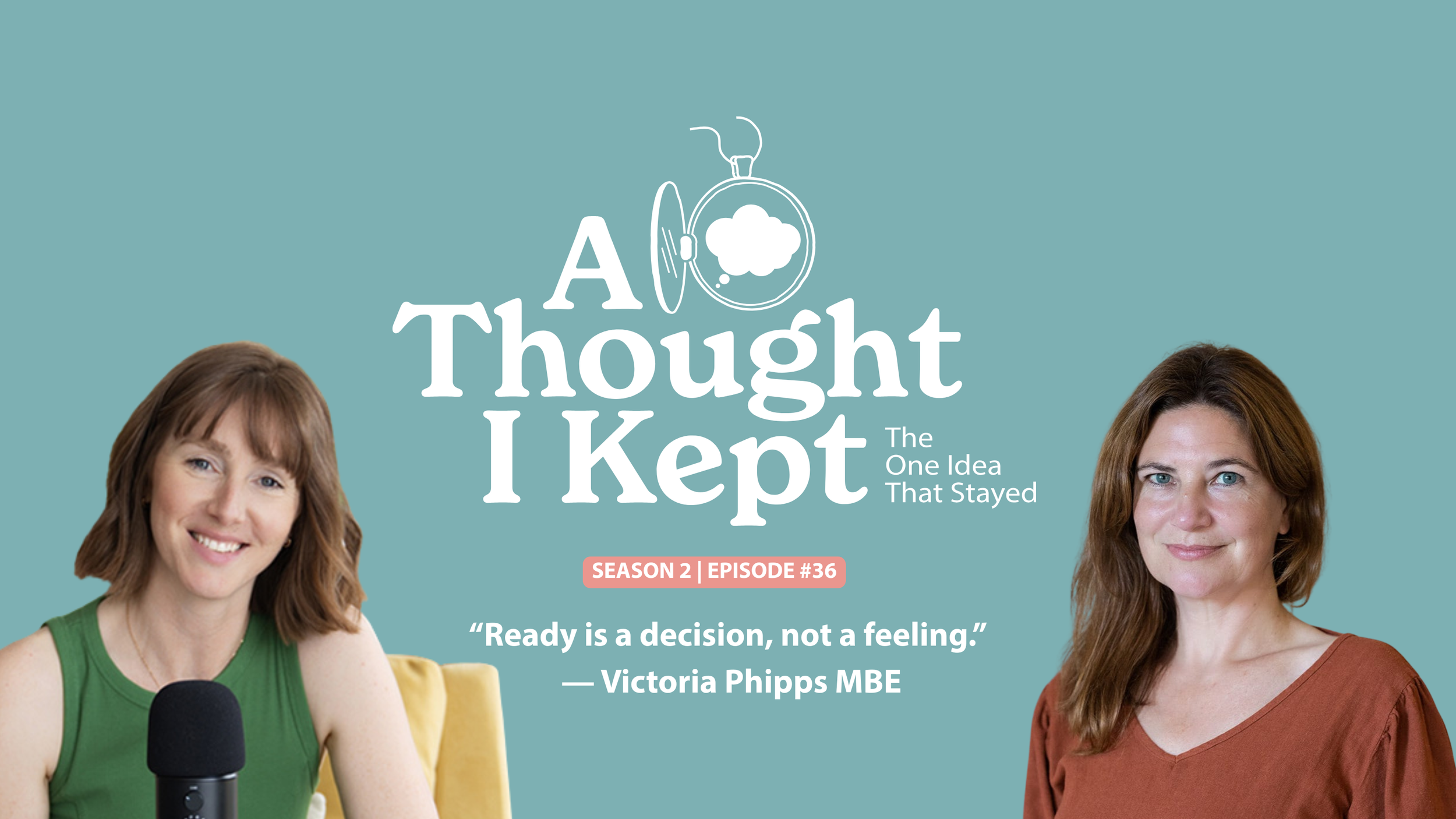
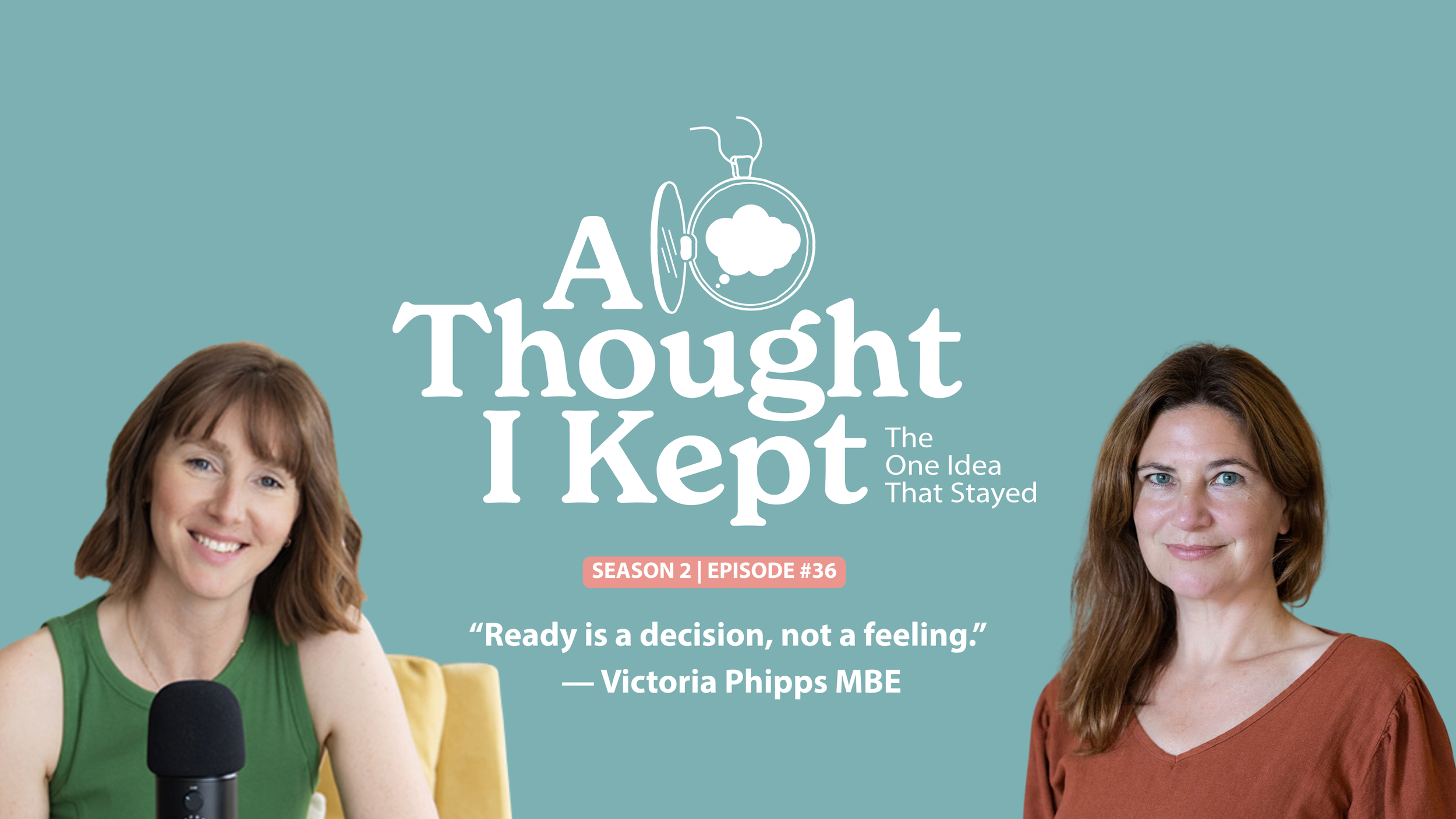
I was thinking about all of this during my conversation with Victoria Phipps MBE on A Thought I Kept. Victoria describes emerging from COVID and the intense early years of motherhood feeling as though she had “fallen out of the world.” Before children, she had spent more than a decade running a charity with her father supporting Second World War veterans alongside a successful wedding photography business. Her life had felt big. She had felt capable. She had purpose and work she loved.
Then suddenly her life looked very different. She talks in our conversation about the “grief over my own capacity” — going from happily working a lot to finding that even sending an email could become a mission with two small children around her. But the ideas hadn’t disappeared. If anything, there were too many of them. Victoria estimates that she had over a thousand ideas about what she could do next.
This gets at something we don't always understand about feeling lost. You don't necessarily have no idea what you want. You can have far too many. So how do you start moving when you have all that restless energy but absolutely no idea where to put it?
1. Stop trying to find the thing
When you're lost, it's very easy to become obsessed with finding the answer. What should I do with my life? What's the right job? Which idea should I pursue? What am I meant to be doing? Victoria was asking versions of these questions too. She knew she couldn't simply return to the life she'd had before children, but she couldn't see what should replace it either.
Eventually, she stopped trying to recreate the thing and started thinking about the feelings underneath it. What had she loved about her old life? Connection. Community. Creativity. Conversation. Purpose. The feeling that how she was spending her time was making some kind of difference. She couldn't have her old life back, but perhaps those feelings could show up somewhere new.
I think that's such a useful place to start when you can't see a direction. Instead of asking yourself to name the job, business, project or life you want next, try asking what you want to feel more of. Perhaps you want to feel interested again. Useful. Connected. Creative. Free. Challenged. Calm. You still might not know what to do, but you've given yourself a direction to look in.
2. Follow the energy, even if you don't know what it means yet
There’s a moment in our conversation when Victoria describes having all this mental energy for the “adult world” while living almost entirely in the baby world. She was physically exhausted, but creatively restless. Those two things can exist together, and you might recognise that feeling too: you're tired of thinking about what comes next and simultaneously unable to stop thinking about it.
Maybe you keep returning to the same idea. Maybe there’s something you could happily talk about for an hour. Maybe you feel completely different after you've spent an afternoon writing, gardening, volunteering, making something or being around a certain group of people. Don't immediately ask any of these things to become your new career. Just notice them.
I think restlessness gets a bad reputation. We can treat it as something to calm down or get rid of, but sometimes restlessness contains information. Your energy might know something before the rest of you has caught up.
3. Don't wait to feel confident
Victoria eventually had an idea she really liked. She wanted to start a podcast. She told a trusted friend about it and her friend thought it was a great idea. And then Victoria did nothing with it for several months because she didn't feel ready.
She wasn't a podcaster. She didn't know how to edit audio. She worried about what people would think. She'd spent several years feeling as though she'd fallen out of the world and her confidence had taken a knock. So she waited, and then this thought kept following her around: “Ready is a decision, not a feeling.”
Eventually she had to consider the possibility that perhaps the feeling of readiness wasn't coming. I think this is where we can get really stuck. We assume confidence comes first: When I feel confident, I'll apply. When I'm certain, I'll leave. When I know I'm good enough, I'll start.
But confidence often doesn't work like that. Sometimes we have to do something while feeling decidedly unconfident about it and allow the doing to change how we feel.
4. Make the decision that helps you find out more
Shortly after her 40th birthday, Victoria announced that she was starting a podcast. And then she had to learn how to make one. The decision didn't suddenly make Victoria certain. It gave her something to do.
She learned the technology. She found guests. She figured out what she wanted the podcast to be about. She made an episode and then another one. She learned what she liked, what she was good at and what she wanted to change. The first decision created the next one, and the next, until gradually there was something that looked a lot more like a direction.
When you're feeling lost, you can put enormous pressure on yourself to make the right decision. It's as though you should somehow be able to stand where you are now and accurately predict how every possible version of your future will turn out. Perhaps the decision doesn't need to do that. Perhaps it just needs to help you find out something you don't know yet.
5. Be willing to be a beginner
This might be especially difficult if you've spent years getting good at what you already do. Changing direction means becoming new at something again, and being new at something can be uncomfortable. You don't know the terminology. You don't know how everything works. Other people seem much further ahead. The first version of what you make might not be particularly good.
Victoria talks about discovering at 40 that she could be a beginner again. She could learn how to podcast. She could create her first online course. She could change the way she worked as a photographer. She could learn on the job and, importantly, she could do those things imperfectly.
When she first launched her podcast, she tried to have everything ready: the website, the branding, the social media, four episodes in the first week. She remembers editing until 3am when she had two small children and absolutely did not need to be sacrificing sleep. A year later, she launched a rebrand differently. Not everything was finished. She did it anyway.
Somewhere along the way, she'd stopped needing to know that she could do everything before allowing herself to begin. And maybe this is the kind of confidence that matters when you're lost. Not I know exactly what I'm doing, but I trust myself to find out.
By the end of our conversation, Victoria describes herself as feeling “expansive.” It's so different from where she began: small, stuck, frantic, looking at everyone else moving forward while feeling as though she'd fallen out of the world herself.
She didn't get from one place to the other because she finally figured out exactly what she should do with her life. She noticed what she missed. She followed some of her energy. She made one decision and learned from it. Then she made another.
So if you're feeling utterly stuck right now — restless, knowing there must be something else but unable to see it clearly — perhaps you don't need to answer What am I going to do with the rest of my life? That is a lot to ask of yourself on a Tuesday afternoon.
Maybe there are smaller questions: How do I want my life to feel? What gives me energy? What am I waiting to feel ready for? What could I do that would help me find out more? Where could I allow myself to be a beginner?
You don't need all five answers today. You don't even need to know where you're going yet. Perhaps you just need one of them to make your world feel a little bigger again and give you somewhere to start.
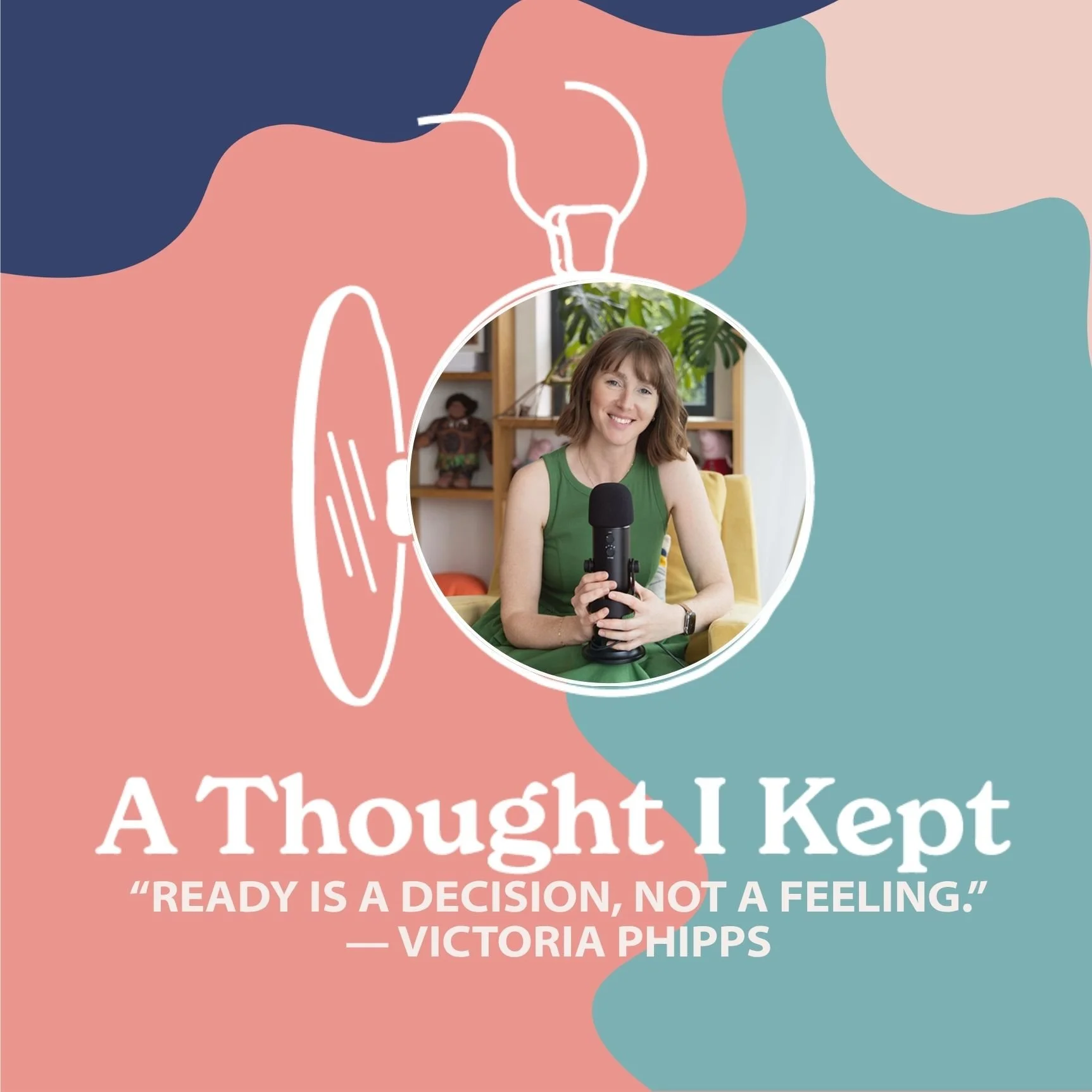
You can listen to my full conversation with Victoria Phipps MBE on A Thought I Kept, where we talk about feeling lost, motherhood and identity, ambition, creativity, perfectionism, visibility, becoming a beginner again and the thought that helped Victoria begin moving: “Ready is a decision, not a feeling.”
And if you're feeling lost yourself, our book If Lost, Start Here was made for exactly these kinds of moments: when you don't necessarily need someone to give you the answer, but you could do with somewhere to begin.
What If Confidence Isn't What You Need?
Waiting until you feel confident? Women's leadership coach Sadia Ghazanfar shares why courage comes first, how to overcome perfectionism, imposter syndrome and self-doubt, and why being brave enough to start something new can change everything.
One of the questions I've found myself thinking about recently is this: what's something you're willing to be bad at? Not because you're naturally gifted at it. Not because you know you'll eventually master it. But because something about it feels interesting enough, hopeful enough, or alive enough that you're prepared to keep going anyway.
It's not a question we ask ourselves very often. Instead, many of us spend our energy trying not to look inexperienced, uncertain or unprepared. We polish. We perfect. We compare ourselves to people who seem effortlessly capable and quietly decide we'll begin when we feel more confident.
But what if confidence isn't actually where we begin?
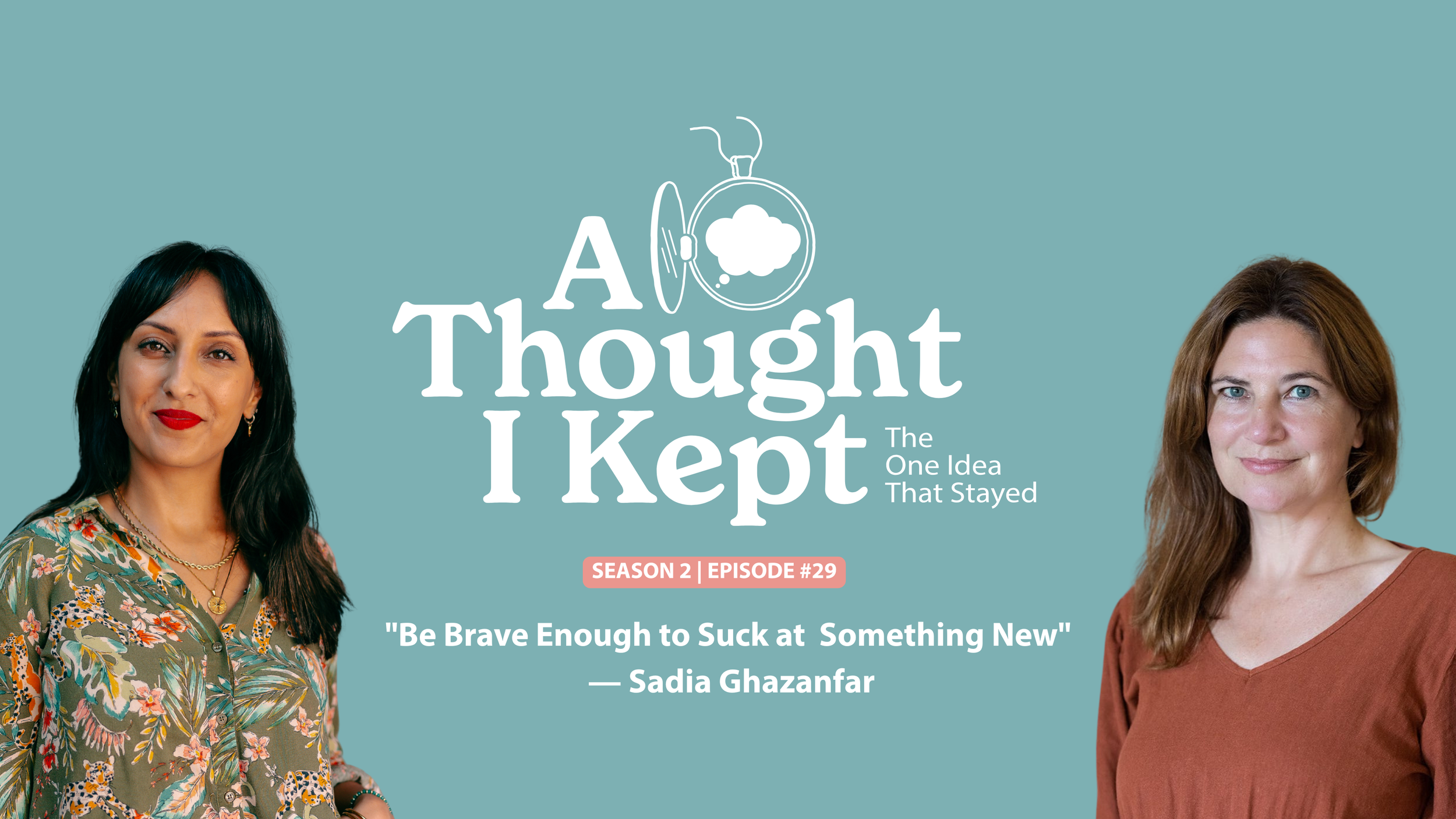
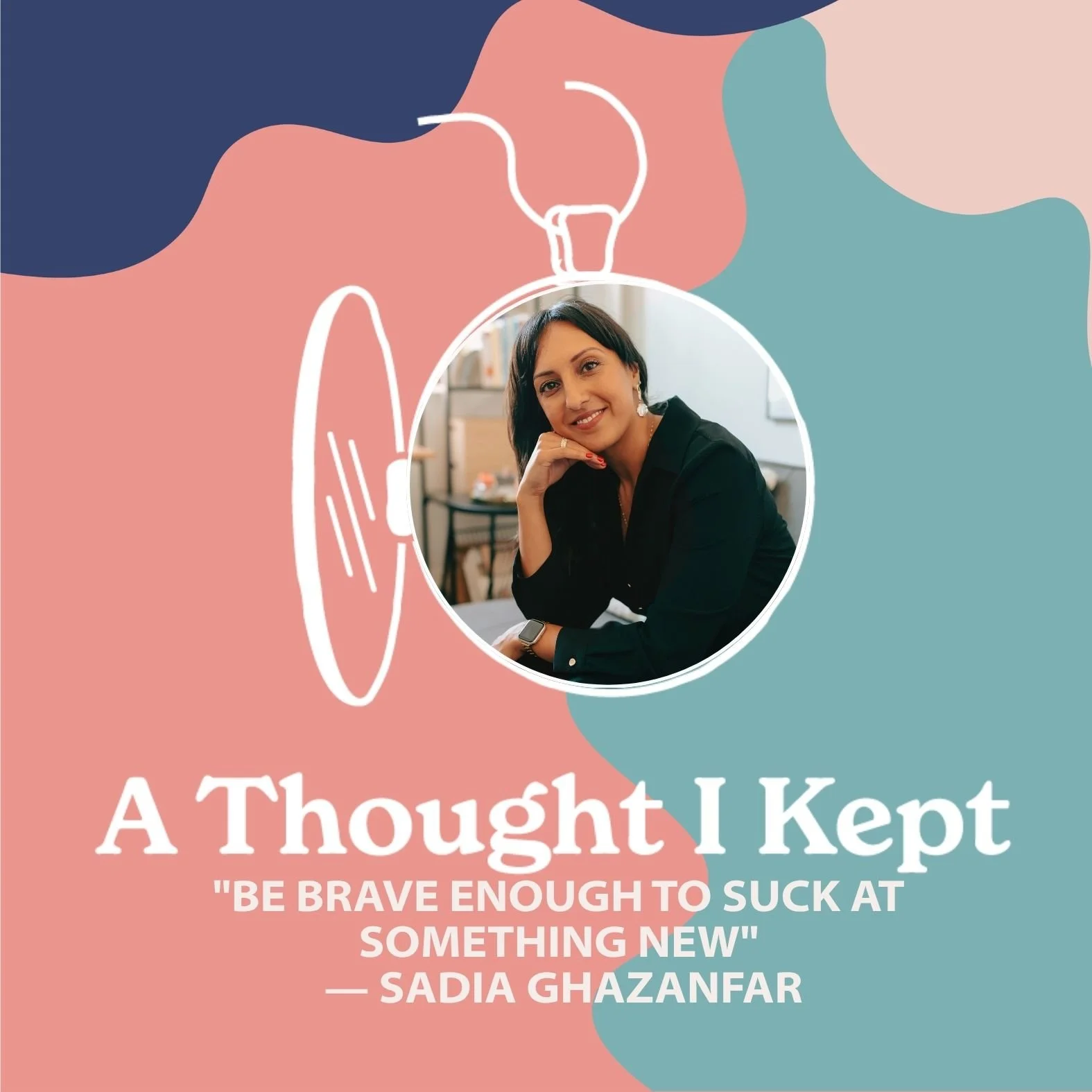
That’s what I get into with this week's guest on A Thought I Kept, Sadia Ghazanfar, women's leadership and career development coach and founder of Slay Your Dragons. The thought she has carried with her for years is beautifully simple:
"Be brave enough to suck at something new."
At first it made me smile. Then it made me feel unexpectedly relieved. We live in a world that expects us not to suck. We see the outcomes of other people's efforts: the bestselling books, the polished speakers, the successful businesses, the perfect performances. What we rarely see are the years of uncertainty that came before them, the uncomfortable first attempts, the moments when someone wondered whether they should give up altogether. We're comparing our beginnings with somebody else's middle, and it's no wonder so many of us decide not to start at all.
One of my favourite moments in our conversation came when Sadia talked about confidence. So many women arrive in her coaching sessions believing confidence is what they need before they can apply for the promotion, change careers, launch the idea or finally speak up. But she sees it differently. Confidence isn't the starting point; it's the result. First comes courage. Then comes practice. Then comes competence. Confidence follows afterwards.
It's such a subtle shift, but it changes everything. Instead of waiting to feel different before we act, we allow ourselves to become different through the act of trying.
We also talked about perfectionism, another companion for so many of us. I loved Sadia's perspective that perfectionism isn't who we are; it's a behaviour that may once have protected us but perhaps no longer serves us. There's something deeply hopeful about that distinction. If perfectionism isn't our identity, then maybe we don't have to carry it forever. Maybe we can gently experiment with behaving differently instead.
As we spoke, I found myself thinking about how often uncertainty masquerades as failure. We assume that not knowing means we're on the wrong path. That feeling awkward means we shouldn't be there. That struggling is evidence we aren't capable. Yet every meaningful thing I've ever learned has begun with exactly those feelings. Coaching. Writing. Speaking. Hosting this podcast. None of them started with confidence. They all started with awkwardness, uncertainty and a willingness to keep going anyway.
Sadia also spoke openly about burnout and the pressure so many women feel to hold everything together. There was a time when she was navigating a demanding leadership role, retraining as a coach and renovating a house all at once. She kept pushing until eventually her body simply wouldn't let her anymore. It's a story that will feel familiar to many people because we often pride ourselves on coping. We tell ourselves we'll figure it out alone. We keep going because stopping feels impossible. Yet sometimes the bravest thing we can do is ask for help before our bodies ask for us.
Listening back to our conversation, I realised that "be brave enough to suck at something new" isn't really about being bad at something. It's about giving ourselves permission to be learners again. To remember that learning has always been messy. That curiosity is often more useful than certainty. That possibility only exists when we're willing to step into something we don't yet know how to do.
This podcast itself is an example of that. I started it because I'd always wanted to make a podcast. Those early episodes were wonderfully imperfect while I figured out the technology, the interviewing, the editing and the rhythm of the conversations. Perhaps they're still imperfect now. But every week I learn something. Every week I become a little more comfortable with not knowing everything. And every week I'm reminded that the joy was never in getting it right first time. It was in beginning.
So if you're arriving here today feeling unsure of yourself, wondering whether you're ready for whatever comes next, perhaps this week's thought is one to keep.
Be brave enough to suck at something new.
It may not feel elegant. It probably won't feel comfortable. But it just might be the beginning of something you couldn't have imagined yet.
Listen to the conversation
In this episode of A Thought I Kept, Sadia Ghazanfar and I explore perfectionism, confidence, courage, burnout, emotional capacity, leadership, asking for help and why learning something new can become one of the most freeing things we ever do.
Listen to "Be Brave Enough to Suck at Something New" — Sadia Ghazanfar wherever you get your podcasts.
Looking for support?
If this conversation resonated because you're feeling overwhelmed, stuck, burnt out or uncertain about your next step, you don't have to figure it out alone. Explore my one-to-one emotions coaching sessions and together we'll make sense of what's really going on beneath the surface, so you can move forward with greater clarity, self-compassion and courage.
Struggling With Comparison? Rethinking Confidence and Self-Trust
Comparison and competition can quietly shape how we see ourselves. In this conversation, we explore confidence, self-trust, and the beliefs we carry through life.
This is how it might go. You’re scrolling, or reading, or listening to a podcast, and you notice a flicker of feeling when someone else shares good news. A promotion. A book deal. A confident post about work they love. You’re pleased for them — genuinely — and yet something tightens. A question forms that you don’t quite want to look at too closely.
What does this mean about me?
Moments like this don’t usually come with drama. They’re small, everyday, easy to brush past. But they can linger. And over time, they shape how we see ourselves, how we show up at work, and how much space we allow ourselves to take.
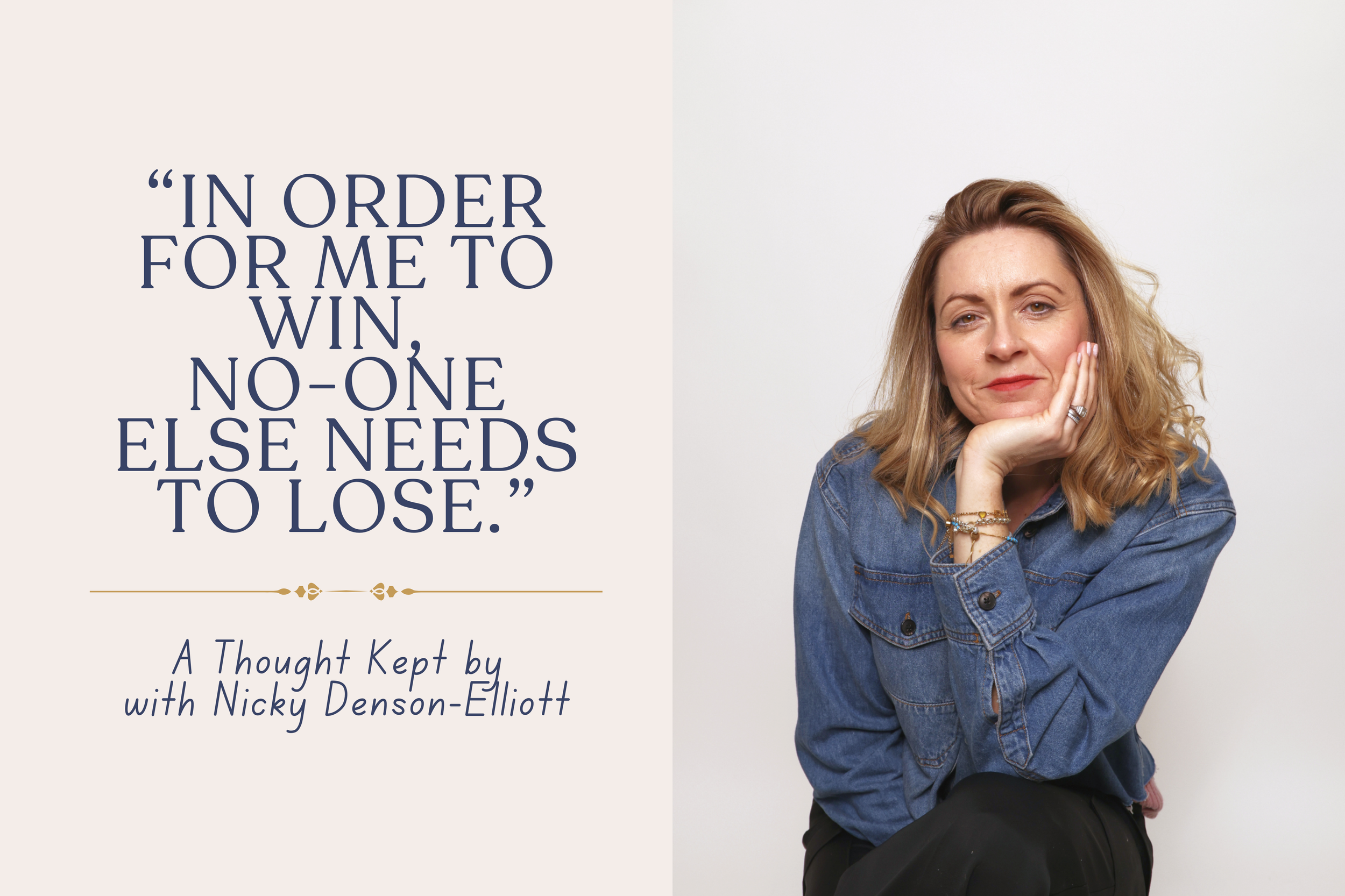
This week on A Thought I Kept, I spoke to Nicky Denson-Elliott, and she brought a thought that disrupted that familiar inner pattern:
In order for me to win, no one else has to lose.
It’s one of those ideas that seems obvious when you first hear it and then quietly radical the longer you sit with it.
Because so much of our inner landscape has been shaped by the opposite belief. That success is scarce. That confidence belongs to certain people, not others. That if someone else steps forward, there’s less room for us. These ideas don’t usually announce themselves as beliefs. They show up as feelings: comparison, jealousy, self-doubt, hesitation.
Nicky spoke about how deeply this conditioning runs, especially for women. How it can shape our relationship with money, confidence, and visibility. How it influences the way we price our work — often not based on its value, but on what feels safe. How it quietly sets women against one another, even when connection and solidarity are what we most want.
What’s important here is that none of this is a personal flaw. These are not thoughts we invented. They’re learned. Reinforced. Picked up over time in workplaces, families, schools, media, and culture. When they surface, they can feel intensely personal but they rarely originate there.
And when life already feels full or uncertain, carrying these inherited ideas can make everything heavier. You might notice it in how hard you are on yourself. In the way you second-guess decisions. In the tension you feel around confidence — wanting it, distrusting it, worrying what it might cost.
One of the most grounding parts of the conversation with Nicky was her refusal to replace one set of rules with another. There was no invitation to be bolder, louder, or more confident in a performative sense. Instead, she talked about noticing. About recognising when a familiar reaction appears and asking, with curiosity rather than judgment: Is this actually mine?
That question alone can create a shift.
Because when we start to see that some of our thoughts are inherited rather than chosen, we don’t have to wrestle with them in the same way. We don’t have to argue ourselves out of feeling jealous or small or unsure. We can simply recognise the pattern, and loosen our grip.
This matters not just for our inner world, but for how we move through everyday life. Especially work. Especially relationships with other women. Especially moments where confidence feels like something other people have access to, and we’re still figuring it out.
Letting go of the myth of competition doesn’t mean pretending everything is fair or easy. It doesn’t mean denying ambition or discomfort. But it does open up a different orientation — one where someone else’s success doesn’t automatically diminish our own, and where confidence can be something we grow into, rather than something we perform.
For many of us, this kind of rethinking doesn’t arrive as a neat turning point. It shows up gradually. In small pauses. In moments where we choose not to rush to judgment — of ourselves or others. In the realisation that uncertainty doesn’t mean we’re failing; it often means we’re paying attention.
If you’ve been questioning old ideas about success, money, confidence, or what it means to be doing “well” in life, you’re not behind. You may simply be noticing that the old maps don’t quite match the terrain anymore.
Nicky’s thought offers a steadier way of orienting. It reminds us that life isn’t a zero-sum game. That generosity — toward ourselves and others — isn’t naïve, but grounding. And that self-trust doesn’t come from fixing or perfecting ourselves, but from recognising which beliefs were never designed to support us in the first place.
You don’t need to know what comes next. You don’t need to replace every thought at once. Sometimes it’s enough to notice which ideas make life feel smaller, and to wonder — without urgency — what it might be like to set one of them down.
If this resonates, listen to the full conversation with Nicky on A Thought I Kept.
And if you need help exploring some of the feelings you have around comparison — jealousy, self-doubt, hesitation — or what confidence even means to you, explore our emotions coaching sessions.