Which bits of yourself do you quietly edit away?
Do you hold back to avoid being too much? Explore confidence, self-trust and the parts of ourselves we quietly edit away, with insights from Genelle Aldred.
Perhaps you’ve had that moment after a conversation when you start going back over what you said. Were you a bit too direct? Did you sound like you thought you knew everything? Should you have kept that opinion to yourself? You might have felt perfectly comfortable while you were speaking, but afterwards not so much. Next time, you decide, you’ll soften it a little. Or say less.
It can happen with the good things too. You’re excited about something you’ve made, something you’ve learned, something you’re proud of. You want to share it, but then you hesitate. You wonder what people will think. And a small piece of you that wanted to be seen gets put away for another time.
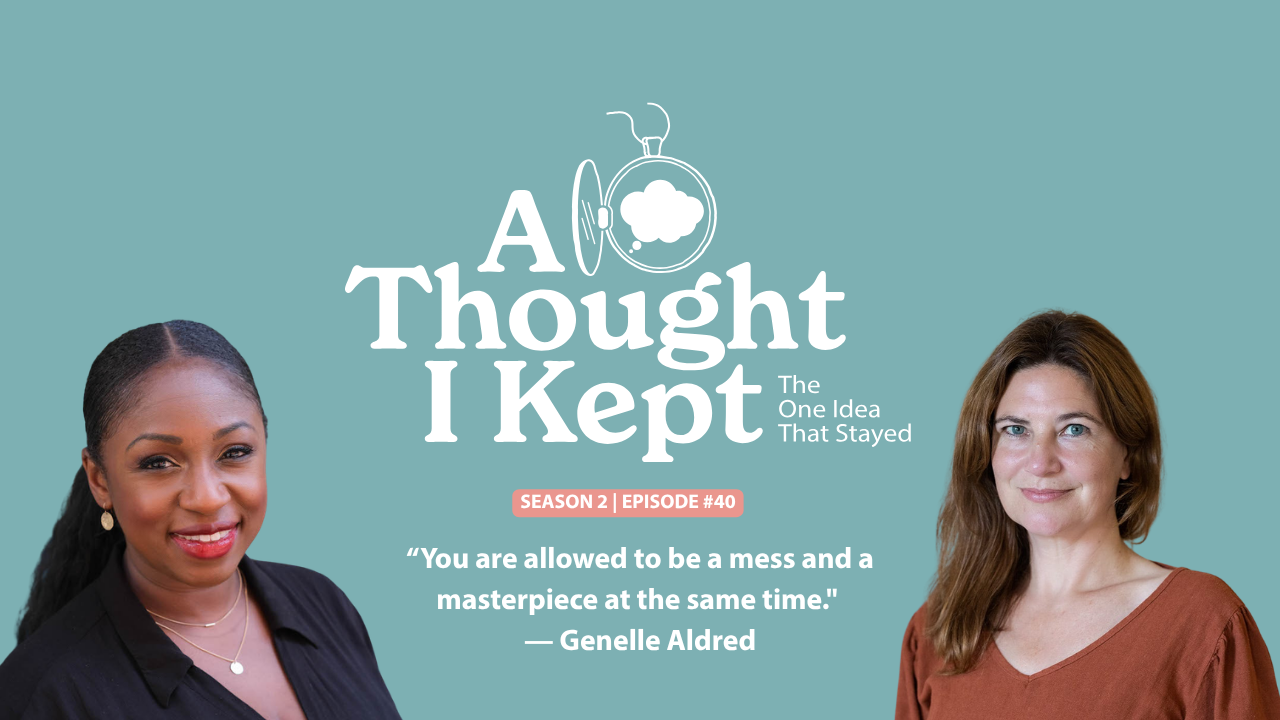
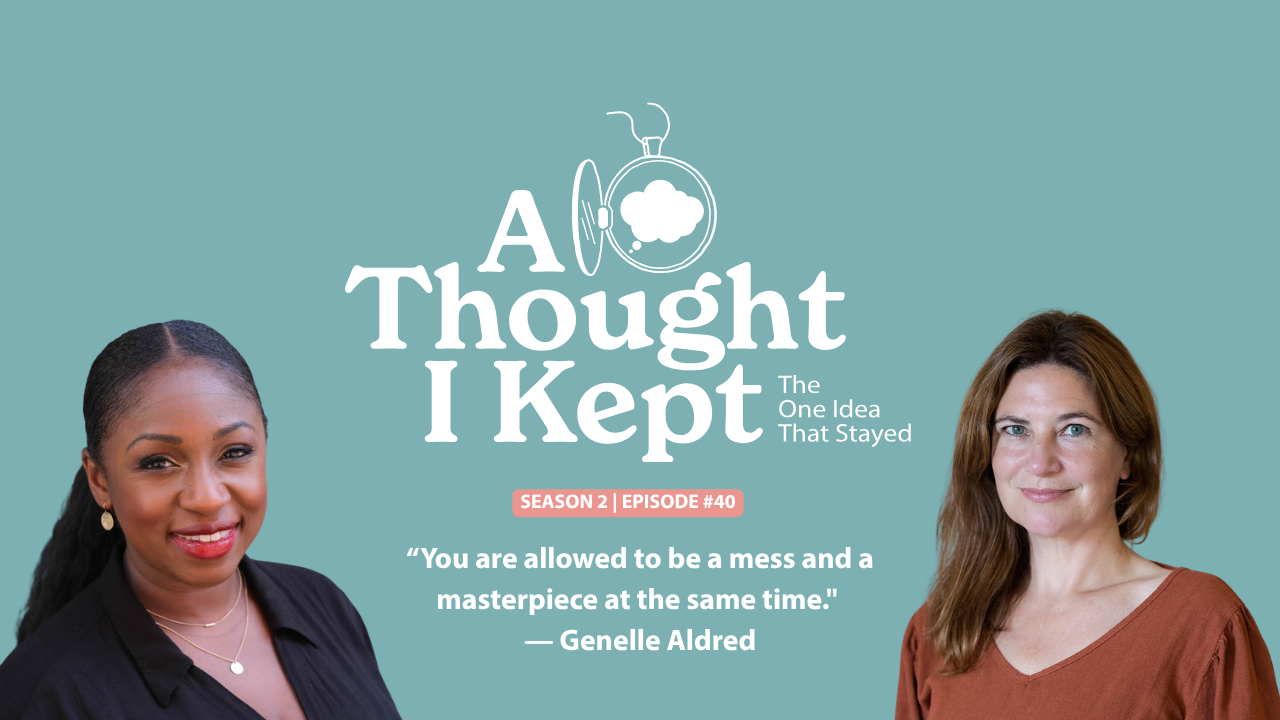
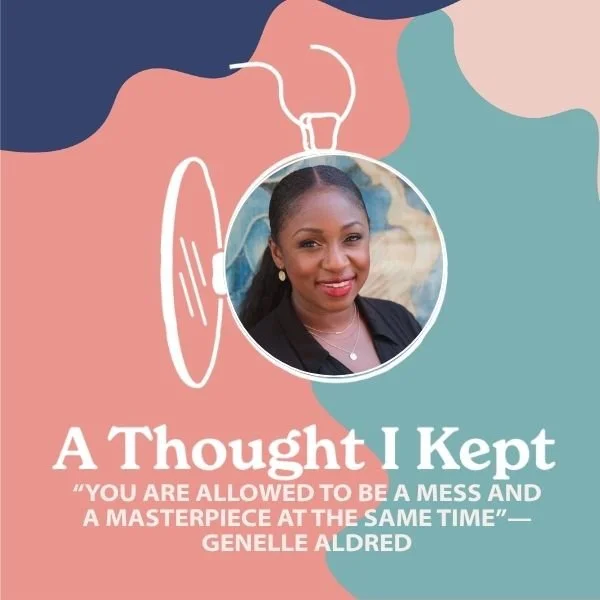
I’ve been thinking about these moments since my conversation with broadcaster, communication strategist and author Genelle Aldred on A Thought I Kept. When I asked how she hoped to hold on to the thought she’d brought, her answer was: “By not quietly editing bits of myself away.”
We can so easily begin to lose parts of ourselves through small, everyday decisions about what does feel acceptable to show and we get less and less visible, and even confident, as we do so.
How the editing begins
Genelle’s thought was: “You are allowed to be a mess and a masterpiece at the same time.” And it gave us a way into confidence that felt much more human than the certainty and polish we might associate with it.
Even the beginning of our conversation offered an example of this. Genelle arrived feeling flustered after some client work and said so. We talked about the pressure to be calm and together, and how much more there is to connect with when someone can tell you how they actually feel. We could have done the usual exchange of “How are you?” and “Fine.” Instead, we got to share where we really were.
But being honest about how we’re arriving can feel risky. Genelle spoke about the expectations placed on women, and specifically her experience as a Black woman: how standing up for yourself or expressing a view can attract labels such as aggressive or too emotional. Those responses can begin to shape what you feel able to say.
As she described it, we start to self-filter, self-edit and minimise. We don’t want to appear messy. We don’t want to be wrong. We feel we should have everything worked out before we speak.
That context matters. The editing isn’t always something we’ve invented in our own minds. Sometimes we’ve learned from experience that certain parts of us receive a difficult response. It makes sense that we might become careful. But it’s worth noticing what that carefulness is beginning to cost us.
When one mistake becomes the whole story
One of the things Genelle suggested was how readily we judge ourselves by the worst thing we’ve done. We can do the same to other people. A moment when someone wasn’t there for us can become bigger than all the times they were.
I wonder how often we do this with our confidence. We have a difficult conversation and begin questioning whether we’re any good at communicating. We disappoint someone and start wondering whether we’re a good friend. We get something wrong at work and suddenly our experience seems to count for very little.
Genelle knows she’s good at communication. She also knows that she doesn’t get every conversation right. Sometimes people misunderstand her. Sometimes she makes a mistake and needs to apologise. Both things can be true.
There’s something useful to try here the next time you find yourself replaying a conversation: can you stay with what actually happened? Perhaps you interrupted someone, chose the wrong words or spoke before you’d understood. There may be something to acknowledge or repair. But can you do that without turning the moment into a verdict on who you are?
You’re allowed to acknowledge the masterpiece too
I think many of us can understand the relief of being allowed to be a mess. Being allowed to be a masterpiece might feel more uncomfortable.
Who am I to say I’m good at this? To trust my own judgement? To acknowledge that I have something valuable to offer?
For many of the women I work with, these questions can be difficult. We may be used to looking for reassurance from someone else, or qualifying a strength so quickly that we barely let ourselves acknowledge it.
Genelle brought a lovely, everyday example of holding different parts of herself together. She can post a silly meme or a picture of her dinner and also advise senior leaders on their communication. Enjoying one doesn’t diminish her ability to do the other.
Perhaps there’s a part of you that you keep separate because you worry it will undermine something else. Your playfulness and your expertise. Your sensitivity and your authority. What might become possible if you allowed them to belong to the same person?
What are you trying to say?
Genelle also spoke about the distance between saying what we mean and saying what we think will please the person listening. This might mean pausing to acknowledge this before we edit ourselves again.
What am I trying to communicate? What matters to me here? Have I changed my words to make them clearer, or have I removed the thing I wanted to say?
There is care in this too. Genelle was clear that we should consider how our communication affects others, while remembering to care for ourselves within it. We can take responsibility for our words and still allow ourselves to have a view, a feeling or a need.
You might try noticing one moment this week when you begin to edit yourself away. There’s no requirement to suddenly say everything. Just become curious about what you’re holding back, and whether you’d like to give it a little more room.
Listen to my conversation with Genelle Aldred on A Thought I Kept for more on confidence, communication and being allowed to be yourself.
And if you’d like some space to explore the feelings that come up around confidence, visibility or expressing what you need, you can explore emotions coaching sessions with me here..